


Some Russians Shun Coffee as Western in Favor of Traditional Tea 

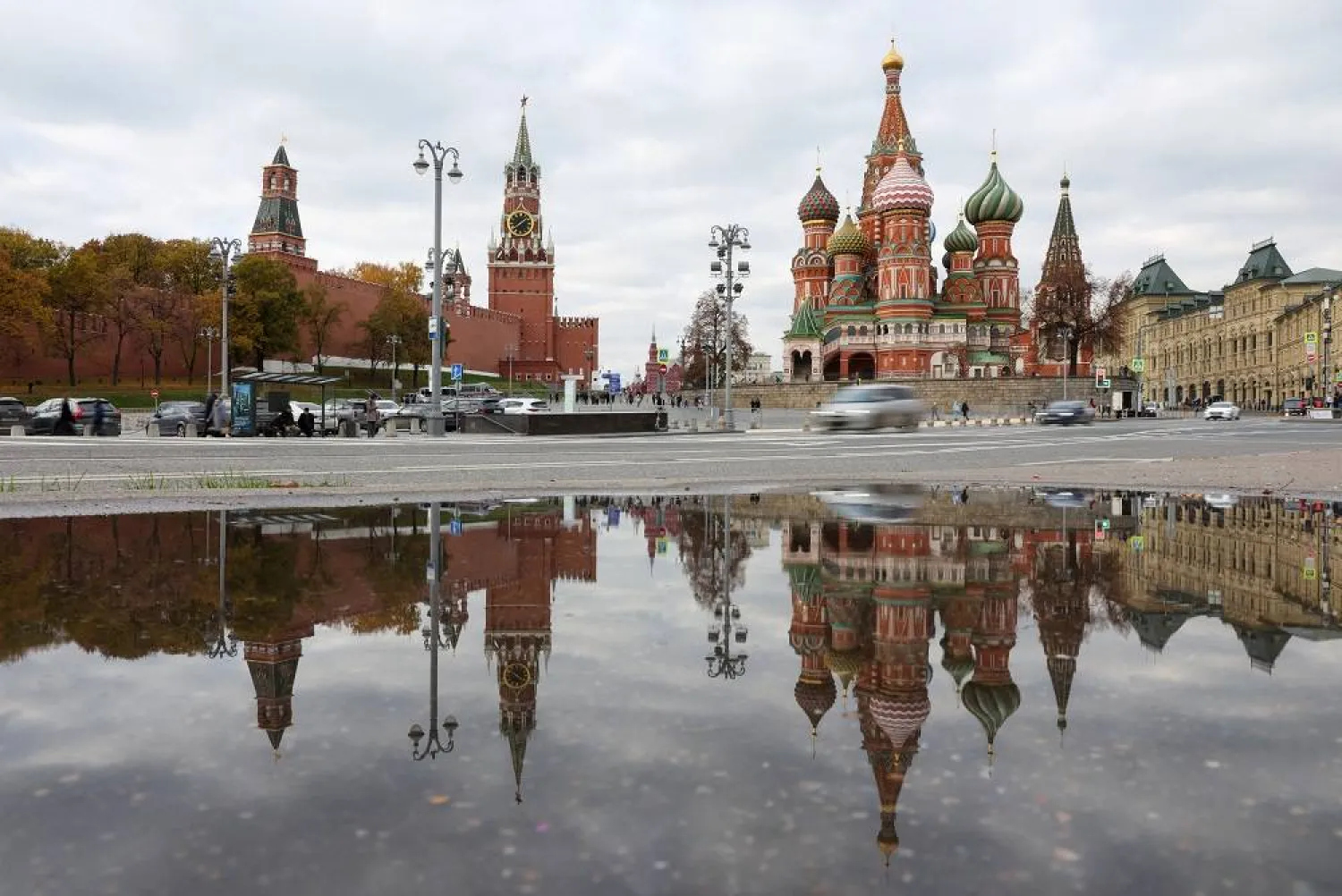
A puddle in a street reflects the towers of the Kremlin, St. Basil’s Cathedral, and the State Department Store, GUM, in central Moscow, Russia, October 23, 2025. (Reuters)
TT

Some Russians Shun Coffee as Western in Favor of Traditional Tea 

A puddle in a street reflects the towers of the Kremlin, St. Basil’s Cathedral, and the State Department Store, GUM, in central Moscow, Russia, October 23, 2025. (Reuters)

Moscow, which for decades has run on caffeine, could be rediscovering its taste for tea as some shun coffee as a Western introduction and embrace the more traditional drink.

Andrei Kolbasinov, founder of retro-chic teahouse chain Nitka, which means "thread" in Russian, says his business is all about trying to resurrect Russia's lost tea-drinking culture.

"We are trying to revive modern Russian teahouses," he said. "Before the (1917) Revolution, there used to be a lot of them in Russia, especially in Moscow. Unfortunately, they all disappeared during Soviet times," Kolbasinov said.

"Five years ago there were just coffee shops everywhere. We try to imagine how teahouses would look, had they continued existing," he said.

His company runs three teahouses in Moscow and two more in other cities.

While Russians are some of the biggest consumers of tea worldwide, they mostly do so at home, typically accompanying their brews with jam, lemon, and sweets.

As in the rest of Europe, busy city dwellers are more likely to grab a coffee on the go than opt for a cup of tea.

But with the country at loggerheads with the West over the conflict in Ukraine, even a simple tea shop reflects how the country has changed over the last three and a half years.

Nitka customer Kirill, who did not give his last name, said: "Tea is ... well, it's more Russian I guess. It has this home warmth and coziness."

Kolbasinov said the rising popularity of his teahouses represented "a turn inward", as Russia rediscovers its own cultural traditions.

Though a part of Nitka's tea is Russian grown, Western sanctions against Russia have complicated the country's tea imports, said Kolbasinov.

For instance, some of Nitka's tea is sourced from Nepal, but sanctions have interfered with the complex supply chains that bind Russia to the landlocked South Asian country.

Far more of the tea comes from Russia's neighbor and ally China, and from Georgia, where much of the Soviet Union's tea was grown before 1991. Neither country has imposed sanctions on Russia, and both have deepened economic ties with Moscow since 2022.



Saudi Arabia, Syria Underline Depth of their Cultural Ties

Syrian President al-Sharaa receives the Saudi minister of culture and the accompanying delegation at the Conference Palace in Damascus on Thursday. (SPA)
TT

Saudi Arabia, Syria Underline Depth of their Cultural Ties

Syrian President al-Sharaa receives the Saudi minister of culture and the accompanying delegation at the Conference Palace in Damascus on Thursday. (SPA)

Saudi Arabia and Syria underlined the strength of their cultural relationship during high-level meetings held in Damascus on Thursday, on the sidelines of the opening of the Damascus International Book Fair 2026, where the Kingdom is participating as guest of honor.

Syrian President Ahmad al-Sharaa received Saudi Minister of Culture Prince Badr bin Abdullah bin Farhan at the Conference Palace in the capital.

Earlier the same day, Prince Badr met with his Syrian counterpart, Minister of Culture Mohammad Yassin Saleh, during an official visit to attend the fair. T

he Saudi minister congratulated Syria on hosting the exhibition and expressed his wishes for continued prosperity, progress, and stability for the Syrian government and people.

Both meetings highlighted the depth of cultural relations between the two countries, the importance of expanding joint cultural cooperation across various fields, and the alignment of positions on issues of mutual interest in a way that serves both nations.

The Saudi delegation included senior officials and advisers, among them representatives from the Royal Court, the Ministry of Culture, and the King Abdulaziz Public Library, reflecting broad institutional engagement in the visit.

In the evening, Prince Badr attended the opening ceremony of the fair’s special session, held under the patronage and in the presence of al-Sharaa. The event drew wide official and cultural participation, including Arab ministers, political and intellectual figures, and a distinguished group of writers and cultural figures.

In a post on the X platform, Prince Badr thanked “our brothers in Syria for their generous hospitality and their efforts in organizing the Damascus International Book Fair.”

The minister also inaugurated the Kingdom’s pavilion at the fair in the presence of the Syrian minister of culture and the Qatari minister of culture.

Saudi Arabia’s guest-of-honor participation continues until Feb. 16 and reflects its growing prominence and leadership in the Arab and global cultural landscape.

This participation aligns with Saudi Vision 2030, which places culture at the heart of national development, viewing it as a space for dialogue, a bridge for civilizational communication, and a tool for strengthening ties among Arab peoples.

The Saudi Literature, Publishing and Translation Commission is leading the Kingdom’s participation, highlighting the development of the cultural sector and reaffirming the central role of books as carriers of knowledge and awareness.

The Saudi pavilion boasts a comprehensive cultural program featuring intellectual seminars, poetry evenings, a manuscript exhibition, traditional Saudi fashion displays, hospitality corners, archaeological replicas, and performing arts that express the depth of the Kingdom’s cultural heritage.

On the sidelines of the visit, Prince Badr, accompanied by Minister Saleh, toured the National Museum of Damascus, which houses rare artifacts spanning prehistoric eras, ancient Syrian civilizations, classical and Islamic periods, as well as traditional and modern art.


UNESCO Honors Al-Bisht Al-Hasawi as Thousands Flock to Al-Ahsa Festival

Visitors can explore interactive displays, participate in live workshops, and witness the meticulous process of tailoring this iconic symbol of prestige - SPA
TT

UNESCO Honors Al-Bisht Al-Hasawi as Thousands Flock to Al-Ahsa Festival

Visitors can explore interactive displays, participate in live workshops, and witness the meticulous process of tailoring this iconic symbol of prestige - SPA

The third edition of Al-Bisht Al-Hasawi Festival is drawing thousands of regional and international visitors to Ibrahim Palace in historic Al-Hofuf.

Organized by the Heritage Commission, this year’s festival celebrates the inscription of the Bisht on UNESCO’s Representative List of the Intangible Cultural Heritage of Humanity.

The event showcases Al-Ahsa’s centuries-old tradition of hand-weaving and gold embroidery, a craft passed down through generations of local families, SPA reported.

Visitors can explore interactive displays, participate in live workshops, and witness the meticulous process of tailoring this iconic symbol of prestige.

With UNESCO's participation and representatives from six countries, the festival has evolved into a global platform for cultural dialogue, cementing the Bisht’s status as a world-class cultural treasure.


Saudi, Syrian Culture Ministers Tour National Museum of Damascus

The ministers observed the museum’s extensive collections spanning prehistoric eras to modern art. SPA
TT

Saudi, Syrian Culture Ministers Tour National Museum of Damascus

The ministers observed the museum’s extensive collections spanning prehistoric eras to modern art. SPA

Saudi Minister of Culture Prince Badr bin Abdullah bin Farhan and his Syrian counterpart, Mohammed Yassin Saleh, have toured the National Museum of Damascus during the Kingdom’s participation as guest of honor at the 2026 Damascus International Book Fair.

The ministers observed on Thursday the museum’s extensive collections spanning prehistoric eras to modern art.

A particular focus was placed on the Arab-Islamic wing, featuring significant artifacts from the Umayyad period.

The Kingdom's participation as guest of honor at the 2026 Damascus International Book Fair, which runs until February 16, stems from the role culture plays within Saudi Vision 2030.