



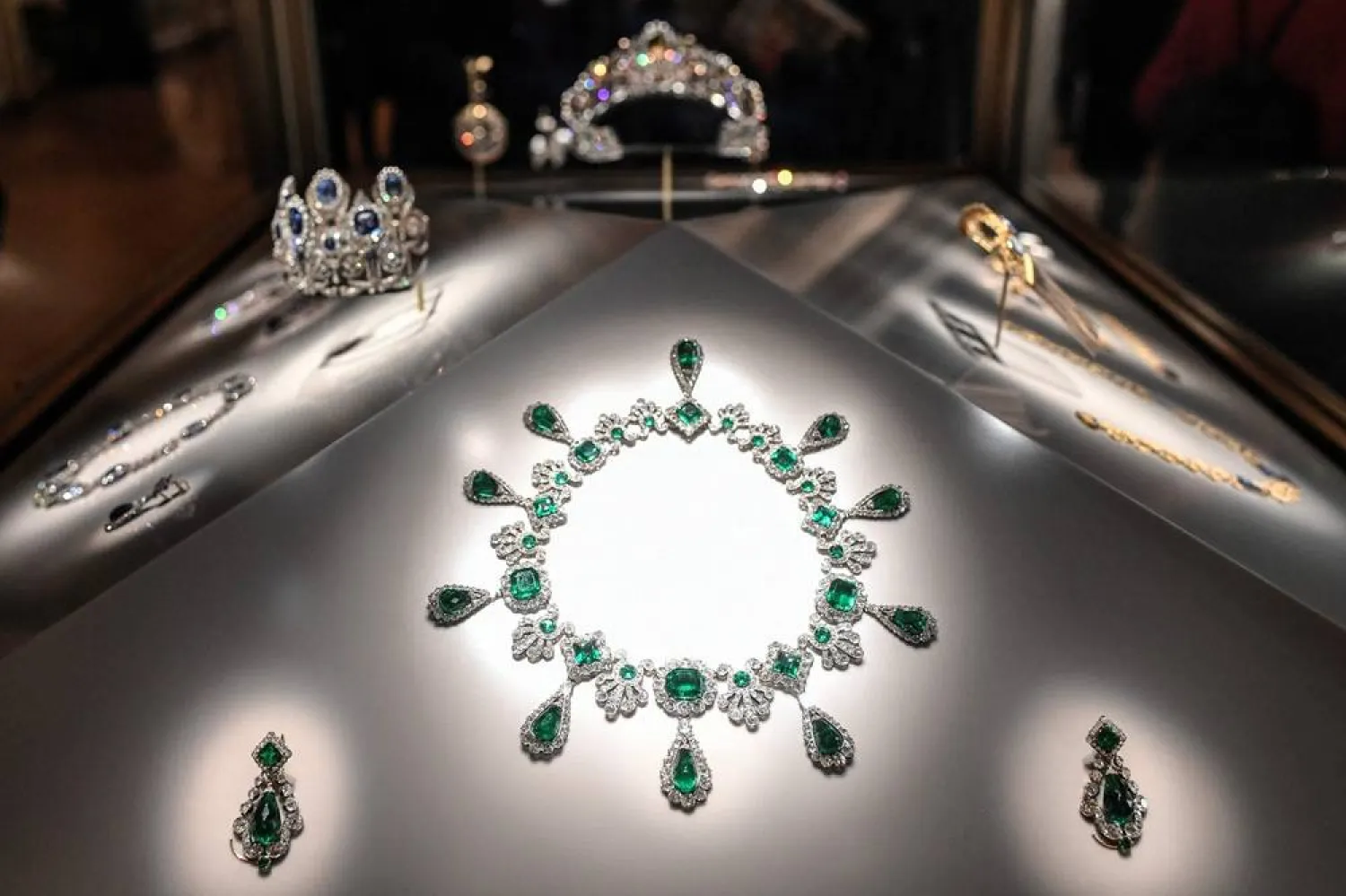

The robbery at the Louvre has done what no marketing campaign ever could: It has catapulted France’s dusty Crown Jewels — long admired at home, little known abroad — to global fame.
One week on, and the country is still wounded by the breach to its national heritage.
Yet the crime is also a paradox. Some say it will make celebrities of the very jewels it sought to erase — much as the Mona Lisa’s turn-of-the-20th-century theft transformed the then little-known Renaissance portrait into the world’s most famous artwork.
In 1911, a museum handyman lifted the Leonardo da Vinci masterpiece off its hook. The loss went unnoticed for more than a day; newspapers turned it into a global mystery, and crowds came to stare at the empty space. When the painting resurfaced two years later, its fame eclipsed everything else in the museum, and that remains so today.
That's the uneasy question shadowing Sunday’s robbery: whether a crime that cut deep will glorify what's left behind.
“Because of the drama, the scandal, the heist, the Apollo Gallery itself and the jewels that remain will likely receive a new spotlight and become celebrities, just like the Mona Lisa after 1911,” said Anya Firestone, a Paris art historian and Culture Ministry licensed heritage expert. She toured the gallery the day before the robbery and did not think it looked sufficiently guarded.
Bringing celebrity through theft
The heist has electrified global media. Nightly newscasts from the US to Europe and across Latin America and Asia have beamed the Louvre, its Apollo Gallery and the missing jewels to hundreds of millions — a surge of attention some say rivals, or even surpasses, the frenzy after Beyoncé and Jay-Z’s 2018 video filmed inside the museum. The Louvre is once again a global set.
For generations, the British monarchy's regalia has captured the popular imagination through centuries of coronations and drawing millions every year to their display in the Tower of London. Meanwhile, France’s jewels lived in the shadow. This week's heist tilts the balance.
One early emblem of that celebrity effect could be the survivor piece itself — Empress Eugénie’s emerald-set crown, dropped in the getaway and studded with more than 1,300 diamonds, which may now become the gallery’s most talked-about relic.
“I’d never even heard of Eugénie’s crown until this,” said Mateo Ruiz, a 27-year-old visitor from Seville. “Now it’s the first thing I want to see when the gallery reopens.”
Among the treasures that escaped the thieves’ grasp are storied gems still gleaming under glass — the Regent Diamond, the Sancy and the Hortensia. Authorities say one other stolen bejeweled piece, besides Empress Eugénie’s damaged crown, has since been quietly recovered, though they have declined to identify it.
The heist has not dented the Louvre's pull. The palace-museum reopened to maximum crowds Wednesday, even as the jewels remain missing, and the robbers at large. Long before the robbery, the museum was straining under mass tourism, roughly 33,000 visitors a day, and staff warn it cannot easily absorb another surge, especially with the Apollo Gallery sealed and security resources stretched.
Jewels represent French history itself
For France, the loss is more than precious stones and metal totaling over $100 million; it is pages torn from the national record. The Apollo Gallery reads as a timeline in gold and light, carrying the country from Bourbon ceremony to Napoleon’s self-fashioned empire and into modern France.
Firestone puts it this way: The jewels are “the Louvre’s final word in the language of monarchy — a glittering echo of kings and queens as France crossed into a new era.” They are not ornaments, she argues, but chapters of French history, marking the end of the royal order and the beginning of the country France is today.
Interior Minister Laurent Nuñez called the theft an “immeasurable” heritage loss, and the museum says the pieces carry “inestimable” historic weight — a reminder that what vanished is not just monetary.
Many also see a stunning security lapse.
“It’s staggering that a handful of people couldn’t be stopped in broad daylight,” said Nadia Benyamina, 52, a Paris shopkeeper who visits the gallery monthly. “There were failures — avoidable ones. That’s the wound.”
Investigators say the thieves rode a basket lift up the building's Seine-facing façade, forced open a window, smashed two display cases and fled on motorbikes — all in minutes. Alarms sounded, drawing security to the gallery and forcing the intruders to bolt, officials say. The haul spanned royal and imperial suites in sapphire, emerald and diamond, including pieces tied to Marie-Amélie, Hortense, Marie-Louise and Empress Eugénie.
In Senate testimony, Louvre director Laurence des Cars acknowledged “a terrible failure,” citing gaps in exterior camera coverage and proposing vehicle barriers and a police post inside the museum. She offered to resign; the culture minister refused. The heist followed months of warnings about chronic understaffing and crowd pressure points.
Drawing crowds to see what isn't there
Outside the blocked doors, visitors now come to see what cannot be seen.
“I came to see where it happened,” said Tobias Klein, 24, an architecture student. “That barricade is chilling. People are looking with shock and curiosity.”
Others feel a flicker of hope. “They’re ghosts now, but there’s still hope they’ll be found,” said Rose Nguyen, 33, an artist from Reims. “It’s the same strange magnetism the Mona Lisa had after 1911. The story becomes part of the object.”
Curators warn that recutting or melting the jewels would be a second violence. In museums, authenticity lives in the original: the mount, the design, the work of the goldsmith’s hand and the unbroken story of who made, wore, treasured, exhibited and, yes, stole the object.
Whether loss now brings legend is the Louvre’s uneasy future.
“In the strange economy of fame, even bad news becomes attention and attention makes icons,” Firestone said.


