


Luxury Brands Turn on the Charm in China to Kindle Nascent Spending Recovery

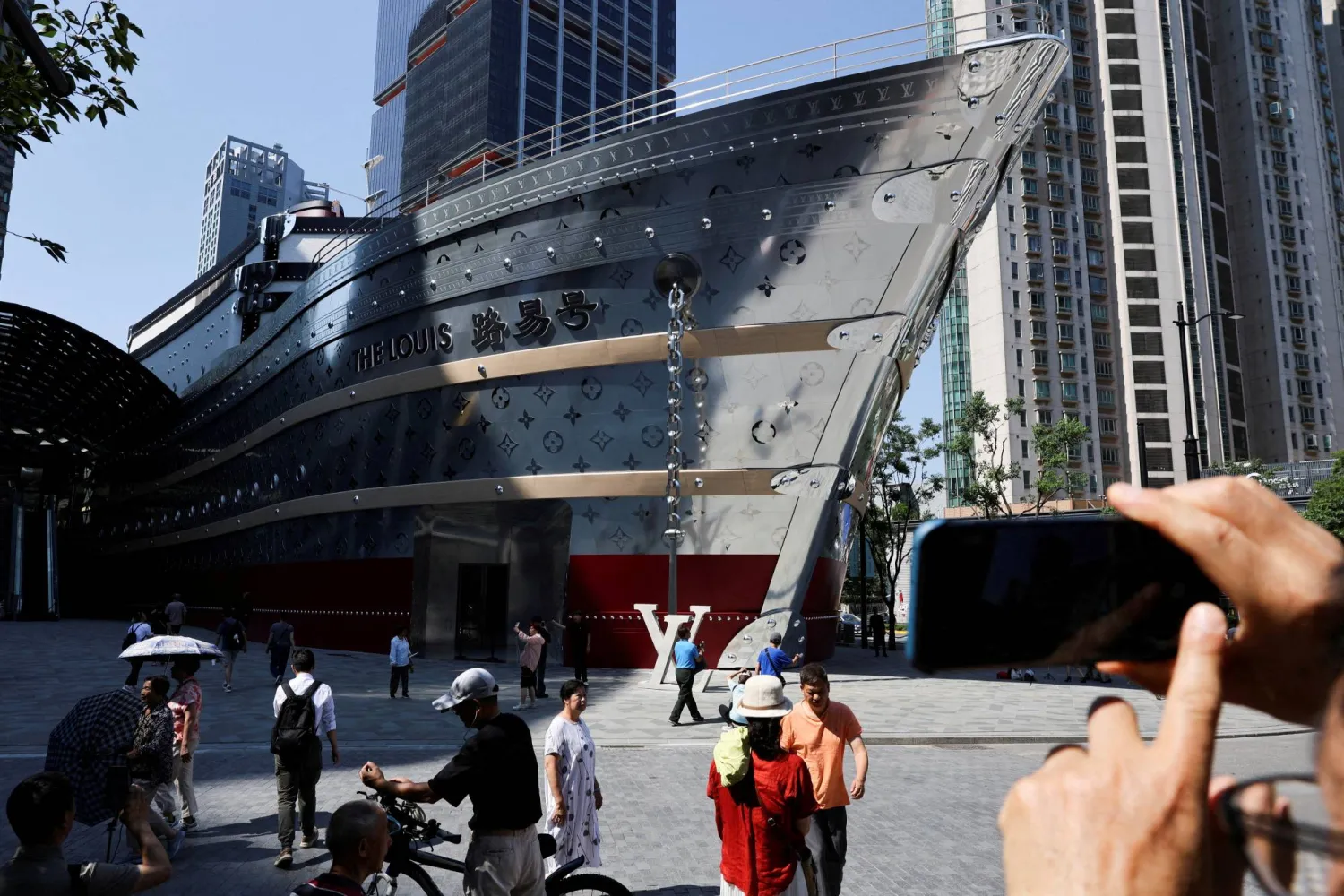
FILE PHOTO: People take photos of the new Louis Vuitton store in Shanghai, China, June 27, 2025. REUTERS/Go Nakamura/File Photo
TT

Luxury Brands Turn on the Charm in China to Kindle Nascent Spending Recovery

FILE PHOTO: People take photos of the new Louis Vuitton store in Shanghai, China, June 27, 2025. REUTERS/Go Nakamura/File Photo

As Chinese shoppers dip toes back in the luxury pool, brands are targeting economically resilient high-earners with distinctive, personalized experiences as their focus shifts more to market share than growth.

Firms like LVMH and Hermes increasingly offer intimate dinners and large-scale shows, as well as stores with private shopping areas and exclusive elevator access for the VIPs they bet will help end a post-pandemic sales slump.

Luxury brands have accompanied earnings reports with comments offering glimmers of hope for Chinese retail, spurring a rally that has added nearly $80 billion to European luxury stock valuations. Still, few expect the sales surge of the pandemic years, and with US policies rewriting global trade, China's economic trajectory is far from certain.

James Macdonald, head of Savills research for China, said luxury firms have shifted from "rapid expansion to improving sales per store and deepening engagement,” Reuters reported.

"Rather than waiting for the economy to lift demand, brands are creating their own recovery by highlighting value and delivering richer, more immersive experiences," Macdonald said.

Brands have flocked to Nanjing Deji Plaza, China's top-performing mall in 2024 with sales of 24.5 billion yuan ($3.4 billion).

Nanjing's only mall with the likes of Hermes, Chanel, Dior and LVMH's Louis Vuitton under one roof is better known for mirror-clad bathrooms that have gone viral.

In August, Louis Vuitton chose the mall as the first China stop in its entry into beauty with its La Beaute line, which raised eyebrows for its $160 lipstick.

Some brands said while there are signs of spending growth, there will be no return to the heyday when pandemic-era travel curbs kept spending in mainland China.

"I think that the worst is over, but I don't think that we will ever see again in the near future what we have seen in the last decade," Prada CEO Andrea Guerra said in an earnings briefing.

The proportion of luxury goods sold to mainland Chinese consumers is around 22% from a peak of one-third, showed data from consultancy Bain & Co.

To encourage spending, perks such as intimate dinners with creative directors and celebrity ambassadors have become common.

However, the June opening of Louis Vuitton's massive ship-shaped store, dubbed The Louis, is the most eye-catching example of the lengths to which brands are going to stimulate consumption with out-of-the-ordinary experiences.

Combining high-end retail with eateries and exhibition space, the Louis not only outperforms other Louis Vuitton flagships by daily sales, but 60% of its revenue comes from new clients, said Zino Helmlinger, head of China retail at property services firm CBRE.

"Luxury brands' executives, they're going to The Louis several times and taking notes," Helmlinger said. "They all want their own Louis. They are forced to transform, or you're just heading toward disappearance."

Louis Vuitton's China sales rose 5% in August versus the same month a year earlier, said two people with knowledge of the business, declining to be identified as they were not authorized to speak with media.

Both said the business' goal this year is to ensure sales do not fall. Last year, the overall mainland China market declined as much as 20%, Bain estimated.

LVMH and Louis Vuitton did not respond to requests for comment.

While the global economy has been upended by the US trade war, in China economic fundamentals are fragile and data from the Golden Week holiday showed per-capita spending below pre-pandemic levels.

Still, earnings point to optimism, helped by comparisons to dismal year-earlier figures, favorable exchange rates and a domestic stock rally.

LVMH said China sales "turned positive" in its most recent quarter. L'Oreal said the market has "gone into positive territory" and Hermes enjoyed "very slight improvement."

"It's good news. Maybe too early to really declare victory, but it's a good sign," said Bruno Lannes, senior partner at Bain in Shanghai. The sustainability of the stock rally could also be a wild card, he said.

"Especially for the target customers of luxury, you can expect that those people probably have a retail equity account, so they are seeing the benefits of the stock market rising and feeling more confident to spend more."

Sophia Liu, CEO of an education company, recently splurged on a Burberry coat, Fendi scarf and Louis Vuitton products in her favorite colors, pink and purple. She said, though there is ample economic and geopolitical uncertainty, that is having less of an impact on big spending decisions.

"I think people in China have gotten more used to uncertainty overall," she said. "A lot of my friends work in the technology industry, and their companies have gone IPO. So, mostly I feel people around me are more positive at the moment."

Luxury brands that invested during the downturn are likely to win market share as spending stabilizes, even if revenue does not significantly grow, said Jacques Roizen, managing director of China consulting at Digital Luxury Group.

"In a market that is now basically flat, brand performance will no longer be fueled by overall market growth," Roizen said. "Those that succeed now will do so by gaining market share from others via optimization and innovation."



Debenhams' New Pay Plan Without Vote 'Disgraceful', Says Top Investor Frasers

Debenhams logo is seen on smartphone in front of a displayed Boohoo logo in this illustration taken January 25, 2021. (Reuters)
TT

Debenhams' New Pay Plan Without Vote 'Disgraceful', Says Top Investor Frasers

Debenhams logo is seen on smartphone in front of a displayed Boohoo logo in this illustration taken January 25, 2021. (Reuters)

A move by struggling British online fashion retailer Debenhams to push ahead with a new executive pay scheme without seeking approval from investors was "utterly disgraceful", the finance chief of rival Frasers said on Thursday.

Frasers is Debenhams' biggest investor with a 29.7% stake.

Last week, Debenhams said that one of the reasons it was not asking for a shareholder vote on the new pay scheme worth up to 222 million pounds ($296 million) was because a "major competitor" investor, which it did not name, had tried to block previous resolutions.

Debenhams has been locked in a long-running tussle with Frasers, majority-owned by British retail tycoon Mike Ashley, which unsuccessfully attempted to block its rebrand and oust its co-founder.

Frasers' chief financial officer Chris Wootton said Debenhams' latest move, which could see CEO Dan Finley earn up to 148 million pounds if Debenhams' share price hits 3 pounds over the next five years, was "typical corporate governance from them, utterly disgraceful".

However, he told Reuters that if Debenhams achieved a share price of 3 pounds "shareholders will be happy."

Debenhams shares were trading at 22.25 pence on Thursday, down 3.3%.


Zara Owner Inditex Reports Strong Start to Winter Sales

FILE PHOTO: A person walks by a Zara store in Plaza de Espana in Madrid, Spain, June 11, 2025. REUTERS/Ana Beltran/File Photo
TT

Zara Owner Inditex Reports Strong Start to Winter Sales

FILE PHOTO: A person walks by a Zara store in Plaza de Espana in Madrid, Spain, June 11, 2025. REUTERS/Ana Beltran/File Photo

Zara owner Inditex said sales grew 10.6% in constant currency over the start of its fourth quarter, beating analysts' expectations for the November period that includes the crucial Black Friday sales.

The $178 billion fast fashion giant also reported on Wednesday sales of 9.8 billion euros ($11.41 billion) for its third quarter ending October 31, higher than the 9.69 billion euros expected by analysts according to an LSEG estimate.

The results from Inditex, seen as a bellwether for the global fast fashion sector, provide a first glimpse into how successful the key Black Friday sales weekend was for retailers.

The strong sales growth in the period from November 1 to December 1 compared to a year ago marked an acceleration from the nine-month currency-adjusted growth rate of 6.2%, an encouraging sign for the fourth quarter, its biggest in terms of revenues.


Hugo Boss Sees 2026 EBIT at 300 Million-350 Million Euros on Strategic Overhaul

FILE PHOTO: Plastic toilet cabins are reflected in a window with the logo of Hugo Boss fashion company in central Moscow, Russia, May 8, 2025. REUTERS/Maxim Shemetov/File Photo/File Photo
TT

Hugo Boss Sees 2026 EBIT at 300 Million-350 Million Euros on Strategic Overhaul

FILE PHOTO: Plastic toilet cabins are reflected in a window with the logo of Hugo Boss fashion company in central Moscow, Russia, May 8, 2025. REUTERS/Maxim Shemetov/File Photo/File Photo

German fashion group Hugo Boss on Tuesday said it expects its earnings before interest and taxes to be between 300 million and 350 million euros ($406.74 million) in 2026, as it undertakes a strategic overhaul.

The company forecast currency-adjusted sales to fall in mid- to high-single digits in 2026 before returning to growth in 2027, due to deliberate brand and channel realignment, Reuters reported.

The update follows last month's guidance for 2025 at the lower end of its range, between 4.2 billion and 4.4 billion euros in sales and operating profit of 380 million to 440 million euros, citing rising macroeconomic uncertainty and adverse currency moves.

It had also reported its quarterly sales below expectations, hurt by weaker demand in Britain and China and pressure from a softer dollar.

The company said it would provide a detailed outlook for 2026 on March 10, alongside full-year 2025 results.