


Haiti, Jamaica and Cuba Pick Up the Pieces after Melissa's Destruction

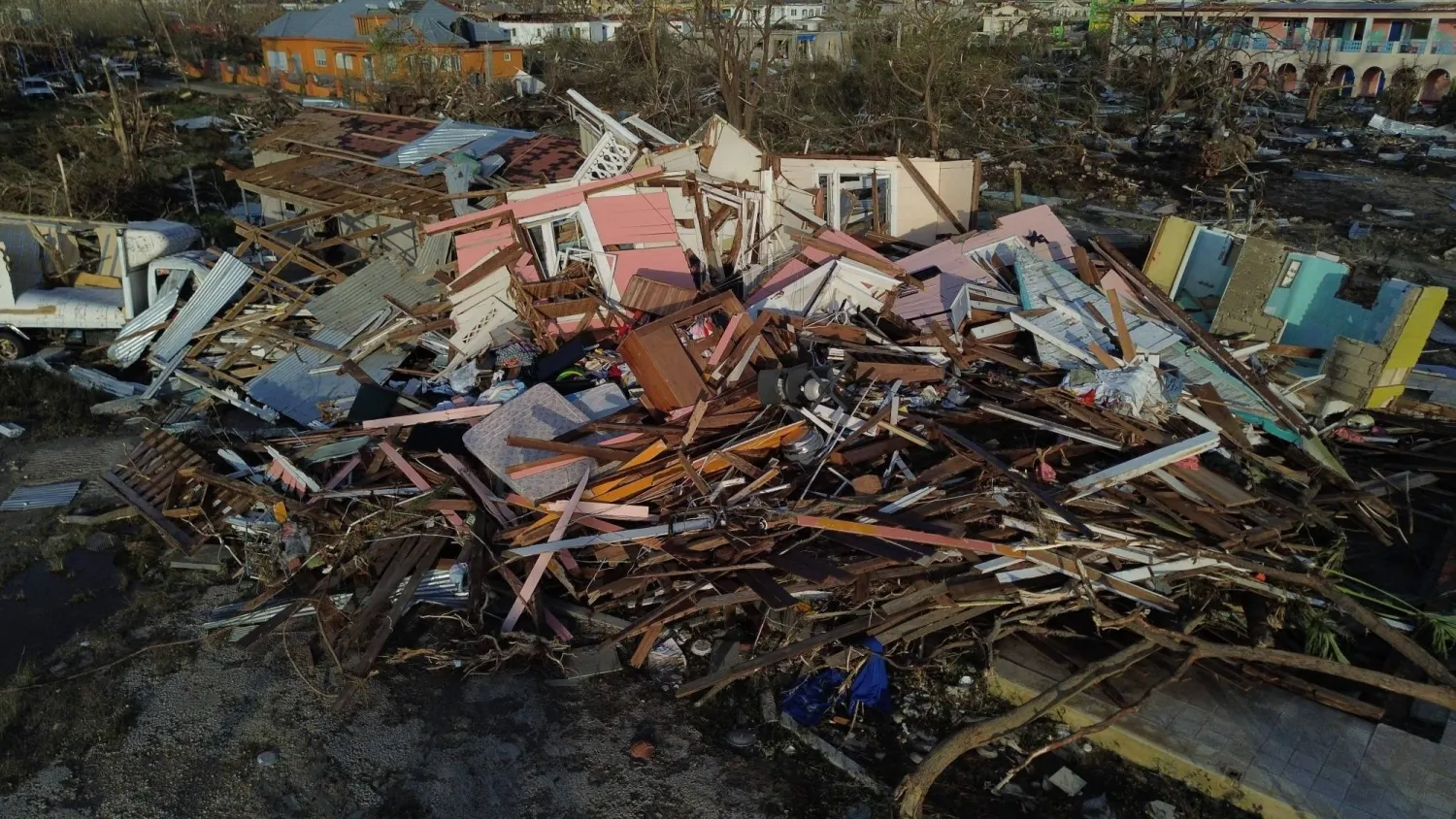
An aerial view of destroyed buildings following the passage of Hurricane Melissa, in Black River, St. Elizabeth, Jamaica on October 29, 2025. (Photo by Ricardo MAKYN / AFP)
TT

Haiti, Jamaica and Cuba Pick Up the Pieces after Melissa's Destruction

An aerial view of destroyed buildings following the passage of Hurricane Melissa, in Black River, St. Elizabeth, Jamaica on October 29, 2025. (Photo by Ricardo MAKYN / AFP)

People across the northern Caribbean were digging out from the destruction of Hurricane Melissa on Thursday as deaths from the catastrophic storm climbed.

The rumble of large machinery, whine of chainsaws and chopping of machetes echoed throughout southeast Jamaica as government workers and residents began clearing roads in a push to reach isolated communities that sustained a direct hit from one of the most powerful Atlantic storms on record.

Stunned residents wandered about, some staring at their roofless homes and waterlogged belongings strewn around them, The Associated Press reported.

"I don’t have a house now,” said a distressed Sylvester Guthrie, a resident of Lacovia in the southern parish of St. Elizabeth, as he held onto his bicycle, the only possession of value left after the storm.

“I have land in another location that I can build back but I am going to need help,” the sanitation worker pleaded.

Emergency relief flights began landing at Jamaica’s main international airport, which reopened late Wednesday, as crews distributed water, food and other basic supplies.

“The devastation is enormous,” Jamaican Transportation Minister Daryl Vaz said.

Some Jamaicans wondered where they would live.

“I am now homeless, but I have to be hopeful because I have life,” said Sheryl Smith, who lost the roof of her home.

Authorities said they have found at least four bodies in southwest Jamaica.

Prime Minister Andrew Holness said up to 90% of roofs in the southwest coastal community of Black River were destroyed.

“Black River is what you would describe as ground zero,” he said. “The people are still coming to grips with the destruction.”

More than 25,000 people remained crowded into shelters across the western half of Jamaica, with 77% of the island without power.

Melissa also unleashed catastrophic flooding in Haiti, where at least 25 people were reported killed and 18 others missing, mostly in the country’s southern region.

Steven Guadard, who lives in Petit-Goâve, said Melissa killed his entire family.

“I had four children at home: a 1-month-old baby, a 7-year-old, an 8-year-old and another who was about to turn 4,” he said.

Haiti’s Civil Protection Agency said Hurricane Melissa killed at least 20 people in Petit-Goâve, including 10 children. It also damaged more than 160 homes and destroyed 80 others.

Officials warned that 152 disabled people in Haiti’s southern region required emergency food assistance. More than 11,600 people remained sheltered in Haiti because of the storm.

Meanwhile, in Cuba, people began to clear blocked roads and highways with heavy equipment and even enlisted the help of the military, which rescued people trapped in isolated communities and at risk from landslides.

No fatalities were reported after the Civil Defense evacuated more than 735,000 people across eastern Cuba. They slowly were starting to return home.

“We are cleaning the streets, clearing the way,” said Yaima Almenares, a physical education teacher from the city of Santiago, as she and other neighbors swept branches and debris from sidewalks and avenues, cutting down fallen tree trunks and removing accumulated trash.

In the more rural areas outside the city of Santiago de Cuba, water remained accumulated in vulnerable homes on Wednesday night as residents returned from their shelters to save beds, mattresses, chairs, tables and fans they had elevated ahead of the storm.

A televised Civil Defense meeting chaired by President Miguel Díaz-Canel did not provide an official estimate of the damage. However, officials from the affected provinces — Santiago, Granma, Holguín, Guantánamo, and Las Tunas — reported losses of roofs, power lines, fiber optic telecommunications cables, cut roads, isolated communities and losses of banana, cassava and coffee plantations.

Officials said the rains were beneficial for the reservoirs and for easing a severe drought in eastern Cuba.

Many communities were still without electricity, internet and telephone service due to downed transformers and power lines.

A historic storm When Melissa came ashore in Jamaica as a Category 5 hurricane with top winds of 185 mph (295 kph) on Tuesday, it tied strength records for Atlantic hurricanes making landfall, both in wind speed and barometric pressure. It was still a Category 3 hurricane when it made landfall again in eastern Cuba early Wednesday.

A hurricane warning remained in effect early Thursday for the southeastern and central Bahamas and for Bermuda.

Hurricane conditions were expected to continue through the morning in the southeastern Bahamas, where dozens of people were evacuated.

Melissa was a Category 2 storm with top sustained winds near 100 mph (155 kph) early Thursday and was moving north-northeast at 21 mph (33 kph) according to the US National Hurricane Center in Miami.

The hurricane was centered about 145 miles (235 kilometers) northeast of the central Bahamas and about 755 miles (1,215 kilometers) southwest of Bermuda.

Melissa was forecast to pass near or to the west of Bermuda late Thursday and may strengthen further before weakening Friday.



China Says It Opposes Outside Interference in Iran’s Internal Affairs

Iranians walk next to a billboard reading "Iran is our Homeland" at Enqelab Square in Tehran, Iran, 13 January 2026. (EPA)
TT

China Says It Opposes Outside Interference in Iran’s Internal Affairs

Iranians walk next to a billboard reading "Iran is our Homeland" at Enqelab Square in Tehran, Iran, 13 January 2026. (EPA)

China opposes any outside interference in Iran's ​internal affairs, the Chinese foreign ministry said on Wednesday, after US President Donald Trump warned that Washington ‌would take "very ‌strong action" ‌against Tehran.

China ⁠does ​not ‌condone the use or the threat of force in international relations, Mao Ning, spokesperson at ⁠the Chinese foreign ministry, said ‌at a ‍regular ‍news conference when ‍asked about China's position following Trump's comments.

Trump told CBS News in ​an interview that the United States would take "very ⁠strong action" if Iran starts hanging protesters.

Trump also urged protesters to keep protesting and said that help was on the way.


South Korea Vows Legal Action Over Drone Incursion into North

A North Korean flag flutters on top of a 160-meter tower in North Korea's propaganda village of Gijungdong in this picture taken from the Dora observatory near the demilitarized zone separating the two Koreas, in Paju, South Korea, April 24, 2018. (Reuters)
TT

South Korea Vows Legal Action Over Drone Incursion into North

A North Korean flag flutters on top of a 160-meter tower in North Korea's propaganda village of Gijungdong in this picture taken from the Dora observatory near the demilitarized zone separating the two Koreas, in Paju, South Korea, April 24, 2018. (Reuters)

The South Korean president's top advisor vowed on Wednesday to punish whoever is found responsible for a recent drone incursion into North Korea, after a furious Pyongyang demanded an apology.

North Korea accused the South over the weekend of sending a drone across their shared border into the city of Kaesong this month, releasing photos of debris from what it said was the downed aircraft.

And on Tuesday the North Korean leader's powerful sister, Kim Yo Jong, demanded an apology over the incident from the "hooligans of the enemy state" responsible.

Seoul has denied any involvement but has left open the possibility that civilians may have flown the drone, a position reiterated by National Security Adviser Wi Sung-lac on Wednesday.

"Our understanding so far is that neither the military nor the government carried out such an operation," Wi told reporters on the sidelines of a summit between the leaders of South Korea and Japan in the Japanese city of Nara.

"That leaves us the task to investigate if someone from the civilian sector may have done it," he said.

"If there is anything that warrants punishment, then there should be punishment."

South and North Korea remain technically at war, as the 1950-53 Korean War ended with an armistice rather than a peace treaty.

Wi noted that despite Pyongyang's criticism and its demand for an apology, the North has also sent its own drones into South Korea.

"There have been incidents in which their drones fell near the Blue House, and others that reached Yongsan," he said, referring to the current and former locations of the presidential offices.

"These, too, are violations of the Armistice Agreement," he said.

South Korean President Lee Jae Myung has ordered a joint military-police probe into the drone case.

Any civilian involvement would be "a serious crime that threatens peace on the Korean peninsula", he warned.


Iran’s Judiciary Signals Fast Trials and Executions for Detained Protesters Despite Trump’s Warning

This video grab taken on January 14, 2026 from UGC images posted on social media on January 13, 2026, shows dozens of bodies lying on the ground at the Tehran Province Forensic Diagnostic and Laboratory Centre in Kahrizak, as grieving relatives search for their loved ones. (UGC / AFP)
TT

Iran’s Judiciary Signals Fast Trials and Executions for Detained Protesters Despite Trump’s Warning

This video grab taken on January 14, 2026 from UGC images posted on social media on January 13, 2026, shows dozens of bodies lying on the ground at the Tehran Province Forensic Diagnostic and Laboratory Centre in Kahrizak, as grieving relatives search for their loved ones. (UGC / AFP)

The head of Iran’s judiciary signaled Wednesday there would be fast trials and executions ahead for those detained in nationwide protests despite a warning from US President Donald Trump.

The comments from Iran’s judiciary chief Gholamhossein Mohseni-Ejei come as activists had warned hangings of those detained could come soon.

Already, a bloody security force crackdown on the demonstrations has killed at least 2,571, the US-based Human Rights Activists News Agency reported. That figure dwarfs the death toll from any other round of protest or unrest in Iran in decades and recalls the chaos surrounding the country’s 1979 revolution.

Trump repeatedly has warned that the United States may take military action over the killing of peaceful protesters, just months after it bombed Iranian nuclear sites during a 12-day war launched by Israel against the Islamic Republic in June.

Mohseni-Ejei made the comment in a video shared by Iranian state television online.

“If we want to do a job, we should do it now. If we want to do something, we have to do it quickly," he said. “If it becomes late, two months, three months later, it doesn’t have the same effect. If we want to do something, we have to do that fast.”

His comments stand as a direct challenge to Trump, who warned Iran about executions an interview with CBS aired Tuesday. “We will take very strong action,” Trump said. “If they do such a thing, we will take very strong action.”

Meanwhile, activists said Wednesday that Starlink was offering free service in Iran. The satellite internet service has been key in getting around an internet shutdown launched by the theocracy on Jan. 8. Iran began allowing people to call out internationally on Tuesday via their mobile phones, but calls from people outside the country into Iran remain blocked.

“We can confirm that the free subscription for Starlink terminals is fully functional,” said Mehdi Yahyanejad, a Los Angeles-based activist who has helped get the units into Iran. “We tested it using a newly activated Starlink terminal inside Iran.”

Starlink itself did not immediately acknowledge the decision.

Security service personnel also apparently were searching for Starlink dishes, as people in northern Tehran reported authorities raiding apartment buildings with satellite dishes. While satellite television dishes are illegal, many in the capital have them in homes, and officials broadly had given up on enforcing the law in recent years.