


Fatah Likely to Skip Upcoming Palestinian Factions’ Meeting in Cairo

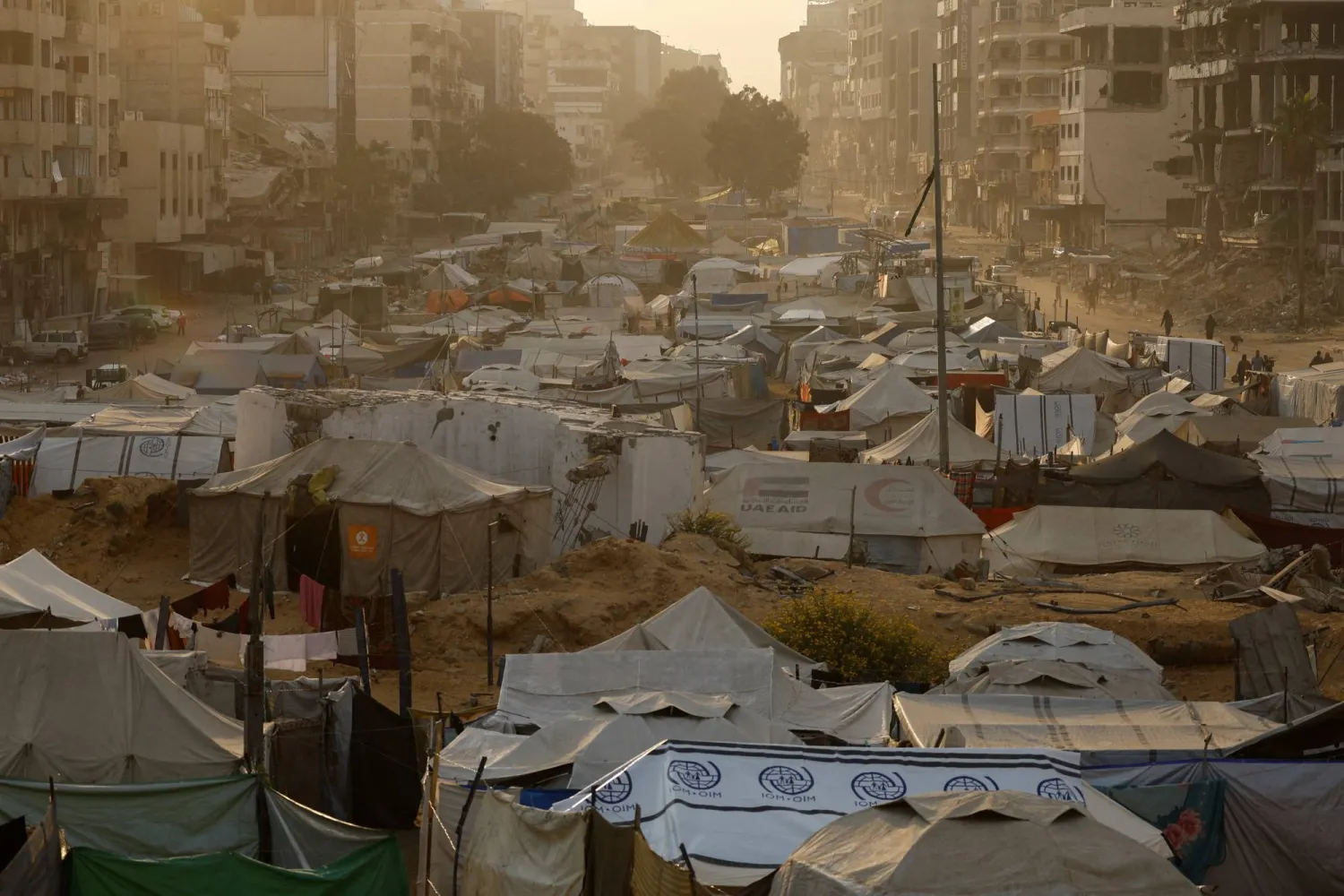
Displaced Palestinians shelter in tents, amid a ceasefire between Israel and Hamas, in Gaza City, November 4, 2025. (Reuters)
TT

Fatah Likely to Skip Upcoming Palestinian Factions’ Meeting in Cairo

Displaced Palestinians shelter in tents, amid a ceasefire between Israel and Hamas, in Gaza City, November 4, 2025. (Reuters)

Two senior officials from the Palestine Liberation Organization (PLO) told Asharq Al-Awsat on Monday that consultations are underway to hold a meeting of several Palestinian factions in Cairo this week. However, they said the Fatah movement is unlikely to participate in the talks, which are expected to focus on forming a committee to run the Gaza Strip.

One of the officials said that several factions are already present in Cairo, including the Islamic Jihad, Popular Front for the Liberation of Palestine (PFLP), the Democratic Front for the Liberation of Palestine (DFLP), and the Reformist Current led by exiled Fatah leader Mohammad Dahlan. He added that Hamas had not yet arrived.

“Cairo is organizing the meeting, but no official invitations have been sent so far,” the source said, explaining that the event remains informal due to Fatah’s reluctance to join at this stage.

A source close to Fatah said the movement insists that any dialogue must take place within the framework of a comprehensive national dialogue, similar to previous rounds held in Egypt and China.

He argued that a limited meeting of a few factions “does not amount to a national consensus that could end the division or form a unified national strategy,” particularly amid “attempts by some to isolate the Gaza Strip.”

The upcoming talks follow an earlier Cairo meeting on October 24, which Fatah also boycotted. During that gathering, the factions agreed to continue implementing the ceasefire arrangements and to hand over Gaza’s administration to an interim Palestinian committee composed of independent figures from the enclave.

The factions endorsed the creation of an international committee to oversee the funding and implementation of Gaza’s reconstruction, emphasizing the unity of the Palestinian political system and the need for an independent national decision.

However, disputes later emerged over who should lead the new administrative committee, after Israeli media reports claimed that the factions had agreed to appoint Amjad Shawa as its head.

Last week, Abdelfattah Dawla, a spokesperson for Fatah, told Asharq Al-Awsat that his movement “will not stand in the way of any proposed candidate for the Gaza Administrative Committee, provided they are qualified professionals from the Strip.”

He declined to give further details about potential candidates, but another senior Fatah official said Dr. Majed Abu Ramadan, the Palestinian health minister and a native of Gaza, remains among the leading contenders to chair the committee.

“He is a national figure with extensive field experience and high competence that qualifies him to assume such responsibility,” the source added.

Taher al-Nounou, a senior Hamas official, said in a televised interview from Doha last week that the movement had proposed 45 independent technocrats to serve on the Gaza Administrative Committee.

He noted that these nominees “have no political affiliations” and were approved by all participating factions during the October 24 Cairo meeting.



Syrian Army Tells Kurdish Forces to Withdraw from Area East of Aleppo City

Buses carrying displaced residents drive past a building in ruins as they return to the Achrafieh neighborhood after days of fighting between government forces and Kurdish fighters in the northern city of Aleppo, Syria, Monday, Jan. 12, 2026. (AP)
TT

Syrian Army Tells Kurdish Forces to Withdraw from Area East of Aleppo City

Buses carrying displaced residents drive past a building in ruins as they return to the Achrafieh neighborhood after days of fighting between government forces and Kurdish fighters in the northern city of Aleppo, Syria, Monday, Jan. 12, 2026. (AP)

Syria's army on Tuesday told Kurdish forces to withdraw from an area east of Aleppo after dislodging fighters from two neighborhoods in the city in deadly clashes last week.

State television published an army statement with a map declaring a large area a "closed military zone" and said "all armed groups in this area must withdraw to east of the Euphrates" River.


Syrian Interior Ministry Details Results of Security Campaigns in Latakia, Damascus Countrysides

Security personnel inside the Imam Ali bin Abi Talib Mosque in the Wadi al-Dhahab neighborhood of Homs following a bombing . (AFP)
TT

Syrian Interior Ministry Details Results of Security Campaigns in Latakia, Damascus Countrysides

Security personnel inside the Imam Ali bin Abi Talib Mosque in the Wadi al-Dhahab neighborhood of Homs following a bombing . (AFP)

Syria’s Interior Ministry has announced the results of a series of security operations carried out in recent days in Homs, Latakia, and the Damascus countryside, including the arrest of two alleged ISIS members accused of involvement in the bombing of the Imam Ali bin Abi Talib Mosque in Homs last month.

The ministry said the operations led to the arrest of three senior figures in a cell known as “Lieutenant Abbas,” affiliated with the “Coastal Shield Brigade” led by Miqdad Fteiha, a prominent figure loyal to the former regime.

Security forces also detained an armed group in the al-Wuroud neighborhood of Damascus that was allegedly planning “acts of sabotage.”

The operations form part of broader efforts to dismantle armed groups and restore the state’s exclusive authority over weapons.

Interior Minister Anas Khattab vowed to continue pursuing ISIS operatives and bringing them to justice.

In a post on X, he said security and intelligence services had conducted a “highly precise operation” resulting in the arrest of those involved in the December 26 attack on the Imam Ali bin Abi Talib Mosque in the Wadi al-Dhahab district of Homs, which killed eight people and wounded 18 others.

According to the Interior Ministry, security units in Homs, in coordination with the General Intelligence Service, arrested two persons identified as ISIS members. Authorities said explosive devices, various weapons, ammunition, documents, and digital evidence allegedly linking the suspects to terrorist activities were seized.

The two were referred to the Counterterrorism Directorate to complete investigations ahead of prosecution.

In a separate statement earlier Monday, the Interior Ministry said a “valuable catch” was detained by security and intelligence forces in Latakia. It said he was a key figures in the “Lieutenant Abbas” cell. Initial investigations indicated the cell had targeted internal security and army positions in the province.

Meanwhile, in the Damascus countryside, the ministry said security forces carried out a “preemptive operation” in the al-Wuroud neighborhood of Qudsaya city, arresting three individuals accused of planning armed attacks.

The ministry said security services would continue pursuing remaining members of the groups, pledging to “eradicate them completely” to ensure security and stability.


Gaza Deal: Cairo Talks Aim to Settle Sector’s ‘Administrative Committee’

Displaced Palestinians stand beside a pool of rainwater amid makeshift shelters at the Bureij refugee camp in central Gaza (AFP). 
TT

Gaza Deal: Cairo Talks Aim to Settle Sector’s ‘Administrative Committee’

Displaced Palestinians stand beside a pool of rainwater amid makeshift shelters at the Bureij refugee camp in central Gaza (AFP). 

Cairo is hosting renewed consultations on the Gaza ceasefire agreement, which entered into force on Oct. 10, following the arrival of a delegation from Hamas and amid anticipation of an announcement on the committee that will administer the territory.

Experts told Asharq Al-Awsat that the talks provide an important boost at a critical moment for the second phase of the Gaza agreement, which has been stalled for some time. They stressed that moving forward hinges largely on US will and pressure on Israel.

A Palestinian source said Monday that a Hamas delegation headed by the movement’s leader, Khalil al-Hayya, arrived in Cairo to discuss the second phase and push ahead with the ceasefire deal. The source added that indications suggest the Gaza administration committee will be finalized during the Cairo round, with factions briefed on the names, particularly after recent changes prompted by Israeli objections.

Hamas Political Bureau member Mohammed Nazzal said in televised remarks Sunday night that the delegation would discuss follow-up on implementing the ceasefire amid “major difficulties hindering its application and continued Israeli violations.”

He said the delegation would hold meetings with Palestinian factions and forces, as well as with Egyptian officials, to discuss several files linked to the agreement.

These include ways to consolidate the ceasefire and move to subsequent phases, alongside key issues - foremost the formation of a Palestinian technocratic committee to administer Gaza - aimed at preventing Israeli Prime Minister Benjamin Netanyahu from reneging on or delaying the deal.

Former Egyptian assistant foreign minister and member of the Egyptian Council for Foreign Affairs, Ambassador Rakha Ahmed Hassan, said the Cairo consultations are highly significant and could revive the stalled agreement.

He pointed to anticipation surrounding US President Donald Trump’s announcement of a Peace Council, followed by the Gaza administration committee, adding that discussions would also cover approaches to dealing with weapons in Gaza to undercut Netanyahu’s justifications.

He suggested Hamas would press for full implementation of the first phase first, including opening the Rafah crossing from the Palestinian side, increasing aid, maintaining the ceasefire, and Israel’s withdrawal from Gaza in parallel with any later steps.

On the Egyptian front, Foreign Minister Badr Abdelatty stressed, during a Cairo meeting with Irish Minister for Migration, Trade and Defense Helen McEntee, the importance of announcing a temporary Palestinian technocratic committee to manage daily affairs in Gaza and forming an international stabilization force.