


Saudi Arabia Saves $2.4 Bn from 2,500 Gov’t Reform Projects

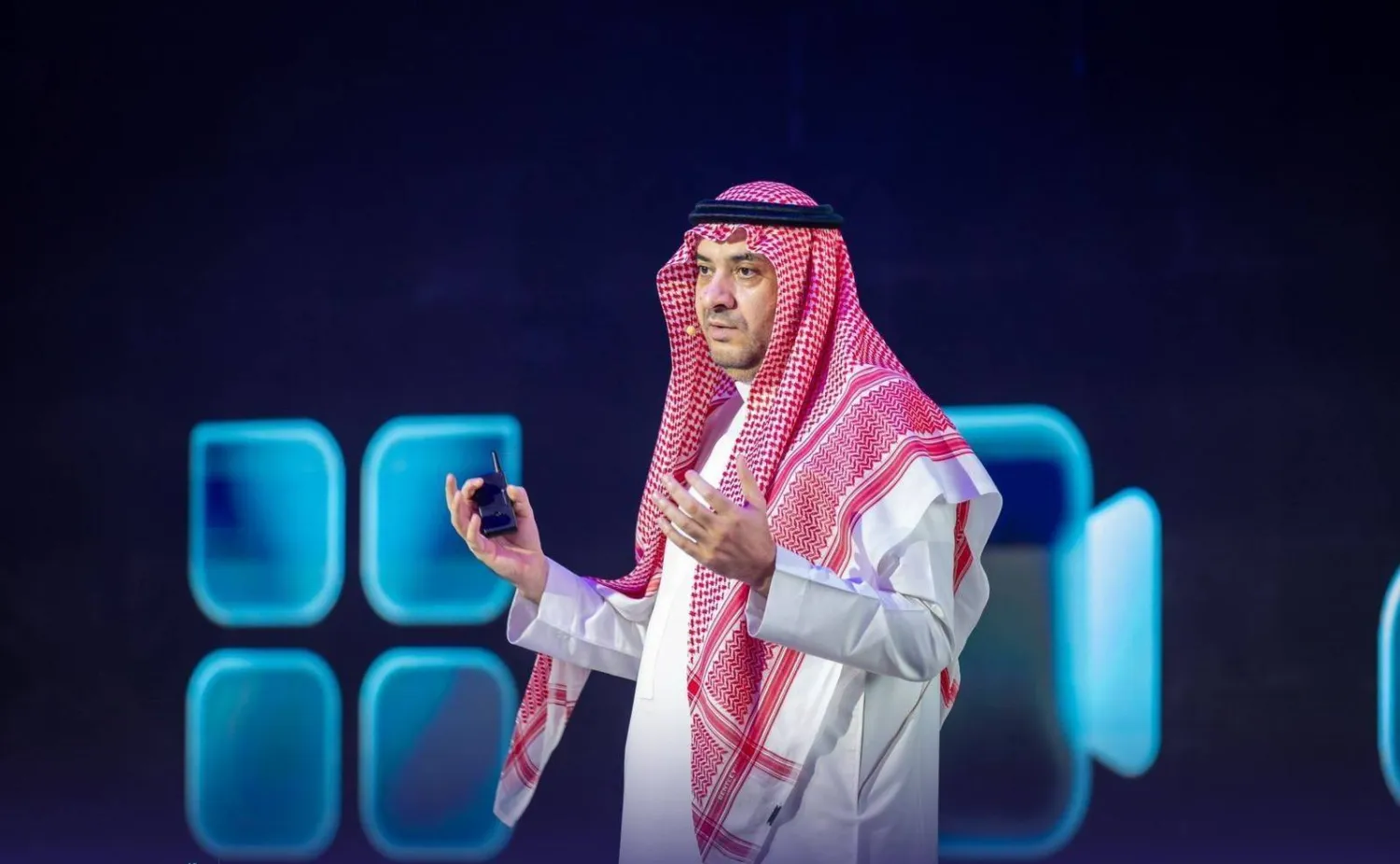
Faisal Al-Khamisi announcing the Beem platform at the Digital Government Forum (Asharq Al-Awsat)
TT

Saudi Arabia Saves $2.4 Bn from 2,500 Gov’t Reform Projects

Faisal Al-Khamisi announcing the Beem platform at the Digital Government Forum (Asharq Al-Awsat)

Saudi Arabia unveiled significant advances in its digital transformation during the fourth edition of the Digital Government Forum 2025 in Riyadh, a high-profile event that brought together more than 400 government entities and 2,000 decision-makers and global and local experts.

The forum, far from being just a discussion platform, highlighted Saudi Arabia’s rapid progress in digital services, with the kingdom ranking first regionally and third globally in the Digital Government Services Maturity Index.

Ahmed Alsuwaiyan, Governor of the Saudi Digital Government Authority (DGA), announced that a review of 2,500 government reform projects had generated savings of $2.4 billion.

The forum also saw the launch of pioneering technological initiatives, including Saudi Arabia’s plan to become the first country to launch a government marketplace for artificial intelligence agents, the rollout of the national business instant messaging platform “Beem,” the launch of the “Smart Court,” and the automation of the civil registry.

These initiatives underscore the kingdom’s accelerating drive toward Vision 2030 targets in expenditure efficiency and digital leadership.

In his opening remarks, Alsuwaiyan said Saudi Arabia held the top spot in the region and third globally in digital government services maturity, reflecting the rapid development of digital infrastructure and the efficiency of technological transformation across government entities.

He added that total savings reached 8.87 billion riyals ($2.4 billion) in the third quarter of 2025, covering more than 2,500 reform projects across over 120 government entities, as part of ongoing efforts to improve financial and administrative performance and spending efficiency.

Alsuwaiyan also noted that small and medium enterprises contributed 9.16 billion riyals, accounting for about 24% of total government procurement in 2024, highlighting the government’s commitment to supporting the private sector and boosting its role in economic development.

Government cloud service adoption rose to 41%, up from 14% in 2021, with total spending exceeding 25 billion riyals across more than 156 government entities by the end of Q3 2025, demonstrating the readiness of digital infrastructure and a shift toward more efficient and secure solutions.

The authority continues to lead government digital transformation efforts according to global best practices, contributing to Vision 2030 goals by enhancing financial sustainability and improving service quality for citizens and beneficiaries, he said.

Government AI Marketplace

Tareq Amin, CEO of Saudi AI company Humain, said Saudi Arabia would become the first country to launch a centralized government marketplace for AI agents. He described the kingdom’s unprecedented technological transformation, positioning AI as an integral part of every government and private sector activity.

AI is the enabling technology that will permeate everything done, whether in government, the private sector, or even at the consumer level, Amin told attendees.

He added that Saudi Arabia had the opportunity to distinguish its services and products globally, noting that Huamain was established to develop massive infrastructure and data centers hosting advanced chips and processors with liquid cooling architecture.

According to Amin, the company plans to build computing capacity of 1.9 gigawatts by 2030, rising to 6 gigawatts by 2034, in strategic partnerships with global firms including Nvidia and Qualcomm. Currently, Humain serves 150 countries through its inference ecosystem at roughly 47% lower cost than major international competitors.

Abdulwahab Al-Baddah, a DGA spokesperson, told Asharq Al-Awsat that Saudi Arabia ranks among the world’s leading countries, securing first place regionally for the third consecutive year in the UN ESCWA index, third globally according to the World Bank, and fourth in the UN e-Government Development Index.

Boosting Productivity and Digital Services

The forum also launched several initiatives, including the Beem business platform, an integrated instant messaging and collaborative work system developed by the Saudi Federation for Cybersecurity, Programming, and Drones in partnership with the DGA.

Beem is a nationally owned platform, developed locally with all data hosted within Saudi Arabia, designed to increase efficiency and productivity in government, corporate, and private sector environments.

It consolidates work tools in a single digital ecosystem, offering instant messaging, high-quality video meetings, file and task management, shared calendars, bilingual support in Arabic and English, advanced team organization tools, local secure cloud storage, and multi-organization account management.

Faisal Al-Khamisi, chairman of the Saudi Federation for Cybersecurity, Programming, and Drones, said Beem represented a strategic step in building national digital solutions to global standards, reflecting local expertise in advanced technology development and enhancing productivity while ensuring compliance with national regulations.

The platform relies on locally compliant infrastructure with secure data management, precise access control, and collaboration tools suitable for office, hybrid, and remote work environments, aligning with Vision 2030 digital transformation objectives.

Smart Court and Civil Registry Automation

The forum also introduced the “Smart Court,” a comprehensive digital system from the Board of Grievances that redesigns litigation processes using a realistic, simplified, and technology-integrated approach, improving service quality and supporting an advanced administrative judiciary.

Additionally, the “Education and Training Situation Room” was launched to analyze evaluation data, turning large datasets into actionable insights for education and training policy, contributing to national development.

The Ministry of Foreign Affairs launched the Unified Embassy Portal, consolidating all Saudi embassies’ websites under a single digital platform with consistent branding and improved user experience.

The civil registry system was also automated through the Absher Individual platform, allowing citizens, residents, and visitors to manage civil records electronically, covering over 61 services, including data updates, birth and death certificates, and marriage and divorce documentation.

Government Website Performance

The DGA announced that the 2025 Government Websites and Digital Content Efficiency Index scored 76.24%, classified as “proficient,” up from 71.40% in 2024, based on assessments of 250 government websites. This improvement reflects growing government commitment to updating content and enhancing digital presence in line with Vision 2030.

Top performers included the Human Resources Development Fund at 92.43%, followed by the Ministry of Human Resources and Social Development at 92.41%, King Khalid University at 92.37%, and Qassim University at 92.31%.

Other notable rankings were the Saudi Water Authority at 92.02%, the Saudi Energy Efficiency Center at 90.71%, the Ministry of Industry and Mineral Resources at 90.02%, the Technical and Vocational Training Corporation at 89.52%, and the Saudi Data and Artificial Intelligence Authority at 89.39%.



US Seeks to Assert Control over Venezuelan Oil with Tanker Seizures and Sales Worldwide

This image from video provided by the US Department of Defense, shows the US Coast Guard cutter Munro shadowing the MV Bella 1 in the North Atlantic Ocean during the maritime interdiction operation Wednesday, Jan. 7, 2026. (Department of Defense via AP)
TT

US Seeks to Assert Control over Venezuelan Oil with Tanker Seizures and Sales Worldwide

This image from video provided by the US Department of Defense, shows the US Coast Guard cutter Munro shadowing the MV Bella 1 in the North Atlantic Ocean during the maritime interdiction operation Wednesday, Jan. 7, 2026. (Department of Defense via AP)

President Donald Trump's administration on Wednesday sought to assert its control over Venezuelan oil, seizing a pair of sanctioned tankers transporting petroleum and announcing plans to relax some sanctions so the US can oversee the sale of Venezuela’s petroleum worldwide.

Trump's administration intends to control the distribution of Venezuela’s oil products globally following its ouster of President Nicolás Maduro in a surprise nighttime raid. Besides the United States enforcing an existing oil embargo, the Energy Department says the “only oil transported in and out of Venezuela” will be through approved channels consistent with US law and national security interests.

That level of control over the world’s largest proven reserves of crude oil could give the Trump administration a broader hold on oil supplies globally in ways that could enable it to influence prices. Both moves reflect the Republican administration’s determination to make good on its effort to control the next steps in Venezuela through its vast oil resources after Trump pledged the US will “run” the country.

Vice President JD Vance said in an interview the US can “control” Venezuela’s “purse strings” by dictating where its oil can be sold.

“We control the energy resources, and we tell the regime, you’re allowed to sell the oil so long as you serve America’s national interest,” Vance said in an interview to air on Fox News Channel’s “Jesse Watters Primetime.”

The vice president added, “And that’s how we exert incredible pressure on that country without wasting a single American life."

Secretary of State Marco Rubio suggested that the oil taken from the sanctioned vessels seized in the North Atlantic and the Caribbean Sea would be sold as part of the deal announced by Trump on Tuesday under which Venezuela would provide up to 50 million barrels of oil to the US.

Venezuela’s interim authorities “want that oil that was seized to be part of this deal,” Rubio told reporters after briefing lawmakers Wednesday about the Maduro operation. “They understand that the only way they can move oil and generate revenue and not have economic collapse is if they cooperate and work with the United States.”

Seizing 2 more vessels US European Command said on social media that the merchant vessel Bella 1 was seized in the North Atlantic for “violations of US sanctions."

The US had been pursuing the tanker since last month after it tried to evade a blockade on sanctioned oil vessels around Venezuela.

Homeland Security Secretary Kristi Noem revealed US forces also took control of the M Sophia in the Caribbean Sea. Noem said on social media that both ships were “either last docked in Venezuela or en route to it."

The two ships join at least two others that were taken by US forces last month — the Skipper and the Centuries.

The Bella 1 had been cruising across the Atlantic nearing the Caribbean on Dec. 15 when it abruptly turned and headed north, toward Europe. The change in direction came days after the first US tanker seizure of a ship on Dec. 10 after it had left Venezuela carrying oil.

When the US Coast Guard tried to board the Bella 1, it fled. US European Command said a Coast Guard vessel had tracked the ship “pursuant to a warrant issued by a US federal court."

As the US pursued it, the Bella 1 was renamed Marinera and flagged to Russia, shipping databases show. A US official, who spoke on the condition of anonymity to discuss sensitive military operations, said the ship’s crew had painted a Russian flag on the side of the hull.

The Russian Foreign Ministry said it had information about Russian nationals among the Marinera's crew and, in a statement carried by Russia’s state news agencies Tass and RIA Novosti, demanded that "the American side ensure humane and dignified treatment of them, strictly respect their rights and interests, and not hinder their speedy return to their homeland.”

Separately, a senior Russian lawmaker, Andrei Klishas, decried the US action as “blatant piracy.”

The Justice Department is investigating crew members of the Bella 1 vessel for failing to obey Coast Guard orders and “criminal charges will be pursued against all culpable actors,” Attorney General Pam Bondi said.

“The Department of Justice is monitoring several other vessels for similar enforcement action — anyone on any vessel who fails to obey instructions of the Coast Guard or other federal officials will be investigated and prosecuted to the fullest extent of the law,” Bondi said on X.

The ship had been sanctioned by the US in 2024 on allegations of smuggling cargo for a company linked to Lebanese militant group Hezbollah, which is backed by Iran.

Easing some sanctions to sell Venezuela's oil The Trump administration, meanwhile, is “selectively” removing sanctions to enable the shipping and sale of Venezuelan oil to markets worldwide, according to an outline of the policies published Wednesday by the Energy Department.

The sales are slated to begin immediately with 30 million to 50 million barrels of oil. The US government said the sales “will continue indefinitely,” with the proceeds settling in US-controlled accounts at “globally recognized banks.” The money would be disbursed to the US and Venezuelan populations at the “discretion” of Trump’s government.

Venezuelan state-owned oil company PDVSA said it is in negotiations with the US government for the sale of crude oil.

“This process is developed under schemes similar to those in force with international companies, such as Chevron, and is based on a strictly commercial transaction, with criteria of legality, transparency and benefit for both parties,” the company said in the statement.

Acting President Delcy Rodríguez on Wednesday night tried to normalize the latest chapter in US-Venezuela economic relations, calling them “neither extraordinary nor irregular.”

“Venezuela must diversify its relations and have relations with all the countries of this hemisphere, just as it should with Asia, Africa, the Middle East and Europe,” she said during a televised meeting with lawmakers and senior government officials.

The US plans to authorize the importation of oil field equipment, parts and services to increase Venezuela’s oil production, which has been roughly 1 million barrels a day.

The Trump administration has indicated it also will invest in the electricity grid to increase production and the quality of life for people in Venezuela, whose economy has been unraveling amid changes to foreign aid and cuts to state subsidies, making necessities, including food, unaffordable to millions.

Meanwhile, Trump abruptly changed his tone about Colombian President Gustavo Petro. Trump said Wednesday that they had exchanged a friendly phone call and he had invited the leader of the South American country to the White House. Trump had said earlier this week that “Colombia is very sick too” and accused Petro of “making cocaine and selling it to the United States.”

Ships said to be part of a shadow fleet Noem said both seized ships were part of a shadow fleet of rusting oil tankers that smuggle oil for countries facing sanctions, such as Venezuela, Russia and Iran.

After the seizure of the now-named Marinera, which open-source maritime tracking sites showed was between Scotland and Iceland earlier Wednesday, the UK defense ministry said Britain’s military provided support, including surveillance aircraft.

“This ship, with a nefarious history, is part of a Russian-Iranian axis of sanctions evasion which is fueling terrorism, conflict, and misery from the Middle East to Ukraine,” UK Defense Secretary John Healey said.

The capture of the M Sophia, on the US sanctions list for moving illicit cargos of oil from Russia, in the Caribbean was much less prolonged.

The ship had been “running dark,” not having transmitted location data since July. Tankers involved in smuggling often turn off their transponders or broadcast inaccurate data to hide their locations.

Samir Madani, co-founder of TankerTrackers.com, said his organization used satellite imagery and surface-level photos to document that at least 16 tankers had left the Venezuelan coast since Saturday, after the US captured Maduro.

The M Sophia was among them, Madani said, citing a recent photo showing it in the waters near Jose Terminal, Venezuela’s main oil export hub.

Windward, a maritime intelligence firm that tracks such vessels, said in a briefing to reporters the M Sophia loaded at the terminal on Dec. 26 and was carrying about 1.8 million barrels of crude oil — a cargo that would be worth about $108 million at current price of about $60 a barrel.


Saudi Fund to Speed Syria Recovery with Up to $1.5 Bln Financing

Delegation from the Saudi Fund for Development meets Syrian Finance Minister Mohammed Yisr Barnieh (Syrian Finance Ministry)
TT

Saudi Fund to Speed Syria Recovery with Up to $1.5 Bln Financing

Delegation from the Saudi Fund for Development meets Syrian Finance Minister Mohammed Yisr Barnieh (Syrian Finance Ministry)

A delegation from the Saudi Fund for Development, headed by its chief executive Sultan bin Abdulrahman Al-Marshad, discussed proposed priority projects in Syria’s electricity and water sectors with Syrian Energy Minister Mohammed al-Bashir and other ministry officials.

Four projects worth $250 million were presented, part of a broader list of projects across various sectors to be financed by the fund in phases, with total funding potentially reaching $1.5 billion.

Al-Marshad told Asharq Al-Awsat that development agreements to finance priority projects in vital sectors would be signed with the Syrian government “soon.”

The talks are part of a three-day visit to Syria that began on Tuesday, during which the delegation is holding meetings with several ministers and heads of public bodies to discuss priority development projects and the fund’s contribution to economic and social development in Syria, as well as support for stability.

The delegation began its meetings on Wednesday with a visit to the headquarters of the Energy Ministry in Damascus. According to a ministry statement, discussions focused on priority projects proposed in the electricity and water sectors, as part of coordination to identify areas that could be supported in the next phase.

The delegation later held an expanded meeting with Energy Ministry aides, including Ibrahim al-Adhan, for planning and institutional excellence, and with Osama Abu Zeid for water resources, attended by officials from the electricity, water, and sanitation sectors.

During the meeting, a package of service and development projects was reviewed to determine the ministry’s priorities ahead of moving to subsequent coordination and implementation stages.

The proposed projects include maintenance of the Aleppo thermal power plant to restore it to full production capacity, the supply and installation of prepaid smart water meters for institutions across all provinces, a project to convey Euphrates water from Deir el-Zor in eastern Syria to the Tadmor and Hasiya areas in Homs province, and an irrigation project for the plains of al-Bab and Tadef in northern Aleppo countryside, aimed at improving water resources and supporting the agricultural sector.

The ministry stated that the visit is part of efforts to define its requirements, noting that a subsequent meeting will be held with the Ministry of Finance to finalize coordination and select the priority projects to be supported.

In a separate statement to Asharq Al-Awsat, Al-Marshad said the visit aims to explore opportunities for development cooperation between the Saudi Fund for Development and Syria across various sectors. He said discussions are focused on financing priority projects and supporting economic and social development in Syria.

Al-Marshad said development agreements with the Syrian government to finance priority projects in vital sectors would be signed in the near future.

For his part, Energy Ministry aide for water resources Osama Abu Zeid told Asharq Al-Awsat that the proposed projects are “important and urgent to achieve early recovery and improve services for the Syrian people.”

He stated that the rehabilitation of the al-Bab and Tadef irrigation project would irrigate more than 6,600 hectares, while rehabilitating the Aleppo thermal power plant would increase electricity generation capacity by up to 600 kilowatts.

He said the rehabilitation of water stations in villages and towns destroyed during the war includes restoring 157 stations, while the supply of prepaid smart water meters would help rationalize consumption and improve water services.

Abu Zeid stated that the total value of the projects amounts to $250 million, noting that there has been positive engagement from the Saudi Fund for Development, and that funding is expected to be approved soon after the administrative procedures are completed.

The Saudi Fund for Development delegation, led by Al-Marshad, also met Syrian Finance Minister Mohammed Yisr Barnieh on Tuesday to discuss the provision of concessional financing with a high grant component to support government projects in vital sectors.

In a post on LinkedIn, Barnieh expressed hope that an agreement would be reached by the end of the visit on a list of projects to be financed in phases, with a total value potentially reaching $1.5 billion.

According to Barnieh, the projects primarily focus on the health and education sectors through the rehabilitation and equipping of hospitals and schools, as well as projects in the energy and water sectors, including electricity substations and water treatment facilities, alongside housing, disaster management, and telecommunications projects.

The projects also include financing support for a large number of micro, small, and medium-sized enterprises, helping to create productive job opportunities in several development areas.

Barnieh said he presented an initial overview outlining needs and proposed projects, prepared in cooperation with several ministries, governorates, authorities, and institutions, within the framework of a workshop organized by the Finance Ministry earlier this week in support of the “Syria Without Camps” initiative.

The Saudi Fund for Development delegation also met with Health Minister Musaab al-Ali to discuss financing and support for vital health projects within the ministry’s 2026-2028 plan, as well as with Education Minister Mohammed Abdulrahman Turko to discuss enhancing cooperation in education and improving the educational process in Syria.

The fund stated on Tuesday that the visit highlights the importance of development cooperation between the two sides in supporting the sustainable development goals and development initiatives in Syria.

Since its establishment in 1974, the fund has contributed to development projects in over 100 developing countries, financing more than 800 projects and programs worth over $22 billion.

Saudi Arabia has continued to provide extensive support to Syria across multiple sectors following the ouster of former president Bashar al-Assad on Dec. 8, 2024.

Mohammed Hamza, head of the Syrian General Authority for Exhibitions and International Markets, said during his participation as guest of honor at the “Made in Saudi Arabia” exhibition held from Dec. 15 to 17 that Saudi investments in Syria exceeded $6.6 billion in 2025 across various sectors.


Saudi Minerals Program Accelerates Unlocking Trillions Beneath the Desert

Saudi Arabia maps mining exploration zones (Asharq Al-Awsat)
TT

Saudi Minerals Program Accelerates Unlocking Trillions Beneath the Desert

Saudi Arabia maps mining exploration zones (Asharq Al-Awsat)

Economic experts said the Saudi Cabinet’s approval of the draft rules and procedures governing the National Minerals Program marks a decisive step that will accelerate the development of the Kingdom’s vast mineral resources, estimated at around 9 trillion riyals, or $2.4 trillion.

They said the move firmly positions mining as the third pillar of national industry and a key engine of non-oil growth.

Khalid Al-Mudayfer, Deputy Minister of Industry and Mineral Resources for Mining Affairs, said the approval builds on sustained government support for the mining and minerals industries. He said the program will act as a primary enabler to ensure sufficient current and future mineral supplies and to address gaps across value chains.

The regulatory push comes as economic circles look ahead to the fifth edition of the International Mining Conference, set to take place in Riyadh from Jan. 13 to 15, 2026, under the patronage of Custodian of the Two Holy Mosques King Salman bin Abdulaziz.

The event is expected to generate exceptional momentum, with around 150 memorandums of understanding and strategic agreements anticipated, alongside participation from more than 200 exhibitors and sponsors.

From regulation to strategic planning

Mohammed Al-Duleim, chairman of the National Mining Committee at the Federation of Saudi Chambers, told Asharq Al-Awsat that the Cabinet’s approval reflects the government’s determination to build a strong, well-regulated and sustainable mining sector capable of matching the ambitions of the Saudi economy at this stage.

He said the decision represents a qualitative shift in a sector that has become part of strategic economic activities linked to industry and several other sectors, making a positive contribution to non-oil growth.

Al-Duleim said the timing of the program is critical, as global competition for minerals intensifies, echoing earlier competition for oil. He said the Kingdom has moved early from a focus on regulation and governance toward forward planning and long term sustainability.

He added that the program guarantees the timely availability of mineral supplies at stable prices, offering investors a high degree of clarity and helping to manage risks. He said Saudi Arabia has now emerged as a global minerals hub, driven by the outcomes of the International Mining Conference and a successful partnership between the public and private sectors.

Strong domestic demand underpins the new program, which centers on securing mineral needs on time and at stable prices, Al-Duleim said.

The Cabinet decision, he added, enhances transparency and confidence for investors and reinforces the state’s comprehensive approach to managing the sector, from planning to value maximization, in line with Vision 2030 targets.

He said the Kingdom’s status as a global minerals center has been reinforced by mega projects and by the government’s success in building public private partnerships, positioning Saudi Arabia as a major international destination through the annual International Mining Conference in Riyadh.

Unifying procedures

Economist Ahmed Al-Shahri told Asharq Al-Awsat that the new program represents a regulatory step aimed at strengthening governance of the sector and improving management mechanisms.

He said it supports exploration and development of mineral resources valued at more than 9 trillion riyals, or $2.4 trillion.

He said the National Minerals Program provides a government framework that organizes the sector and defines coordination mechanisms among relevant authorities, adding that Cabinet approval will lead to unified procedures and faster licensing.

Al-Shahri stated that the program aims to transform mining into a key economic pillar, aligning with government objectives, while also attracting both domestic and foreign investment. He said it also focuses on maximizing local value added from mineral resources.

He said the decision reflects a structured, long term approach to developing the minerals sector, strengthening exploration, environmental governance and sustainability.

In conclusion, the National Minerals Program stands as a key mechanism to enhance the efficiency of developing Saudi Arabia’s mineral wealth, combining strict governance with flexible planning.

Analysts said this approach will help channel the necessary investment to deliver significant gains in the sector’s contribution to the country's gross domestic product in the coming years.