


Yes, You Do Need to Clean Your Water Bottle. Here's Why and How

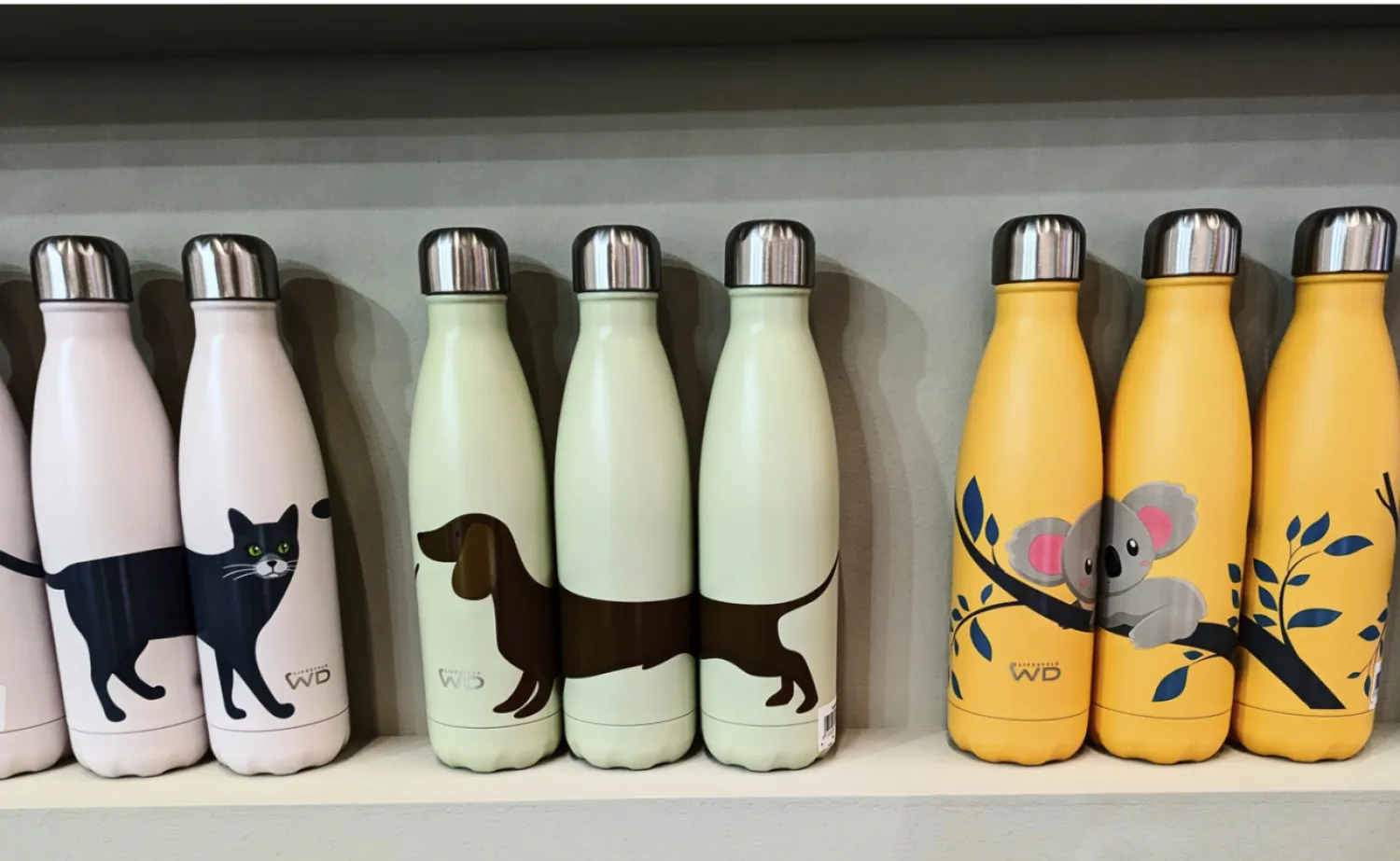
A selection of Lifestyle WD water bottles featuring animals are displayed at the Ambiente homewares trade fair in Frankfurt, Germany in Feb. 2025. (Kim Cook via AP)
TT

Yes, You Do Need to Clean Your Water Bottle. Here's Why and How

A selection of Lifestyle WD water bottles featuring animals are displayed at the Ambiente homewares trade fair in Frankfurt, Germany in Feb. 2025. (Kim Cook via AP)

You keep your trusty reusable bottle filled with only clear, delicious water. Do you still need to wash it?

Experts say reusable bottles get grubby no matter what liquid they're filled with, and it's important to clean them regularly.

Water bottles pick up germs from our mouths when we take a sip, and from our hands when we touch the straw or lid. They're covered in tiny, tough-to-reach nooks and crannies which can become breeding grounds for mold, bacteria and other microbes if left un-scrubbed, The AP news reported.

“It seems like something mundane, but it is extremely important,” said nurse practitioner Michele Knepper, who works at the University of Pittsburgh Medical Center.

Unclean water bottles can cause stomach aches and itchy throats and even exacerbate allergies and asthma.

Experts disagree on when and how you should wash them, but they're all in agreement on one thing: Give your water bottle a tender loving clean, because something is better than nothing at all.

“Is it that big of a deal? No. But it’s also not difficult to just wash your water bottle,” said Dr. Mike Ren, a family medicine physician at Baylor College of Medicine.

Some tips for a squeaky clean water bottle Experts say the gunk doesn’t care what your water bottle is made of. Reusable metal, plastic and glass bottles all grow germy, but plastic bottles are more likely to get scratches or dings on the inside where microbial life can cozy up.

The best cleaning routine is a simple one: Use a sponge or bottle brush to scrub inside and out with warm, soapy water, rinse it out and let it dry so it's ready for the next refill. A narrow or pipe cleaner-shaped tool can be useful to get into straws and tight crevices.

For a deeper wash, scientists recommend popping the bottle in the dishwasher if it's safe to do so, or dissolving a denture or retainer-cleaning tablet in the bottle overnight. Scrubbing with a warm water solution of vinegar or baking soda works too.

Many experts recommend doing a simple, soapy water clean every day and a deeper clean once a week. If daily cleaning feels a little extra, Ren said to try to get to it at least every other week or so while maintaining other good habits like rinsing the mouthpiece over the sink during each refill.

But if you fill your reusable bottle with other beverages like protein shakes or exercise drinks, it really is important to clean every day. Sugary drinks leave a residue that bacteria love to snack on.

Do you need to dump the water in your bottle every day? Is it okay to leave water in a reusable bottle overnight? Experts disagree.

Some say to dump the dregs out every refill, while others recommend emptying every few hours. Ren says it's likely okay to leave some inside overnight, but to empty old water at least every few days.

“Guidelines are guidelines,” Ren said. “Everyone's going to do it a little bit differently.”

If there's visible mold on the bottle or the liquid inside has a weird smell, don't drink it. Avoid refilling disposable plastic water bottles since chemicals can leach into the water, and they're even more full of cracks and crevices that can harbor germs.

Water bottle cleaning routines may not all look the same — but it's important to keep up the habit, said Ivy Sun, a hospitality expert at Georgia Southern University who has studied water bottle contamination. She washes her and her kids' bottles with soapy water every day.

“This is just a very small step that we do, but it can largely help with our health,” Sun said.



Caffeinated Beverages May Help Protect the Brain, Study Says

A cup of coffee and a cappuccino are seen at a Juan Valdez store in Bogota, Colombia June 5, 2019. (Reuters)
TT

Caffeinated Beverages May Help Protect the Brain, Study Says

A cup of coffee and a cappuccino are seen at a Juan Valdez store in Bogota, Colombia June 5, 2019. (Reuters)

Drinking a few cups of caffeinated coffee or tea every day may help in a small way to preserve brain power and prevent dementia, researchers reported on Monday.

People with the highest daily intake of caffeinated coffee had an 18% lower risk of developing dementia compared to those with the lowest such intake, according to a study based on responses to questionnaires by 132,000 U.S. adults spanning four decades.

The study, published in JAMA, also found that the people with the highest intake had a lower rate - by nearly 2 percentage points - of ‌self-perceived memory ‌or thinking problems compared to those with ‌the ⁠lowest intake.

Results were ‌similar with caffeinated tea, but not with decaffeinated beverages, the researchers said.

While the findings are encouraging, the study does not prove caffeine helps protect the brain, they said.

The magnitude of caffeine's effect, if any, was small, and there are other better-documented ways to protect cognitive function as people age, study leader Dr. Daniel Wang ⁠of Harvard Medical School said in a statement.

Lifestyle factors linked with lower risks of ‌dementia include physical exercise, a healthy diet ‍and adequate sleep, according to previous ‍research.

"Our study suggests that caffeinated coffee or tea consumption can ‍be one piece of that puzzle," Wang said.

The findings were most pronounced in participants who consumed two to three cups of caffeinated coffee or one to two cups of caffeinated tea daily, the researchers reported.

Those who drank caffeinated coffee also showed better performance on some objective tests of cognitive function, according to the ⁠study funded by the National Institutes of Health.

Further research is needed to validate the factors and mechanisms responsible for the findings, the researchers said.

They noted that bioactive ingredients in coffee and tea such as caffeine and polyphenols have emerged as possible factors that reduce nerve cell inflammation and damage while protecting against cognitive decline.

"We also compared people with different genetic predispositions to developing dementia and saw the same results - meaning coffee or caffeine is likely equally beneficial for people with high and low genetic risk of developing ‌dementia," study coauthor Dr. Yu Zhang of the Harvard T.H. Chan School of Public Health said in a statement.


AlUla Announces Exceptional Ramadan Experiences

These programs come as part of efforts to enhance AlUla’s tourism experience - SPA
TT

AlUla Announces Exceptional Ramadan Experiences

These programs come as part of efforts to enhance AlUla’s tourism experience - SPA

AlUla Governorate is welcoming the holy month of Ramadan this year with a wide range of diverse tourism experiences that reflect the area’s distinctive character and rich cultural heritage, reinforcing its position as one of the Kingdom’s most prominent destinations to visit during the holy month.

During Ramadan, AlUla offers an integrated experience catering to different visitor preferences, including guided stargazing experiences, cultural events, and night markets, in addition to traditional dining experiences for Iftar and Suhoor, embodying the depth of AlUla’s cultural heritage and local identity.

The Ramadan programs in AlUla include a variety of standout events, such as Ramadan experiences at Maraya Hall, a cultural market, and live performances in the atmosphere of Ashar Valley, alongside heritage tours in AlUla Old Town that narrate stories of AlUla and its Ramadan customs, including the award-winning Incense Road Experience, SPA reported.

The programs also feature seasonal art exhibitions hosted across multiple cultural venues, including Design Space AlUla, the fourth edition of Desert X AlUla, and the Arduna exhibition at AlUla Oasis, in addition to experiences combining art, nature, and stargazing at Daimumah Oasis in collaboration with AlUla Manara.

Visitors are also offered tours to prominent archaeological sites, including Hegra, Dadan, and Jabal Ikmah, to explore ancient sites dating back centuries BCE and view unique rock inscriptions, as well as adventure experiences ranging from dinner and stargazing in Sharaan, hot-air balloon rides, mountain hiking trails, and safari tours.

These programs come as part of efforts to enhance AlUla’s tourism experience during the holy month of Ramadan and provide diverse options that meet visitor expectations, contributing to the growth of tourism activity and showcasing the governorate’s natural and cultural assets.


NCW Releases over 10,000 Animals under Reintroduction Programs

The releases carried out by the center over the past years included more than 80 priority wildlife species - SPA
TT

NCW Releases over 10,000 Animals under Reintroduction Programs

The releases carried out by the center over the past years included more than 80 priority wildlife species - SPA

The National Center for Wildlife (NCW) announced that the total number of wildlife animals released under its breeding and reintroduction programs for locally threatened species has exceeded 10,000 animals, an achievement reflecting the scale of the center’s sustained efforts to develop wildlife, restore ecosystems, and enhance biodiversity across various regions of the Kingdom.

The releases carried out by the center over the past years included more than 80 priority wildlife species, including reem gazelles (sand gazelles), Arabian oryx, Idmi gazelles, mountain ibex, houbara bustards, ostriches, and sandgrouse, as part of efforts aimed at supporting the recovery of natural populations of these species and enhancing their sustainability within their environmental and historical ranges, SPA reported.

CEO of NCW Dr. Mohammad Qurban noted that release operations are among the key tools for restoring ecosystems and reducing ecological imbalance, as the return of wildlife to their natural habitats contributes to protecting biodiversity and improving environmental quality, which in turn supports habitat integrity, the continuity of plant and animal components, and the enhancement of ecosystem functions over the long term.

NCW continues to implement its strategic plans to develop wildlife, protect endangered species, and enhance the efficiency of natural habitat management through expanding breeding programs, enhancing applied scientific research, building national capacities, and applying the best international practices in biodiversity management, in addition to raising environmental awareness, engaging local communities, and supporting eco-tourism, thereby contributing to achieving the objectives of the Saudi Green Initiative and Saudi Vision 2030, and the National Environment Strategy, toward thriving and sustainable wildlife, biodiversity, and ecosystems.