


Senate Takes First Step Toward Ending Government Shutdown

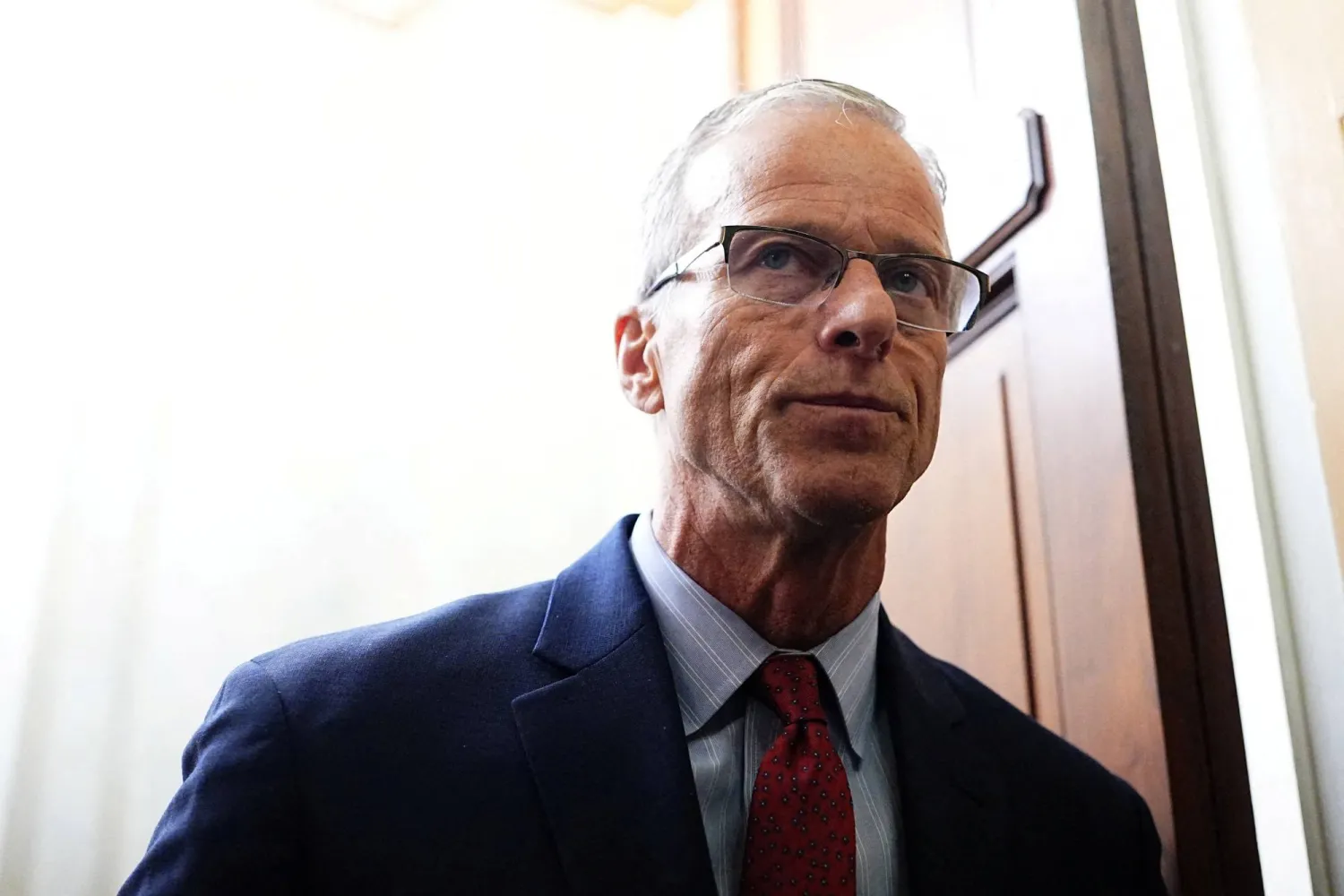
US Senate Majority Leader John Thune (R-SD) looks on outside the Senate Chamber after the vote on the 40th day of the partial government shutdown, in Washington, D.C., US, November 9, 2025. REUTERS/Aaron Schwartz
TT

Senate Takes First Step Toward Ending Government Shutdown

US Senate Majority Leader John Thune (R-SD) looks on outside the Senate Chamber after the vote on the 40th day of the partial government shutdown, in Washington, D.C., US, November 9, 2025. REUTERS/Aaron Schwartz

The Senate took the first step to end the government shutdown on Sunday after a group of moderate Democrats agreed to proceed without a guaranteed extension of health care subsidies, angering many in their caucus who say Americans want them to continue the fight.

In a test vote that is the first in a series of required procedural maneuvers, the Senate voted 60-40 to move toward passing compromise legislation to fund the government and hold a later vote on extending Affordable Care Act tax credits that expire Jan. 1.

Final passage could be several days away if Democrats object and delay the process.

The agreement does not guarantee the Affordable Care Act subsidies will be extended, as Democrats have demanded for almost six weeks. Senate Democratic leader Chuck Schumer of New York voted against moving ahead with the package, along with all but eight of his Democratic colleagues.

A group of three former governors — New Hampshire Sen. Jeanne Shaheen, New Hampshire Sen. Maggie Hassan and Independent Sen. Angus King of Maine — broke the six-week stalemate on Sunday when they agreed to vote to advance three bipartisan annual spending bills and extend the rest of government funding until late January in exchange for a mid-December vote on extending the health care tax credits.

The agreement also includes a reversal of the mass firings of federal workers by the Trump administration since the shutdown began on Oct. 1 and would ensure that federal workers receive back pay.

Senate Majority Leader John Thune quickly endorsed the deal and called the immediate vote to begin the process of approving it as the shutdown continued to disrupt flights nationwide, threaten food assistance for millions of Americans and leave federal workers without pay.

“The time to act is now,” The Associated Press quoted Thune as saying.

Returning to the White House on Sunday evening after attending a football game, President Donald Trump did not say whether he endorsed the deal. But he said, “It looks like we’re getting close to the shutdown ending.”

In addition to Shaheen, King and Hassan, Democratic Sen. Tim Kaine of Virginia, home to tens of thousands of federal workers, also voted in favor of moving forward on the agreement. Illinois Sen. Dick Durbin, the No. 2 Democrat, Pennsylvania Sen. John Fetterman and Nevada Sens. Catherine Cortez Masto and Jacky Rosen also voted yes.

The moderates had expected a larger number of Democrats to vote with them as around 10-12 Democratic senators had been part of the negotiations. But in the end, only five Democrats switched their votes — the exact number that Republicans needed.

King, Cortez Masto and Fetterman had already been voting to open the government since Oct. 1.

The vote was temporarily delayed on Sunday evening as three conservatives who often criticize spending bills, Republican Sens. Mike Lee of Utah, Rick Scott of Florida and Ron Johnson of Wisconsin, withheld their votes and huddled with Thune at the back of the chamber. They eventually voted yes after speaking to Trump, Lee said.

Another Republican, Sen John Cornyn of Texas, had to fly back from Texas to deliver the crucial 60th vote.

After Democrats met for over two hours to discuss the proposal, Schumer said he could not “in good faith” support it.

Schumer, who received blowback from his party in March when he voted to keep the government open, said that Democrats have now “sounded the alarm” on health care.
“We will not give up the fight,” he said.

Independent Sen. Bernie Sanders of Vermont, who caucuses with the Democrats, said that giving up the fight was a “horrific mistake.”

Sen. Chris Murphy, D-Conn., agreed, saying that people in last week's elections voted overwhelmingly Democratic “to urge Democrats to hold firm.”

A bipartisan agreement Democrats had voted 14 times not to reopen the government as they demanded the extension of tax credits that make coverage more affordable for health plans offered under the Affordable Care Act. Republicans said they would not negotiate on health care, but GOP leaders have been quietly working with the group of moderates as the contours of an agreement began to emerge.

The agreement includes bipartisan bills worked out by the Senate Appropriations Committee to fund parts of government — food aid, veterans programs and the legislative branch, among other things. All other funding would be extended until the end of January, giving lawmakers more than two months to finish additional spending bills.

The deal would reinstate federal workers who had received reduction in force, or layoff, notices and reimburse states that spent their own funds to keep federal programs running during the shutdown. It would also protect against future reductions in force through January and guarantee federal workers would be paid once the shutdown is over.

House Democrats push back House Democrats swiftly criticized the Senate.

Texas Rep. Greg Casar, the chairman of the Congressional Progressive Caucus, said a deal that doesn't reduce health care costs is a “betrayal” of millions of Americans who are counting on Democrats to fight.

“Accepting nothing but a pinky promise from Republicans isn’t a compromise — it’s capitulation,” Casar said in a post on X. "Millions of families would pay the price.”

Rep. Angie Craig of Minnesota posted that “if people believe this is a ‘deal,’ I have a bridge to sell you.”

House Democratic leader Hakeem Jeffries blamed Republicans and said Democrats will continue to fight.

“Donald Trump and the Republican Party own the toxic mess they have created in our country and the American people know it,” Jeffries said.

Health care debate ahead It's unclear whether the two parties would be able to find any common ground on the health care subsidies before a promised December vote in the Senate. House Speaker Mike Johnson, R-La., has said he will not commit to bring it up in his chamber.

Some Republicans have said they are open to extending the COVID-19-era tax credits as premiums could skyrocket for millions of people, but they also want new limits on who can receive the subsidies and argue that the tax dollars for the plans should be routed through individuals.

Other Republicans, including Trump, have used the debate to renew their yearslong criticism of the law and called for it to be scrapped or overhauled.

“THE WORST HEALTHCARE FOR THE HIGHEST PRICE,” Trump said of the Affordable Care Act in a post Sunday.

Meanwhile, the consequences of the shutdown have been compounding. US airlines canceled more than 2,000 flights on Sunday for the first time since the shutdown began, and there were more than 7,000 flight delays, according to FlightAware, a website that tracks air travel disruptions.

Treasury Secretary Sean Duffy said on CNN’s “State of the Union" that air travel ahead of the Thanksgiving holiday will be “reduced to a trickle” if the government doesn't reopen.

At the same time, food aid was delayed for tens of millions of people as Supplemental Nutrition Assistance Program benefits were caught up in legal battles related to the shutdown.

And in Washington, home to millions of federal workers who have gone unpaid, the Capital Area Food Bank said it is providing 8 million more meals ahead of the holidays than it had prepared to this budget year — a nearly 20% increase.



Netanyahu Says He Will Not Quit Politics if He Receives a Pardon

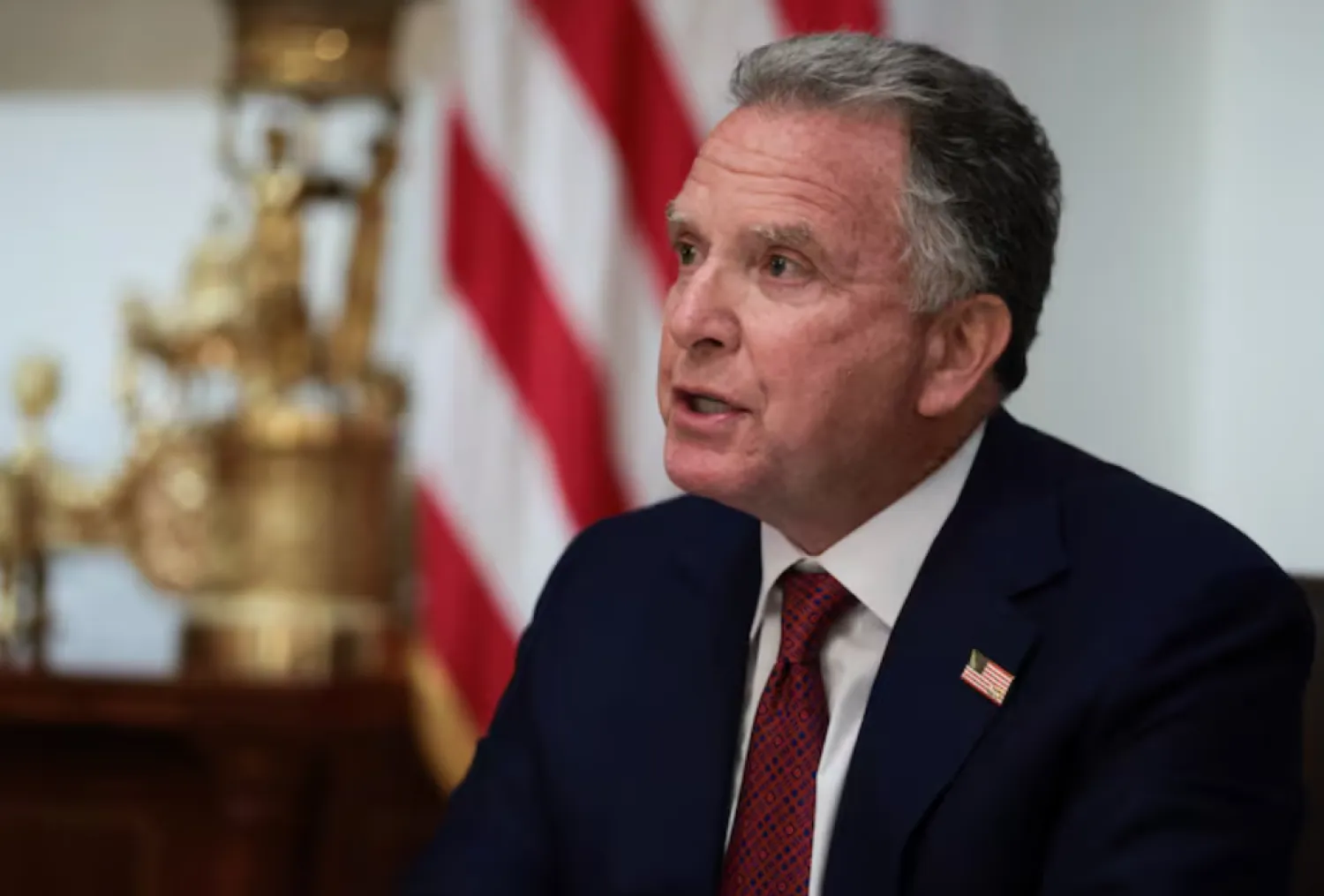
Israeli Prime Minister Benjamin Netanyahu adjusts his headphones during a joint press conference with German Chancellor Friedrich Merz (not pictured) in Jerusalem, 07 December 2025. (EPA)
TT

Netanyahu Says He Will Not Quit Politics if He Receives a Pardon

Israeli Prime Minister Benjamin Netanyahu adjusts his headphones during a joint press conference with German Chancellor Friedrich Merz (not pictured) in Jerusalem, 07 December 2025. (EPA)

Israeli Prime Minister Benjamin Netanyahu said on Sunday that he would not retire from politics if he receives a pardon from the country’s president in his years-long corruption trial.

Asked by a reporter if planned on retiring from political life if he receives a pardon, Netanyahu replied: “no.”

Netanyahu last month asked President Isaac Herzog for a pardon, with lawyers for the prime minister arguing that frequent court appearances were hindering Netanyahu’s ability to govern and that a pardon would be good for the country.

Pardons in Israel have typically been granted only after legal proceedings have concluded and the accused has been convicted. There is no precedent for issuing a pardon mid-trial.

Netanyahu has repeatedly denied wrongdoing in response to the charges of bribery, fraud and breach of trust, and his lawyers have said that the prime minister still believes the legal proceedings, if concluded, would result in a complete acquittal.

US President Donald Trump wrote to Herzog, before Netanyahu made his request, urging the Israeli president to consider granting the prime minister a pardon.

Some Israeli opposition politicians have argued that any pardon should be conditional on Netanyahu retiring from politics and admitting guilt. Others have said the prime minister must first call national elections, which are due by October 2026.


Man Arrested after Pepper Spray Attack in London's Heathrow Airport Parking Garage

File photo: A plane prepares ahead of taking-off, after radar failure led to the suspension of outbound flights across the UK, at Heathrow Airport in Hounslow, London, Britain, July 30, 2025. (Reuters)
TT

Man Arrested after Pepper Spray Attack in London's Heathrow Airport Parking Garage

File photo: A plane prepares ahead of taking-off, after radar failure led to the suspension of outbound flights across the UK, at Heathrow Airport in Hounslow, London, Britain, July 30, 2025. (Reuters)

Police arrested a man in London on Sunday after a group of people were assaulted with pepper spray in a parking garage at Heathrow Airport.

The victims were taken to the hospital by ambulance but their injuries were not believed to be serious, the Metropolitan Police said.

The incident in the Terminal 3 garage occurred after an argument escalated between two groups who knew each other. It was not being investigated as terrorism, police said.

One man was arrested on suspicion of assault and held in custody. Police were searching for the other suspects who left the scene.


US Envoy Kellogg Says Ukraine Peace Deal Is Really Close

A Ukrainian serviceman walks near apartment buildings damaged by a Russian military strike, amid Russia's attack on Ukraine, in the frontline town of Kostiantynivka in Donetsk region, Ukraine November 15, 2025. (Oleg Petrasiuk/Press Service of the 24th King Danylo Separate Mechanized Brigade of the Ukrainian Armed Forces/Handout via Reuters)
TT

US Envoy Kellogg Says Ukraine Peace Deal Is Really Close

A Ukrainian serviceman walks near apartment buildings damaged by a Russian military strike, amid Russia's attack on Ukraine, in the frontline town of Kostiantynivka in Donetsk region, Ukraine November 15, 2025. (Oleg Petrasiuk/Press Service of the 24th King Danylo Separate Mechanized Brigade of the Ukrainian Armed Forces/Handout via Reuters)

US President Donald Trump's outgoing Ukraine envoy said a deal to end the Ukraine war was "really close" and now depended on resolving two main outstanding issues: the future of Ukraine's Donbas region and the Zaporizhzhia nuclear power plant.

Russia invaded Ukraine in February 2022 after eight years of fighting between Russian-backed separatists and Ukrainian troops in the Donbas, which is made up of the Donetsk and Luhansk regions.

The Ukraine war is the deadliest European conflict since World War Two and has triggered the biggest confrontation between Russia and the West since the depths of the Cold War.

US Special Envoy for Ukraine Keith Kellogg, who is due to step down in January, told the Reagan National Defense Forum that efforts to resolve the conflict were in "the last 10 meters" which he said was always the hardest.

The two main outstanding issues, Kellogg said, were on territory - primarily the future of the Donbas - and the future of Ukraine's Zaporizhzhia nuclear power plant, Europe's largest, which is under Russian control.

"If we get those two issues settled, I think the rest of the things will work out fairly well," Kellogg said on Saturday at the Ronald Reagan Presidential Library and Museum in Simi Valley, California. "We're almost there."

"We're really, really close," said Kellogg.

Kellogg, a retired lieutenant general who served in Vietnam, Panama and Iraq, said the scale of the death and injuries caused by the Ukraine war was "horrific" and unprecedented in terms of a regional war.

He said that, together, Russia and Ukraine have suffered more than 2 million casualties, including dead and wounded since the war began. Neither Russia nor Ukraine disclose credible estimates of their losses.

Moscow says Western and Ukrainian estimates inflate its losses. Kyiv says Moscow inflates estimates of Ukrainian losses.

Russia currently controls 19.2% of Ukraine, including Crimea, which it annexed in 2014, all of Luhansk, more than 80% of Donetsk, about 75% of Kherson and Zaporizhzhia, and slivers of the Kharkiv, Sumy, Mykolaiv and Dnipropetrovsk regions.

A leaked set of 28 US draft peace proposals emerged last month, alarming Ukrainian and European officials who said it bowed to Moscow's main demands on NATO, Russian control of a fifth of Ukraine and restrictions on Ukraine's army.

Those proposals, which Russia now says contain 27 points, have been split up into four different components, according to the Kremlin. The exact contents are not in the public domain.

Under the initial US proposals, the Zaporizhzhia nuclear plant, whose reactors are currently in cold shutdown, would be relaunched under the supervision of the International Atomic Energy Agency, and the electricity produced would be distributed equally between Russia and Ukraine.

Ukrainian President Volodymyr Zelenskiy said on Saturday that he had had a long and "substantive" phone call with Trump's special envoy Steve Witkoff and Trump's son-in-law Jared Kushner.

The Kremlin said on Friday it expected Kushner to be doing the main work on drafting a possible deal.