


Lebanon’s Historic Pines Are Dying, One Cone at a Time 

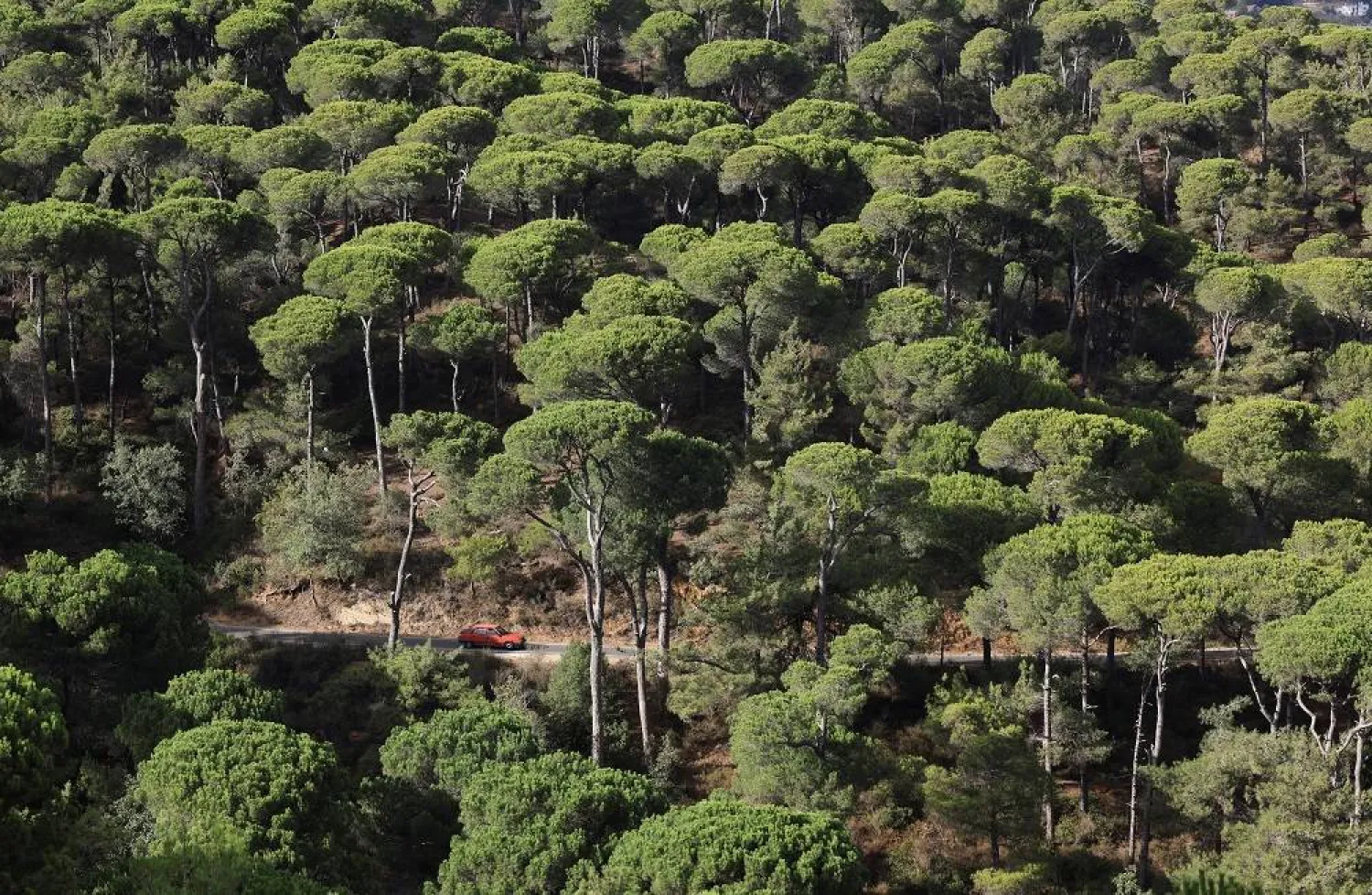
A car passes by a pine tree forest, where a pine crisis is unfolding, caused by an invasive insect that feeds on the cones that produce Lebanon's prized pine nuts, in Bkassine, Lebanon, October 21, 2025. (Reuters)
TT

Lebanon’s Historic Pines Are Dying, One Cone at a Time 

A car passes by a pine tree forest, where a pine crisis is unfolding, caused by an invasive insect that feeds on the cones that produce Lebanon's prized pine nuts, in Bkassine, Lebanon, October 21, 2025. (Reuters)

In the heart of southern Lebanon, where pine trees once stood tall and abundant, a quiet crisis is unfolding. The cones are barren, the trees are drying and a forest that was a lifeline for entire communities is under siege.

Farmers in Bkassine forest have watched their pine yields dwindle for years. At first, they blamed seasonal weather changes. Then, in 2015, scientists confirmed what many feared: an invasive insect had taken hold, one that feeds on the cones that produce Lebanon's prized pine nuts.

"It's not just the nuts," said Dr. Nabil Nemer, a forest health expert at the Holy Spirit University of Kaslik (USEK). "This insect attacks the cones over three years. It doesn't just reduce productivity, it wipes it out."

In some cases, up to 82% of a cone's seed pods are left as empty shells, according to Nemer. Trees weakened by the ravages of climate change are particularly vulnerable.

The insect, Leptoglossus occidentalis, is originally from North America and likely arrived in Lebanon via untreated wooden shipping pallets.

It has since spread across the Mediterranean to Türkiye, and other areas, according to his research.

Livelihoods are under threat in the Bkassine reserve, the Middle East's largest productive pine forest. The trees grow in other parts of Lebanon, but largely not commercially.

For decades, Miled Hareb's family survived on the forest's bounty. That is no longer the case.

"This work was passed down to me. I built my house with it and raised my family with it. But then the trees started dying, and so did our way of life," Hareb told Reuters.

Harvesting pine cones is grueling work. Workers climb towering trees with narrow ladders, balancing on narrow branches without safety gear to collect cones nestled high in the canopy.

Injuries are common and pay has dwindled along with the yields. Nabil Assad, a Syrian laborer who has harvested pine cones in Lebanon for more than a decade, still remembers when up to 250 pine-pickers worked simultaneously in Bkassine.

"Now it's just around 20 or 30 people. There's no work anymore," he said.

A DWINDLING ECOSYSTEM

Most of Lebanon's pine forests were planted hundreds of years ago. These older trees are still within their productive lifespans, but droughts, erratic rainfall and rising temperatures triggered by climate change have made them more vulnerable to the pests.

"A healthy tree can fight back," Nemer said. "But when it's thirsty and starved, it has no defense."

Ahead of this month's COP-30 climate summit in Belem, Brazil, UN officials stressed the importance of shielding forests from pest infestations and other risks, describing forests as "the planet's most powerful natural defense".

Bkassine forest was once home to around 100,000 productive pine trees, according to the UN Development Program.

The number has fluctuated: years of climate stress and pest infestations decreased them and efforts at replanting aimed to offset those losses, but no recent studies offer accurate new figures, Nemer said.

In addition to the cone-eating insect, wood-boring beetles are also killing pines. Dead trees litter the forest floor, attracting more pests and accelerating the decline.

Decades of political and economic turmoil in Lebanon have also taken a toll. After the country's brutal 1975-1990 civil war, state-led forest management fell by the wayside.

Illegal logging has surged since an economic meltdown in 2019.

As productivity drops, market prices have gone up - but few Lebanese can afford them. A kilogram of pine nuts now sells for nearly $100, from around $65 five years ago. Families and even restaurants have swapped out pine nuts for cheaper sliced almonds for Lebanese dishes that call for a crunch.

Efforts to fight back have been slow. Spraying pesticides requires helicopters, which are controlled by the Lebanese army. Logistical delays mean treatments often miss the critical window when insects lay their eggs.

Lebanon's agriculture ministry announced a national spraying campaign for this past August. But Nemer warns that without a broader strategy that involves farmers themselves, it won't be enough.

In Bkassine, farmers are learning to identify pests, report outbreaks and participate in forest management, through training programs led by USEK, the Lebanese Ministry of Agriculture, FAO and the United Nations Environment Program.

"We need to manage the forest as a whole," Nemer said. "This isn't a garden. It's not a farm. It's a living ecosystem."



Australian Firefighters Warn of ‘High-Risk’ Bushfire Season

Country Fire Authority (CFA) crew fill up tankers in the bushfire affected town of Ruffy, Victoria, Australia, 12 January 2026. (EPA)
TT

Australian Firefighters Warn of ‘High-Risk’ Bushfire Season

Country Fire Authority (CFA) crew fill up tankers in the bushfire affected town of Ruffy, Victoria, Australia, 12 January 2026. (EPA)

Australian firefighters warned people on Monday to prepare for more bushfires in a "high-risk" summer, after blazes killed one person and incinerated more than 350 buildings in the southeast.

Weather conditions have eased since strong winds and temperatures topping 40C fed dozens of wildfires in southeastern Australia's Victoria, which declared a state of disaster on Saturday.

But officials said 12 major fires were still burning across the state.

Country Fire Authority chief officer Jason Heffernan said another "heating event" was expected towards the end of January, though its intensity was uncertain.

"We are early in the high-risk weather season," Heffernan told a news conference.

"There's been a lot of fire in the landscape. Much work will be done between now and then to contain these fires," he said.

"Whilst we join with community in the rebuilding and the relief and recovery of the fires that have been, we need to turn our minds to the fires that could be as the season continues."

More than 350 structures -- including over 65 homes -- have been lost so far in the state, officials said, with the number likely to rise as fire damage is assessed.

One person died in a fire near the town of Longwood, about two hours' drive north of state capital Melbourne, police say.

Emergency Management Commissioner Tim Wiebusch said weather conditions had become more favorable for firefighters.

"But that doesn't mean that the risk is over," he said.

"Whilst the conditions are easing in some parts of the state, even the slightest of winds are still causing those fires to move around."

High temperatures and dry winds combined last week to form some of the most dangerous bushfire conditions since the "Black Summer" blazes.

The Black Summer bushfires raged across Australia's eastern seaboard from late 2019 to early 2020, razing millions of hectares, destroying thousands of homes and blanketing cities in noxious smoke.

Australia's climate has warmed by an average of 1.51C since 1910, researchers have found, fueling increasingly frequent extreme weather patterns over both land and sea.


Some Supplements Can Make Your Medication Less Effective

Some vitamin and mineral supplements can interfere with absorption of medications (Oklahoma State University) 
TT

Some Supplements Can Make Your Medication Less Effective

Some vitamin and mineral supplements can interfere with absorption of medications (Oklahoma State University) 

Health experts warned that some supplements can interact with certain medications and reduce their effectiveness, according to Eating Well website.

While these supplements are usually sold over-the-counter, taking them without asking a health care provider can have dangerous impact on your health.

Naturopathic doctor Jacob Wolf said that for instance, some vitamin and mineral supplements can interfere with absorption of medications.

Other supplements can bind with medications, preventing the drug from being utilized in the body, or they may be metabolized by the same or similar pathways as medications, explains Wolf. That can have a dangerous impact on your health.

Top offenders include calcium, magnesium, iron, fiber, activated charcoal and vitamins C and K.

Minerals like calcium, magnesium and iron can bind with medications, especially levothyroxine, a drug used to treat hypothyroidism, said Wolf.

“This can impact how levothyroxine is utilized in the body, adversely affecting treatment,” he explained.

These minerals can also interact with antibiotics in the tetracycline and fluoroquinolone class, said pharmacist Amanda Corbett.

Taking these mineral supplements at the same time as antibiotics may reduce the bioavailability of the antibiotic, creating risks like bacterial resistance or ineffective treatment.

And while scientists affirm fiber is an important nutrient for digestive regularity, healthy cholesterol levels and blood sugar management, supplementing isn’t always a great idea, as large doses can impact the absorption of certain medications.

Fiber-rich foods are a cornerstone of blood sugar management, even for those taking blood sugar–lowering medications, like metformin.

Fiber may also impair the effectiveness of other drugs, including digoxin (which treats certain heart conditions) and levothyroxine for hypothyroidism, Wolf said.

Therefore, if you do choose to take a fiber supplement, Wolf recommended speaking with your health care provider about spacing out your fiber and medication doses.

As for activated charcoal, it is a form of carbon that is used in the emergency room to treat the ingestion of toxic drugs and poisons.

“Activated charcoal acts like a sponge and can bind to many medications. It is best to completely avoid activated charcoal if on any life-critical medication,” said Wolf.

For Vitamin C, it is an important antioxidant that protects cells from free radical damage and supports proper immune system function.

However, if you are undergoing chemotherapy treatment for cancer, experts strongly caution against taking vitamin C supplements.

“Vitamin C can lead to certain chemotherapies being less effective or ineffective in treating cancer,” said Corbett.

Vitamin E, another antioxidant, can also interfere with chemotherapy’s effectiveness.

If taking Vitamin K, which is a fat-soluble vitamin that helps blood clot and shores up bone health, you should know that it can reduce the effectiveness of a blood-thinning medication called warfarin (Coumadin).

That, in turn, can make blood more likely to clot, which can lead to a heart attack or stroke.

If you are taking warfarin, you don’t necessarily need to avoid vitamin K, but it is critical to keep the amount you consume—from both foods and supplements—consistent to avoid clotting problems.

Experts advise that to take supplements safely, consult with your health care provider.

Many supplements can interact with medications, and so it’s critical to connect with your prescribing health care provider to make sure that the supplements you’re taking play nice with your medications.

Also, look for those that have been independently tested in a laboratory, recommended Corbett.

Experts say you should also know how much to take. Supplement dosages are listed on the label, but they aren’t standardized.

That means they can vary from product to product, and may far exceed safe levels.


Rejuvenated Human Eggs… Scientists Revolutionize IVF Success

Egg quality is the primary cause of IVF failure and miscarriage in older women (Reuters) 
TT

Rejuvenated Human Eggs… Scientists Revolutionize IVF Success

Egg quality is the primary cause of IVF failure and miscarriage in older women (Reuters) 

German scientists claim to have “rejuvenated” human eggs for the first time in an advance that they predict could revolutionize IVF success rates for older women.

The groundbreaking research suggests that an age-related defect that causes genetic errors in embryos could be reversed by supplementing eggs with a crucial protein, according to The Guardian.

When eggs donated by fertility patients were given microinjections of the protein, they were almost half as likely to show the defect compared with untreated eggs.

If confirmed in more extensive trials, the approach has the potential to improve egg quality, which is the primary cause of IVF failure and miscarriage in older women.

The decline in egg quality is the main reason IVF success rates drop steeply with female age and is why the risk of chromosome disorders such as Down’s syndrome increases with maternal age.

“Overall we can nearly halve the number of eggs with [abnormal] chromosomes. That’s a very prominent improvement,” said Prof Melina Schuh, a director at the Max Planck Institute for Multidisciplinary Sciences in Göttingen and a co-founder of Ovo Labs, which is aiming to commercialize the technique.

“Most women in their early 40s do have eggs, but nearly all of the eggs have incorrect chromosome numbers,” added Schuh, whose lab has been investigating egg biology for the past two decades. “This was the motivation for wanting to address this problem.”

The latest approach targets a vulnerability in eggs linked to a process called meiosis, in which sex cells (eggs or sperm) jettison half their genetic material so they can join together to make an embryo.

In eggs, this requires 23 pairs of X-shaped chromosomes to align along a single axis in the cell. On fertilization, the cell divides causing the chromosome pairs to be – ideally – neatly snapped down their centers to create a cell with precisely 23 single chromosomes from the mother, the rest being delivered by the sperm.

However, in older eggs the chromosome pairs tend to loosen at their midpoint, becoming slightly unstuck or detaching entirely before fertilization.

In this scenario, the X-shaped structures fail to line up properly and move around chaotically in the cell, so when the cell divides they are not snapped symmetrically.

This results in an embryo with too many or too few chromosomes.

Schuh and colleagues previously found that a protein, Shugoshin 1, which appears to act as a glue for the chromosome pairs, declines with age. In the latest experiments in mouse and human eggs, they found that microinjections of Shugoshin 1 appeared to reverse the problem of chromosome pairs separating prematurely.

Using eggs donated by patients at the Bourn Hall fertility clinic in Cambridge, they found that the number showing the defect decreased from 53% in control eggs to 29% in treated eggs. When they looked only at eggs from women over 35 years of age, a similar trend was seen (65% compared with 44%), although this result was not statistically significant, which the scientists said was probably due to them only having treated nine eggs in this age range.

Dr Agata Zielinska, a co-founder and co-CEO of Ovo Labs, said: “Currently, when it comes to female factor infertility, the only solution that’s available to most patients is trying IVF multiple times so that, cumulatively, your likelihood of success increases. What we envision is that many more women would be able to conceive within a single IVF cycle.”

The findings will be presented at the British Fertility Conference in Edinburgh on Friday and have been published as a preprint paper on the Biorxiv website.