Thieves Have Stolen Ancient Roman-Era Statues from the National Museum in Syria 

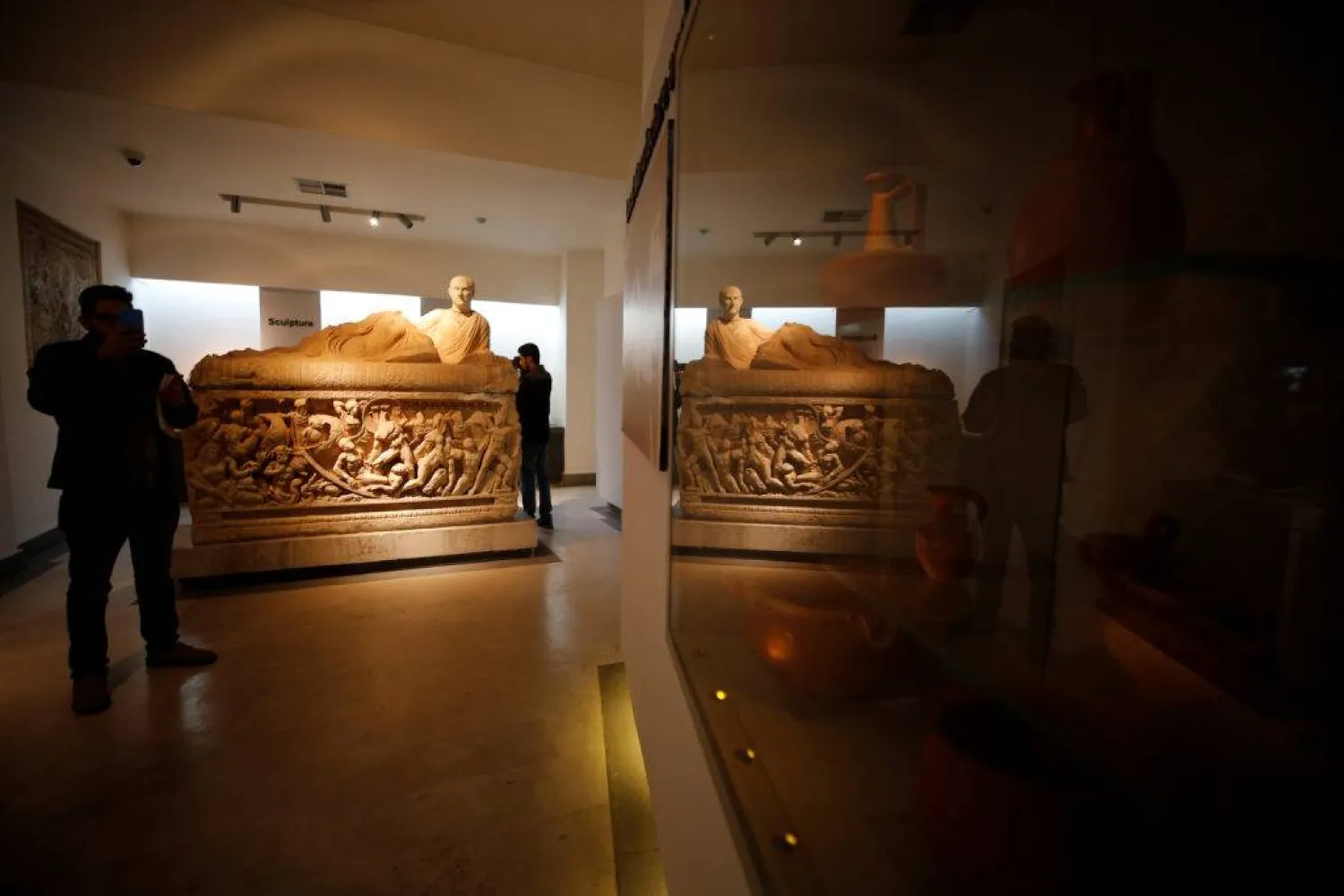
A visitor takes a picture with his mobile phone during the reopening of Syria’s National Museum of Damascus, Syria October 28, 2018. (Reuters) 
TT

Thieves Have Stolen Ancient Roman-Era Statues from the National Museum in Syria 

A visitor takes a picture with his mobile phone during the reopening of Syria’s National Museum of Damascus, Syria October 28, 2018. (Reuters) 

Thieves have stolen several ancient statues dating back to the Roman era from the national museum in the Syrian capital, leading to temporary closure of the facility, two officials from the country’s antiquities department said Tuesday.

The daring theft in the classical department of the National Museum of Damascus comes as the country is reeling from the 14-year civil war and the fall of the 54-year Assad family rule last year.

The museum in central Damascus, the country’s largest, houses invaluable antiquities dating back to Syria’s long history. After the war started, security was boosted with metal gates and surveillance cameras.

Two officials from Syria’s Directorate-General for Antiquities and Museums confirmed the theft when contacted by The Associated Press. The officials spoke on condition of anonymity in line with regulations because the government has not yet made a statement.

One of the officials said six marble statues were stolen from the museum, adding that an investigation is ongoing.

The other official said that the theft occurred Sunday night and was discovered early Monday, when one of the doors at the classical department was found broken and several statues dating back to the Roman era were missing. The official refused to give an exact number.


PM: Anne Carson's Nobel Literature Prize 'a Proud Moment for Canada'

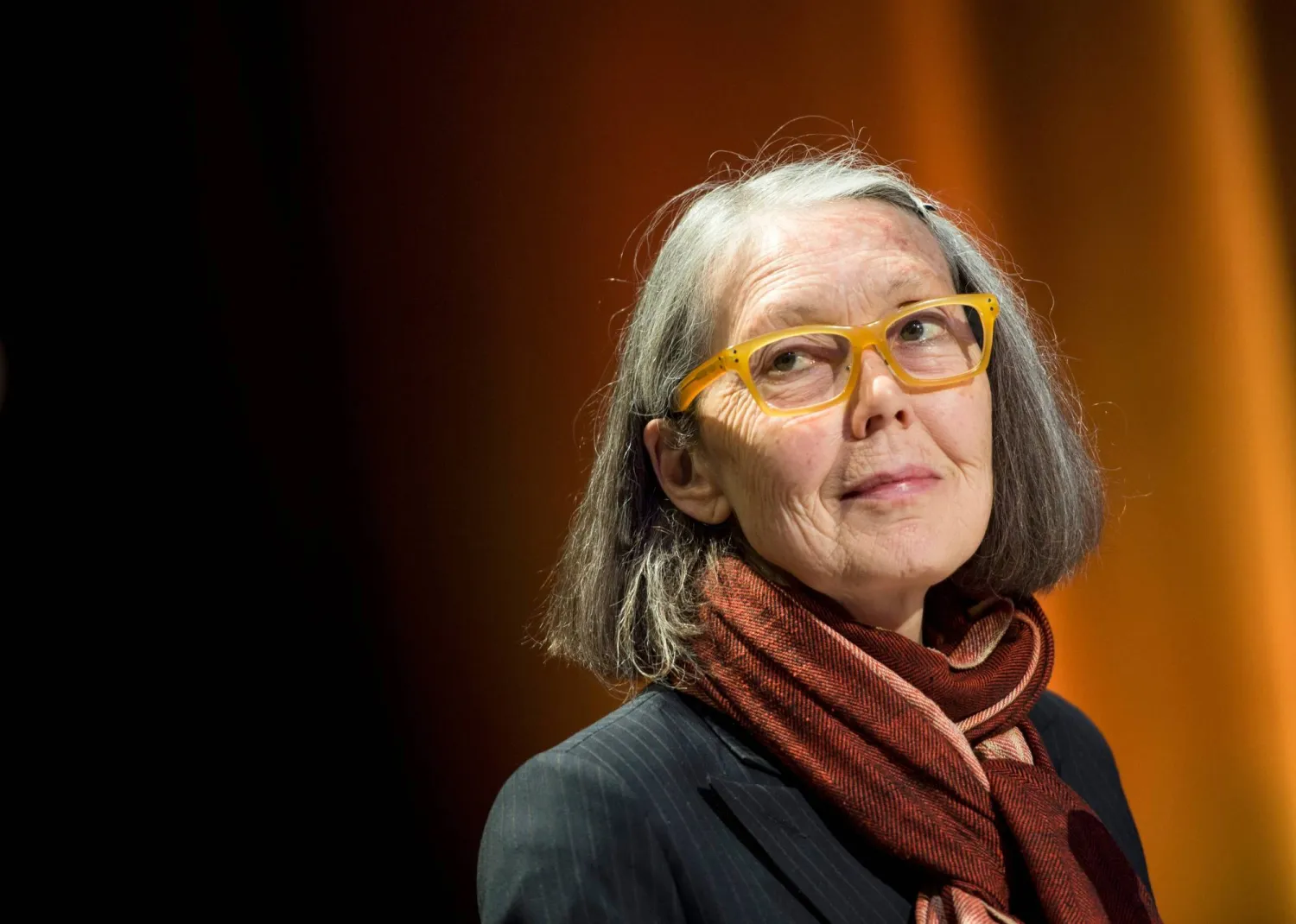
Canadian poet Anne Carson, winner of the 2026 Nobel Prize in Literature, performs her work "Antigonick" at the Moderna Museet art gallery in Stockholm, Sweden, May 8, 2015. (Pontus Lundahl/TT News Agency via AP)
TT

PM: Anne Carson's Nobel Literature Prize 'a Proud Moment for Canada'

Canadian poet Anne Carson, winner of the 2026 Nobel Prize in Literature, performs her work "Antigonick" at the Moderna Museet art gallery in Stockholm, Sweden, May 8, 2015. (Pontus Lundahl/TT News Agency via AP)

Canadian poet Anne Carson winning the Nobel prize for literature is a "proud moment" for the country, Prime Minister Mark Carney said Thursday.

The 76-year-old's works feature "wit, imagination, and a style entirely her own," Carney said on X.

"She has brought ancient stories to new audiences and transformed the way we think about literature," he said, calling the award "an extraordinary achievement and a proud moment for Canada."

In a statement to AFP, Canadian novelist Margaret Atwood said Carson's work "has long been admired among poets of many countries."

"For new readers I would recommend 'The Beauty of the Husband' -- direct and visceral, funny and angry and sad - or 'Men in the Off Hours.' Delights await!" added Atwood, a longtime Nobel contender who was passed over in 2013 in favor of fellow Canadian Alice Munro.

A renowned classicist, Carson has taught at several prestigious Canadian and American universities, including McGill in Montreal. She joined McGill's Department of Classics in 1988 and left the university in 2002.

"This is a wonderfully deserved honor for Anne Carson, whose work has captivated readers around the world by bringing ancient voices into conversation with the present," Lisa Shapiro, McGill's dean of arts, was quoted as saying by The McGill Reporter.

"Her extraordinary talent, originality and intellectual depth have had a profound influence on contemporary literature. We are proud that McGill was her academic home for many years and delighted to see her remarkable contributions recognized on the world stage."

Outside the university in Montreal, Vicky Huang, a 24-year-old political science student, expressed pride.

"My friends and I love 'Eros the Bittersweet,' so this is such exciting news," she told AFP.

"Yeah, I mean, the fact that she's a Canadian woman working in high literature makes all of us really proud."


Red Sea Museum Opens 'Photographing Distance' Exhibition in Historic Jeddah

The exhibition showcases photography and video installations documenting lighthouses across diverse global locations. SPA
TT

Red Sea Museum Opens 'Photographing Distance' Exhibition in Historic Jeddah

The exhibition showcases photography and video installations documenting lighthouses across diverse global locations. SPA

The Red Sea Museum, operating under Saudi Arabia’s Museums Commission, inaugurated the "Photographing Distance" exhibition by Argentine artist Matilde Marín at its premises in Historic Jeddah, marking its Kingdom debut and running through December 31.

The exhibition showcases photography and video installations documenting lighthouses across diverse global locations, including Jeddah and Yanbu, exploring their role in maritime navigation, human memory, and the connection between people and place.

Based on the artist's "Pharus" project initiated in 2005, the artworks frame lighthouses beyond their navigational utility as enduring symbols of guidance and hope.

The opening ceremony featured a guided tour by the artist, as well as a discussion session and a musical performance.

Linking contemporary art with Red Sea maritime heritage, the event is accompanied by an ongoing public program offering film screenings, poetry evenings, creative photography workshops, and family activities such as lighthouse model-making.

The event forms part of the Museums Commission's initiatives to enrich the Kingdom's cultural landscape and foster creative dialogue by hosting international artistic experiences.


Latin American, Caribbean Women Top Nobel Literature Buzz

A statue of Alfred Nobel in Stockholm, Sweden, on October 5, 2026. Jonathan Nackstrand / AFP
TT

Latin American, Caribbean Women Top Nobel Literature Buzz

A statue of Alfred Nobel in Stockholm, Sweden, on October 5, 2026. Jonathan Nackstrand / AFP

This year's Nobel literature prize could go to a Latin American or Caribbean woman when it is awarded on Thursday amid efforts to diversify an award that has most often gone to male, European authors, literary critics say.

There is no public shortlist for the Nobel, and since the nominees and the jury deliberations remain sealed for 50 years, Stockholm's literary circles engage in frantic guessing ahead of the announcement.

Antiguan-American author Jamaica Kincaid, 77, whose work explores Caribbean culture, family and identity as well as colonialism and race, has often been mentioned in Nobel speculation, as has China's Can Xue, whose avant-garde experimental writing has been compared to that of Franz Kafka.

The suspense will end at 1:00 pm (1100 GMT) Thursday when the 18-member Swedish Academy reveals its pick.

A 2018 sex assault scandal left the Academy in tatters and more than half of its 18 members were replaced.

Since then, every other literature laureate has been a woman -- making it likely that this year's nod could go to a woman, after last year's prize for Hungary's Laszlo Krasznahorkai.

Punters are this year putting their money on Can Xue and Mexico's Cristina Rivera Garza, as well as Spanish author Enrique Vila-Matas, Australia's Gerald Murnane, his Aboriginal compatriot Alexis Wright and American author Thomas Pynchon.

"It's about time for Jamaica Kincaid to get it," Victor Malm, culture critic at Swedish daily Expressen, told AFP.

"She has been mentioned for a long time," agreed Bjorn Wiman, culture editor at Sweden's largest daily Dagens Nyheter.

- Women under-represented -

Kincaid's 1990 novel "Lucy" is an autobiographical tale of an embittered young girl who travels from the West Indies to the United States to work as an au pair.

"It's exactly the kind of book where it's enough to read three lines to say: 'OK, we're talking about a Nobel laureate here'," Wiman said.

Giving her the nod could also be interpreted as a political choice, given her fierce criticism of US President Donald Trump, analysts say.

The Swedish Academy has long been criticized for the over-representation of Western male authors since the prize was first awarded in 1901.

There are only 18 women among the 122 laureates. Very few have worked in Asian or Middle Eastern languages. No African languages are represented.

The Academy insists however that its only consideration is the quality of a writer's work.

But unlike the Nobel prizes in medicine, physics and chemistry, there is no groundbreaking research on which to base speculation for the literature prize, Wiman said.

"In physics or chemistry, you can say that one discovery was more important than others", in terms of the impact it has had on mankind, he said.

"But when it comes to literature, it's different. There are easily 50 to 100 authors who could win the Nobel literature prize."

"That's why it's so interesting to follow the geographic distribution, the gender distribution, the kind of mark they want to make with the choice of laureate and so on," he said.

- 'Dark and violent' writing -

So what about the literature?

Lina Kalmteg, literary critic for Swedish public broadcaster SR, said it was time for a Spanish-language author from Latin America.

"In recent years, there has been a lot of talk about the 'Latin American literary miracle', this new generation that came after the male authors devoted to magical realism, like Gabriel Garcia Marquez," she told AFP.

"In this new wave, it's women who are taking the lead, with writing often tinged with feminism, but also often quite dark and violent, punctuated by surreal touches," she noted.

Argentine author Samanta Schweblin, 48, would be an interesting and surprising choice in this category, she said.

"But she is surely still too young," she added.

Literature laureates are honored for their body of work, not a single publication.

The last writer from South America to be honored was Peru's Mario Vargas Llosa in 2010.

Several new names getting Nobel buzz the past few years are Germany's Jenny Erpenbeck, who won the 2024 International Booker Prize for the novel "Kairos", and Duong Thu Huong, one of Vietnam's most popular writers whose first books in the late 1980s were bestsellers before they were banned. Her books are mainly published outside Vietnam.