



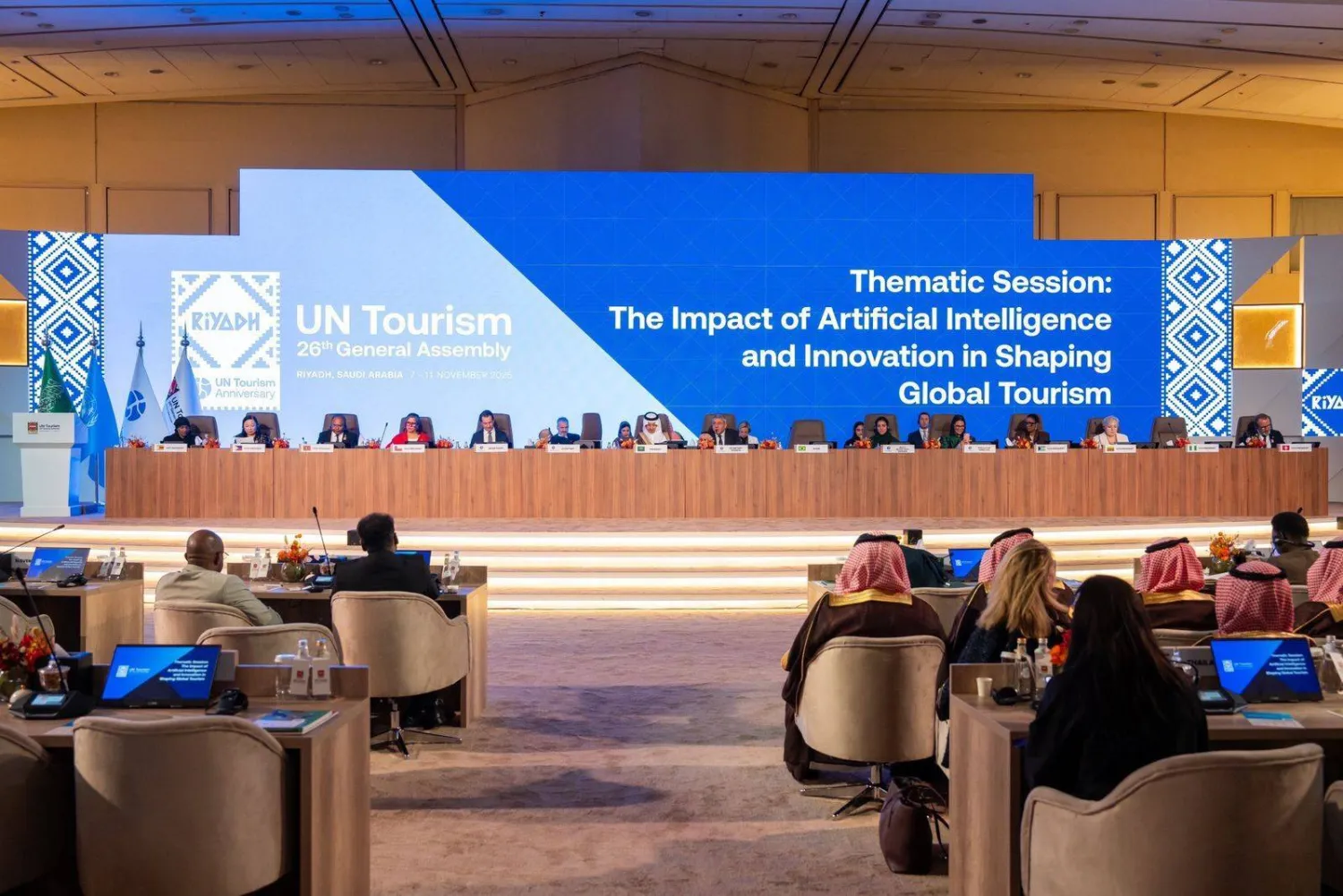

The 26th session of the United Nations Tourism General Assembly, hosted by Saudi Arabia, concluded on Tuesday with the adoption of the “Riyadh Declaration on the Future of Tourism,” which sets the foundation for international cooperation in the global tourism sector over the next 50 years.
The declaration underscores the Kingdom’s leading role as a key contributor to shaping the future of tourism and highlights Riyadh's position as a hub for major global tourism decisions. The Riyadh Declaration will serve as a pivotal framework for the tourism sector in driving Sustainable Development Goals for 2030, with a focus on sustainability, digital innovation, integration of artificial intelligence technologies, and inclusive economic growth.
Serving as a roadmap for the global tourism industry in the years ahead, the declaration focuses on boosting international cooperation, empowering local communities, and strengthening the sector's resilience to challenges.
It outlines a unified vision to promote environmental responsibility in tourism and reinforces its role as a key driver of economic growth and cultural understanding.
“As we conclude this session in Riyadh, we move from declaration to implementation,” said Saudi Minister of Tourism Ahmed Al-Khateeb. “The agreements we have signed and the platforms we have launched will drive investments, develop human capital, advance digital transformation for small and medium enterprises, and protect cultural and environmental treasures.”
“The Kingdom will continue to bring international partners together, leveraging Riyadh's hosting of the UN Tourism Regional Office for the Middle East, and will seek to achieve tangible results to ensure tourism remains a bridge between nations and a catalyst for shared prosperity,” the minister said.
“With the adoption of the Riyadh Declaration on the Future of Tourism, the international community reaffirms its commitment to fully harnessing the economic and social potential of tourism in pursuit of the Sustainable Development Goals. This adoption reflects global confidence in the Kingdom’s role as a facilitator of international dialogue and a center for collaboration among all stakeholders in the tourism sector,” he added.
Al-Khateeb told Asharq Al-Awsat that Saudi Arabia has set a target of attracting 150 million tourists by 2030, raising the figure from an initial goal of 100 million that it has already achieved.
He predicted that the Kingdom will soon be among the world’s top ten travel destinations.
At the event, member state representatives approved the appointment of Shaikha Nasser Al Nowais as the new secretary-general of the UN Tourism Organization — the first woman and the first Gulf national to hold the position. Her term will begin on January 1, 2026.
She told Asharq Al-Awsat that she will prioritize sustainable and responsible growth, digital transformation, smart tourism, local empowerment, developing infrastructure, bolstering air connectivity, and transparency, among other issues.
The conclusion of the assembly marked the official launch of the “TOURISE Forum,” a global initiative introduced by the Kingdom to deepen cooperation between the public and private sectors and to advance innovation in the global tourism industry.
The forum will serve as a platform for public and private sector leaders to collaborate on promoting digital transformation, sustainability, impactful investments, and workforce development to prepare the sector for future challenges and opportunities.


