
MI5 Spy Service Warns UK Lawmakers Chinese Spies Posing as Headhunters

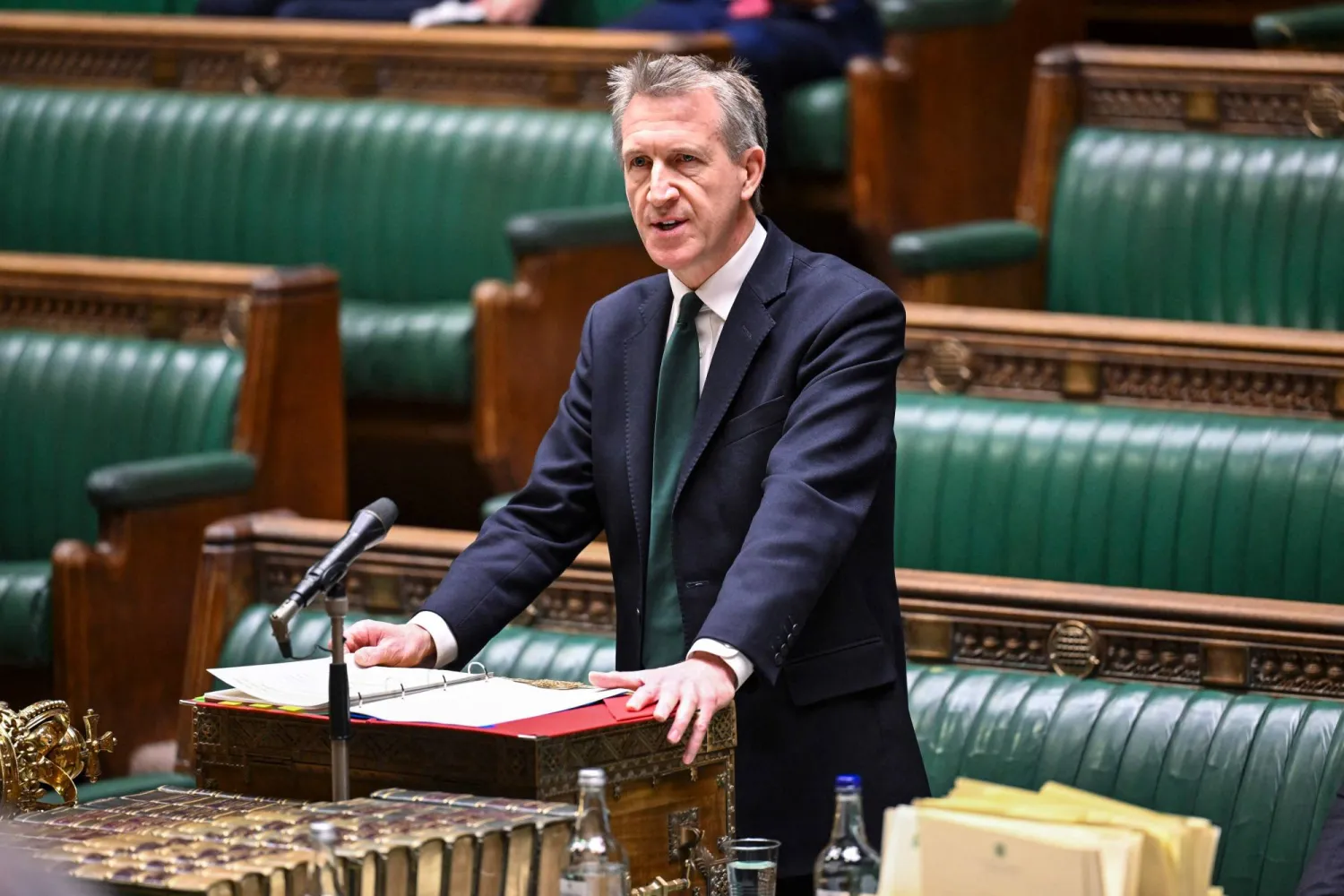
A handout photograph released by the UK Parliament shows Britain's Minister of State in the Home Office, Dan Jarvis, making a statement to MPs on an "Espionage Alert" issued by Britain's domestic intelligence agency MI5, in the House of Commons in London on November 18, 2025. (House of Commons / AFP)
TT

MI5 Spy Service Warns UK Lawmakers Chinese Spies Posing as Headhunters

A handout photograph released by the UK Parliament shows Britain's Minister of State in the Home Office, Dan Jarvis, making a statement to MPs on an "Espionage Alert" issued by Britain's domestic intelligence agency MI5, in the House of Commons in London on November 18, 2025. (House of Commons / AFP)

Britain's MI5 security service issued a new warning to lawmakers on Tuesday about attempts by Chinese agents to collect information and influence activity, its latest accusation that Beijing is trying to spy on the nation's parliament.

Lawmakers were told Chinese spies were targeting them by posing as headhunters or companies to make contact, with two individuals reaching out on LinkedIn to "conduct outreach at scale on behalf" of the Chinese government.

The speakers of the lower and upper houses of parliament said MI5 had said the Chinese Ministry of State Security was "actively reaching out to individuals in our community".

Britain's Security Minister Dan Jarvis told parliament the alert revealed "a covert and calculated attempt" by Beijing to interfere in UK politics and said the government would launch a counterespionage plan to address the threat.

"MI5 have stated that this activity is being carried out by a group of Chinese intelligence officers, often masked through the use of cover companies or external headhunters," he said.

In recent years, Britain and China have traded accusations of perceived spying. The Chinese embassy in London said the latest accusations were "pure fabrication and malicious slander".

"We strongly condemn such despicable moves of the UK side and have lodged stern representations with them," an embassy spokesperson said in a statement.

"We urge the UK side to immediately stop this self-staged charade of false accusations and self-aggrandizement, and stop going further down the wrong path of undermining China-UK relations."

SPYING CASE COLLAPSED IN SEPTEMBER

The new warning comes after British prosecutors abandoned a case in September against two British men charged with spying on members of parliament for China, saying the British government had not provided clear evidence to show that Beijing was a threat to its national security.

The collapse of the case led to accusations from opposition politicians that Prime Minister Keir Starmer was prioritizing better relations with Beijing over national security. The government denies that.

It also comes just weeks before the government must decide whether to approve a massive new Chinese embassy in London that critics say will pose a security risk.

In October, MI5 said Chinese spies were creating fake job adverts to try to lure British professionals into handing over information, with thousands of suspicious postings placed on online recruitment platforms.

In his annual speech last month, Ken McCallum, the director-general of MI5, said Chinese spies posed a daily national security threat and that his service had "intervened operationally" against China only the week before.

Jarvis told parliament that the foreign secretary had spoken to her Chinese counterpart on November 6 to say any activity that sought to undermine Britain's national security would not be tolerated.

He said Britain would spend 170 million pounds on improving encrypted technology used by civil servants to safeguard sensitive work, in response to the threat from China and others.

There would also be security guidance for election candidates and plans to tighten rules on political donations, while Chinese-made surveillance equipment had been removed from sensitive sites.

UNIVERSITIES ALSO ALERTED OVER RISK

Lawmakers should be careful because "China has a low threshold for what information is considered to be of value", Jarvis said, adding that China was also interfering with academic work in Britain’s universities.

He said ministers would hold a closed event with university leaders to highlight the risks of foreign interference.

In January 2022, MI5 sent out an alert notice about lawyer Christine Lee, alleging she was "involved in political interference activities" in the United Kingdom on behalf of China's ruling Communist Party.

Lee later sued MI5 in a bid to clear her name, but lost the case.


Trump Moves to Block Courts from Seizing Venezuelan Oil Revenue in US Accounts

 The sun rises in Caracas, Venezuela, Saturday, Jan. 10, 2026, a week after US forces captured Venezuelan President Nicolas Maduro. (AP)
The sun rises in Caracas, Venezuela, Saturday, Jan. 10, 2026, a week after US forces captured Venezuelan President Nicolas Maduro. (AP)
TT

Trump Moves to Block Courts from Seizing Venezuelan Oil Revenue in US Accounts

 The sun rises in Caracas, Venezuela, Saturday, Jan. 10, 2026, a week after US forces captured Venezuelan President Nicolas Maduro. (AP)
The sun rises in Caracas, Venezuela, Saturday, Jan. 10, 2026, a week after US forces captured Venezuelan President Nicolas Maduro. (AP)

US President Donald Trump signed an executive order aimed at blocking courts or creditors from impounding revenue tied to the sale of Venezuelan oil held in US Treasury accounts, the White House said on Saturday.

The emergency order said the revenue, held in foreign government deposit funds, should be used in Venezuela to help create "peace, prosperity and stability."

The order was signed on ‌Friday, less ‌than a week after US ‌forces ⁠captured Venezuelan leader ‌Nicolas Maduro in Caracas. Several companies have longstanding claims against the country. Exxon Mobil and ConocoPhillips, for example, left Venezuela nearly 20 years ago after their assets were nationalized. Both are still owed billions of dollars.

The order does not mention any ⁠specific company. It declares that the money is the sovereign ‌property of Venezuela held in US ‍custody for governmental and ‍diplomatic purposes and is not subject to private ‍claims.

"President Trump is preventing the seizure of Venezuelan oil revenue that could undermine critical US efforts to ensure economic and political stability in Venezuela," the White House said in a fact sheet.

A US agreement with Venezuela's interim leaders would provide ⁠up to the US, where numerous refineries are specially equipped to refine it.

Trump cited the 1977 International Emergency Economic Powers Act and the 1976 National Emergencies Act as a legal justification.

Trump signed the order the same day he met in Washington with executives from Exxon, Conoco, Chevron and other oil companies as part of a bid to encourage them to invest $100 billion in Venezuela's oil ‌industry.


As Protests Rage, Iran Pulls the Plug on Contact with the World

 This frame grab from a video released Friday, Jan. 9, 2026, by Iranian state television shows a man holding a device to document burning vehicles during a night of mass protests in Zanjan, Iran. (Iranian state TV via AP)
This frame grab from a video released Friday, Jan. 9, 2026, by Iranian state television shows a man holding a device to document burning vehicles during a night of mass protests in Zanjan, Iran. (Iranian state TV via AP)
TT

As Protests Rage, Iran Pulls the Plug on Contact with the World

 This frame grab from a video released Friday, Jan. 9, 2026, by Iranian state television shows a man holding a device to document burning vehicles during a night of mass protests in Zanjan, Iran. (Iranian state TV via AP)
This frame grab from a video released Friday, Jan. 9, 2026, by Iranian state television shows a man holding a device to document burning vehicles during a night of mass protests in Zanjan, Iran. (Iranian state TV via AP)

Just after 8 p.m. Thursday, Iran's theocracy pulled the plug and disconnected the country's 85 million people from the rest of the world.

Following a playbook used both in demonstrations and in war, Iran severed the internet connections and telephone lines that connect its people to the vast diaspora in the United States, Europe and elsewhere. Until now, even while facing strict sanctions over the country's nuclear program, Iranians still could access mobile phone apps and even websites blocked by the theocracy, using virtual private networks to circumvent restrictions.

Thursday's decision sharply limits people from sharing images and witness accounts of the nationwide protests over Iran's ailing economy that have grown to pose the biggest challenge to the government in years. It also could provide cover for a violent crackdown after the Trump administration warned Iran's government about consequences for further deaths among demonstrators.

As the country effectively goes dark, loved ones abroad are frantic for any scrap of news, especially as Iran’s attorney general warned on Saturday that anyone taking part in protests will be considered an “enemy of God,” a death-penalty charge

“You can’t understand our feelings. My brothers, my cousins, they will go on the street. You can’t imagine the anxiety of the Iranian diaspora,” said Azam Jangravi, a cybersecurity expert in Toronto who opposes Iran's government. “I couldn’t work yesterday. I had meetings but I postponed them because I couldn’t focus. I was thinking of my family and friends.”

Her voice cracked as she added: “A lot of people are being killing and injured by Iran, and we don’t know who.”

Even Starlink is likely being jammed

This is the third time Iran has shut down the internet from the outside world. The first was in 2019, when demonstrators angry about a spike in government-subsidized gasoline prices took to the streets. Over 300 people reportedly were killed.

Then came the protests over the 2022 death of Mahsa Amini following her arrest by the country’s morality police over allegedly not wearing her hijab, or headscarf, to the liking of authorities. A monthslong crackdown killed more than 500 people.

While the connectivity offered by Starlink played a role in the Amini demonstrations, the deployment of its receivers is now far greater in Iran. That's despite the government never authorizing Starlink to function, making the service illegal to possess and use.

A year ago, an Iranian official estimated tens of thousands of Starlink receivers in the country, a figure that Los Angeles-based internet freedom activist Mehdi Yahyanejad said sounded right.

While many receivers likely are in the hands of business people and others wanting to stay in touch with the outside world for their livelihoods, Yahyanejad said some are now being used to share videos, photos and other reporting on the protests.

“In this case, because all those things have been disrupted, Starlink is playing the key for getting all these videos out,” Yahyanejad said.

However, Starlink receivers are facing challenges. Since its 12-day war with Israel last June, Iran has been disrupting GPS signals, likely in a bid to make drones less effective. Starlink receivers use GPS signals to position themselves to connect to a constellation of low-orbit satellites.

Amir Rashidi, director of digital rights and security at the Miaan Group and an expert on Iran, said that since Thursday he had seen about a 30% loss in packets being sent by Starlink devices — basically units of data that transmit across the internet. In some areas of Iran, Rashidi said there had been an 80% loss in packets.

“I believe the Iranian government is doing something beyond GPS jamming, like in Ukraine where Russia tried to jam Starlink,” Rashidi said. He suggested Iran may be using a mobile jammer, like it did in previous decades to disrupt satellite television receivers.

The International Telecommunication Union, a United Nations agency, has called on Iran to stop jamming in the past.

Meanwhile, Iran has been advocating at the ITU for Starlink service to the country to be stopped.

Help ‘needs to come soon’

It appears that the majority of information coming out of Iran since Thursday night is being transmitted via Starlink, which is now illegal. That carries dangers for those possessing the devices.

“It’s really hard to use it because if they arrest a person, they can execute the person and say this person is working for Israel or the United States,” Jangravi said.

Not using it, however, means the world knows even less about what's happening inside Iran at a pivotal moment.

“This sort of nonviolent protest is not sustainable when the violence (by security forces) is so extreme,” Yahyanejad said. “Unless something changes in the next two or three days, these protests can die down, too. If there’s any help, it needs to come soon.”


One Dead, Seven Missing After Migrant Boat Sinks off Türkiye

This photograph shows the oil tanker the "Maridive 703" sailing in the search-and-rescue zone of the international waters between Malta and Tunisia, on December 31, 2025. (AFP)
TT

One Dead, Seven Missing After Migrant Boat Sinks off Türkiye

This photograph shows the oil tanker the "Maridive 703" sailing in the search-and-rescue zone of the international waters between Malta and Tunisia, on December 31, 2025. (AFP)

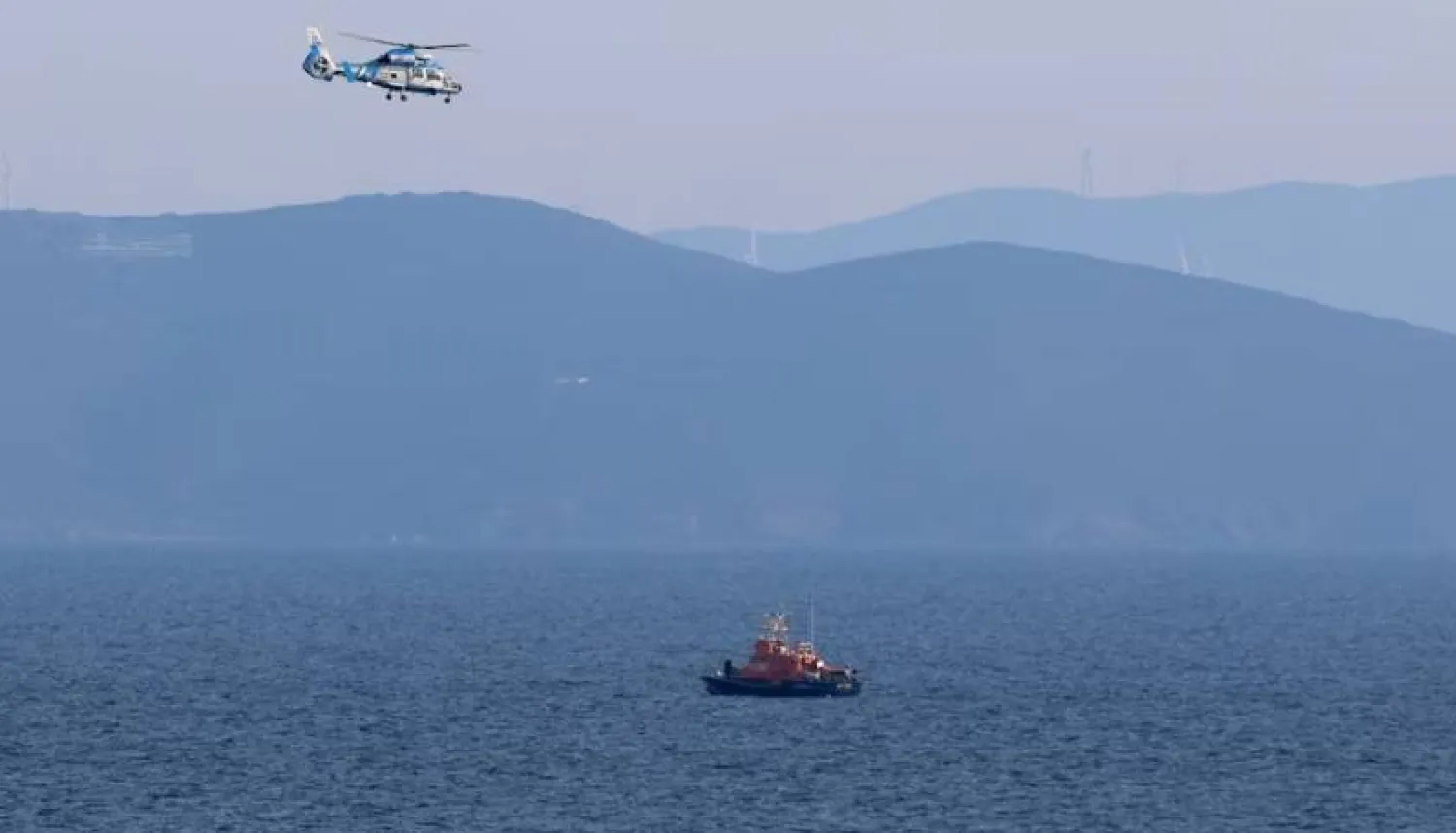
One person died and seven others were missing Saturday after a migrant boat sank in the Aegean Sea off the coast of Türkiye, the Turkish coast guard said.

Thirty-seven passengers on a rubber dinghy which took on water before dawn off the western city of Dikili, north of Izmir, were rescued alive, the coast guard stated.

Dikili, a small seaside resort, faces the Greek island of Lesbos, some 20 kilometers (12 miles) away.

"Search operations ... are continuing to find the seven missing irregular migrants," the coast guard said.

Shipwrecks are common for perilous crossings to the Greek islands, which are a gateway to the European Union.

Nearly 1,900 migrants either disappeared or were found drowned in the Mediterranean in 2025, according to the International Organization for Migration.