


Settler Movement ‘Hilltop Youth’ Plans Infiltrating Likud Party

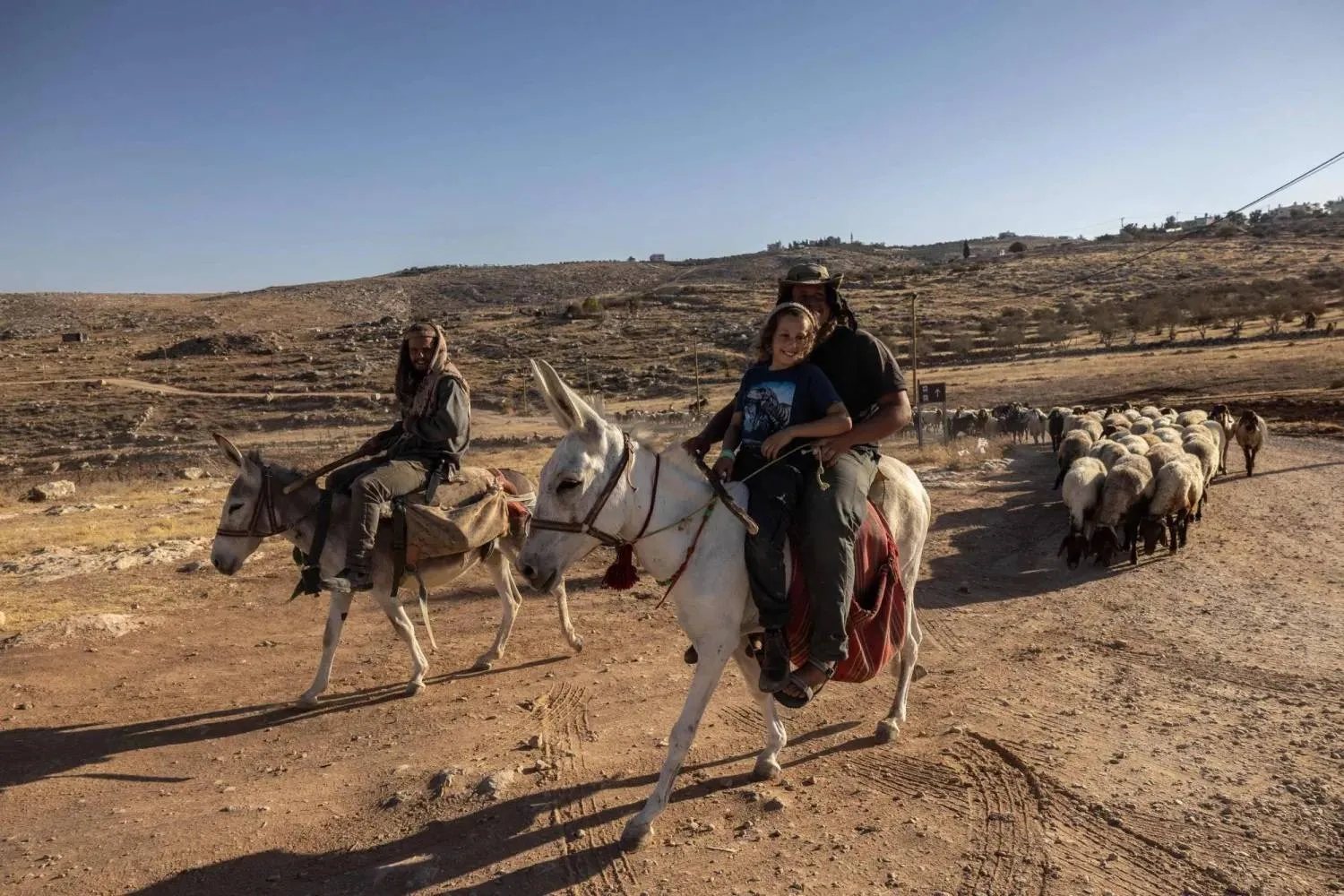
Israeli settlers ride donkeys and herd goats and sheep near a settlement outpost in the occupied West Bank, June last year (AFP)
TT

Settler Movement ‘Hilltop Youth’ Plans Infiltrating Likud Party

Israeli settlers ride donkeys and herd goats and sheep near a settlement outpost in the occupied West Bank, June last year (AFP)

Political sources in Tel Aviv said on Wednesday that the settler organization Hilltop Youth, which carries out attacks against Palestinians and even Israeli soldiers, has devised a plan to place its representatives within Prime Minister Benjamin Netanyahu’s Likud party to influence decision-making in favor of settlement expansion and strengthen its political sway.

The sources said the group manages its political campaign alongside hundreds of its members’ attacks on Palestinians in the West Bank, which include shootings, physical assaults, arson of vehicles and homes, targeting of olive harvesters, land seizures, and the establishment of new settlement outposts.

Yedioth Ahronoth newspaper published an internal post by the group on Wednesday, stating: “We in the hills are running representatives for the Likud Central Committee in the Binyamin branch. For many long years we have been facing challenges from within and without, physically preventing Palestinian takeover of our land. In order to continue succeeding in this important mission, we are trying to bring several representatives from the hills into the Likud Central Committee, so we can influence Knesset members and ministers.”

Sources told the newspaper that the initiative is still in its early stages, and it is difficult to predict how successful the group will be in Likud’s internal elections for the next Knesset candidate list. Israel Ganz, head of the Binyamin Regional Council, is also head of Samaria Settlements in the Nablus area, who last week criticized Hilltop Youth after its members attacked Israeli soldiers.

The group considers him conciliatory and has called for his removal.

Former Detainees

Yedioth Ahronoth noted that some members of the organization are “highly problematic individuals, some of whom were previously detained on suspicion of nationalist crimes.”

The infiltration of Hilltop Youth into Likud has been ongoing for years but remained largely unpublicized. The announcement comes after the evacuation of an unauthorized settlement outpost this week, which sparked disagreements between settler leaders and the organization.

The evacuated outpost had been occupied by Hilltop Youth members, who seized the land without coordinating with any authority, effectively declaring themselves its owners. The land was earmarked by the Gush Etzion Settlement Council and the outpost legalization directorate under Minister Bezalel Smotrich for the construction of hundreds of new housing units.

The newspaper said the outpost mirrors similar unauthorized settlements across the West Bank, all established after Hilltop Youth seized land. The group fears that other outposts may be evacuated to allow settlement expansion or new outpost construction, one of the reasons behind its move to submit a candidate list to Likud.

The report added that supporters of the Hilltop Youth list are “extremists who have been arrested and questioned by Shin Bet on suspicion of nationalist (terrorist) crimes.”

Even when they presented their list at Likud headquarters in Tel Aviv, police detained one member on suspicion of carrying out “price tag” attacks against Palestinians.

Upcoming Party Elections

Internal elections for Likud’s candidate list for the upcoming general Knesset elections are scheduled for next week. Hilltop Youth representatives will participate in determining who will sit on the party’s Central Committee for the coming years.

The Hilltop Youth list will compete with other Likud factions, including one led by Israel Ganz and another by Likud MK Avichai Boaron.

In response to rising Hilltop Youth violence, Netanyahu announced on Tuesday that he would hold two meetings on Thursday to address the phenomenon, focusing on settler terrorism through “educational measures” in one session and “legal tools” in the other.

Israeli media reported that Security Minister Israel Katz, Justice Minister Yariv Levin, and two ministers associated with extremist settlers, Bezalel Smotrich and Itamar Ben Gvir, along with police officials, the government coordinator for the occupied territories, and Shin Bet representatives, were invited to attend.

Government sources said they expect Shin Bet chief David Zini to recommend monitoring Hilltop Youth members with electronic ankle monitors, though the cabinet is not expected to approve such a measure.


Houthi Schools in Yemen Turned into Early Recruitment Camps

Yemeni students attend morning assembly at a school in Sanaa (EPA)
TT

Houthi Schools in Yemen Turned into Early Recruitment Camps

Yemeni students attend morning assembly at a school in Sanaa (EPA)

Since rising to power in 2014, Yemen’s Houthi movement, Ansar Allah, has systematically entrenched itself within the education system, rewriting curricula, renaming schools, and embedding ideological programs.

Classrooms have become a frontline in a broader struggle over identity and influence, and a pipeline for recruiting young people.

As public schools were sidelined and weakened, the group built a parallel model, recasting education as a controlled, camp-like environment. At its core is a network branded “Martyr of the Quran Schools,” positioned as an alternative system.

Seizure and spread

The shift has been enforced on the ground. Public school buildings have been taken over and rebranded. Kamran School in Ibb, for example, was renamed under the new label. Other schools have been given the names of Houthi figures, a move educators say aims to replace the state’s education identity.

The expansion has also reached mosques, including the Grand Mosque in Dhamar, Al-Shamsiya School, and Al-Firdous Mosque in Sanaa’s Sawaan district, which have been repurposed into centers under the same banner.

Within three years, the model has spread across Houthi-held areas, moving beyond major cities into districts.

The schools operate as closed boarding schools, providing housing, food, and supplies while imposing a tightly controlled ideological framework. The name itself invokes the group’s founder, Hussein Badr al-Din al-Houthi.

From headline to pattern

On March 3, 2024, Houthi authorities said 3,000 students had graduated from the network.

The figure appears routine. But it reflects just two years of intensive, closed education, from a project that only began to take shape in 2022, underscoring the speed of expansion.

Houthi media say the model started with one school in Sanaa, then one per province, before spreading rapidly, especially in the capital.

Accounts suggest similarities with the system used by Hezbollah in Lebanon. Houthi officials frame the schools as part of the founder’s vision to produce generations “aware of the Quran” and able to confront cultural challenges.

Blurred structures

The schools carry the formal name “Martyr of the Quran Secondary Schools for Sharia Sciences,” but key details, including their legal basis and oversight, remain unclear.

References to a “republican decree” establishing them have surfaced, but no confirmed evidence exists. Reports also refer to boards of directors and links to education officials, yet the structure remains opaque.

An entity described as the General Administration of Secondary Schools for Sharia Sciences, reportedly led by Houthi figure Mohammed al-Tawqi within the education ministry, appears to be connected, though its exact role is unclear.

The group’s “General Mobilization” apparatus, tasked with recruitment and ideological training, is a constant presence. It operates directly under Houthi leadership and coordinates with religious bodies, mirroring models used by Hezbollah and Iran-aligned groups elsewhere.

No oversight

A teacher in Sanaa province, speaking anonymously, said the schools operate outside formal educational supervision. Curricula and programs are not published, leaving their content difficult to assess.

Management, he said, is tied to Ansar Allah’s cultural and educational offices, not standard education authorities.

Funding is similarly opaque. The schools are backed by the group’s resources, including levies and compulsory contributions, with Houthi media pointing to the Zakat Authority and the General Mobilization body as sources.

Recruitment and incentives

Each academic year, aligned with the Islamic calendar adopted by the group, enrollment opens to students aged 15 to 17 who have completed basic education.

Admission requires interviews and tests that assess ideological commitment and readiness for a full two-year residential program.

The incentives are clear: full accommodation, meals, clothing, and free tuition, alongside intensive daily programs described as faith-based.

The schools currently focus on secondary education, but expansion is underway. Graduates receive certification from an affiliated religious academy and can pursue further study or join institutions, including the group's military colleges.

A controlled day

Details of the curriculum remain scarce, but officials describe a rigid schedule. According to a school supervisor in Sanaa, the day starts at 4 a.m. with prayers and Quran study, followed by classes, then extended ideological sessions in the afternoon and evening.

Students study the writings of Hussein al-Houthi, attend lectures, and watch group-produced content as part of sustained indoctrination.

The program runs for two years in a closed setting, largely cut off from families.

Teachers are also drawn in. With public sector salaries disrupted, many join these schools, where pay is available, but they must first undergo ideological training.

Beyond the classroom

Activities extend beyond formal lessons. Students visit sites linked to Houthi leaders, including the grave of Hussein al-Houthi and that of Saleh al-Sammad, framed as “faith-building” experiences.

Annual events, including “Martyr’s Day,” feature speeches, marches, and staged combat scenes, reinforcing themes of jihad and allegiance.

A former teacher said the activities follow a structured program designed to build loyalty before academic learning. Students are trained in public speaking, media presence, and simulated combat, and take part in security-style exercises.

Militarization of school life

Military elements are integrated into daily life, with exposure to weapons and organized student parades, such as one held in Raymah province in February 2025.

School environments reinforce the messaging, with classrooms filled with images, slogans, and ideological language tied to the group.

“It is not an educational institution,” one teacher said. “It is a place to shape students.”

Pressure and withdrawal

A student in Sanaa province, identified as Sadiq, said he left after his father learned of the school’s ideological focus.

He described a reduced academic schedule, with only three classes a day, while the rest of the time is devoted to lectures.

“After the lecture, if a student cannot answer questions, he is beaten,” he said, adding that many stopped attending under the pressure.

Parallel system, uncertain future

The rise of these schools has created a parallel education track alongside the recognized system, leaving students exposed if conditions shift.

Houthi media promote student statements dismissing other schools as lacking real knowledge, reflecting a broader effort to discredit formal education.

Graduates emerge shaped by a strong ideological framework, raising questions about their academic and professional prospects and the long-term impact on Yemen.

Education, once a space for critical thinking and opportunity, is being recast as a tool of mobilization, reshaping a generation in line with a narrow ideological project.


Khamenei Message to Hezbollah Chief Reaffirms Ties, Sends Political Signals

A woman reacts as mourners gather on March 29, 2026, in the Choueifat area on the outskirts of Beirut during the funeral of journalists killed the previous day in an Israeli strike in south Lebanon. (Photo by ibrahim AMRO / AFP)
TT

Khamenei Message to Hezbollah Chief Reaffirms Ties, Sends Political Signals

A woman reacts as mourners gather on March 29, 2026, in the Choueifat area on the outskirts of Beirut during the funeral of journalists killed the previous day in an Israeli strike in south Lebanon. (Photo by ibrahim AMRO / AFP)

A message from Iran’s Supreme Leader, Mojtaba Khamenei, to Hezbollah Secretary General Naim Qassem, thanking him for condolences over the death of his father, “leader of the Islamic Revolution,” came at a pivotal moment of regional escalation, giving it clear political weight and signaling messages to both domestic and foreign audiences.

The message reaffirms the depth of ties between Iran and Hezbollah, reinforces the group’s place within Tehran’s strategy, and signals a push to sustain open confrontation.

It made no reference to the Lebanese state, even as officials in Lebanon seek to “disassociate” from Iran after Hezbollah opened the southern front in support of Tehran. Authorities have taken steps in that direction, including expelling the Iranian ambassador and banning the group’s military wing.

“Reaffirming the obvious”

Lebanese ministerial sources described the message as “a reaffirmation of the obvious,” saying it “offers nothing new, but reinforces an established reality.”

“The relationship between Iran and Hezbollah has never been severed,” the sources told Asharq Al-Awsat, pointing to continued coordination and joint operations in the current war.

They said the message aligns fully with both sides’ declared positions, making it “a restatement of existing policy.” The core of the relationship, they added, is now explicit and entrenched, forming part of a fixed political landscape that goes beyond the traditional concept of the state.

One battle, with the US named as an enemy

Political analyst Ali al-Amine said the message underscores that Iran and Hezbollah see themselves as fighting a single battle against a common enemy, reflected in references to “steadfastness” against the United States and Israel.

He said the narrative, invoking Hezbollah and Iranian figures killed by Israel, reinforces a shared path and common fate in the war.

Al-Amine noted one sharper shift, the explicit placement of the United States alongside Israel as an equal enemy, highlighted in the closing reference to the “American-Zionist enemy.”

Khamenei told Qassem he is leading the movement at a defining moment in the resistance’s history, voicing confidence in his ability to defeat Israeli plans and restore pride to the Lebanese people.

He reaffirmed that Iran’s policy remains aligned with the path of the late imam and the “martyred leader,” pledging continued support for the resistance against Israel and the US.

Ignoring the Lebanese state, overlooking the cost

Al-Amine said the message pointedly omits any reference to the Lebanese state, addressing only the Lebanese people and speaking directly to Hezbollah.

“All the focus is on confrontation and the role of the party,” he said, with no acknowledgment of state authority or decision-making power.

He added that the message also overlooks the scale of destruction and displacement in Lebanon. More than one million people have been displaced, most from the Shiite community, including many Hezbollah supporters forced from their homes and scattered across the country.


‘Iran Data’ Guides Israel to Hezbollah Leaders in Lebanon

Firefighters extinguish blazes in cars hit by an Israeli strike in Beirut’s Jnah area at dawn Wednesday, killing Hezbollah commander Youssef Hashem (AP)
TT

‘Iran Data’ Guides Israel to Hezbollah Leaders in Lebanon

Firefighters extinguish blazes in cars hit by an Israeli strike in Beirut’s Jnah area at dawn Wednesday, killing Hezbollah commander Youssef Hashem (AP)

The assassination of senior Hezbollah commander Youssef Hashem at dawn on Wednesday has laid bare signs of security breaches the group had previously said it had resolved before the latest war.

It has also exposed a mix of advanced techniques and what sources describe as Israeli data originating from Iran, alongside the persistent role of human intelligence in tracking targets, security sources and experts told Asharq Al-Awsat.

Since the war began on March 2, Israel has carried out a string of assassinations targeting Hezbollah and Revolutionary Guards commanders on Lebanese soil, most notably Hashem, who was killed in a missile strike on a parking garage in the Jnah area on the outskirts of Beirut.

Emerging security factors

Security sources tracking the killings and the pursuit of Hezbollah members said the major breach that existed before the previous war, which erupted in September 2024 and ended in November that year, appeared largely absent at the outset of the current conflict.

They attributed this to a set of changes. Hezbollah tightened security measures, shifted communication methods, evacuated headquarters and apartments, and abandoned communication devices altogether.

Newly appointed figures replacing assassinated leaders were largely unknown. Israel, meanwhile, was unable to rebuild the intelligence database it had compiled over the years in the short window between the two wars. It also diverted attention to gathering intelligence from Iran, reflecting a shift in priorities.

As a result, assassinations declined in Lebanon in the early phase of the war, despite limited breaches that still enabled targeted strikes on senior figures, including Hashem, whom Israel identified as Hezbollah’s southern region commander.

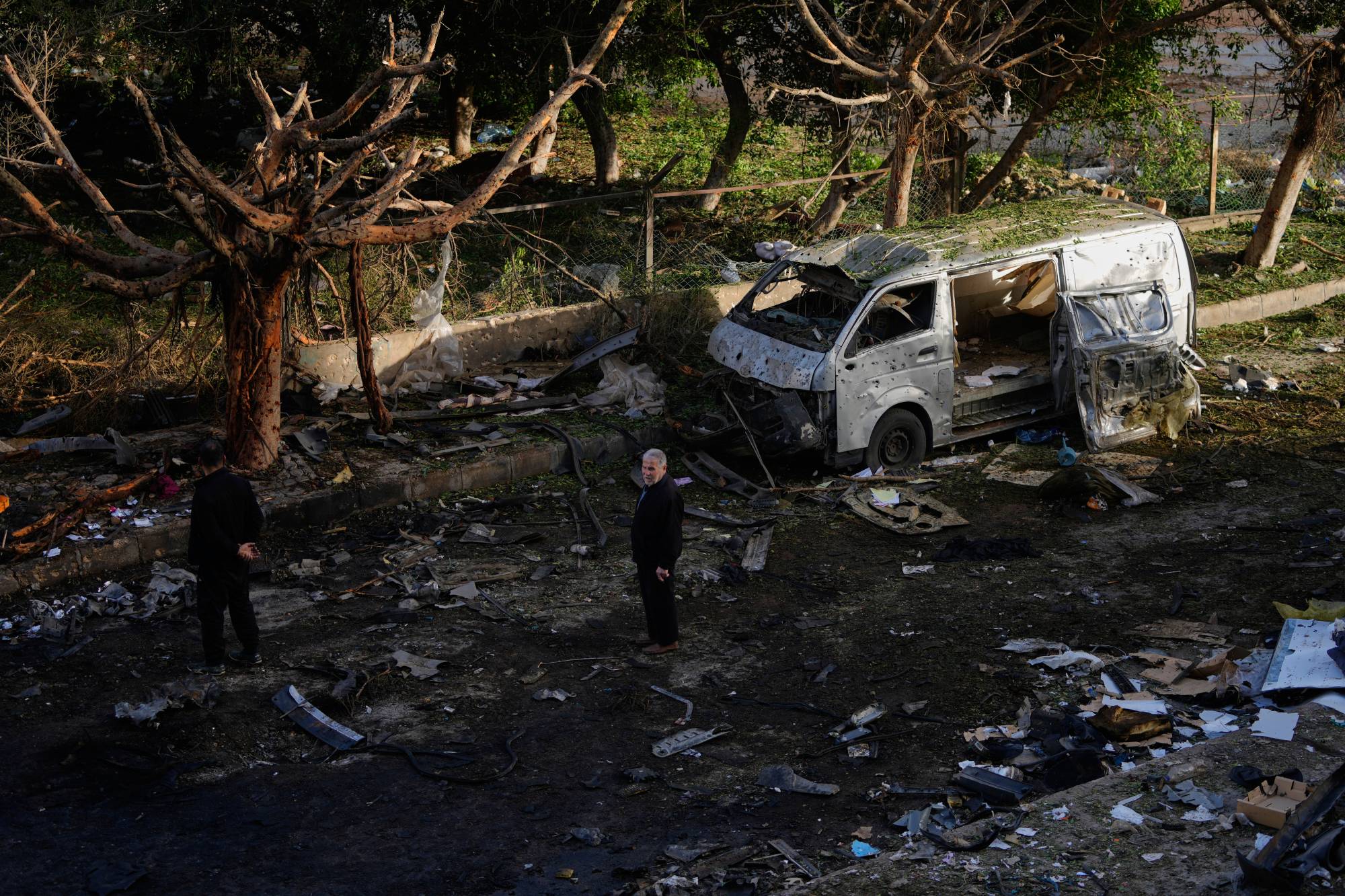
People stand near a damaged van beside scattered debris following an Israeli strike in Beirut, Lebanon, Wednesday, April 1, 2026. (AP Photo/Hassan Ammar)

Non-Lebanese data sources

The sources said the most decisive factor in identifying targets lay in non-Lebanese data, pointing to an intelligence bank compiled from Iranian and Palestinian networks.

That pattern is reflected in the profiles and locations of those targeted.

Israel said on Monday it killed Hezbollah commander Ibrahim Rakin in a strike on an apartment in Beirut’s southern suburbs, describing him as the deputy commander of Unit 1800, responsible for supporting Palestinian militants and managing Hezbollah operations in countries neighboring Israel.

Israel also said it killed several Iranian figures in Lebanon, including two central commanders in the Lebanon Corps affiliated with the Quds Force of Iran’s Revolutionary Guards who were operating in Beirut, one of them in the Ramada Hotel in the Raouche area.

On March 11, the Israeli military said it had targeted Hisham Abdel Karim Yassin, describing him as a senior commander in Hezbollah’s communications unit and in the Palestine Corps affiliated with the Quds Force, the external arm of the Revolutionary Guards.

The sources said Israel’s Iran-based intelligence pool helped it track individuals inside Lebanon. Most targets maintained contact with Iranians, making them easier to trace through Iranian movements.

They added that Iranian figures killed early in the war were widely believed to have been carrying mobile phones, making them easier to locate and track, as were individuals linked to those handling the Palestinian file.

The pattern is not new. In the previous war, Hezbollah leaders were killed alongside Iranian figures, including a Revolutionary Guards official killed when Hezbollah Secretary General Hassan Nasrallah was assassinated, and another killed with Radwan force commanders on September 20, 2024, reinforcing indications that Israeli intelligence sources extend into Iran.

Another hypothesis suggests that Iranian, Palestinian, and Lebanese figures coordinating with them are compelled to use communication devices, exposing them to surveillance.

Foreign operatives also tend to move through populated areas with surveillance cameras, making them easier to track through camera infiltration.

The sources did not rule out human intelligence breaches, pointing to operatives working for Israel’s Mossad in Lebanon, Iran, or the Palestinian territories.

Separately, Israel said on Wednesday it killed the head of the engineering branch in the Lebanon Corps of the Quds Force in a strike in the Mahallat area in central Iran.

The Israeli military said its air force targeted engineer Mehdi Vafaei, who had led infrastructure projects in Lebanon and Syria for two decades.
