

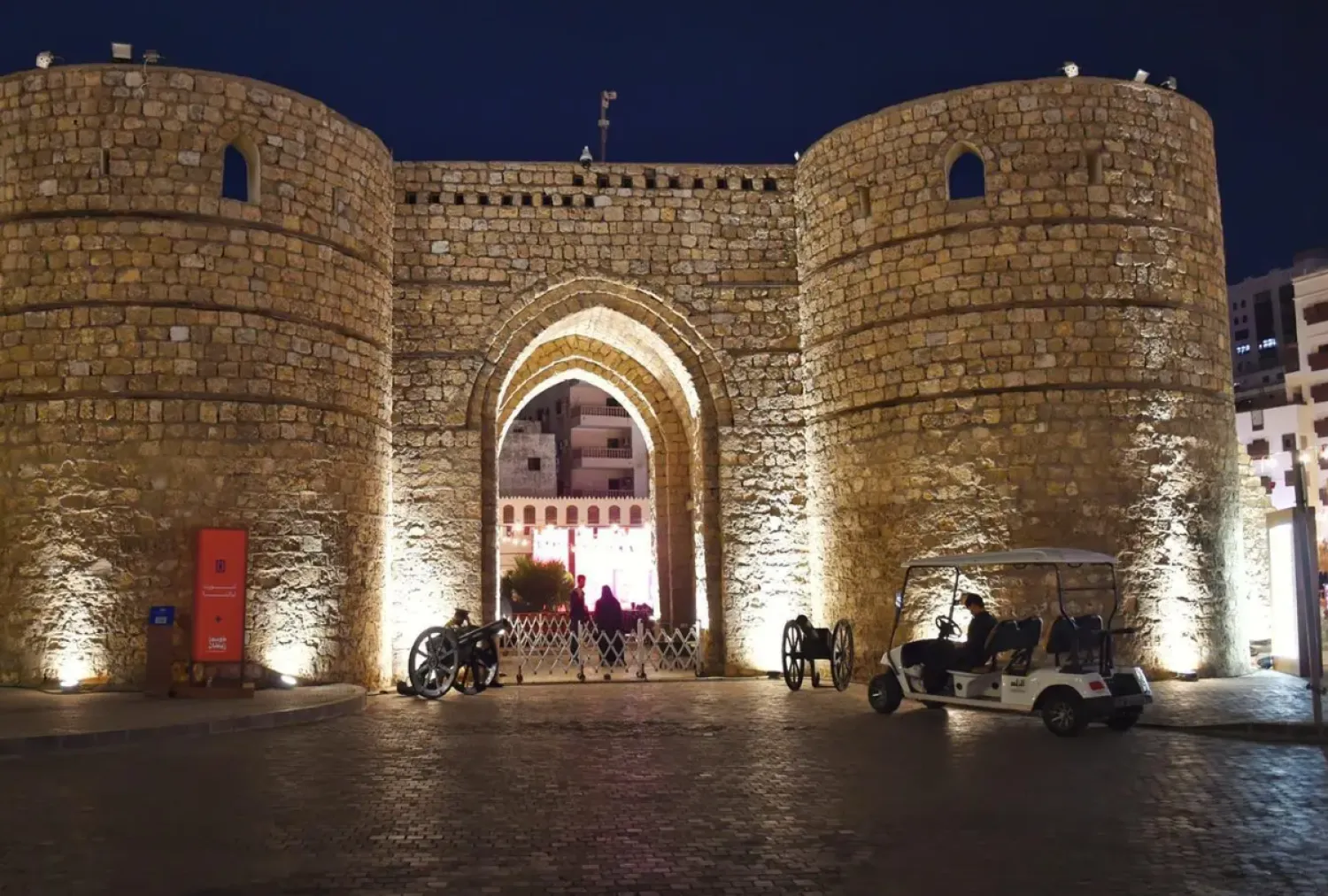

Red Sea Museum to Open in Historic Jeddah on December 6

The Red Sea Museum will also launch with a vibrant public program of workshops - SPA
TT

Red Sea Museum to Open in Historic Jeddah on December 6

The Red Sea Museum will also launch with a vibrant public program of workshops - SPA

The Museums Commission announced that the Red Sea Museum will open to the public on December 6, 2025, in the heart of Historic Jeddah, a UNESCO World Heritage Site.

Housed in the restored Bab Al-Bunt building, a regional landmark which once served as the gateway to Saudi Arabia, the museum will serve as a cultural anchor for the region, dedicated to preserving and sharing the Red Sea’s tangible, intangible, and natural heritage.

Visitors will experience a world-class museum that blends historic architecture with cutting-edge design, innovation, and inclusive storytelling, SPA reported.

Minister of Culture and Chairman of the Museums Commission Prince Bader bin Abdullah bin Farhan affirmed that the Red Sea Museum embodies the Kingdom’s commitment to safeguarding and preserving the national heritage, and to building a cultural infrastructure that enhances quality of life through culture, the arts, and education, while empowering creatives in support of the goals of Saudi Vision 2030.

The Red Sea Museum is the guardian of the Red Sea’s natural and cultural heritage. It pieces together the region’s stories of cultural exchange, creativity, and connection through an inclusive museum experience, driven by museological expertise, innovation, and the latest museum design and technology.

The museum’s vision is to foster cross-cultural exchange of knowledge, celebrating the diversity of the Red Sea and the legacy of its people through time. Its mission is to revive Bab Al-Bunt into a world-class museum, dedicated to preserving and celebrating the Red Sea’s rich natural and cultural heritage. It brings communities together through dynamic exhibitions and programming, driven by a commitment to social and environmental sustainability.

The museum is located inside the historic Bab Al-Bunt building, at the point where land meets sea. The building has been restored according to the highest environmental sustainability standards for heritage conservation, as part of the Quality of Life Program initiatives supporting the goals of Saudi Vision 2030 to elevate the cultural sector’s infrastructure and strengthen its sustainable urban presence.

Bab Al-Bunt has retained its architectural spirit and regained its role as Jeddah’s first gateway to the world over the past century. Today, it returns as a cultural landmark that connects past and present, highlighting Historic Jeddah as a bridge between cultures along the Red Sea coast.

The museum’s permanent collection features over 1,000 artifacts and artworks presented across seven themes in 23 galleries. These include Al-Bunt, mapping the history and transformation of the Bab Al-Bunt building itself; Salam Upon the Sea, exploring the origins and cultural significance of the Red Sea; Orientation, unearthing the navigation tools and methods used by sailors and travelers; A Living Sea, celebrating the region’s biodiversity and coastal communities; Sea of Abundance, charting the Red Sea’s maritime trade, cartography, and cultural exchange; Sea of Faith, tracing historic journeys to sacred cities and iconic artifacts; and Sea of Inspiration, showcasing artistic interpretations of the Red Sea.

Historic artifacts such as Chinese porcelain, incense burners, coral, jewelry, navigational tools, astrolabes, maps, sacred manuscripts, and photographs are presented alongside modern and contemporary artworks by Saudi, regional, and international artists, creating a dialogue between past and present.

Opening alongside the museum, the inaugural temporary exhibition The Gate of Gates by Saudi artist Moath Alofi, curated by Philippe Cardinal, documents the transformation of Bab Al-Bunt and its role as a gateway between past and present. The exhibition invites visitors to reflect on the building’s layered history and its renewed role as a cultural landmark.

The Red Sea Museum will also launch with a vibrant public program of workshops, masterclasses, talks, and panel discussions. Highlights include artisan training through Made in the Red Sea, collaborative sustainability projects such as Red Sea Art, and cultural performances including Music of the Red Sea, a unique symphony and parade celebrating the region’s musical traditions.

The opening of the Red Sea Museum reflects the mission of Historic Jeddah to preserve cultural heritage in a modern, sustainable form while creating opportunities for economic and cultural growth.



'Talking Drum' Looted by France in 1916 Back in Ivory Coast

A crate containing the Djidji Ayokwe drum, at the airport in Abidjan, Ivory Coast. (Photo by Issouf SANOGO / AFP)
TT

'Talking Drum' Looted by France in 1916 Back in Ivory Coast

A crate containing the Djidji Ayokwe drum, at the airport in Abidjan, Ivory Coast. (Photo by Issouf SANOGO / AFP)

The Djidji Ayokwe "talking drum", which was looted by French colonial troops in 1916 and taken to France, arrived back in Ivory Coast Friday, in the latest repatriation of stolen artifacts.

The wooden drum, more than three meters (10 feet) long and weighing 430 kilos (950 pounds), was used by the Ebrie tribe to transmit messages.

It was officially handed over on February 20 after France's parliament approved removing the artifact from the national museum collections to enable its return.

Ivory Coast had asked in late 2018 for the return of the Djidji Ayokwe among 148 works of art taken during the colonial period.

It arrived aboard a specially chartered plane at Ivory Coast's main city Abidjan and remained inside a huge wooden crate stamped "fragile", AFP journalists saw.

"It's an historic day and I feel deep emotion," Culture Minister Francoise Remarck said, welcoming its arrival at the airport, where the Ebrie community also sang and played drums.

"We are living a moment of justice and remembrance," the minister added.

French President Emmanuel Macron promised in 2021 to send the drum and other artifacts back home to the west African country.

It is one of hundreds of objects France is preparing to send back to Africa, with the efforts set to be accelerated by the passing of a new law to authorize mass repatriations.

"We are happy and relieved to know that this sacred piece of our culture is back on its native land," Aboussou Guy Georges Mobio, an Ebrie village chief, told AFP.

The drum will initially be held in a "safe space" to allow it to acclimatize, the culture minister said.

It is due to go on display at the Museum of Civilizations in Abidjan which has been specially renovated.

The "talking drum" was used by the Ebrie community to warn of danger, mobilize for war or call villagers to ceremonies.

It was seized by colonial authorities in 1916 before being shipped to France in 1929 and exhibited in Paris.

Senegal and Benin have also asked for the repatriation of their treasures.

In late 2020, the French parliament adopted a law providing for the permanent return to Benin of 26 artifacts from the royal treasures of Dahomey.

The return of cultural artifacts taken from ex-colonies in Africa and elsewhere has become a sensitive issue, with museums, institutions and collectors in Europe and the United States facing pressure to give them back.


Red Sea Fund Launches Second Round to Support Film Projects in Production Stage

File photo of the fifth day of the Red Sea International Film Festival - SPA
TT

Red Sea Fund Launches Second Round to Support Film Projects in Production Stage

File photo of the fifth day of the Red Sea International Film Festival - SPA

The Red Sea Fund, affiliated with the Red Sea Film Foundation, announced the opening of applications to support film projects in the production stage within the second round of this year’s support program, which will continue until March 21, as part of its efforts to enhance the cinema industry and empower innovators in the region, SPA reported.

The round aims to support promising cinematic voices from the Kingdom and the Arab world, as well as filmmakers from Africa and Asia, through financial grants that help complete film projects and present their creative narratives globally, with a special focus on projects ready to enter production and begin filming.


Prince Mohammed bin Salman Project Restores Historic Al-Jami' Mosque in Tabuk Region

The renovation utilized modern technologies to restore the mosque's original identity - SPA
TT

Prince Mohammed bin Salman Project Restores Historic Al-Jami' Mosque in Tabuk Region

The renovation utilized modern technologies to restore the mosque's original identity - SPA

The Prince Mohammed bin Salman Project for the Development of Historical Mosques has completed the restoration of Al-Jami' Mosque in Duba, Tabuk Region, as part of its mission to preserve the Kingdom's architectural heritage under Vision 2030.

As one of Duba’s oldest landmarks, the mosque is deeply intertwined with the city’s maritime history, traditionally serving as a central meeting point for sailors. Throughout its history, the mosque underwent several construction phases, including significant contributions by King Abdulaziz and King Fahd, before its selection for the current national development project, SPA reported.

The renovation utilized modern technologies to restore the mosque's original identity, increasing its area to 972.23 square meters and its capacity to 779 worshippers. The architectural style is inspired by traditional Red Sea heritage, incorporating natural materials like stone, mud, and wood for intricate mashrabiyas.

Executed by specialized Saudi firms, the project balances traditional standards with sustainability to rehabilitate the site for worship while highlighting its cultural significance. By restoring such landmarks, the project ensures the preservation of the Kingdom’s diverse architectural and social memory for future generations.