
Hisham Al Bahkali, President of GE Vernova in Saudi Arabia, said that the Kingdom today stands as a central pillar in the company’s global strategy for transforming the energy sector. He noted that GE’s presence in the country, spanning nearly 90 years, has evolved from a commercial footprint into a deep strategic partnership that contributes to the goals of Saudi Vision 2030, particularly in energy efficiency, economic diversification, and the localization of knowledge and technology.
Al Bahkali told Asharq Al-Awsat that GE Vernova’s strategy in Saudi Arabia is closely aligned with national power sector transformation plans. The company is helping support the Kingdom’s ambition to generate half of its electricity from natural gas and the other half from renewable sources by 2030, ultimately achieving net-zero emissions by 2060.
“We are part of a broader effort to build a more sustainable energy future for the Kingdom, driven by local expertise, innovation, and long-term partnerships with national entities,” he said.
GE Vernova’s industrial investments in the Kingdom represent a “practical embodiment” of the company’s commitment to Vision 2030, he went on to say.
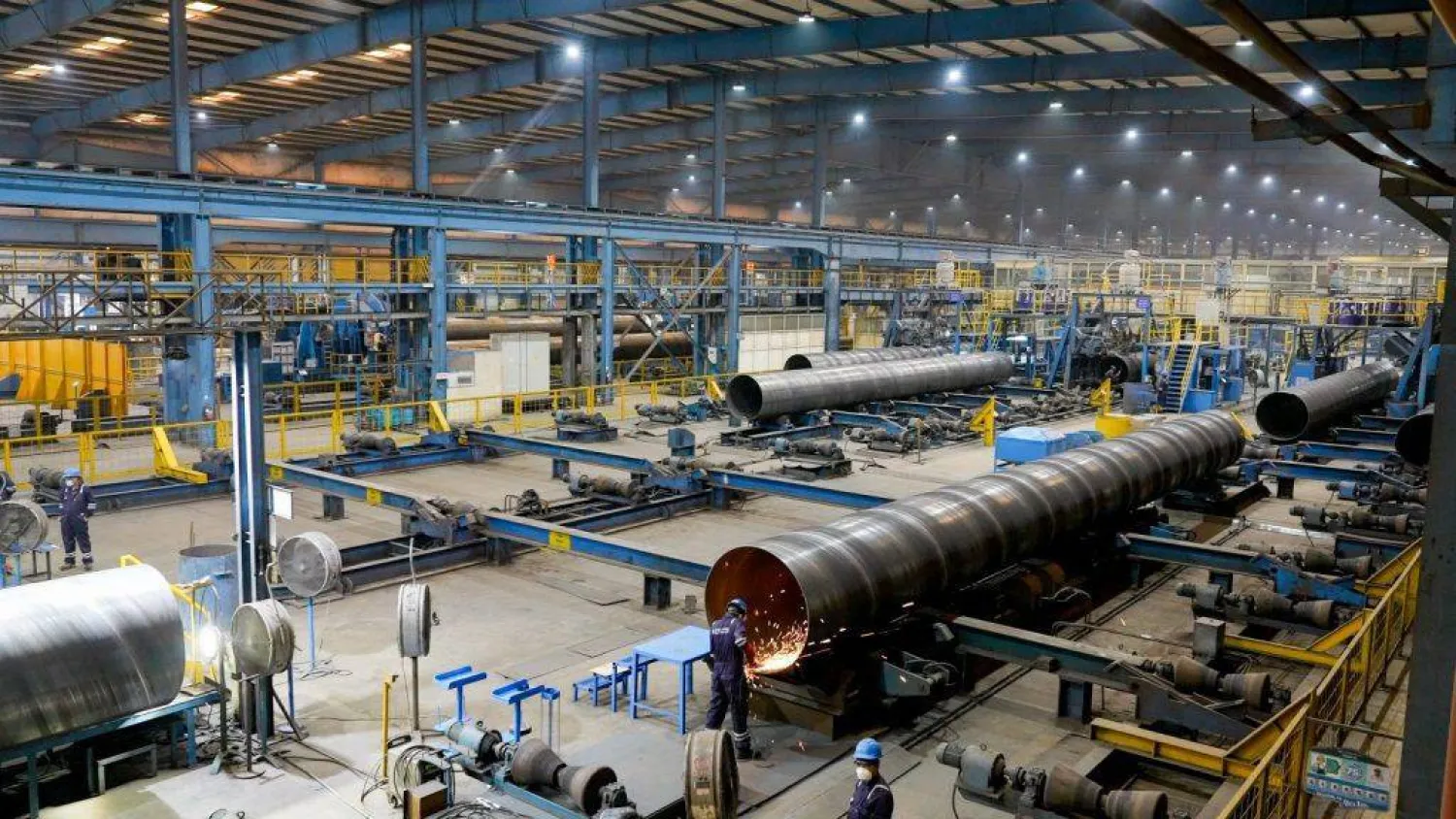
He highlighted the role of GE Saudi Advanced Turbines (GESAT) in Dammam, which successfully manufactured the first HA gas turbine in the Kingdom - an achievement marked by the attendance of Minister of Energy Prince Abdulaziz bin Salman bin Abdulaziz.
The Dammam plant has become an integral part of GE Vernova’s global manufacturing network, exporting gas turbine components to more than 70 countries, even maintaining shipments during the COVID-19 pandemic, said Al Bahkali.
“This reinforces Saudi Arabia’s position as an industrial energy hub,” he stated, “supporting high-value job creation, strong local supply chains, and positioning the Kingdom as an exporter of energy solutions, not merely a consumer.”
Al Bahkali stressed that developing local talent is “at the heart” of GE Vernova’s strategy. The GE Manufacturing & Technology Center in Dammam, which includes manufacturing facilities, a gas turbine service and repair center, and a Decarbonization Center of Excellence, has evolved into a comprehensive platform for training and developing Saudi engineers in advanced technologies and industrial leadership. Saudization at the facility has reached about 65%, with further growth underway.
Al Bahkali added that the company recruits engineers from Saudi universities and sends them to GE facilities worldwide for hands-on experience before taking on leadership roles locally.
Women are also increasingly represented, with around 20% female employment in some departments, and Saudi female engineers now leading full manufacturing cells.
Innovation is another key focus, according to Al Bahkali. GE Vernova is introducing state-of-the-art solutions to the Saudi market, including 7HA.03 gas turbines, among the company’s most powerful and efficient technologies, used in key power plants across the Kingdom while components continue to be manufactured in Dammam.
The Decarbonization Center is also developing low-carbon solutions, carbon capture technologies, and small modular reactors (SMRs) to support Saudi ambitions in hydrogen leadership and a low-carbon energy system.
Al Bahkali highlighted strategic projects supported by GE Vernova in Madinah, Qassim, and Qurayyah, as well as partnerships with the Saudi Electricity Company, including synchronous condenser projects to stabilize the grid as renewable energy expands.
He also cited agreements with ACWA Power and the Saudi Export-Import Bank, covering advanced generation, carbon capture, and technology localization.
“The pillars of Vision 2030, including energy efficiency, economic diversification, and technology localization, directly align with GE Vernova’s mission. We are proud to be part of Saudi Arabia’s new energy story, not only as technology users, but as manufacturers and exporters of solutions to the world,” said Al Bahkali.