


Yemen’s Alimi: There Can Be No State without Security, Comprehensive Reforms

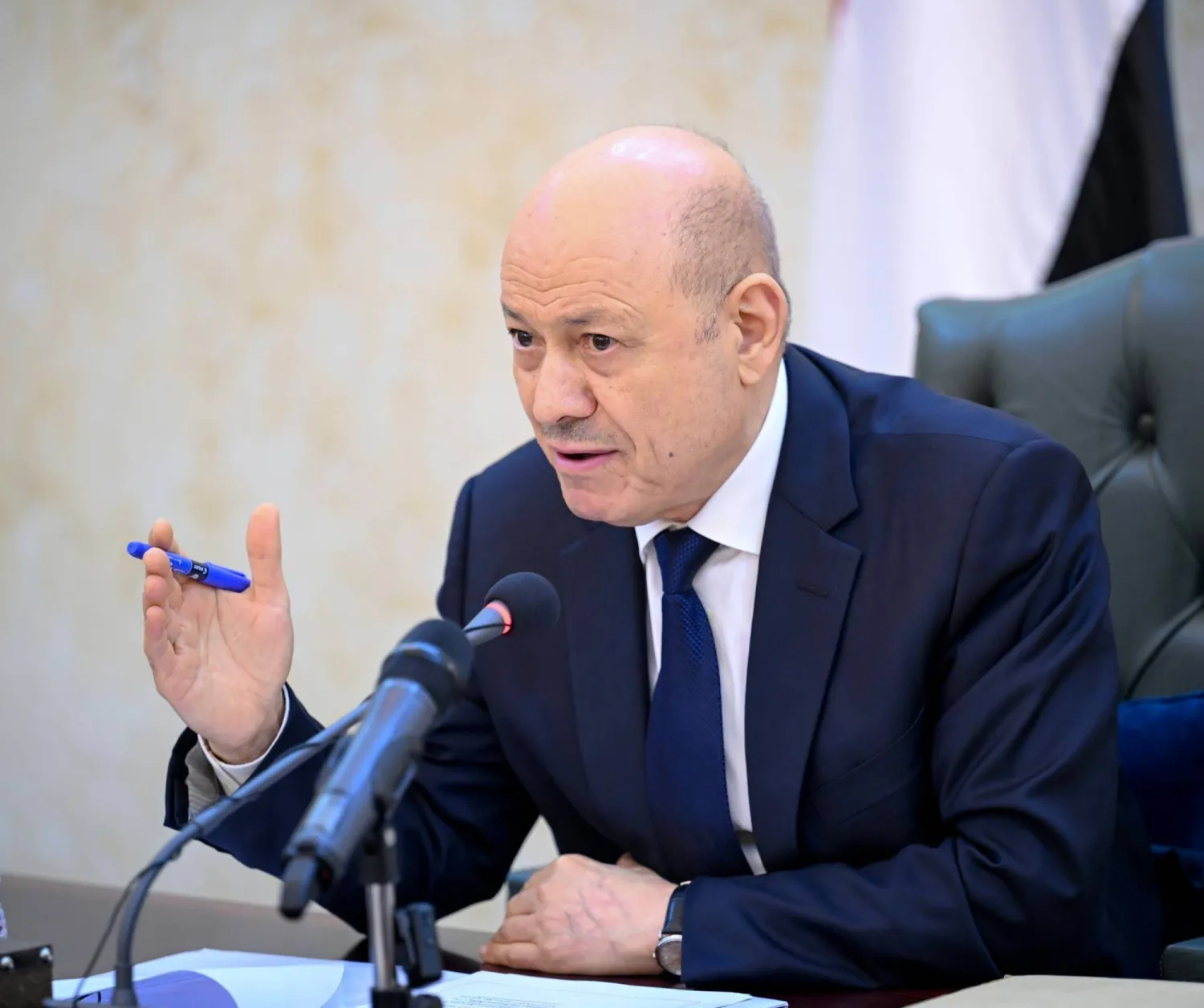
Chairman of the Yemeni Presidential Leadership Council Dr. Rashad al-Alimi. (Government media)
TT

Yemen’s Alimi: There Can Be No State without Security, Comprehensive Reforms

Chairman of the Yemeni Presidential Leadership Council Dr. Rashad al-Alimi. (Government media)

Chairman of the Yemeni Presidential Leadership Council Dr. Rashad al-Alimi underscored on Monday’s the government’s priorities in saving the national economy and consolidating stability.

He held a meeting with the government in the interim capital Aden to underline the importance of reform, security and empowering state institutions, saying they were necessary for the “survival of the state”.

“Economic reforms are the real test for the state,” he remarked, urging officials to focus on providing wages and basic services and goods.

Security must be consolidated, and efforts should be made towards “reclaiming the state,” he continued.

The government has major responsibilities that must not be ignored, he added, warning against being distracted by minor issues while Yemen is confronted with mounting humanitarian, economic and security challenges.

Moreover, al-Alimi stressed the need to unify public revenues and depositing them in the Central Bank. The success of the government begins when it has control over public funds and resources.

He also underlined the importance of the “independence of the Central Bank” and activating auditing tools for the banking sector.

The success of the monetary policy demands “complete cooperation between state institutions,” he said.

Al-Alimi also noted the rising challenges in humanitarian work, saying over 17 million Yemenis are in need of aid. He highlighted the “alarming reports” about obstacles hindering the work of international organizations.

He stressed the need to secure humanitarian work and facilitate the efforts of international workers in the field.

On the security level, he praised the accomplishments in busting terrorist cells, and arms and drugs shipments headed to the Huothis.

Any economic, financial and administrative reform operation needs an effective security and judicial system, he stressed.

“There can be no economy amid fragile security and no development without an independent judiciary,” he declared.

On foreign policy, he urged diplomatic missions to further support the Yemeni people and activate diplomacy in serving the national interest, especially after the designation of the Houthis as a terrorist organization, al-Alimi added. He also called on the government to document the Houthi crimes and violations.

He noted that the Saudi- and UAE-led Arab coalition’s support of the legitimate authorities in Yemen is an “investment in the stability of Yemen and the future of the region.”

Prime Minister Salem bin Braik, who was present at the meeting, underscored the strong ties between the government and Presidential Leadership Council.

The success of the current phase demands respect for the jurisdiction of the executive authority and refraining from meddling in government affairs, he went on to say.

He described the comprehensive reform plan adopted by the council as an “unprecedented national project”, demanding that it be implemented in full.



MSF Calls Israeli Ban a 'Grave Blow' to Gaza Aid

Nanaa Abu Jari cooks outside her tent after it was flooded by rainwater in Nuseirat, central Gaza Strip, Friday, Jan. 2, 2026. (AP Photo/Abdel Kareem Hana)
TT

MSF Calls Israeli Ban a 'Grave Blow' to Gaza Aid

Nanaa Abu Jari cooks outside her tent after it was flooded by rainwater in Nuseirat, central Gaza Strip, Friday, Jan. 2, 2026. (AP Photo/Abdel Kareem Hana)

International charity Doctors Without Borders Friday condemned a "grave blow to humanitarian aid" after Israel revoked the status it needs to operate in Gaza for refusing to share Palestinian staff lists.

Israel on Thursday confirmed it had banned access to the Gaza Strip to 37 foreign humanitarian organizations for refusing to share lists of their Palestinian employees.

Doctors Without Borders (MSF), which has 1,200 staff members in the Palestinian territories, the majority of them in Gaza, said in a statement that "denying medical assistance to civilians is unacceptable under any circumstances".

The medical organization argued that it had "legitimate concerns" over new Israeli requirements for foreign NGO registration, specifically the disclosing of personal information about Palestinian staff.

According to AFP, it pointed to the fact that 15 MSF staff had been "killed by Israeli forces", and that access to any given territory should not be conditional on staff list disclosure.

"Demanding staff lists as a condition for access to territory is an outrageous overreach," the charity said.

MSF also denounced "the absence of any clarity about how such sensitive data will be used, stored, or shared", charging that Israeli forces "have killed and wounded hundreds of thousands of civilians" in Gaza during the course of the war.

It also charged that Israel had "manufactured shortages of basic necessities by blocking and delaying the entry of essential goods, including medical supplies".

Israel controls and regulates all entry points into Gaza, which is surrounded by a wall that began to be built in 2005.

Felipe Ribero, MSF head of mission in the Palestinian territories, told AFP that all of its operations were still ongoing in Gaza.

"We are supposed to leave under 60 days, but we don't know whether it will be three or 60 days" before Israeli authorities force MSF to leave, he said.

Prominent humanitarian organizations hit by the Israeli ban include the Norwegian Refugee Council (NRC), World Vision International and Oxfam, according to an Israeli ministry list.

The ban, which came into effect on December 31, 2025 at midnight, has triggered widespread international condemnation.

Israel says the new regulation aims to prevent bodies it accuses of supporting terrorism from operating in the Palestinian territories.

MSF says it currently supports one in five hospital beds in Gaza and assists one in three mothers in the territory, and urged the Israeli authorities to meet to discuss the ban.


Sources to Asharq Al-Awsat: National Shield Forces Control Al-Khasha Camp

National Shield forces are seen in Hadhramaut. Photo: National Shield forces
TT

Sources to Asharq Al-Awsat: National Shield Forces Control Al-Khasha Camp

National Shield forces are seen in Hadhramaut. Photo: National Shield forces

Sources confirmed that the National Shield forces, led by the Governor of Hadhramaut in Yemen, have taken control of the “37th Strategic Brigade Camp” in the Al-Khasha area.

Field sources told Asharq Al-Awsat that the National Shield forces tightened their grip on Al-Khasha camp after clashes with the Southern Transitional Council (STC) forces, which subsequently retreated.

The sources added that National Shield forces continue to secure and completely clear the areas adjacent to the camp.

According to military sources in Hadhramaut, STC forces “had positioned themselves in areas on the outskirts of the camp early on, fearing airstrikes.”

“These forces were dealt with,” and efforts are underway to secure the area, the sources said.

They confirmed that National Shield forces will continue advancing toward Seiyun to liberate the remaining camps and areas.

Those forces, “with support from brothers in the Kingdom (Saudi Arabia), are proceeding according to clear plans to secure all military camps in the governorates of Hadhramaut and Al-Mahrah.”

The forces “are now present in some areas on the outskirts of Seiyun.”

The sources did not confirm reports about the withdrawal of STC forces from the First Military Region in Seiyun.

“Some STC forces are stationed at Seiyun Hospital and the Republican Palace, while the rest of the locations have been completely evacuated and their forces have withdrawn toward Al-Qatn," they added.


Israel Says It Intercepted 'False Target' after Drone Alert near Lebanon Border

FILE PHOTO: Israel's Iron Dome anti-missile system operates for interceptions as projectiles are launched from Lebanon towards Israel, amid hostilities between Hezbollah and Israel, in northern Israel, November 26, 2024. REUTERS/Ronen Zvulun/File Photo
TT

Israel Says It Intercepted 'False Target' after Drone Alert near Lebanon Border

FILE PHOTO: Israel's Iron Dome anti-missile system operates for interceptions as projectiles are launched from Lebanon towards Israel, amid hostilities between Hezbollah and Israel, in northern Israel, November 26, 2024. REUTERS/Ronen Zvulun/File Photo

The Israeli military said on Friday it intercepted what it described as a "false target" in the northern town ‌of Bar’am after ‌sirens ‌were ⁠triggered by ‌a suspected drone.

A source close to Lebanon's Hezbollah told Reuters the Iran-aligned group is not ⁠linked to the ‌incident.

Lebanon has faced ‍mounting ‍pressure from the ‍United States and Israel to disarm Hezbollah under a truce deal, with Israeli Defense Minister Israel Katz warning ⁠that Israel would "act as necessary" if Beirut fails to curb the group's arsenal.