


Study: One-Week Social Media Break Reduces Symptoms of Depression, Anxiety  

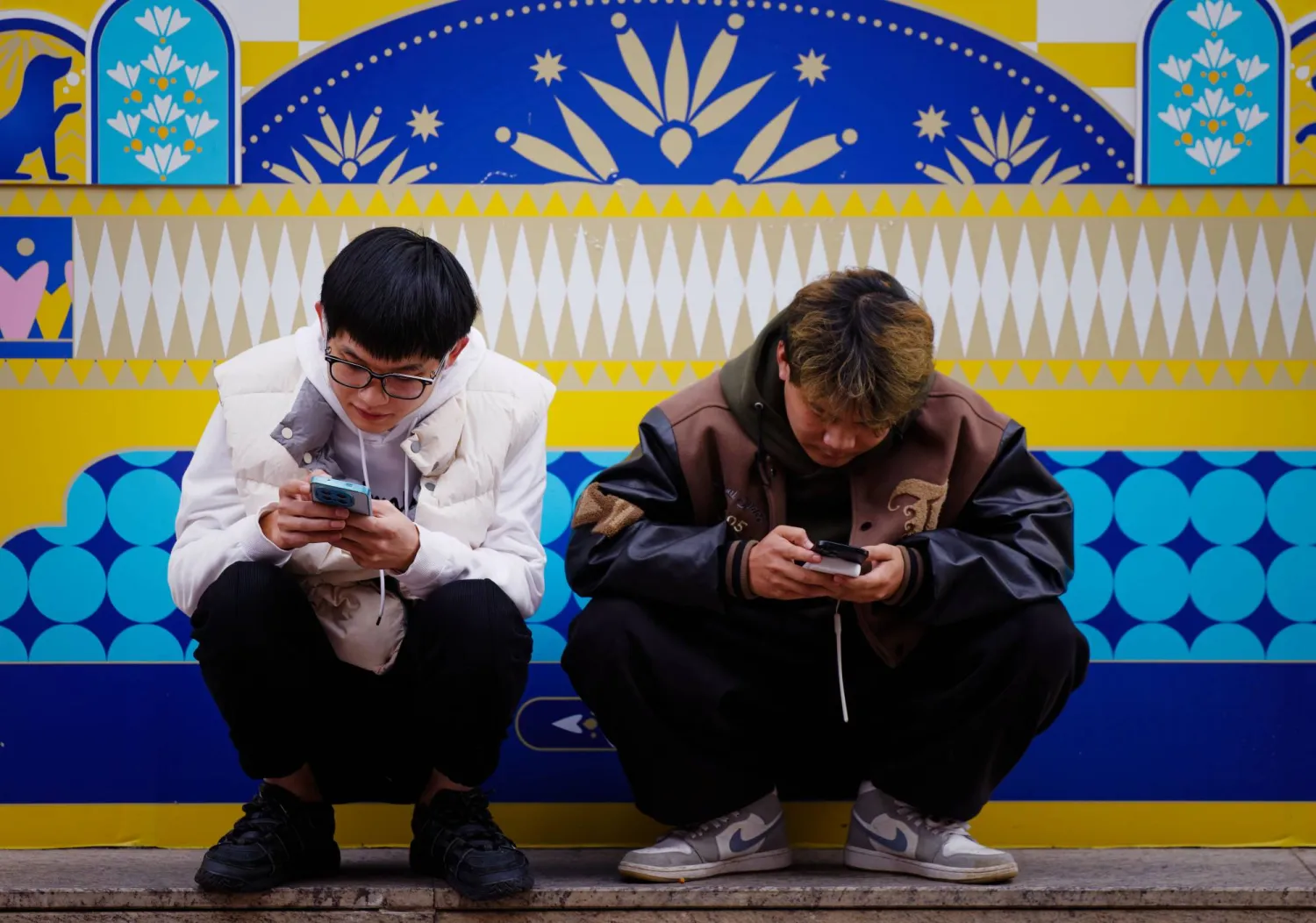
People use their smartphones on a street in Shanghai, China, 20 November 2025. (EPA)
TT

Study: One-Week Social Media Break Reduces Symptoms of Depression, Anxiety  

People use their smartphones on a street in Shanghai, China, 20 November 2025. (EPA)

Dialing down the use of social media for a week reduced symptoms of anxiety, depression and insomnia in young adults, revealed a study published on Monday in the journal JAMA Network Open.

According to The New York Times, researchers followed 295 volunteers, ages 18 to 24, who opted to take a break from social media.

Before and after, the participants answered surveys measuring depression, anxiety, insomnia, loneliness and a number of problematic social media behaviors.

Overall, they reported positive changes: On average, symptoms of anxiety dropped by 16.1 percent; depression by 24.8%; and insomnia by 14.5%.

The improvement was most pronounced in subjects with more severe depression. At the same time, there was no change in reported loneliness — perhaps, the authors wrote, because the platforms play a constructive social role.

Dr. John Torous, an associate professor of psychiatry at Harvard Medical School and a co-author of the study, said reducing social media “certainly would not be your first-line or your only form of care,” but the study showed it could be useful as an adjunct treatment.

“If you’re struggling with a mental health condition, and you have treatment already,” he said, “it’s likely worth experimenting to see whether reducing social media helps you feel better.”

The mental health benefit seemed to come from avoiding problematic social media behaviors, like addictive use and negative social comparison, rather than a change in overall screen time, the authors said.

The findings land in the midst of an intense academic debate over whether excessive screen time causes mental health problems.

At the same time, many specialists have urged caution about concluding that screen time is a central factor in declining mental health, saying that studies have yielded mixed results and that what seems to matter is what young people do online, not how much time they spend there.

Several psychologists said the new study was of limited value because its design allowed for bias.

Dr. Jean Twenge, a professor of psychology at San Diego State University and the author of “10 Rules for Raising Kids in a High-Tech World,” said the study helped discount the longstanding argument that people experiencing mental health struggles simply use social media more.

She noted, however, that more research was necessary to shed light on whether the effects were long-lasting. “The key would be to see how long people can keep up light use of social media,” she said. “If they slide back into old habits, the detox won’t have long-lasting effects,” she said.



Foundation Stone Laid for World’s Largest Government Data Center in Riyadh

Officials are seen at Thursday's ceremony. (SPA)
TT

Foundation Stone Laid for World’s Largest Government Data Center in Riyadh

Officials are seen at Thursday's ceremony. (SPA)

The foundation stone was laid in Riyadh Thursday for the Saudi Data and Artificial Intelligence Authority (SDAIA) “Hexagon” Data Center, the world’s largest government data center by megawatt capacity.

Classified as Tier IV and holding the highest data center rating by the global Uptime Institute, the facility will have a total capacity of 480 megawatts and will be built on an area exceeding 30 million square feet in the Saudi capital.

Designed to the highest international standards, the center will provide maximum availability, security, and operational readiness for government data centers. It will meet the growing needs of government entities and support the increasing reliance on electronic services.

The project will contribute to strengthening the national economy and reinforce the Kingdom’s position as a key player in the future of the global digital economy.

A ceremony was held on the occasion, attended by senior officials from various government entities. They were received at the venue by President of SDAIA Dr. Abdullah bin Sharaf Alghamdi and SDAIA officials.

Director of the National Information Center at SDAIA Dr. Issam bin Abdullah Alwagait outlined the project’s details, technical and engineering specifications, and the operational architecture ensuring the highest levels of readiness and availability.

He also reviewed the international accreditations obtained for the center’s solutions and engineering design in line with recognized global standards.

In a press statement, SDAIA President Dr. Abdullah bin Sharaf Alghamdi said the landmark national project comes as part of the continued support of Prince Mohammed bin Salman bin Abdulaziz Al Saud, Crown Prince, Prime Minister and Chairman of SDAIA’s Board of Directors.

This support enables the authority, as the Kingdom’s competent body for data, including big data, and artificial intelligence and the national reference for their regulation, development, and use, to contribute to advancing the Kingdom toward leadership among data- and AI-driven economies, he noted.

The Kingdom will continue to strengthen its presence in advanced technologies with the ongoing support of the Crown Prince, he stressed.

SDAIA will pursue pioneering projects that reflect its ambitious path toward building an integrated digital ecosystem, strengthening national enablers in data and artificial intelligence, and developing world-class technical infrastructure that boosts the competitiveness of the national economy and attracts investment. This aligns with Saudi Vision 2030’s objectives of building a sustainable knowledge-based economy and achieving global leadership in advanced technologies.


Neuralink Plans ‘High-Volume’ Brain Implant Production by 2026, Musk Says

Elon Musk steps off Air Force One upon arrival at Morristown Municipal Airport in Morristown, New Jersey, US, March 22, 2025. (AFP)
TT

Neuralink Plans ‘High-Volume’ Brain Implant Production by 2026, Musk Says

Elon Musk steps off Air Force One upon arrival at Morristown Municipal Airport in Morristown, New Jersey, US, March 22, 2025. (AFP)

Elon Musk's brain implant company Neuralink will start "high-volume production" of brain-computer interface devices and move to an entirely automated surgical procedure in 2026, Musk said in a post on the social media platform X on ‌Wednesday.

Neuralink did ‌not immediately respond ‌to ⁠a Reuters ‌request for comment.

The implant is designed to help people with conditions such as a spinal cord injury. The first patient has used it to play video ⁠games, browse the internet, post on ‌social media, and ‍move a cursor ‍on a laptop.

The company began ‍human trials of its brain implant in 2024 after addressing safety concerns raised by the US Food and Drug Administration, which had initially rejected its application in ⁠2022.

Neuralink said in September that 12 people worldwide with severe paralysis have received its brain implants and were using them to control digital and physical tools through thought. It also secured $650 million in a June funding round.


Report: France Aims to Ban Under-15s from Social Media from September 2026

French President Emmanuel Macron holds a press conference during a European Union leaders' summit, in Brussels, Belgium December 19, 2025. (Reuters)
TT

Report: France Aims to Ban Under-15s from Social Media from September 2026

French President Emmanuel Macron holds a press conference during a European Union leaders' summit, in Brussels, Belgium December 19, 2025. (Reuters)

France plans to ban children under 15 from social media sites and to prohibit mobile phones in high schools from September 2026, local media reported on Wednesday, moves that underscore rising public angst over the impact of online harms on minors.

President Emmanuel Macron has often pointed to social media as one of the factors to blame for violence among young people and has signaled he wants France to follow Australia, whose world-first ‌ban for under-16s ‌on social media platforms including Facebook, Snapchat, TikTok ‌and ⁠YouTube came into force ‌in December.

Le Monde newspaper said Macron could announce the measures in his New Year's Eve national address, due to be broadcast at 1900 GMT. His government will submit draft legislation for legal checks in early January, Le Monde and France Info reported.

The Elysee and the prime minister's office did not immediately respond to a request for comment on the reports.

Mobile phones have been banned ⁠in French primary and middle schools since 2018 and the reported new changes would extend that ban ‌to high schools. Pupils aged 11 to ‍15 attend middle schools in the French ‍educational system.

France also passed a law in 2023 requiring social platforms to ‍obtain parental consent for under-15s to create accounts, though technical challenges have impeded its enforcement.

Macron said in June he would push for regulation at the level of the European Union to ban access to social media for all under-15s after a fatal stabbing at a school in eastern France shocked the nation.

The European Parliament in ⁠November urged the EU to set minimum ages for children to access social media to combat a rise in mental health problems among adolescents from excessive exposure, although it is member states which impose age limits. Various other countries have also taken steps to regulate children's access to social media.

Macron heads into the New Year with his domestic legacy in tatters after his gamble on parliamentary elections in 2024 led to a hung parliament, triggering France's worst political crisis in decades that has seen a succession of weak governments.

However, cracking down further on minors' access to social media could prove popular, according to opinion ‌polls. A Harris Interactive survey in 2024 showed 73% of those canvassed supporting a ban on social media access for under-15s.