


Beloved Sheepskin-Sack Cheese Bosnia Wants to Protect 

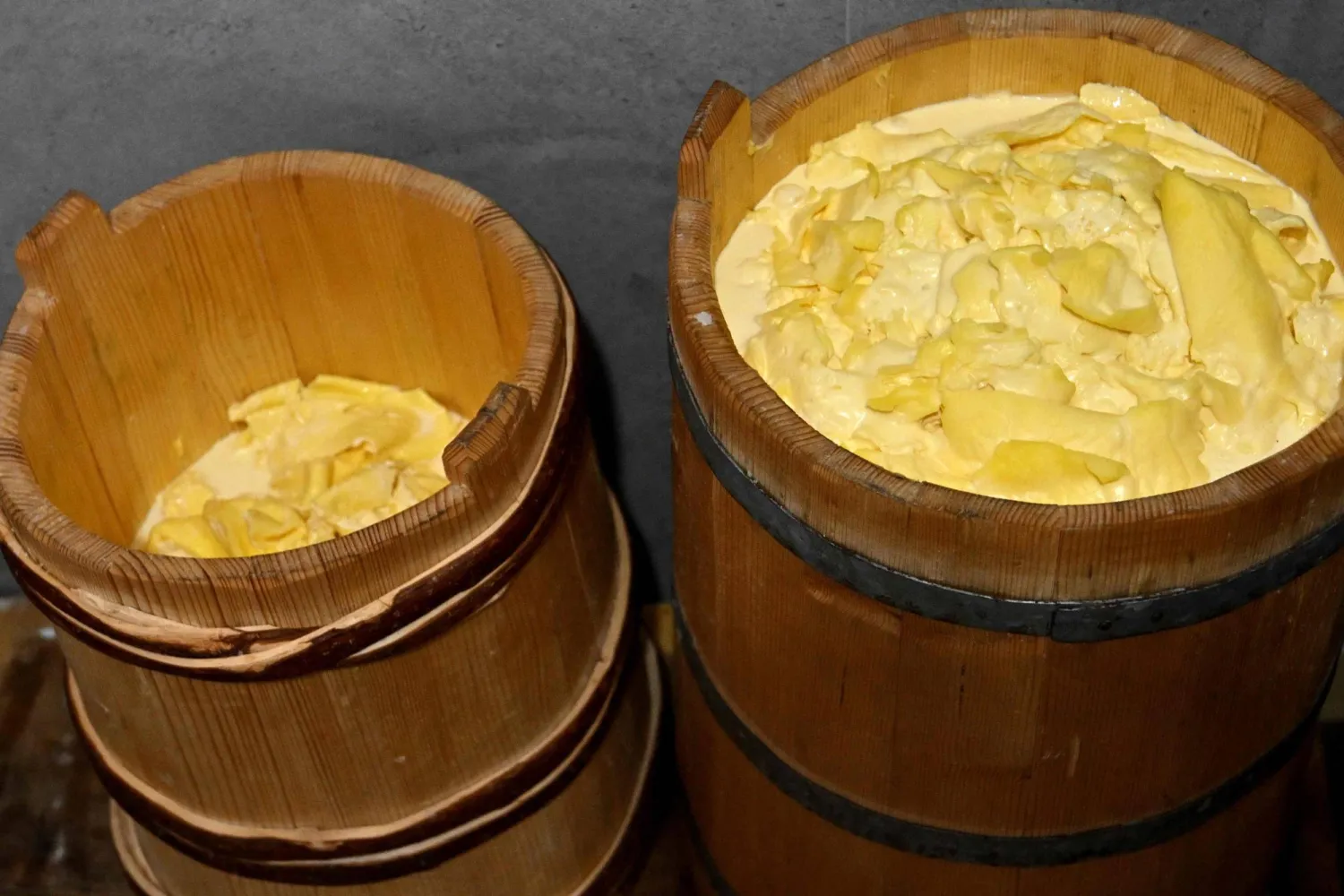
This photograph shows barrels filled with kajmak cheese at the workshop of Branka Buha in the hilly hamlet of Domrke, near the southern Bosnian town of Gacko on November 19, 2025. (AFP)
TT

Beloved Sheepskin-Sack Cheese Bosnia Wants to Protect 

This photograph shows barrels filled with kajmak cheese at the workshop of Branka Buha in the hilly hamlet of Domrke, near the southern Bosnian town of Gacko on November 19, 2025. (AFP)

High in the mountain meadows of southern Bosnia, farmer Branka Buha monitors her cows through a GPS signal on her husband's phone.

But when it comes to making her kajmak cheese, she sticks to the traditional method: ageing it in sheepskin sacks.

"It's a tradition passed down from my mother, from my mother-in-law. Now, I'm passing it on to my daughter-in-law," said 55-year-old Buha.

Her dairy is nestled in the hilly hamlet of Domrke, near Gacko.

At 1,200 meters (3,900 feet), and with lots of grass and wind, Buha says she has everything she needs to produce good "kajmak iz mjesine", a creamy cheese aged in animal hide -- typically sheep or lambskin around here.

Her eight cows freely wander the mountain pastures during the day, returning themselves in the evening to be milked, although one has a GPS collar in case they get lost or run into bears or wolves.

Her kajmak is a slightly crumblier, more flavorful cousin of the creamy "kaymak" people across the Balkans and Türkiye love to spread on their bread.

After milking her cows, Buha cooks the milk in a large pot before pouring it into enamel bowls or wooden containers.

"A day or two later, depending on the ambient temperature, we skim off the milk skin that forms on the surface of the milk," she said, scooping up a thick yellow layer with a spoon.

Salt is added and then it is left to rest in a wooden barrel for around 20 days, then wrapped in animal hide.

"The longer it stays in the skin, the more it matures and acquires the specific flavor of the skin. That is what makes it unique," Buha said.

Buha also makes the sheepskin bags. Once the skin is shaved off, the hide is dried over smoke.

When dry, "we wash it carefully and stuff it with kajmak, which is then aged in the skin for up to a month. But it can even stay there for a year," she added.

"It is an ancient preservation method. When there was no electricity or other modern means of preservation, the skin was used to preserve this cheese," said Dragana Milovic, head of the Gacko Kajmak Producers Association.

Much stronger than the traditional kajmak sold in local shops and markets, the cheese has notes of smoke and lamb that set it apart.

With her husband, Buha produces between 500 and 600 kilos (1,100 and 1,325 pounds) of kajmak each year.

They sell their cheese at their farm or to restaurants, where it is usually served with meat dishes.

It is also eaten on toast with honey, or added to "cicvara", a traditional cornmeal dish not unlike polenta.

In 2024, kajmak was granted national Protected Designation of Origin (PDO) status, raising its price per kilo from 40 convertible marks ($24) to 50 ($30).

This means the cheese can be made only with milk from cows that graze in the Gacko region. The cows must also be fed only with locally harvested hay.

The Gacko Kajmak Producers Association recently applied for PDO status at the EU level, said Milovic.

As a formal candidate for membership of the 27-nation bloc, Bosnia-Herzegovina has the right to protect its products there.

But with only small amounts of the sheepskin-sack kajmak being produced, it is more a matter of "prestige" than as an export earner, Milovic added.


UNESCO Honors Al-Bisht Al-Hasawi as Thousands Flock to Al-Ahsa Festival

Visitors can explore interactive displays, participate in live workshops, and witness the meticulous process of tailoring this iconic symbol of prestige - SPA
TT

UNESCO Honors Al-Bisht Al-Hasawi as Thousands Flock to Al-Ahsa Festival

Visitors can explore interactive displays, participate in live workshops, and witness the meticulous process of tailoring this iconic symbol of prestige - SPA

The third edition of Al-Bisht Al-Hasawi Festival is drawing thousands of regional and international visitors to Ibrahim Palace in historic Al-Hofuf.

Organized by the Heritage Commission, this year’s festival celebrates the inscription of the Bisht on UNESCO’s Representative List of the Intangible Cultural Heritage of Humanity.

The event showcases Al-Ahsa’s centuries-old tradition of hand-weaving and gold embroidery, a craft passed down through generations of local families, SPA reported.

Visitors can explore interactive displays, participate in live workshops, and witness the meticulous process of tailoring this iconic symbol of prestige.

With UNESCO's participation and representatives from six countries, the festival has evolved into a global platform for cultural dialogue, cementing the Bisht’s status as a world-class cultural treasure.


Saudi, Syrian Culture Ministers Tour National Museum of Damascus

The ministers observed the museum’s extensive collections spanning prehistoric eras to modern art. SPA
TT

Saudi, Syrian Culture Ministers Tour National Museum of Damascus

The ministers observed the museum’s extensive collections spanning prehistoric eras to modern art. SPA

Saudi Minister of Culture Prince Badr bin Abdullah bin Farhan and his Syrian counterpart, Mohammed Yassin Saleh, have toured the National Museum of Damascus during the Kingdom’s participation as guest of honor at the 2026 Damascus International Book Fair.

The ministers observed on Thursday the museum’s extensive collections spanning prehistoric eras to modern art.

A particular focus was placed on the Arab-Islamic wing, featuring significant artifacts from the Umayyad period.

The Kingdom's participation as guest of honor at the 2026 Damascus International Book Fair, which runs until February 16, stems from the role culture plays within Saudi Vision 2030.


Saudi Culture Minister Inaugurates Kingdom's Pavilion as Guest of Honor at Damascus Book Fair

Saudi Culture Minister Inaugurates Kingdom's Pavilion as Guest of Honor at Damascus Book Fair
TT

Saudi Culture Minister Inaugurates Kingdom's Pavilion as Guest of Honor at Damascus Book Fair

Saudi Culture Minister Inaugurates Kingdom's Pavilion as Guest of Honor at Damascus Book Fair

Saudi Minister of Culture Prince Badr bin Abdullah bin Farhan, who is the Literature, Publishing and Translation Commission Board Chairman, has inaugurated the Kingdom’s pavilion as guest of honor at the 2026 Damascus International Book Fair.

The inauguration took place on Thursday in the Syrian capital in the presence of Syrian Minister of Culture Mohammed Yassin Saleh and his Qatari counterpart, Sheikh Abdulrahman bin Hamad bin Jassim bin Hamad Al Thani.

The Kingdom's participation as guest of honor at the fair, which runs until February 16, stems from the role culture plays within Saudi Vision 2030.

Literature, Publishing, and Translation Commission Chief Executive Dr. Abdul Latif Al-Wasil affirmed that the Kingdom's presence as guest of honor at the fair reflects its leading role in the Arab cultural landscape and embodies its belief in the role of culture as a bridge for communication, a space for dialogue, and a tool for supporting joint cultural initiatives.

He explained that the Kingdom's presence in Damascus affirms the depth of Saudi-Syrian relations, based on partnership and mutual respect, and stems from the Kingdom's commitment to strengthening cultural exchange.

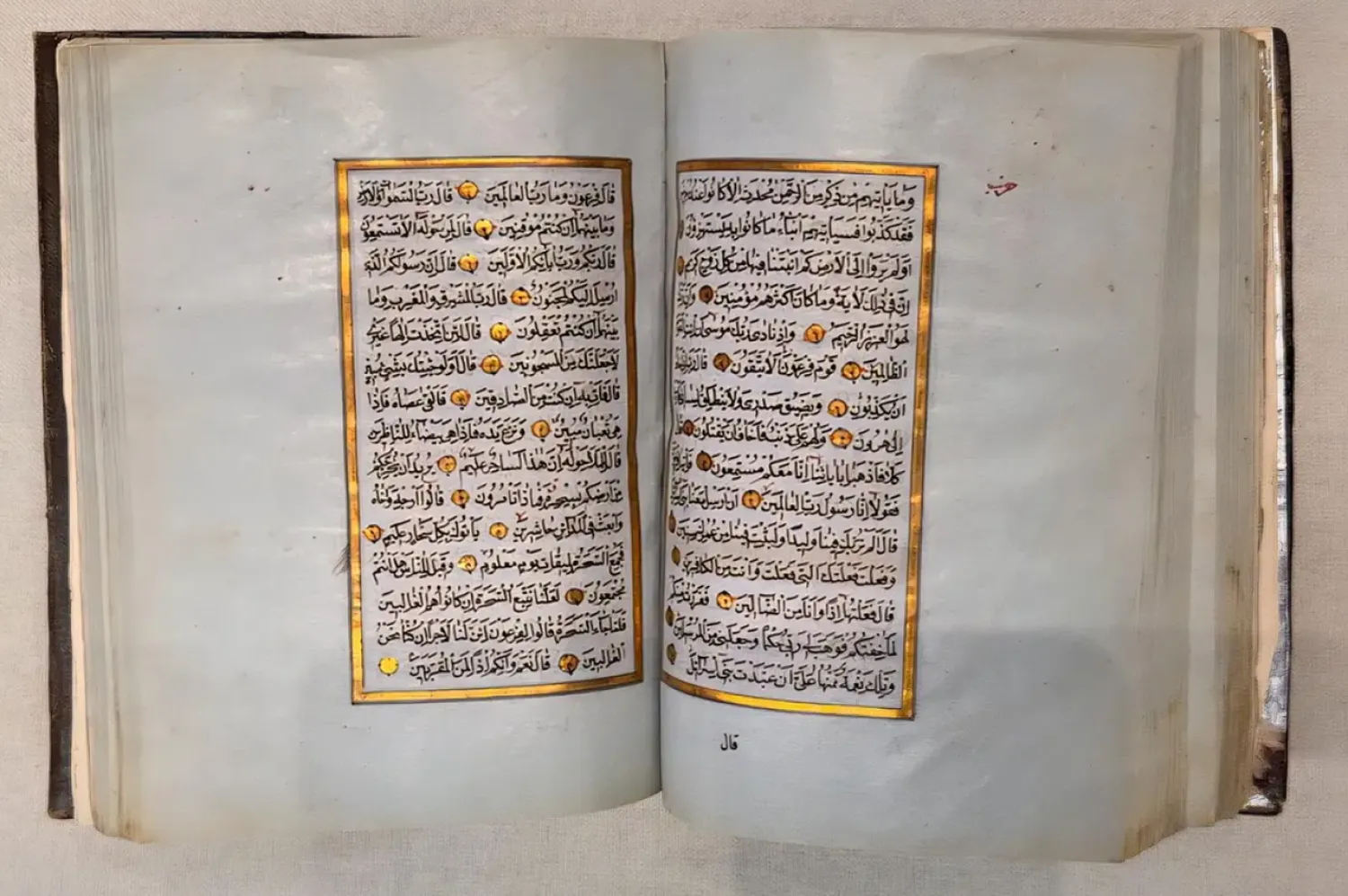
The Kingdom's pavilion showcases the cultural and creative diversity of the Saudi cultural and literary scene through a comprehensive cultural program that includes intellectual seminars, poetry evenings, a manuscripts exhibition, a Saudi fashion corner, a hospitality corner, and a corner displaying archaeological replicas, in addition to Saudi performing arts performances that express the depth of the Kingdom's cultural heritage.

The pavilion offers visitors to the exhibition the opportunity to explore aspects of Saudi culture in its literary, heritage, and human dimensions within a cultural experience presented in a unifying Arab spirit, affirming that culture remains one of the most effective means of fostering understanding and building shared meaning.

Syrian President Ahmed al-Sharaa met on Thursday with Prince Badr at the Conference Palace in Damascus.

The meeting was attended on the Saudi side by Advisor at the Royal Court Mohammed Al-Tuwaijri, along with other officials.