


Western Advice Urges Lebanon, Iraq to Shift from Factions to State

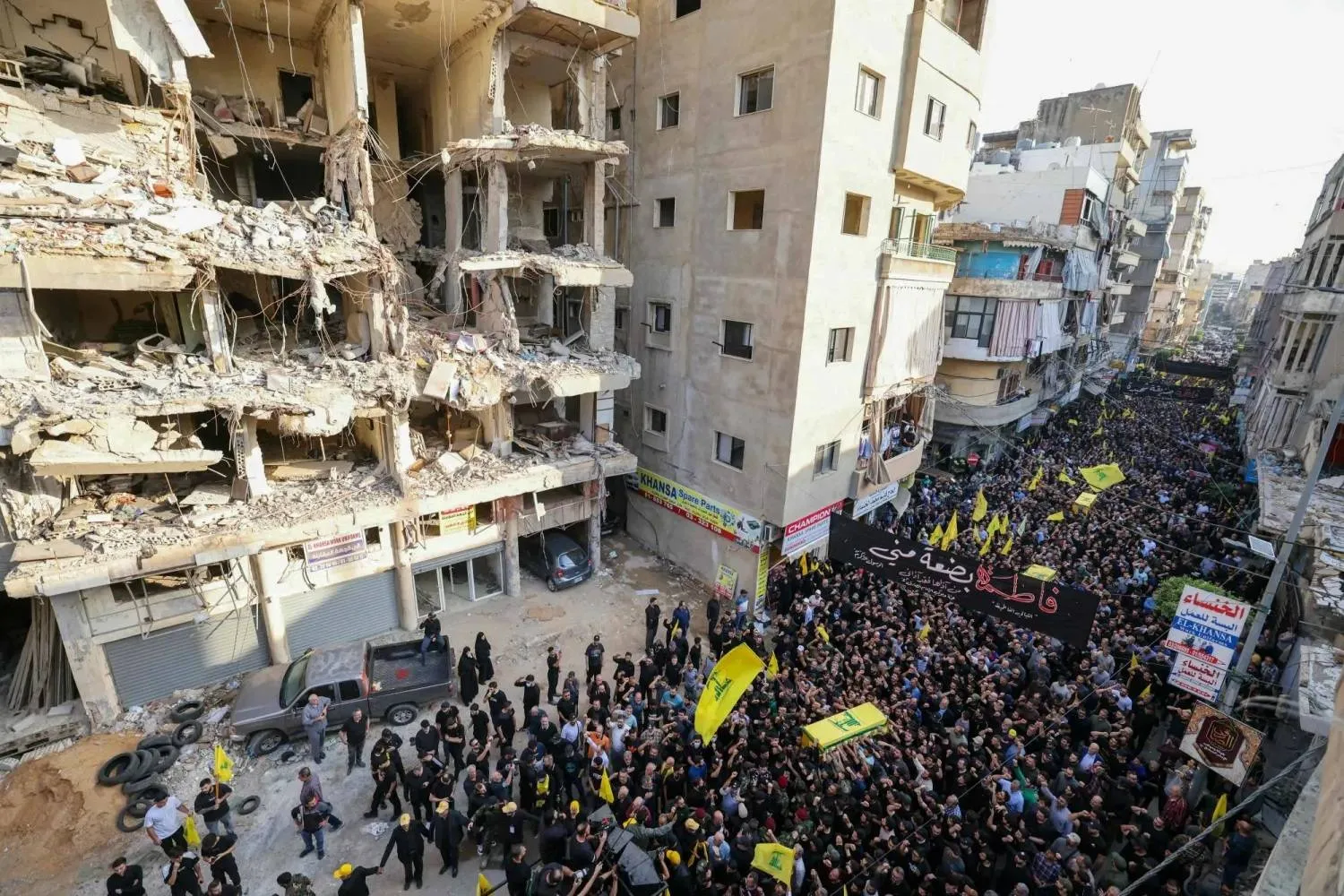
Funeral of Hezbollah chief of staff Haitham Tabtabai and others killed in an Israeli strike in Beirut’s southern suburbs (AFP)
TT

Western Advice Urges Lebanon, Iraq to Shift from Factions to State

Funeral of Hezbollah chief of staff Haitham Tabtabai and others killed in an Israeli strike in Beirut’s southern suburbs (AFP)

A senior Western diplomat in Beirut urged regional states to recognize the gravity of the moment the Middle East is navigating in order to prevent the continuation of the wars that erupted after the October 7 attacks in Gaza.

The diplomat, who is closely involved in Western contacts with Lebanon, told Asharq Al-Awsat that the region should “take advantage of President Donald Trump’s desire to play the role of peacemaker, even if moving forward with the American proposals appears difficult at times.”

The envoy pointed to what they described as “the disastrous outcome of allowing armed factions to control the decisions of capitals.”

He listed them as follows:

Hamas acted alone in launching the Al-Aqsa Flood operation, and the outcome was catastrophic, not only for Gaza but also for the West Bank, which is facing constant Israeli attempts to undermine its stability.

Hezbollah in Lebanon acted unilaterally and joined the flood. The result is what we see today.

Israel has seized positions inside Lebanon and has effectively established a security belt inside Lebanese territory, something it would not have been able to do if decisions were in the hands of the country’s legitimate authorities.

The Bashar al-Assad government paid the price for allowing Iran backed factions to operate on its soil, and the result was its collapse.

Syria’s new president, Ahmed al Sharaa, has learned the lesson that the world has grown weary of the era of factions and wants to deal only with states capable of making their decisions within their institutions.

The diplomat said the coming weeks “could be decisive for Lebanon,” noting that “the world’s ability to spare Lebanon a new Israeli attack depends on the ability of the Lebanese authorities to prove they are the sole decision maker in matters of war and peace, without any faction holding decision making power or veto power.”

They expressed hope that “the moderate current within Lebanon’s Shia community will prevail so that Parliament Speaker Nabih Berri can play a rescue role for his community and for Lebanon as a whole.”

They warned that “keeping the Lebanese state without a clear and firm decision regarding the monopoly of weapons could expose Lebanon to serious dangers.”

They noted that “the shift from the era of factions to the era of states is a task facing not only Lebanon but also Baghdad, especially given the continuing deep rift between Iran and the West.”

They said Tehran “must conclude that a new phase has begun in the region, one defined by states rather than factions, and that clinging to the old policy will only lead to more confrontations that Iran itself will not be spared.”

Iraq, which is now seeking a new government, “needs to thoroughly examine the shifts that have taken place in the region and absorb what happened in Gaza, Lebanon and Syria. Syria is without the Assad government, Lebanese Hezbollah is without Hassan Nasrallah, and Iran itself has lost many of its generals and scientists after already losing Qassem Soleimani,” the commander of the Quds Force, the external operations arm of the Revolutionary Guard.

The diplomat said that in the coming phase Iraq must “prioritize state logic over factional logic and adopt rational choices in both domestic and foreign relations.”

They said that strengthening moderation and state institutions within the Coordination Framework would spare Iraq crises it does not need, especially if predictions prove true that the region is moving toward a new military round between Israel and Iran, one the Trump administration will find difficult to stay out of.

They added that “Iraq would be fortunate if the government formation process results in sending a message to the world that Iraq will focus on rebuilding itself and will not be drawn into bloc politics or confrontational rhetoric regionally or internationally.”

They called on political leaders in Baghdad and Beirut to “look to the experience of President al-Sharaa, who managed quickly to bring his country out of isolation after realizing that Syria had no path except the path of the state, even though he himself came from the world of factions.”



Arab Parliament Speaker Condemns Continued Iranian Attacks on Arab States

Arab Parliament Speaker Condemns Continued Iranian Attacks on Arab States
TT

Arab Parliament Speaker Condemns Continued Iranian Attacks on Arab States

Arab Parliament Speaker Condemns Continued Iranian Attacks on Arab States

Arab Parliament Speaker Mohammed Al-Yamahi condemned the continued systematic Iranian terrorist attacks against several Arab states, describing them as a flagrant violation of international law and the principles of the United Nations Charter, as well as a direct threat to regional security and stability, SPA reported.

He said in a statement that the attacks carried out by Iran since the outbreak of the war, using missiles and drones, reflect a recurring hostile approach that disregards state sovereignty and the safety of civilians.

He stressed that the targeting of infrastructure facilities and the resulting casualties reveal a clear disregard for international humanitarian law and reflect a determination to undermine security and stability in the region.

The Arab Parliament speaker held the Iranian regime fully responsible for these acts and their repercussions, calling on the international community to assume its responsibilities and take a firm and immediate stance to halt these violations and end the aggressive policies threatening regional and international peace and security.

Al-Yamahi also renewed the Arab Parliament’s full support for the measures taken by the targeted Arab states to preserve their security and stability, safeguard their sovereignty, and act in accordance with international law and their legitimate right to self-defense.


Iraq Pushes to Centralize War Powers Under State Control

Relatives of a soldier killed in an airstrike on Habbaniyah base carry the Iraqi flag during his funeral (AFP)
TT

Iraq Pushes to Centralize War Powers Under State Control

Relatives of a soldier killed in an airstrike on Habbaniyah base carry the Iraqi flag during his funeral (AFP)

Iraqi security sources reported a breakthrough in investigations into rocket and drone attacks on diplomatic and security sites, as political and legal pressure intensifies to confine decisions of war and peace to the state.

A security source familiar with the probe told Asharq Al-Awsat that authorities have begun identifying those behind the launches. The information was obtained after the arrest of three members of an armed faction, who were already subject to arrest warrants.

Security forces also detained another group suspected of involvement in attacks targeting the US embassy in Baghdad, the source said.

More arrest warrants are expected as investigators pursue others suspected of carrying out rocket and drone attacks in violation of the law.

Judicial warnings

The government has not named those responsible, but armed factions have repeatedly claimed similar operations through statements and online platforms, complicating the security landscape and weakening state control over weapons.

The developments follow a warning from Supreme Judicial Council President Faiq Zidan of “serious repercussions” from unilateral military decisions by factions and non-official entities. He said such actions violate the constitution and risk exposing Iraq to international isolation and sanctions.

Zidan said declaring a state of war requires a constitutional process, including approval by two-thirds of parliament based on a joint request from the president and prime minister.

The escalation underscores growing tension between the state and armed factions, as authorities seek to reassert institutional control amid rising domestic and international criticism over fragmented security decision-making and continued attacks on diplomatic missions.

Regional war dynamics

Officials describe the situation as indirect involvement in the region’s “geography of war,” with repeated attacks on sites linked to the US presence in Baghdad and Erbil, alongside airstrikes on military positions inside Iraq.

Since the start of the Middle East war, Iraqi factions have claimed attacks on US interests.

Iran has struck Iranian Kurdish opposition groups in northern Iraq, while sites linked to the Popular Mobilization Forces and Iran-aligned factions have been hit by airstrikes attributed to the United States and Israel.

War powers debate

Calls are growing within Iraq to reaffirm that decisions of war and peace rest solely with constitutional institutions.

Prime Minister Mohammed Shia al-Sudani said the government is “the sole authority” empowered to take such decisions, despite operating in a caretaker capacity following recent parliamentary changes.

The Foreign Ministry reiterated Baghdad’s firm rejection of any attacks targeting Gulf states, stressing solidarity with sister countries and commitment to their security and stability. It said Gulf security is inseparable from Iraq’s national security and that regional stability serves all.

Saudi Arabia, the United Arab Emirates, Kuwait, Bahrain, Qatar and Jordan have condemned attacks by Iran-aligned Iraqi factions on regional countries and infrastructure, calling them violations of international law.

Energy risks

President Abdul Latif Rashid reiterated Iraq’s rejection of war, voicing deep concern over the widening conflict and calling for an immediate halt to military operations and a return to dialogue.

In a phone call with Iranian President Masoud Pezeshkian, Rashid said continued war serves no country in the region and threatens Middle East stability.

He added that Iraq, both its people and government, calls for peace and expresses solidarity with the Iranian people, praising their resilience in the face of “attacks.”

In Geneva, Iraq’s mission to the United Nations warned that expanding the conflict would deepen crises and undermine stability. Jaafar Mohammed, second secretary at Iraq’s mission, cautioned that disruptions to energy supply chains through the Strait of Hormuz could have global economic repercussions.


Lebanese Army ‘Repositions’ Itself in the South to Avoid Contact with Israel

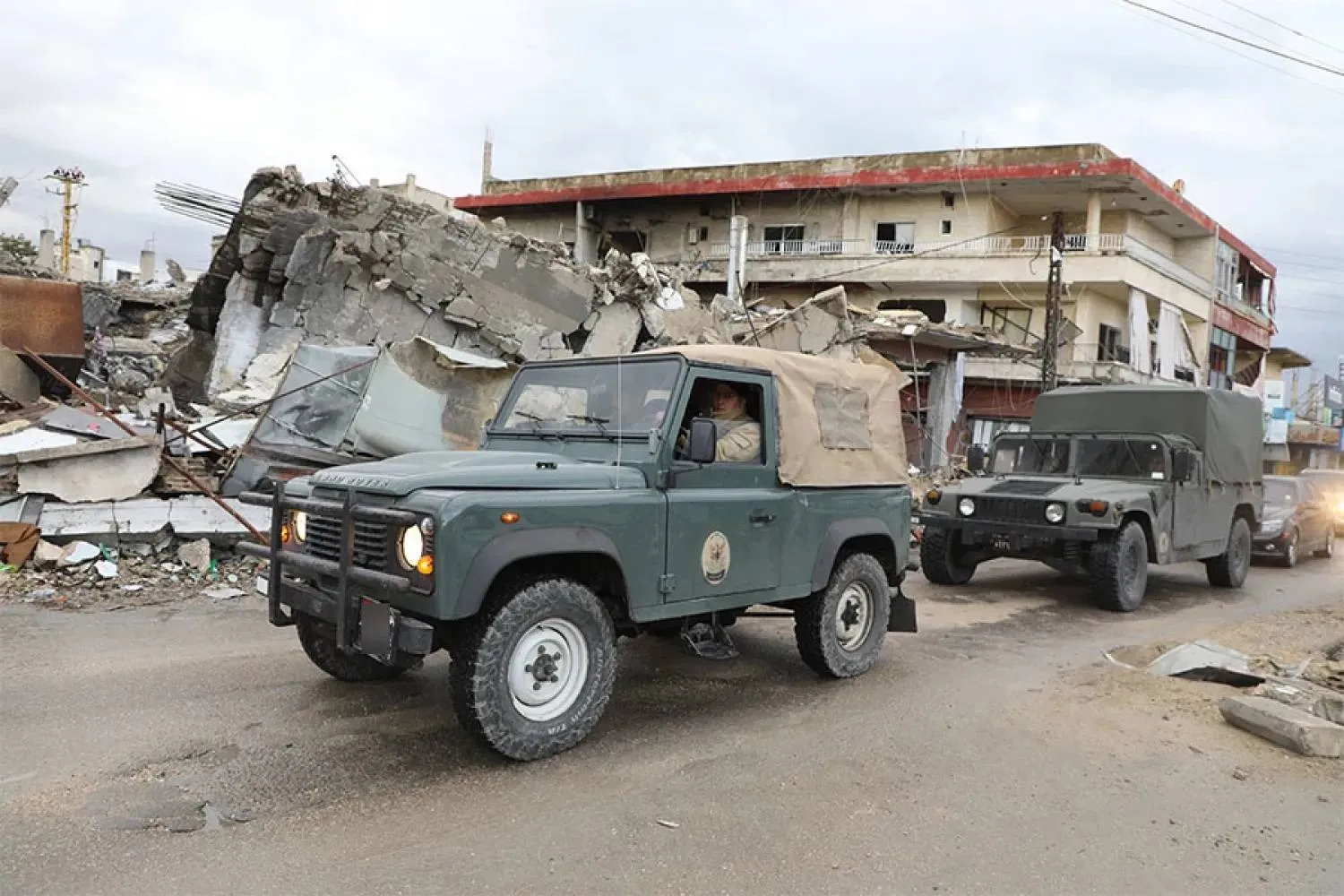
A Lebanese army patrol in southern Lebanon. (Lebanese army file photo)
TT

Lebanese Army ‘Repositions’ Itself in the South to Avoid Contact with Israel

A Lebanese army patrol in southern Lebanon. (Lebanese army file photo)

The Lebanese army and security forces are carrying out a “preventive” redeployment of units in the south under Israeli fire, in a move seen as aimed at avoiding direct contact or friction with Israeli forces.

The step comes amid the absence of a political decision to confront Israeli incursions militarily, and is viewed as the adoption of “protective tactics” for personnel in an area witnessing ongoing clashes.

A Lebanese security source familiar with the matter told Asharq Al-Awsat that the forces follow a fixed field principle of remaining alongside residents until the last moment before they need to evacuate an area.

“Personnel stay where civilians are, and withdraw only after displacement is complete, and before any potential Israeli advance, ensuring neither they nor residents are exposed to danger,” the source said.

Deployment is directly tied to displacement patterns and conditions in each town, the source said, noting that “the presence of residents is a decisive factor in the Internal Security Forces maintaining their posts.”

“Posts are not evacuated under a declared central plan, but based on changing field data,” the source added. “Every town that is emptied of its residents is automatically followed by the evacuation of its police post, with personnel joining the nearest military point.”

The town of Khiam was “among the last locations to maintain a security presence alongside residents until the final stages of displacement, before it was evacuated” as Israeli forces advanced.

Military pullback, local pushback

The town of Debel highlights the complexity of the situation between the military and civilians. A local source said the army had maintained an advanced position on its outskirts, but as limited Israeli incursions began nearby, the position was withdrawn overnight into the town, specifically to the public school.

“The withdrawal did not stop there,” the source said. “The following day, personnel were completely pulled out of Debel toward Rmeish, leaving no effective military presence inside the town, while personnel from Debel remained in their homes in civilian clothing.”

The most sensitive step was a proposal to relocate soldiers from the town, along with their families, outside the area, a move locally seen as a prelude to emptying the town. It was met with widespread rejection.

About 200 security personnel from Debel serve in the army and security forces, meaning their departure with their families would have led to the near-total evacuation of the town. Political and local efforts, involving the defense and interior ministries and religious authorities, led to the plan being frozen.

Despite the tension, the source said the town is not under siege, noting that the Debel-Rmeish road remains open, easing pressure for evacuation. Residents and personnel remain in their homes, while military positions and police posts continue operating in nearby towns, such as Ain Ebel and Rmeish.

Local media reported that the army repositioned at the Khardali checkpoint, the main gateway to the southern Litani area from the eastern sector, and is preparing to redeploy at the Kafra checkpoint, as Israeli forces advance toward Beit Lif and the facing Wadi al-Oyoun from the south.

Lebanese army commander General Rodolphe Haykal inspected units in Beirut and the southern city of Sidon and reviewed security measures within their areas of responsibility.

He urged troops to maintain readiness “to prevent any breach of security, and to act firmly against any attempt to undermine internal stability.”

“Despite rumors and incitement campaigns aimed at undermining the sacrifices and efforts of soldiers, the army will not hesitate to carry out its national duties,” he said, calling on troops “not to be influenced by such rumors, to adhere to their doctrine, and remain committed to performing their national duty.”

Preventive strategy

Former MP and retired brigadier general Chamel Roukoz said the moves “cannot be described as a traditional military withdrawal,” but rather a calculated field redeployment shaped by an asymmetric confrontation, given Israeli air and firepower superiority and the risk of direct targeting of exposed positions.

He said the army operates within a margin set by political authority, noting that no decision has been issued by the government to engage or confront Israeli forces directly.

“The military institution manages its deployment accordingly, balancing field presence with safety requirements,” he said.

On the evacuation of positions, including those reported in Debel, Roukoz said the measures “do not reflect abandonment of territory or a collapse of the front,” but rather precautions imposed by field realities, where some positions become easy targets under bombardment.

He said the redeployment carries operational and morale dimensions, aiming to avoid direct friction in the absence of a political decision, preserve troop morale, and avoid pushing forces into unequal confrontations.

The army command, he added, is showing “high flexibility” in managing deployment, shifting from exposed positions to safer ones.

Roukoz said the developments fall within “protection and redeployment tactics adopted in high-risk environments,” reflecting careful management of the balance between political decision-making and field realities.