


Global Airlines Race to Fix Jets as Airbus Apologizes Following A320 Recall

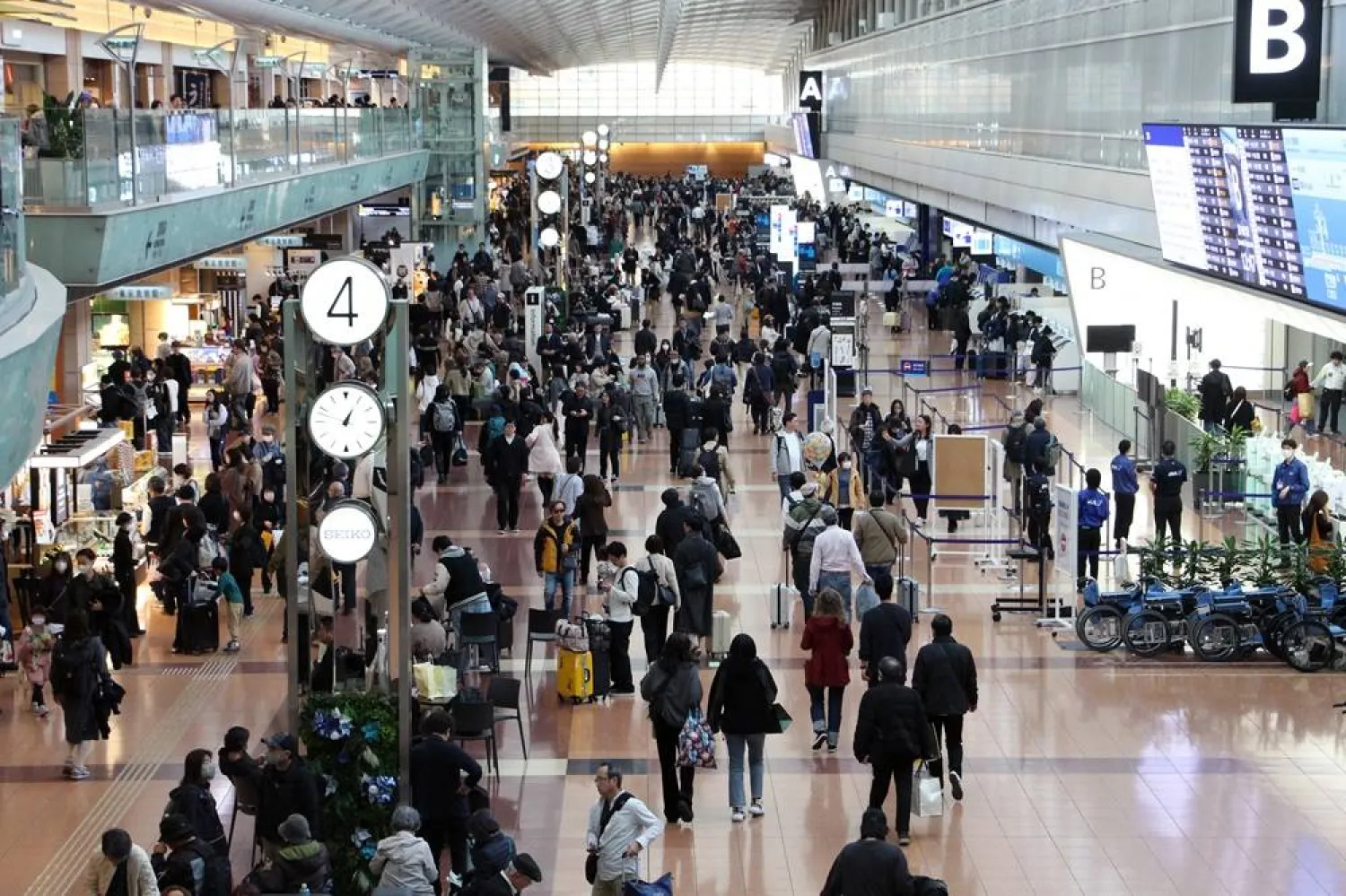
Haneda Airport’s Terminal 2 is crowded with travellers due to flight cancellations, in Tokyo, Japan, 29 November 2025. (EPA/Jiji Press)
TT

Global Airlines Race to Fix Jets as Airbus Apologizes Following A320 Recall

Haneda Airport’s Terminal 2 is crowded with travellers due to flight cancellations, in Tokyo, Japan, 29 November 2025. (EPA/Jiji Press)

Global airlines scrambled to fix a software glitch on Airbus A320 jets on Saturday as a partial recall by the European planemaker halted hundreds of flights in Asia and Europe and threatened US travel over the busiest weekend of the year.

Airlines worked through the night after global regulators told them to remedy the problem before resuming flights. Delta Air Lines and Hungary’s Wizz Air on Saturday each said they had completed the fix to their fleet with no impact on operations.

The overnight effort by airlines appeared to help head off the worst-case scenario and capped the number of flight delays in Asia and Europe. The US will face high demand after the Thanksgiving holiday period.

"It's not as chaotic as some people might think," said Asia-based aviation analyst Brendan Sobie. "But it does create some short-term headaches for operations."

Airbus CEO Guillaume Faury apologized to airlines and passengers after the surprise recall of 6,000 planes or more than half of the global A320-family fleet, which recently overtook the Boeing 737 as the industry's most-delivered model.

"I want to sincerely apologize to our airline customers and passengers who are impacted now," Faury posted on LinkedIn.

Friday's alert followed an unintended loss of altitude on an October 30 JetBlue flight from Cancun, Mexico, to Newark, New Jersey, which injured 10 passengers, according to France's BEA accident agency, which is probing the incident.

AIRBUS RECALL LUCKY TIMING FOR SOME AIRLINES

The alert landed at a time of day when many European airlines and Asian airlines are winding down their schedules, which mostly do not require the short- to medium-haul jets like the A320 to be flying at night, leaving time for repairs.

In the United States, however, it came during the day ahead of the busy Thanksgiving holiday travel weekend.

Steven Greenway, CEO of Saudi carrier Flyadeal, said that the recall had hit late in the evening, which had avoided more serious disruption. The airline said it had fixed all 13 affected jets and would resume normal operations by midnight.

"It was a great team effort but our luck also held up in the timing," Greenway told Reuters.

Airlines must revert to a previous version of software in a computer that helps determine the nose angle of the affected jets and in some cases must also change the hardware itself, mainly on older planes in service.

By Saturday, Airbus was telling airlines that repairs to some of the A320 jets affected may be less burdensome than first thought, industry sources said, with fewer than the original estimate of 1,000 needing the time-consuming hardware changes.

Even so, industry executives said the abrupt action was a rare and potentially costly headache at a time when maintenance is under pressure worldwide from labor and parts shortages.

There were also unresolved questions about the impact of solar flare radiation blamed for the JetBlue incident, which is being treated by French investigators as an "incident," the lowest of three categories of potential safety emergency.

"Any operational challenges that comes at short notice and affecting a large part of your operation is tough to deal with," said UK-based aviation consultant John Strickland.

FIX IS SIMPLE BUT NECESSARY

The fix must be completed before the planes can fly again with passengers, a process needing two to three hours per jet.

Globally, there are about 11,300 of the single-aisle jets in service, including 6,440 of the core A320 model. Those include some of the largest and busiest low-cost carriers.

Tracker data from Cirium and FlightAware showed most global airports operating with good-to-moderate levels of delays.

Wizz Air said updates had been implemented overnight on all its affected jets. The European low-fare airline had already been hit hard by groundings caused by long waiting times for engine repairs rather than safety concerns.

AirAsia, one of the world's largest A320 customers, said it aimed to complete fixes in 48 hours.

India's aviation regulator said on Saturday budget giant IndiGo had completed the reset on 184 out of 200 aircraft while Air India had done 69 of 113 impacted planes. Both were expected to complete the process on Saturday.

Taiwan, meanwhile, said around two-thirds of the 67 A320 and A321 aircraft operated by the island's carriers were affected.

ANA Holdings cancelled 95 flights on Saturday, affecting 13,500 travelers. Japan's biggest airline and affiliates such as Peach Aviation operate the most Airbus A320 jets in the country.

Rival Japan Airlines has a mostly Boeing fleet and does not fly the A320.

Jetstar, the budget carrier of Australia's flag carrier Qantas, said some of its flights would be affected.

South Korea's Transport Ministry said upgrades to 42 aircraft there were expected to be completed by Sunday morning.

American Airlines, the world's largest A320 operator, said 209 of its 480 jets needed the fix, below initial estimates, most of which it expected to complete by Saturday.

US carriers Delta Air Lines, JetBlue and United Airlines are also among the biggest A320-family operators.

Although Thanksgiving is critical for airlines in the United States, Strickland said the financial impact for European carriers would be cushioned by the fact that the recall happened during a lull before end-year holidays and the ski season.



Chile to Restore Global Leadership in Lithium Production

Aerial view of brine ponds and processing areas of the lithium mine of the Chilean company SQM (Sociedad Quimica Minera) in the Atacama Desert, Calama, Chile, on September 12, 2022. (AFP)
TT

Chile to Restore Global Leadership in Lithium Production

Aerial view of brine ponds and processing areas of the lithium mine of the Chilean company SQM (Sociedad Quimica Minera) in the Atacama Desert, Calama, Chile, on September 12, 2022. (AFP)

Chile's state-owned copper producer, Codelco, together with Chinese-backed private miner, SQM, announced on Saturday the creation of a giant company to exploit lithium, often referred to as "white gold."

The South American country is the world’s second-largest producer of lithium, a key component of EVs and other clean technologies and has about 40% of the world’s lithium reserves.

The partnership between the firms will allow them to jointly ramp up the exploration of lithium in the Atacama region of northern Chile.

The public-private partnership will be named Nova Andino Litio SpA, said Codelco, which described the agreement as one of the most significant deals in Chilean business history.

The Chinese firm Tianqi holds 22% stake in SQM.

In a statement, Codelco said the new partnership will carry out lithium exploration, extraction, production, and commercialization activities in the Atacama salt flat until 2060.

The agreement was approved by more than 20 national and international regulatory authorities, including those in China, Brazil, Saudi Arabia, and the European Union.

Chile was the last of the countries to clear the deal. Last month, China gave the green light to the planned partnership between Codelco and SQM.

The new venture is intended to help Chile regain global leadership in lithium production, a position it lost to Australia nearly a decade ago.

The partnership aims to expand lithium output in the Atacama region, with plans to increase production by around 300,000 tons per year. In 2022, Chile produced 243,100 tons of lithium.

The partnership also aligns with Chile’s National Lithium Strategy, announced in 2023 by the leftist government of President Gabriel Boric, aimed at reclaiming Chile’s global leadership in lithium production.


China's BYD Poised to Overtake Tesla in 2025 EV Sales

The Tesla logo is seen in this illustration taken July 23, 2025. (Reuters)
TT

China's BYD Poised to Overtake Tesla in 2025 EV Sales

The Tesla logo is seen in this illustration taken July 23, 2025. (Reuters)

Growing Chinese auto giant BYD stands poised to officially surpass Tesla as the world's biggest electric vehicle company in annual sales.

The two groups are expected soon to publish their final figures for 2025, and based on sales data so far this year, there is almost no chance the American company led by Elon Musk will retain its leadership position.

At the end of November, Shenzhen-based BYD, which also produces hybrid vehicles, had sold 2.07 million EVs so far in 2025.

Tesla, for its part, had sold 1.22 million by the end of September.

Tesla's September figures included a one-time boost in sales, to nearly half-a-million vehicles in a three-month period, before the expiration of a US tax credit for buyers of electric vehicles -- which ended under legislation backed by President Donald Trump, a climate change skeptic.

But Tesla's sales in the coming quarter are expected to fall to 449,000, according to a FactSet analysis consensus. That would give Tesla about 1.65 million sales for all of 2025, a drop of 7.7 percent and well below the level BYD had attained by end November.

Deutsche Bank, which projects just 405,000 Tesla EV sales during the fourth quarter, sees the company's sales down by around one-third in both North America and Europe, and by one-tenth in China.

- Transition period -

Industry watchers say it will take time for EV demand to reach a level of equilibrium in the United States following the elimination of the $7,500 US tax credit at the end of September 2025.

Even prior to that, Tesla had seen sales struggle in key markets over CEO Musk's political support of Trump and other far-right politicians. Tesla has also faced rising EV competition from BYD and other Chinese companies and from European giants.

"We believe Tesla will see some weakness on deliveries" in the fourth quarter, said Dan Ives of Wedbush Securities.

Sales of 420,000 would be "good enough to show stable demand," with Wall Street "laser focused on the autonomous chapter kicking off in 2026," Ives added, referring to plans for self-driving vehicles.

Even as it has grown quickly, BYD has faced challenges in its home market.

With profitability in China weighed down by price-wary consumers, the company has sought to strengthen its foothold in foreign markets.

BYD is "one of the pioneers to establish overseas production capacity and supply chains for EVs," Jing Yang, Director of Asia-Pacific Corporate Ratings at Fitch Ratings, told AFP.

"Going forward, its geographical diversification is likely to help it to navigate an increasingly complicated global tariff environment," said Yang.

Overseas rivals to BYD have balked at Chinese state subsidies and other state supports that have allowed the company to sell vehicles cheaply.

Trump's predecessor Joe Biden imposed 100 percent tariffs on Chinese EV imports that could potentially go even higher under Trump. Europe has also imposed tariffs on Chinese imports, but BYD is building manufacturing capacity in Hungary.

While the chance of Tesla reclaiming its global leadership in EVs looks uncertain, the American company is also potentially positioned for growth.

Michaeli of TD Cowen sees autonomous technology playing an increasingly important role for Tesla, with breakthroughs in its "full self-driving" or "FSD" offerings potentially boosting sales.

"As Tesla really begins to roll out eyes-off features and expand FSDs capability, if they do that successfully, that should generate more demand for their vehicles," Michaeli said.

Musk has said the Cybercab, an autonomous robotaxi model, will begin production in April 2026. The company has also unveiled lower-priced versions of the Models 3 and Y that could boost sales.


China Says to Launch Digital Currency Action Plan

People walk past a shopping mall in Beijing on December 28, 2025. (AFP)
TT

China Says to Launch Digital Currency Action Plan

People walk past a shopping mall in Beijing on December 28, 2025. (AFP)

China will on January 1 launch an "action plan" for boosting management and operations of its digital currency, a deputy governor of the country's central bank said Monday.

"The future digital yuan will be a modern digital payment and circulation means issued and circulated within the financial system," People's Bank of China (PBoC) Deputy Governor Lu Lei wrote in Financial News, a media outlet under the central bank.

In the next step towards that goal, a "new generation" arrangement for digital yuan will be launched on January 1, Lu said, encompassing a "measurement framework, management system, operating mechanism and ecosystem".

The "action plan" will see banks pay interest on balances held by clients in digital yuan -- a move to incentivize broader adoption of the currency.

The plan also includes a proposal to establish an international digital yuan operations center in the eastern financial hub of Shanghai, the report said.

Monetary authorities around the world have in recent years been exploring ways to digitalize currencies, propelled by a boom in online payments during the pandemic and the increased popularity of cryptocurrencies such as bitcoin.

The PBoC has been working on a digital currency since 2014 and has been testing the use of a "digital yuan" or "e-CNY" in various pilot programs.

Consumers across the country already widely use mobile and online payments, but the digital yuan could allow the central bank -- rather than the big tech giants -- access to more data and control over payments.