


Indian Authorities Deploy Drones to Track Killer Wolves

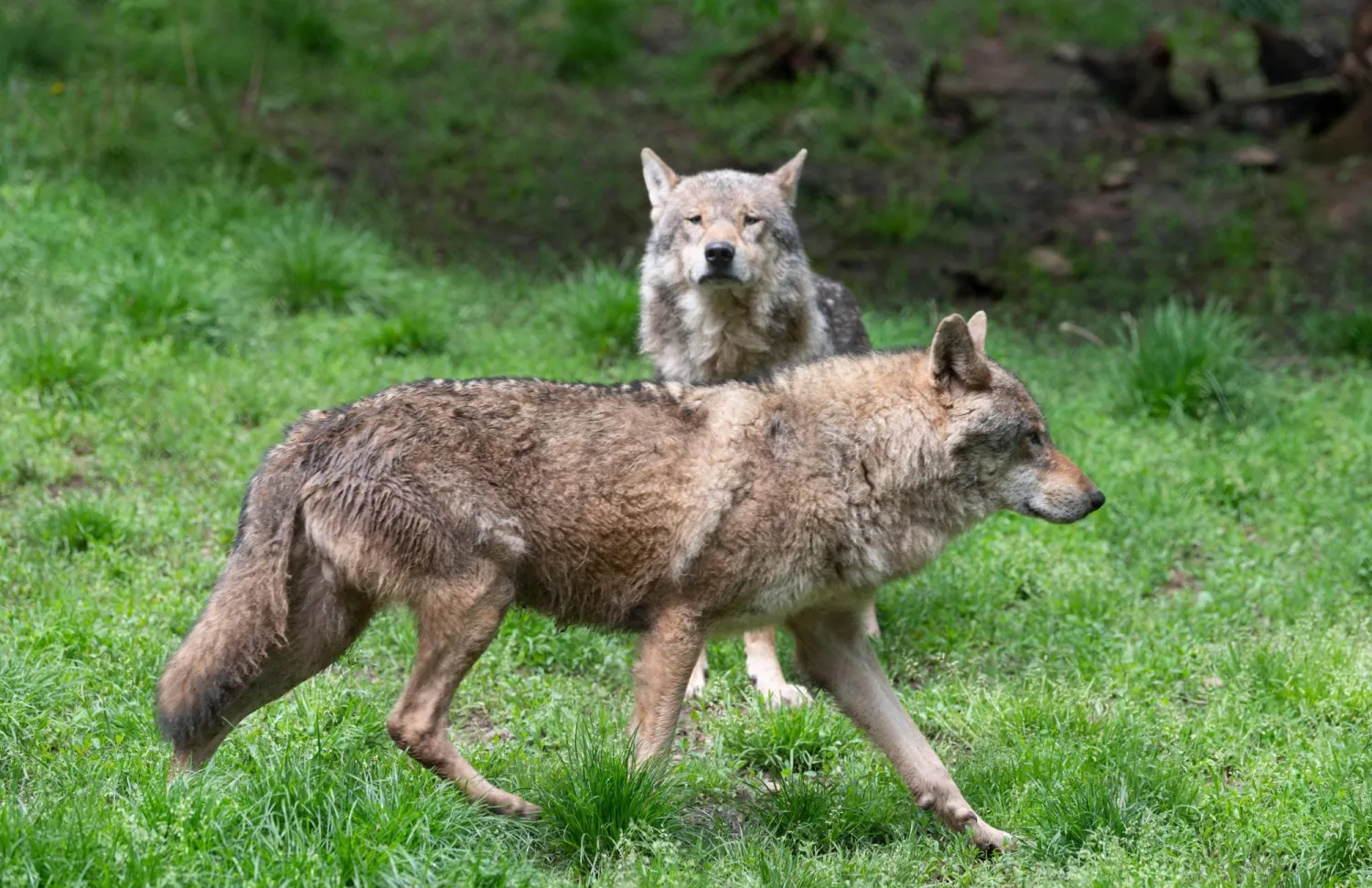
(FILES) European wolves (canis lupus) are seen in their enclosure at the "Wildparadies Tripsdrill", a wildlife park near Cleebronn, southern Germany, on May 10, 2023. (Photo by THOMAS KIENZLE / AFP)
TT

Indian Authorities Deploy Drones to Track Killer Wolves

(FILES) European wolves (canis lupus) are seen in their enclosure at the "Wildparadies Tripsdrill", a wildlife park near Cleebronn, southern Germany, on May 10, 2023. (Photo by THOMAS KIENZLE / AFP)

Forest rangers in India have deployed drones to track man-eater wolves after nine people, mostly children, were killed by the animals in recent weeks, officials said Sunday.

The latest victim was a 10-month-old girl who was snatched by a wolf in Bahraich district of northern Uttar Pradesh state on Saturday while she was sleeping beside her mother, they said.

The child was later found dead in a field.

A day earlier, a five-year-old boy was snatched in plain sight of his mother from outside their home.

The child, found mauled in a sugarcane field, died on the way to hospital.

Officials said the attack followed the same pattern seen across a cluster of villages reporting similar incidents since September.

The latest deaths raise the toll from suspected wolf attacks in Bahraich to at least nine in three months, according to police, forest officials and media reports.

The victims also included an elderly couple.

Forest Officer Ram Singh Yadav told AFP on Sunday that authorities have deployed drones, camera traps and shooters in the area.

"The behavior of wolves seems to have changed. Of late, they are seen active in daytime, which is strange," Yadav said.

Other forest officials said the animals appeared unusually bold.

Bahraich saw a similar wave of attacks last year, with a pack of wolves killing at least nine people and injuring several others.

The grassland plains of Bahraich district lie about 50 kilometers (30 miles) south of the border with Nepal, where thick forests cover the Himalayan foothills.

Experts say wolves attack humans or livestock only as a last resort when they are starving, preferring less dangerous prey such as small antelopes.

The majority of India's roughly 3,000 wolves survive outside protected areas, often in close proximity to people.

The animals, also known as the plains wolf and listed as vulnerable, are smaller than the stronger Himalayan wolf and can be mistaken for other species such as jackals.

Villagers in Bahraich say they now live in mortal fear of the wolves lurking near their homes.

"Our children are not safe even inside the house," one resident said.
"We just want the attacks to stop."



Tunisia Says 2026 Summer Hottest on Record

Tourists pose for a picture in downtown Tunis, Tunisia, August 4, 2017. REUTERS/Zoubeir Souissi
TT

Tunisia Says 2026 Summer Hottest on Record

Tourists pose for a picture in downtown Tunis, Tunisia, August 4, 2017. REUTERS/Zoubeir Souissi

Tunisia's summer this year was its hottest on record, the country's weather authority said Tuesday, following multiple heatwaves, water shortages and power cuts.

"The summer of 2026 was ranked the hottest in Tunisia since 1950," the year temperature records began, the National Meteorological Institute said.

The average temperature was about 2.9 degrees Celsius higher than the previous record, it added.

Although accustomed to scorching heat, Tunisia experienced a particularly gruelling summer this year, with July and August marked by "intense and prolonged heatwaves", the authority said.

Scientists attribute these episodes to climate change.

This summer also saw persistently high nighttime temperatures, the agency added.

The highest temperature was recorded in the central city of Kairouan, which reached 49.7 degrees Celsius in mid-July.

Temperatures also reached 49.2 degrees Celsius in Beja in the northwest, and in the south they reached 48.4 degrees Celsius in Tozeur.

Authorities have yet to provide figures on the health impact of the heatwaves, but a group representing young Tunisian doctors reported numerous deaths it said were caused by the heat.


Six-year-old Chinese Girl Sets World Record with Rubik's Cube

Erno Rubik, the creator of the puzzle, solves a Rubik's cube as he poses during the world's largest Rubik's Cube championship in Aubervilliers, near Paris, France, July 15, 2017. REUTERS/Stephane Mahe/File Photo
TT

Six-year-old Chinese Girl Sets World Record with Rubik's Cube

Erno Rubik, the creator of the puzzle, solves a Rubik's cube as he poses during the world's largest Rubik's Cube championship in Aubervilliers, near Paris, France, July 15, 2017. REUTERS/Stephane Mahe/File Photo

A six-year-old Chinese girl has set a new women's world record for solving a 3x3 Rubik's Cube in just over four seconds, state media reported.

Young speedcuber Lian Yunzhi broke the women's 3x3 average world record twice this month at two World Cube Association certified competitions in Wuhan and Guangzhou, according to state broadcaster CCTV on Monday.

She posted averages of 4.52 and 4.27 seconds, after solving the Rubik's Cube five times.

Lian, who is from Chengdu, is "the first female speedcuber to average under 4.5 seconds", CCTV added.

A video CCTV posted showed the small girl wearing a red gingham bow on her head as she deftly turned and twisted a Rubik's Cube.

After solving the puzzle she places the cube on the table, claps her hands and pumps a fist into the air.

Nicknamed "Zhizhi", Lian was first introduced to the Rubik's Cube after being enrolled into a class as a child -- one of various extracurriculars alongside dance and music lessons, her mother Lin Yangxi, told local media outlets.

Lin "gradually realized" that cubing was an "excellent activity for fostering a child's comprehensive abilities" and shifted her focus towards it, she told Chengdu's Red Star News, according to AFP.

Her daughter has now mastered over 1,300 Rubik's Cube solving algorithms, practicing daily for two to three hours, Lin said.

Photos from Red Star News showed Lian's trophies displayed on a shelf in her home.

"Solving a Rubik's Cube improves focus, memory, logical thinking, spatial awareness, and helps develop a healthy mindset toward winning and losing," Lin said.

"It's not just about blindly memorizing formulas, but using logical reasoning to find optimal solutions," she added.


800,000 Bees stolen Across Australia in ‘Sophisticated’ Operation

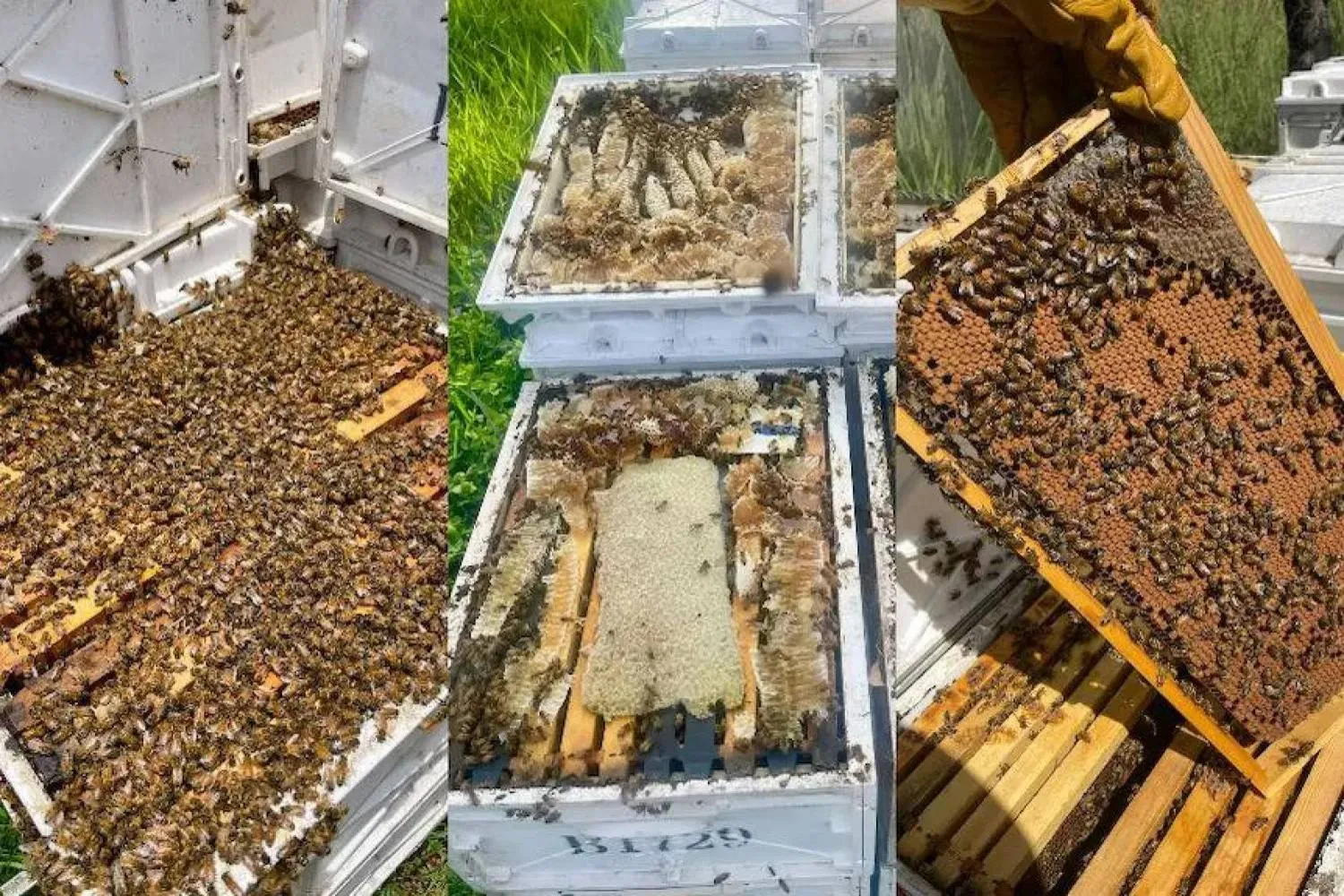
The frames, brood and bees stolen from 41 hives. (Tom Bidner for ABC Network)
TT

800,000 Bees stolen Across Australia in ‘Sophisticated’ Operation

The frames, brood and bees stolen from 41 hives. (Tom Bidner for ABC Network)

An estimated 800,000 bees, worth tens of thousands of dollars, have been stolen from properties in far north Queensland.

The industry is already reeling from this month’s arrival of the varroa mite parasite, according to The Guardian.

Tom Bidner, an apiarist from the Atherton Tablelands, west of Cairns, said 44 colonies had been stolen from three different beekeepers.

“This isn’t over yet,” he said. “We’ve got so many colonies to get through. We’re still getting around and checking all our different sites.”

He estimated that each hive contained at least 20,000 bees, making it a total of more than 800,000.

The alleged thefts happened on multiple different properties in different areas and required a sophisticated operation and specialist equipment.

Rather than risking early detection by stealing an entire box, they took out what’s known as the brood box. That means the hive appears unchanged from afar.

“They’re rocking up with a truckload of gear, basically, and they’re transferring our frames into their boxes ... and putting our hives back together, so it doesn’t sort of alert any of the growers that it looks like someone’s been in and done such a thing,” Bidner said.

The thieves also didn’t take any honey, which was left on the hive.

He suspects that the culprits are probably people from within the industry.

The apiarists will lose not just the stolen insects but the value of the pollination contracts, which can run into the thousands of dollars, he said.

The grower will also lose out due to lower quality flowering.

Bidner said it was the biggest theft in memory, though far from the first.

It’s now the peak of the avocado season in far north Queensland, so hives are deployed at properties across the area on contracted pollination work for local growers. Others are just left on the side of the highway.

“Security wise, in the past, we’ve let the bees do the majority of the job ... from time to time, it definitely happens you’ll have someone try and come and tamper with a hive,” he said. “They usually get about 30 seconds into the job and they’re gone.”