


Ex-officer Tells Inquiry UK Military Committed War Crimes in Afghanistan

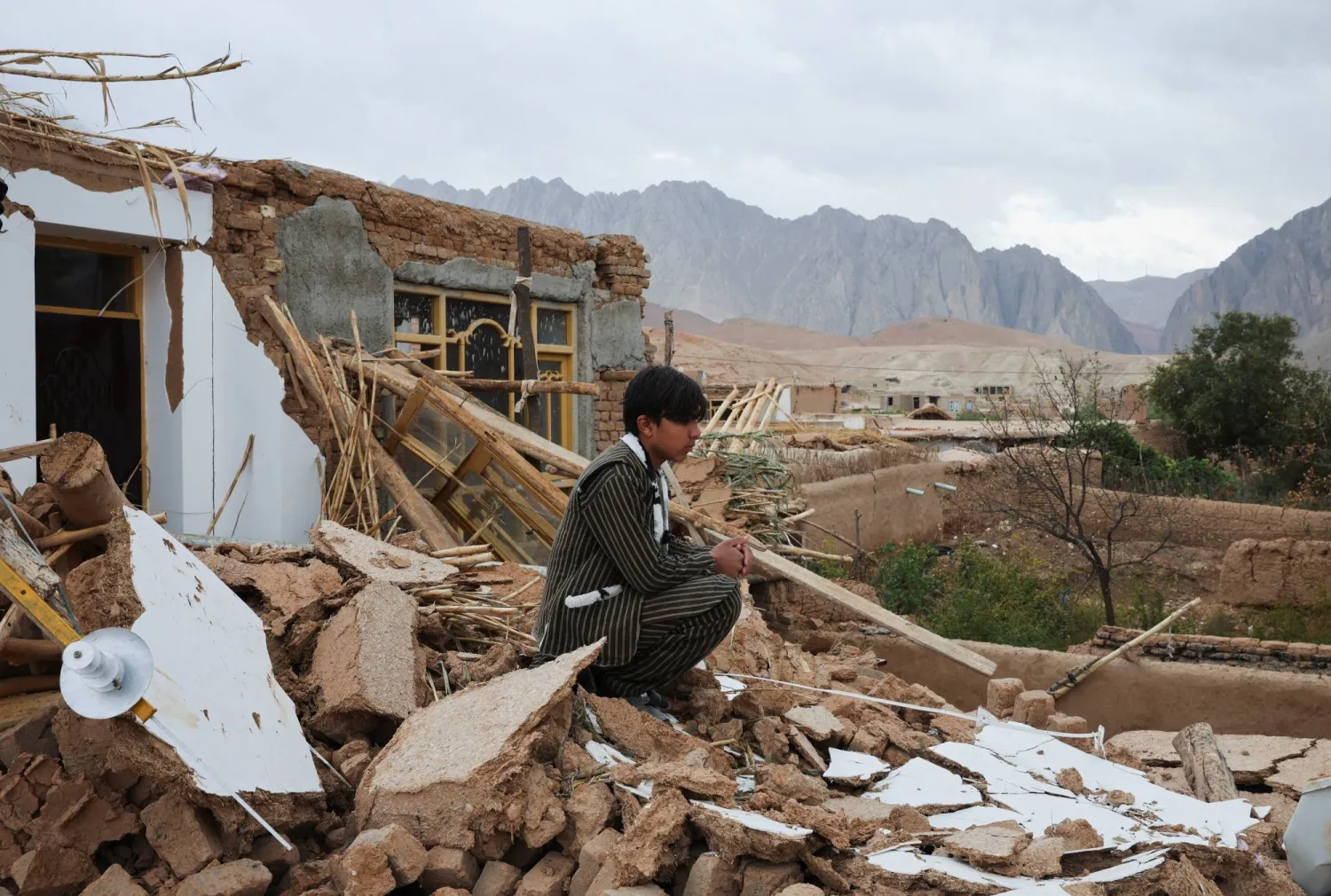
A boy sits next to his damaged house, in the aftermath of an earthquake, in Samangan province, Afghanistan, November 4, 2025. REUTERS/Sayed Hassib
TT

Ex-officer Tells Inquiry UK Military Committed War Crimes in Afghanistan

A boy sits next to his damaged house, in the aftermath of an earthquake, in Samangan province, Afghanistan, November 4, 2025. REUTERS/Sayed Hassib

A former senior British officer has told a public inquiry that British special forces in Afghanistan appeared to commit war crimes by executing suspects and despite widespread knowledge in the chain of command nothing was done.

Britain's defense ministry (MoD) ordered the inquiry after a BBC TV documentary reported that soldiers from the elite Special Air Service (SAS) had killed 54 people during the war in Afghanistan more than a decade ago in suspicious circumstances, Reuters reported.

The investigation is examining a number of night-time raids by British forces from mid-2010 to mid-2013 when they were part of a US-led coalition fighting the Taliban and other militants.

British military police have previously conducted several inquiries into allegations of misconduct by forces in Afghanistan, including those made against the SAS, but the MoD has said none had found enough evidence for prosecutions.

The inquiry's aim is to ascertain whether there was credible information of extra-judicial killings, whether investigations by the military police years later into concerns were properly conducted, and if unlawful killings were covered up.

Its chair, senior judge Charles Haddon-Cave, said it was important anyone who broke the law was referred to relevant authorities while the cloud of suspicion was lifted from those who had done nothing wrong. His inquiry has heard previously concerns from British soldiers who were in Afghanistan about a sub-unit referred to as UKSF1, with one saying they were killing fighting-age males during operations regardless of the threat they posed.

In new evidence, given in private but released on Monday, an officer known as N1466, who at the time was the Assistant Chief of Staff for Operations in the UK Special Forces Headquarters, revealed how in 2011 he had grown suspicious of the number of detainees killed during UKSF1 activities.

Based on an examination of official reports following raids, he said the number of enemies killed in action (EKIA) exceeded the number of weapons recovered, and that reports of detainees repeatedly attempting to pick up weapons or use grenades after capture did not appear credible.

"I will be clear we are talking about war crimes ... we are talking about taking detainees back on target and executing them with a pretense, the pretense being that they conducted violence against the forces," N1466 told Oliver Glasgow, the lead lawyer for the inquiry.

He said he had raised the issue with the Director of Special Forces, referred to as 1802, but rather than consider criminal action, he had instead only ordered a review of the operational tactic.

The former officer said he regretted that he did not approach the military police himself at the time, although he did later report his concerns in 2015.

"I was deeply troubled by what I strongly suspected was the unlawful killing of innocent people, including children," he said in his witness statement. "I had come to the view that the issue of extra-judicial killings was not confined to a small number of soldiers of a single sub unit of UKSF1 but was potentially more widespread, and was apparently known to many in UKSF."

Other evidence provided to the inquiry by former officers and a defense ministry official said there had been frustrations among soldiers that those captured during intelligence-led operations were being released days later as the Afghan judicial system could not cope. It also heard there was great rivalry between the two special forces units UKSFI and UKSF3, to which N1466 belonged.

"I am also conscious that some people out there will want to portray me as ... me against the as if I have got some sort of axe to grind ... I would just like to put across now that nothing, nothing is further from the truth," N1466 told the inquiry.

"... we didn't join the UKSF for this sort of behavior, you know, toddlers to get shot in their beds or random killing. It's not special, it's not elite, it's not what we stand for and most of us I don't believe would either wish to condone it or to cover it up."

The inquiry continues.


Satellite Photos Show Activity at Iran Nuclear Sites as Tensions Rise over Protest Crackdown

This satellite image from Planet Labs PBC shows the rubble of the Pilot Fuel Enrichment Plant at Iran’s Natanz nuclear enrichment site on Dec. 3, 2025. (Planet Labs PBC via AP)
TT

Satellite Photos Show Activity at Iran Nuclear Sites as Tensions Rise over Protest Crackdown

This satellite image from Planet Labs PBC shows the rubble of the Pilot Fuel Enrichment Plant at Iran’s Natanz nuclear enrichment site on Dec. 3, 2025. (Planet Labs PBC via AP)

As tensions soar over Iran’s bloody crackdown on nationwide protests, satellite images show activity at two Iranian nuclear sites bombed last year by Israel and the United States that may be a sign of Tehran trying to obscure efforts to salvage any materials remaining there.

The images from Planet Labs PBC show roofs have been built over two damaged buildings at the Isfahan and Natanz facilities, the first major activity noticeable by satellite at any of the country’s stricken nuclear sites since Israel’s 12-day war with Iran in June.

Those coverings block satellites from seeing what’s happening on the ground — right now the only way for inspectors from the International Atomic Energy Agency to monitor the sites as Iran has prevented access.

Iran has not publicly discussed the activity at the two sites. The IAEA, a watchdog agency of the United Nations, did not respond to requests for comment, The AP news reported.

US President Donald Trump repeatedly has demanded Iran negotiate a deal over its nuclear program to avert threatened American military strikes over the country’s crackdown on protesters. The US has moved the USS Abraham Lincoln and several guided-missile destroyers into the Middle East, but it remains unclear whether Trump will decide to use force.

The new roofs do not appear to be a sign of reconstruction starting at the heavily damaged facilities, experts who examined the sites said. Instead, they are likely part of Iran’s efforts “to assess whether key assets — such as limited stocks of highly enriched uranium — survived the strikes,” said Andrea Stricker, who studies Iran for the Washington-based Foundation for Defense of Democracies, which has been sanctioned by Tehran.

“They want to be able to get at any recovered assets they can get to without Israel or the United States seeing what survived,” she said.

Isfahan and Natanz are 2 key Iran sites Prior to Israel launching a 12-day war with Iran in June, the Islamic Republic had three major nuclear sites associated with its program. Iran long has insisted its nuclear program is peaceful. However, Iranian officials in recent years have increasingly threatened to pursue the bomb. The West and the IAEA say Iran had an organized nuclear weapons program up until 2003.

The Natanz site, some 220 kilometers (135 miles) south of the capital, is a mix of above- and below-ground laboratories that did the majority of Iran’s uranium enrichment.

Before the war, the IAEA said Iran used advanced centrifuges there to enrich uranium up to 60%, a short, technical step from weapons-grade levels of 90%. Some of the material is presumed to have been onsite for when the entire complex was attacked.

The facility outside the city of Isfahan was mainly known for producing the uranium gas that is fed into centrifuges to be spun and purified.

A third site, Fordo, some 95 kilometers (60 miles) southwest of the capital, housed a hardened enrichment site under a mountain.

During last year’s war, Israel targeted the sites first, followed by US strikes using bunker-busting bombs and Tomahawk cruise missiles. The US strikes “significantly degraded Iran’s nuclear program,” the White House’s National Security Strategy published in November said, though specifics on the damage have been hard to come by publicly.

Iran has not allowed IAEA inspectors to visit the sites since the attacks.

Roofs seen in Isfahan and Natanz The main above-ground enrichment building at Natanz was known as the Pilot Fuel Enrichment Plant. Israel hit the building June 13, leaving it “functionally destroyed,” and “seriously damaging” underground halls holding cascades of centrifuges, the IAEA’s director-general, Rafael Mariano Grossi, said at the time. A US follow-up attack on June 22 hit Natanz’s underground facilities with bunker-busting bombs, likely decimating what remained.

Planet Labs PBC images show Iran began in December to build a roof over the damaged plant. It completed work on the roof by the end of the month. Iran has not provided any public acknowledgment of that work. Natanz’s electrical system appears to still be destroyed.

Iran also appears to be continuing digging work that it began in 2023 at Kūh-e Kolang Gaz Lā, or “Pickaxe Mountain,” a few hundred meters (yards) south of the Natanz complex’s perimeter fence. Satellite images show piles of dirt from the excavation growing in size. It is believed to be building a new underground nuclear facility there.

At Isfahan, Iran began building a similar roof over a structure near the facility’s northeast corner, finishing the work in early January. The exact function of that building isn’t publicly known, although the Israeli military at the time said its strikes at Isfahan targeted sites there associated with centrifuge manufacturing. The Israeli military did not respond to requests for comment over the construction.

Meanwhile, imagery shows that two tunnels into a mountain near the Isfahan facility have been packed with dirt, a measure against missile strikes that Iran also did just before the June war. A third tunnel appears to have been cleared of dirt, with a new set of walls built near the entrance as an apparent security measure.

Sarah Burkhard, a senior research associate for the Washington-based Institute for Science and International Security, which long has watched Iran’s nuclear sites, said the roofs appear to be part of an operation to “recover any sort of remaining assets or rubble without letting us know what they are getting out of there.”

Sean O’Connor, an expert at at the open-source intelligence firm Janes, concurred that the aim was likely “to obscure activity rather than to, say, repair or rebuild a structure for use.”

Other work continues in Iran Since the end of the war, Iran has worked to reconstitute its ballistic missile program, rebuilding sites associated with the program, earlier AP reporting showed. That’s included work at a military complex known as Parchin, just to the southeast of Tehran.

In recent weeks, Iran has been working to rebuild a site at Parchin identified by the Institute for Science and International Security as “Taleghan 2.” Israel destroyed the site in an airstrike in October 2024.

It has said an archive of Iranian nuclear data earlier seized by Israel identified the building as housing an explosive chamber and a special X-ray system to study explosive tests. Such tests could be used in research toward compressing a core of uranium with explosives — something that’s needed for an implosion-style nuclear weapon.

Satellite photos show construction being done at “Taleghan 2” in recent months. The open-source intelligence firm Janes similarly noted the construction, as did the institute.

“This has been reconstituted very rapidly,” said Lewis Smart, a Janes analyst who studies Iran’s nuclear program. “It’s being expanded to potentially make it more resistant to penetration attacks and bombings. ... A rather large containment vessel is being put into the facility, which could be used for high explosive testing.”


Britain, Japan Agree to Deepen Defense and Security Cooperation

Britain and Japan agreed to strengthen defense and economic ties during talks between British Prime Minister Keir Starmer and Japanese premier Sanae Takaichi in Tokyo © Kin Cheung / POOL/AFP
TT

Britain, Japan Agree to Deepen Defense and Security Cooperation

Britain and Japan agreed to strengthen defense and economic ties during talks between British Prime Minister Keir Starmer and Japanese premier Sanae Takaichi in Tokyo © Kin Cheung / POOL/AFP

Britain and Japan agreed to strengthen defense and economic ties, visiting Prime Minister Keir Starmer said on Saturday, after his bid to forge closer links with China drew warnings from US President Donald Trump.

Starmer noted that Japan and Britain were the leading economies in a trans-Pacific that includes fellow G7 member Canada, as well as other international trade and defense pacts.

"We set out a clear priority to build an even deeper partnership in the years to come," Starmer said as he stood beside Japan's Prime Minister Sanae Takaichi after a bilateral meeting in Tokyo, AFP reported.

"That includes working together to strengthen our collective security, across the Euro-Atlantic and in the Indo-Pacific."

Takaichi said they agreed to hold a meeting of British and Japanese foreign and defense ministers this year.

She said she also wanted to discuss "cooperation towards realising a free and open Indo-Pacific, the Middle East situation and Ukraine situation" at a dinner with Starmer later on Saturday.

Starmer arrived on a one-day Tokyo stop after a four-day visit in China, where he followed in the footsteps of other Western leaders looking to counter an increasingly volatile United States.

Leaders from France, Canada and Finland have all travelled to Beijing in recent weeks, recoiling from Trump's bid to seize Greenland and tariff threats against NATO allies.

Trump warned on Thursday it was "very dangerous" for its close ally Britain to be dealing with China, although Starmer brushed off those comments.

Tokyo's ties with Beijing have deteriorated since Takaichi suggested in November that Japan could intervene militarily during a potential attack on Taiwan.

China regards the self-ruled democratic island as its territory.

Starmer met Chinese President Xi Jinping and Premier Li Qiang on Thursday, with both sides highlighting the need for closer ties.

He also signed a series of agreements there, with Downing Street announcing Beijing had agreed to visa-free travel for British citizens visiting China for under 30 days.

No start date for that arrangement has been given yet.

Takaich said the two leaders agreed during discussions on economic security that a strengthening of supply chains "including important minerals is urgently needed".

There is concern that Beijing could choke off exports of the rare earths crucial for making everything from electric cars to missiles.

China, the world's leading producer of such minerals, announced new export controls in October on rare earths and associated technologies.

They have also been a major sticking point in trade negotiations between China and the United States.

Britain, Japan and Italy are also developing a new fighter jet after Tokyo relied for decades on the United States for military hardware.


Explosion at Iran's Southern Port of Bandar Abbas Kills One, Hurts 14

Smoke rises from a fire caused by an explosion in Tehran (File photo - Reuters)
TT

Explosion at Iran's Southern Port of Bandar Abbas Kills One, Hurts 14

Smoke rises from a fire caused by an explosion in Tehran (File photo - Reuters)

At least one person was killed and 14 injured in ​an explosion in the southern Iranian port of Bandar Abbas on Saturday, a local official told Iranian news agencies, but the cause of the blast was not known.

The semi-official Tasnim news agency said that social media reports alleging that a Revolutionary Guard navy commander had been targeted in the explosion were "completely false".

Iranian media said the blast was under ‌investigation but provided ‌no further information. Iranian authorities could ‌not immediately ⁠be ​contacted ‌for comment.
Separately, four people were killed after a gas explosion in the city of Ahvaz near the Iraqi border, according to state-run Tehran Times. No further information was immediately available.

Two Israeli officials told Reuters that Israel was not involved in Saturday's blasts, which come amid heightened tensions between Tehran and Washington over Iran's ⁠crackdown on nationwide protests and over the country's nuclear program.

US President Donald Trump ‌said on Thursday an "armada" was heading toward ‍Iran. Multiple sources said on ‍Friday that Trump was weighing options against Iran that include ‍targeted strikes on security forces.

Bandar ​Abbas, home to Iran's most important container port, lies on the Strait of Hormuz, a vital waterway ⁠between Iran and Oman which handles about a fifth of the world's seaborne oil.

The port suffered a major explosion last April that killed dozens and injured over 1,000 people. An investigative committee at the time blamed the blast on shortcomings in adherence to principles of civil defense and security.
