


Airbus Says Most of Its Recalled 6,000 A320 Jets Now Modified

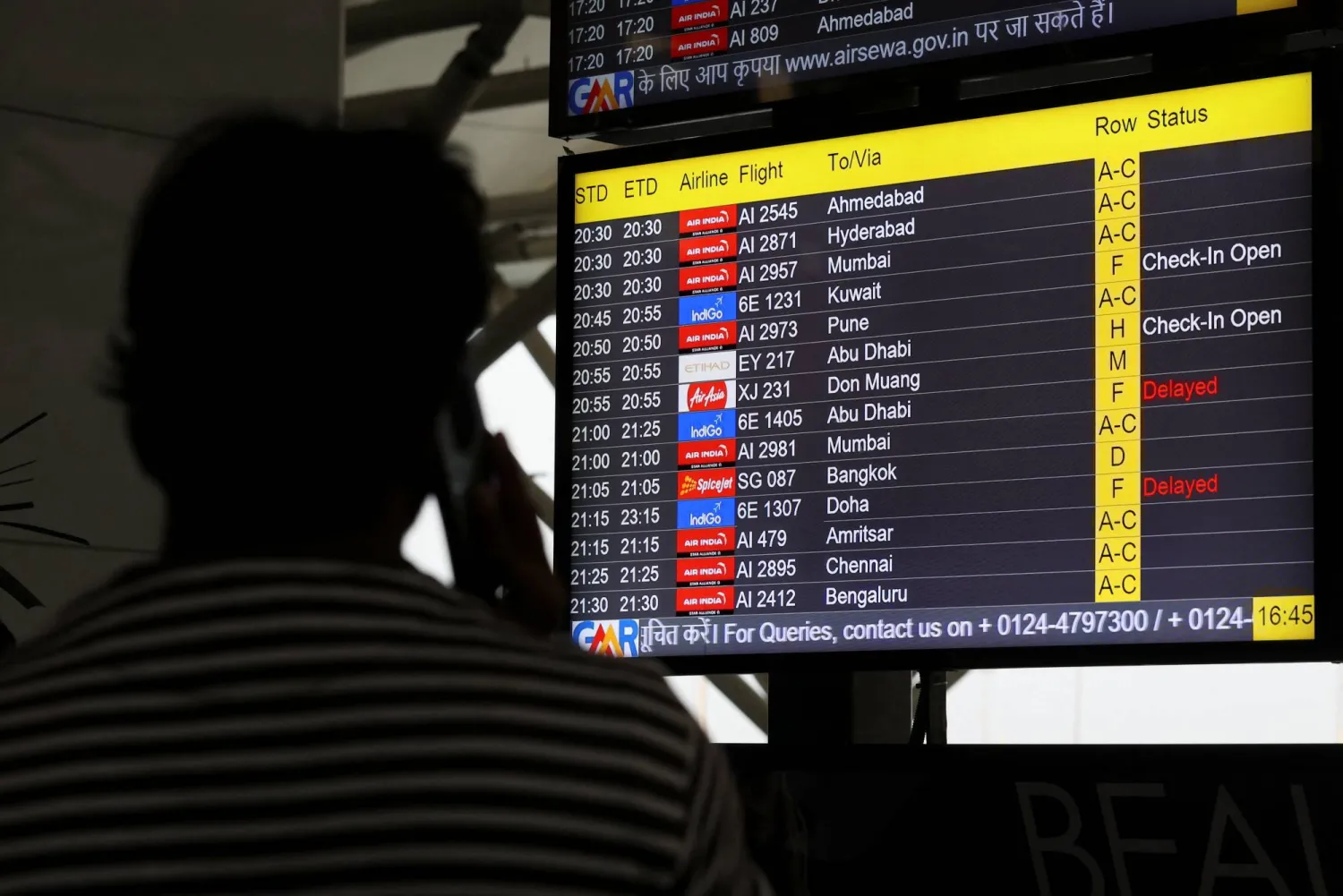
 A screen displays delays in IndiGo flights at the Indira Gandhi International Airport in Delhi, India, November 29, 2025. (Reuters)
A screen displays delays in IndiGo flights at the Indira Gandhi International Airport in Delhi, India, November 29, 2025. (Reuters)
TT

Airbus Says Most of Its Recalled 6,000 A320 Jets Now Modified

 A screen displays delays in IndiGo flights at the Indira Gandhi International Airport in Delhi, India, November 29, 2025. (Reuters)
A screen displays delays in IndiGo flights at the Indira Gandhi International Airport in Delhi, India, November 29, 2025. (Reuters)

Airbus fleets were returning towards normal operations on Monday after the European planemaker pushed through abrupt software changes faster than expected, as it wrestled with safety headlines long focused on rival Boeing.

Dozens of airlines from Asia to the United States said they had carried out a snap software retrofit ordered by Airbus, and mandated by global regulators, after a vulnerability to solar flares emerged in a recent mid-air incident on a JetBlue A320.

Airbus said on Monday that the vast majority of around 6,000 of its A320-family fleet affected by the safety alert had been modified, with fewer than 100 jets still requiring work.

But some require a longer process and Colombia's Avianca continued to halt bookings for dates until December 8.

Sources familiar with the matter said the unprecedented decision to recall about half the A320-family fleet was taken shortly after the possible but unproven link to a drop in altitude on the JetBlue jet emerged late last week.

Shares in Airbus were down 2.1% in early trading in Paris.

PLANES GROUNDED DURING THANKSGIVING WEEKEND

Following talks with regulators, Airbus issued its 8-page alert to hundreds of operators on Friday, effectively ordering a temporary grounding by ordering the repair before next flight.

"The thing hit us about 9 p.m. (Jeddah time) and I was back in here about 9:30. I was actually quite surprised how quickly we got through it: there are always complexities," said Steven Greenway, CEO of Saudi budget carrier Flyadeal.

The instruction was seen as the broadest emergency recall in the company's history and raised immediate concerns of travel disruption, particularly during the busy US Thanksgiving weekend.

The sweeping warning exposed the fact that Airbus does not have full real-time awareness of which software version is used given reporting lags, industry sources said.

IMPACT REVISED DOWN

At first airlines struggled to gauge the impact since the blanket alert lacked affected jets' serial numbers. A Finnair passenger said a flight was delayed on the tarmac for checks.

Over 24 hours, engineers zeroed in on individual jets.

Several airlines revised down estimates of the number of jets impacted and time needed for the work, which Airbus initially pegged at three hours per plane.

"It has come down a lot," an industry source said on Sunday, referring to the overall number of aircraft affected.

The fix involved reverting to an earlier version of software that handles the nose angle. It involves uploading the previous version via a cable from a device called a data loader, which is carried into the cockpit to prevent cyberattacks.

At least one major airline faced delays because it lacked enough data loaders to handle dozens of jets in such a short time, according to an executive speaking privately.

UK's easyJet and Wizz Air said on Monday they had completed the updates over the weekend without cancelling any flights.

JetBlue said late Sunday it expected to have completed work to return to service 137 of 150 impacted aircraft by Monday and plans to cancel approximately 20 flights for Monday due to the issue.

SOME OLDER A320 JETS NEED NEW COMPUTER, NOT RESET

Questions remain over a subset of generally older A320-family jets that will need a new computer rather than a mere software reset. The number of those involved has been reduced below initial estimates of 1,000, industry sources said.

Industry executives said the weekend furor highlighted changes in the industry's playbook since the Boeing 737 MAX crisis, in which the US planemaker was heavily criticized over its handling of fatal crashes blamed on a software design error.

It is the first time Airbus has had to deal with global safety attention on such a scale since that crisis. CEO Guillaume Faury publicly apologized in a deliberate shift of tone for an industry beset by lawsuits and conservative public relations. Boeing has also declared itself more open.

"Is Airbus acting with the Boeing MAX crisis in mind? Absolutely — every company in the aviation sector is," said Ronn Torossian, chairman of New York-based 5W Public Relations.

"Boeing paid the reputational price for hesitation and opacity. Airbus clearly wants to show... a willingness to say, ‘We could have done better.’ That resonates with regulators, customers, and the flying public."



China's Finance Ministry: Fiscal Policies Will be More 'Proactive' in 2026

A man walks on a street in Beijing, China, 24 December 2025. EPA/WU HAO
TT

China's Finance Ministry: Fiscal Policies Will be More 'Proactive' in 2026

A man walks on a street in Beijing, China, 24 December 2025. EPA/WU HAO

China's finance ministry on Sunday said fiscal policies will be more proactive next year, reiterating its focus on domestic demand, technological innovation and a social safety net.

The statement comes as trading partners urge the world's second-biggest economy to reduce its reliance on exports, underscoring the urgency to revive confidence at home where a prolonged property crisis has rippled ⁠through the economy, weighing on sentiment.

China will boost consumption and actively expand investment in new productive forces and people's overall development, the ministry said in a statement after a two-day meeting at which it set ⁠2026 goals.

In addition, Reuters quoted the ministry as saying that it will support innovation to foster new growth engines, and improve the social security system by providing better healthcare and education services.

Other tasks for next year include promoting integration between urban and rural areas, and propelling China's transformation into a greener society.

China is likely to stick to ⁠its annual economic growth target of around 5% in 2026, government advisers and analysts told Reuters, a goal that would require authorities to keep fiscal and monetary spigots open as they seek to snap a deflationary spell.

Leaders this month promised to maintain a "proactive" fiscal policy next year that would stimulate both consumption and investment to maintain high economic growth.


Bulgaria Adopts Euro Amid Fear and Uncertainty

Customers shop in a grocery store in the village of Chuprene, northwestern Bulgaria on December 7, 2025. (Photo by Nikolay DOYCHINOV / AFP)
TT

Bulgaria Adopts Euro Amid Fear and Uncertainty

Customers shop in a grocery store in the village of Chuprene, northwestern Bulgaria on December 7, 2025. (Photo by Nikolay DOYCHINOV / AFP)

Bulgaria will become the 21st country to adopt the euro on Thursday, but some believe the move could bring higher prices and add to instability in the European Union's poorest country.

A protest campaign emerged this year to "keep the Bulgarian lev", playing on public fears of price rises and a generally negative view of the euro among much of the population.

But successive governments have pushed to join the eurozone and supporters insist it will boost the economy, reinforce ties to the West and protect against Russia's influence.

The single currency first rolled out in 12 countries on January 1, 2002, and has since regularly extended its influence, with Croatia the last country to join in 2023.

But Bulgaria faces unique challenges, including anti-corruption protests that recently swept a conservative-led government from office, leaving the country on the verge of its eighth election in five years.

Boryana Dimitrova of the Alpha Research polling institute, which has tracked public opinion on the euro for a year, told AFP any problems with euro adoption would be seized on by anti-EU politicians.

Any issues will become "part of the political campaign, which creates a basis for rhetoric directed against the EU", she said.

While far-right and pro-Russia parties have been behind several anti-euro protests, many people, especially in poor rural areas, worry about the new currency.

"Prices will go up. That's what friends of mine who live in Western Europe told me," Bilyana Nikolova, 53, who runs a grocery store in the village of Chuprene in northwestern Bulgaria, told AFP.

The latest survey by the EU's polling agency Eurobarometer suggested 49 percent of Bulgarians were against the single currency.

After hyperinflation in the 1990s, Bulgaria pegged its currency to the German mark and then to the euro, making the country dependent on the European Central Bank (ECB).

"It will now finally be able to take part in decision making within this monetary union," Georgi Angelov, senior economist at the Open Society Institute in Sofia, told AFP.

An EU member since 2007, Bulgaria joined the so-called "waiting room" to the single currency in 2020, at the same time as Croatia.

The gains of joining the euro are "substantial", ECB president Christine Lagarde said last month in Sofia, citing "smoother trade, lower financing costs and more stable prices".

Small and medium-sized enterprises stand to save an equivalent of some 500 million euros ($580 million) in exchange fees, she added.

One sector expected to benefit in the Black Sea nation is tourism, which this year generated around eight percent of the country's GDP.

Lagarde predicted the impact on consumer prices would be "modest and short-lived", saying in earlier euro changeovers, the impact was between 0.2 and 0.4 percentage points.

But consumers -- already struggling with inflation -- fear they will not be able to make ends meet, according to Dimitrova.

Food prices in November were up five percent year-on-year, according to the National Statistical Institute, more than double the eurozone average.

Parliament this year adopted empowered oversight bodies to investigate sharp price hikes and curb "unjustified" surges linked to the euro changeover.

But analysts fear wider political uncertainty risks delaying much needed anti-corruption reforms, which could have a knock-on effect on the wider economy.

"The challenge will be to have a stable government for at least one to two years, so we can fully reap the benefits of joining the euro area," Angelov said.


Syria Prepares to Launch New Currency Amid Major Challenges

Syrian Central Bank Governor Abdulkader Husrieh (X)
TT

Syria Prepares to Launch New Currency Amid Major Challenges

Syrian Central Bank Governor Abdulkader Husrieh (X)

Syria’s central bank governor, Abdulkader Husrieh, said the new Syrian pound is not merely a means of exchange but a symbol of the success of the Syrian revolution, national belonging, and confidence in the country’s ability to recover.

In a Facebook post, Husrieh said that with the launch of the new currency, Syrians were not just celebrating a banknote, but also celebrating their sovereignty and national identity, noting that many international experiences show that national currencies become strong when people rally around them, according to the Syrian Arab News Agency.

He pointed to Germany’s experience, where the introduction of the mark after the war marked the starting point of economic recovery, and to France, where the new French franc became the financial symbol of the new republic, known as the Fifth Republic.

Husrieh said the central bank would carry out its role with a clear understanding of the challenges and opportunities, while committing to responsibility, transparency, and the protection of the national currency. He added that the cornerstone remains public solidarity and trust, because a strong currency begins with the people's belief in it.

He called for turning the launch into a dignified national occasion through which Syrians express awareness, confidence, and adherence to the pound as a symbol of sovereignty and a national choice.

Husrieh added that supporting the pound is supporting the nation, and taking pride in it is a matter of pride in the future for Syrians and their children. He described the move as an opportunity for a new success following the success of the revolution in liberation and the lifting of economic sanctions that had shackled Syria’s economy for nearly fifty years.

Husrieh had recently announced that Jan. 1, 2026, would mark the launch of the new Syrian currency and the start of the exchange process for the old notes, with the exchange to be carried out through 66 companies and 1,000 designated outlets.

Restoring confidence

Political and economic researcher Bassel Kouwefi said the exchange plans, if well implemented, could serve as an entry point for rebuilding confidence in the national economy, encouraging domestic investment, and paving the way for broader reforms in the financial sector. However, he warned against failing to address the root causes of inflation and economic collapse during the previous regime's rule.

Speaking to Asharq Al-Awsat, Kouwefi described currency exchange and the removal of zeros as complex economic measures.

He said their main benefits include simplifying daily transactions, reducing the volume of banknotes in circulation, boosting confidence in stability, lowering printing and transportation costs, simplifying accounting records and financial software, and reducing currency speculation driven by corruption networks seeking to undermine stability in Syria.

Kouwefi said the exchange plans, if well-executed, could help restore confidence in the macroeconomy, but stressed the challenges posed by failing to tackle the fundamental causes of past inflation and collapse, including fiscal deficits, instability, and weak production. He said a comprehensive economic and financial program was therefore essential.

He added that the process also requires strong banking infrastructure, an organized transition period, and sufficient liquidity in the new denominations.

He said these remain major challenges under current Syrian conditions, alongside the need to mitigate social impacts that could lead to public confusion, market exploitation, and difficulties for less informed segments of society.