

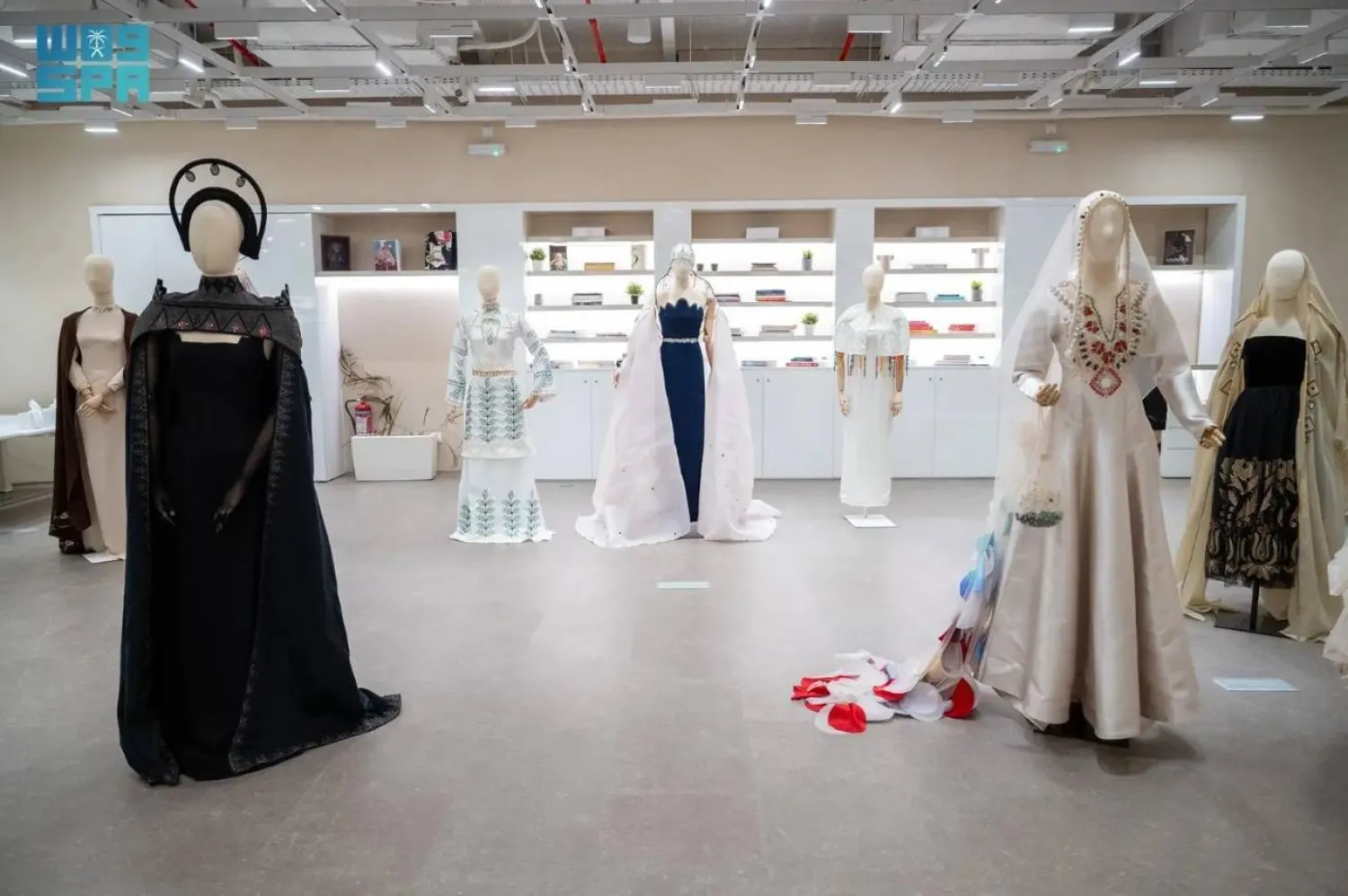

Saudi Fashion Commission Empowers Designers in Collaboration with Swarovski

The program offered participants a comprehensive five-day workshop led by specialized experts. SPA
TT

Saudi Fashion Commission Empowers Designers in Collaboration with Swarovski

The program offered participants a comprehensive five-day workshop led by specialized experts. SPA

The Fashion Commission has successfully concluded its "Saudi Heritage Revival: Arts and Handcrafts" initiative, a program designed to revive traditional Saudi Handcrafts and empower emerging designers through hands-on training and creative development.

Hosted at FCR (Future Creative Residence), the commission's creative space, the initiative aligns with national efforts to preserve cultural heritage while promoting sustainable fashion practices.

The program offered participants a comprehensive five-day workshop series led by specialized experts. Training included modern applications of traditional embroidery and beadwork, as well as the creative use of Swarovski crystals in contemporary design.

The workshops provided both technical and conceptual learning, enabling designers to translate Saudi cultural elements into innovative fashion pieces.

Following the training phase, participants developed final garments inspired by Saudi tradition, supported by individual feedback sessions from Swarovski specialists. Designers also received access to a professional studio to photograph their final looks before jury evaluation.

The initiative concluded with a final ceremony at FCR, where participants presented their completed designs.

The jury announced the competition winner: Rola Mutlaq Alanzi. The top five designers: Rola Mutlaq Alanzi, Abdullah Al-Bargi, Latifa Al-Buajan, Hadeel Abdulaziz, and Arwa Al-Suhaim were nominated to participate in Swarovski's international academic competition.



Fast-Fashion Giant Shein Plunges 10% on Hong Kong Debut

Carlson Tong (C), Chairman of Hong Kong Exchanges and Clearing Limited, attends SHEIN’s listing ceremony at the Hong Kong Exchanges and Clearing Limited (HKEX) in Hong Kong, China, 01 September 2026. (EPA)
TT

Fast-Fashion Giant Shein Plunges 10% on Hong Kong Debut

Carlson Tong (C), Chairman of Hong Kong Exchanges and Clearing Limited, attends SHEIN’s listing ceremony at the Hong Kong Exchanges and Clearing Limited (HKEX) in Hong Kong, China, 01 September 2026. (EPA)

Fast-fashion retailer Shein fell 10 percent on its long-awaited Hong Kong trading debut Tuesday, having raised US$1.7 billion in a high-profile initial public offering.

The flotation comes after the company's plans to list in New York and London were derailed by regulatory scrutiny, but it won approval from Chinese officials in July for the sale in the southern financial hub.

However, its shares fell to as low as HK$43.72 soon after the open, compared with its listing price of HK$48.56.

The IPO put the company's valuation at around US$26.3 billion -- well short of the nearly US$100 billion during private fundraising rounds in 2022.

Shein, known for its ultra-low prices and rapidly produced clothes, said proceeds from the sale would be used to finance its technological capabilities and boost its international presence.

The online retailer moved its headquarters to Singapore between 2021 and 2022, which analysts say was intended to avoid increasing global scrutiny of Chinese firms.

Its European customer base rose to 156 million average monthly users by the end of 2025, making it one of the continent's biggest e-commerce platforms alongside China's AliExpress and US titan Amazon, which have 193 million and around 180 million users respectively.

The company has faced scrutiny over its environmental footprint and allegations of human rights violations, and faces growing competition from low-cost e-commerce companies such as Temu and AliExpress.

Executive chairman Donald Tang told AFP last year that the company has "zero tolerance" for forced labor.

Morningstar analyst Lorraine Tan said in an August note that revenue growth "has converged to the pace seen by the fast fashion industry at below 10 percent in 2025".

She added the fall in valuation "does reflect that drop off in investor appetite for Shein's shares".

The company pioneered a formidable model that is hard to replicate, said Ken Pucker, a sustainable fashion expert at Tufts University.

- Chinese roots -

But its unprecedented growth also invited challenges of "newly imposed taxes and duties, compromised sustainability, privacy and copyright practices and competition", he added.

"Timing is not ideal given the company's slowing growth. That said, it has been trying to go public for around five years, and I am guessing that many of its investors were eager to get paid out."

In 2025, Shein reported a full-year net profit of US$2.06 billion but swung to a US$99 million loss in the first three months of this year after the United States scrapped an import duty exemption on small packages.

In a similar move, the European Union last month imposed a duty of three euros (US$3.50) per item for packages valued at less than 150 euros.

And France will impose a fee on ultra-fast fashion items from Tuesday that could eventually reach almost 20 euros per garment, as the government targets major Asian e-commerce platforms.

"Shein's near future is going to be marked by negative growth," e-commerce analyst Juozas Kaziukenas told AFP.

The retailer needs a "mid-air engine swap" to rebuild its supply chain on diversified inventory sources beyond shipping directly from China, he added.

Shein's CEO Sky Xu made a rare public appearance this year in the southern Chinese province of Guangdong, pledging to allocate greater resources in the country, which was seen by analysts as an attempt to realign the company with its roots.

The Hong Kong listing represents a "new Asian story for the company", as it redefines itself institutionally with "roots in China", said Lawrence Loh, a professor specializing in ESG markets at the National University of Singapore.

"The listing opens a new chapter for Shein to access new capital to resolve the sustainability issues, but this comes with a price of even higher levels of public scrutiny."


Naomi Osaka's US Open Look Channels Allen Iverson with Gray Hoodie and Hair in Cornrows

Naomi Osaka of Japan walks onto the court against Anastasia Zakharova during their Women's Singles First Round match on Day Two of the 2026 US Open at USTA Billie Jean King National Tennis Center on August 31, 2026 in the Flushing neighborhood of the Queens borough of New York City. (Getty Images/AFP)
TT

Naomi Osaka's US Open Look Channels Allen Iverson with Gray Hoodie and Hair in Cornrows

Naomi Osaka of Japan walks onto the court against Anastasia Zakharova during their Women's Singles First Round match on Day Two of the 2026 US Open at USTA Billie Jean King National Tennis Center on August 31, 2026 in the Flushing neighborhood of the Queens borough of New York City. (Getty Images/AFP)

Naomi Osaka channeled Allen Iverson as part of her US Open debut, and the former NBA superstar liked the look.

Osaka made her usual fashionable entrance for her match against Anastasia Zakharova on Monday night in the first round. The two-time US Open champion emerged from the tunnel onto the court in Arthur Ashe Stadium wearing a long, white skirt and a gray, hooded robe featuring newspaper clippings about her.

She had the hood on when she entered. When she removed that to reveal her black outfit, Osaka had her hair done in cornrows, just as Iverson did when was the NBA MVP while playing for the Philadelphia 76ers.

Osaka wore a shirt with Iverson's picture when she met with the media on the eve of the tournament and called him a trailblazer.

“I think he’s also someone that I look up to a lot, because he’s kind done a lot in fashion, whether it’s on purpose or not, but he’s shifted the way that NBA players dress,” Osaka said Saturday. “I also think the whole conversation around clothes in sports and also just expressing yourself through style, I feel like he’s someone that I look up to in that regard.”

She added that they'd never communicated, but Iverson posted a message to Osaka on his Instagram page Monday, writing: “Wow, what an honor!! BIG FAN can’t wait to meet you.”


France Takes Aim at Ultra-Fast Fashion with New Levy

The logo of Temu, an e-commerce platform owned by PDD Holdings, is seen on a mobile phone displayed in front of its website, in this illustration picture taken April 26, 2023. (Reuters)
TT

France Takes Aim at Ultra-Fast Fashion with New Levy

The logo of Temu, an e-commerce platform owned by PDD Holdings, is seen on a mobile phone displayed in front of its website, in this illustration picture taken April 26, 2023. (Reuters)

France will from Tuesday impose a fee on ultra-fast fashion items that will eventually reach almost 20 euros per garment, as the government targets major Asian e-commerce platforms including Shein.

The levy follows legislation passed by the French parliament in June to regulate so-called "ultra-fast fashion" companies, known for selling large volumes of lower quality clothing at rock-bottom prices.

It is part of a push to rein in Asian e-commerce giants including Shein, Temu and AliExpress, which have exploded in popularity in France in recent years.

"The harmful effects of ultra-fast fashion on our environment and our economy are well known and documented," said Mathieu Lefevre, the minister for ecological transition on Friday as details of the measure were published.

Under the legislation, ultra-fast fashion will be determined according to two criteria: the volume of clothing placed on the market and the cost of repairing garments relative to their purchase price.

The per-item fee will vary on a set scale according to how each product scores on both these standards.

In 2026, companies will pay fines such as a 50-cent levy on underwear falling into the ultra-fast fashion category, rising to two euros for T-shirts, nine euros for jeans and 12 euros for a jacket.

The levy could reach up to 19.50 euros ($22.60) per item by 2030, though the cap remains at 50 percent of the product's pre-tax price.

A tool to collect data independently, rather than relying solely on companies' own declarations, is under development, Lefevre's office said.

Shein, which on Monday was valued at $26.3 billion in its long-awaited Hong Kong initial public offering, declined to comment when contacted by AFP.

Temu and AliExpress did not immediately respond to requests for comment.

The measure has faced criticism over which retailers it will affect.

In July, Lefevre's office said the levy would not apply to retailers such as H&M or Zara, prompting some to say that the measure appeared to spare European and French companies.

French officials have made repeated statements that they view Shein, Temu and AliExpress as driving the surge in ultra-fast fashion.

The European Commission had also raised questions over whether the legislation complied with EU law, but Lefevre's office said those concerns had been "dispelled" and the measure was not expected to be blocked.

China meanwhile warned in July of potential retaliation over the French law, slamming the regulation as "discriminatory" and in violation of trade principles.

Imports of small parcels from China into the EU have already fallen by around 30 to 40 percent since a separate three-euro EU levy on such shipments came into force on July 1, according to the French government.