
Report: Sudan Offers Russia Military Base, Gold in Exchange for Weapons

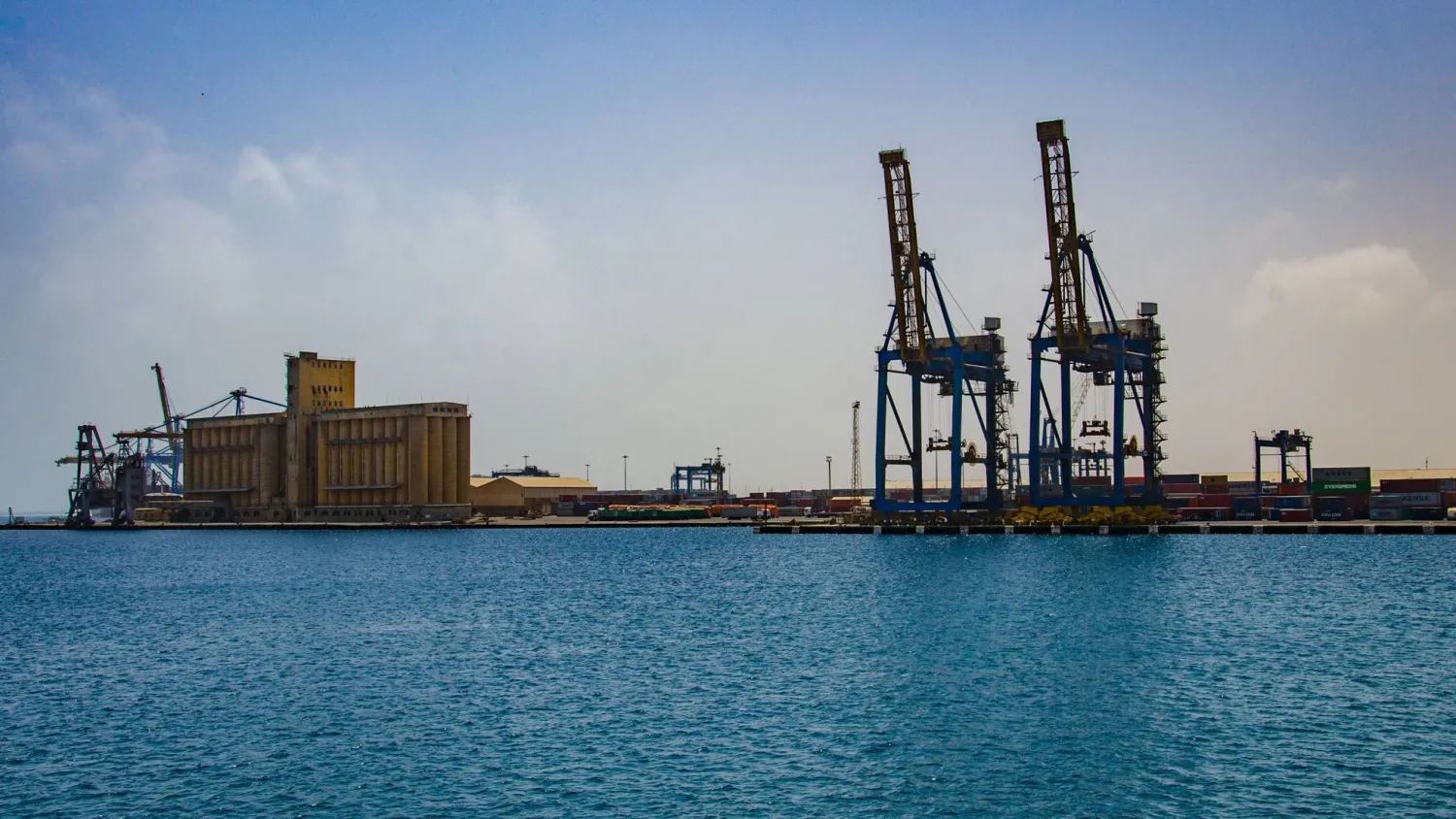
The Port Sudan harbor on the Red Sea. (Getty Images)
TT

Report: Sudan Offers Russia Military Base, Gold in Exchange for Weapons

The Port Sudan harbor on the Red Sea. (Getty Images)

Sudan’s government, based in the interim capital Port Sudan, has offered Russia its first naval base in Africa and investments in the mining sector, particularly gold, in exchange for weapons, according to US and Sudanese sources.

According to Sudanese officials who spoke to the newspaper, the offer includes a 25-year agreement allowing Moscow to deploy up to 300 soldiers and four warships, including nuclear-powered vessels, in Port Sudan or another naval facility on the Red Sea.

The newspaper said the location provides Russia with a strategic foothold that directly overlooks trade routes passing through the Suez Canal, which handles about 12% of global trade.

The Wall Street Journal quoted a senior US official warning that a Russian base in Port Sudan or Libya “could expand Moscow's capacity to use force and allow it to operate without restraint.”

Retired General Mark Hicks, the former commander of US special forces in Africa, said the base “enhances Russia's international standing and expands its influence.”

This development comes while the Sudanese military leadership is seeking new sources of arms amid a fierce war against the Rapid Support Forces led by Mohamed Hamdan Dagalo.

The Journal said that according to a Sudanese official, the country needs air defense systems and advanced weapons, though “entering into a deal with Russia could create problems with the United States and the European Union.”

Meanwhile, sources cited by broadcaster Al Arabiya unveiled additional details of the new US proposal to end the fighting in Sudan.

The proposal is built on a three-track roadmap: military, humanitarian, and political that excludes elements of the former regime, Islamists, and the Muslim Brotherhood.

The sources said the military track addresses measures to achieve a full ceasefire and open corridors for a broad humanitarian operation that allows aid to enter and services to resume in all regions of the country.

It also calls for the formation of an international committee to monitor the ceasefire, secure humanitarian routes, protect civilians, and address any potential violations.

In the political track, Al Arabiya said the proposal outlines the launch of a political transition led by civilian forces, excluding members of the former regime and Islamist groups, to support the truce and lay the groundwork for a full end to the war.

The proposal also includes a comprehensive military and security reform process, involving the removal of Muslim Brotherhood-affiliated elements from the army and security agencies, restructuring these institutions through the integration of armed groups, and dismantling combat forces aligned with both sides, ultimately leading to a unified, professional army under civilian authority resulting from the political process.

Last September, US envoy Massad Boulos had submitted a similar roadmap to delegations from the Sudanese government and the RSF.

On November 25, he announced that both sides had not agreed to it, urging them to accept the US plan “without preconditions.”


Women Returning to Gaza Say Israeli Troops Bound and Interrogated Them After Rafah Crossing

 Huda Abu Abed, 56, cries as she is embraced by her sister inside a tent after returning to Gaza through the Rafah crossing, in Khan Younis in the southern Gaza Strip, February 3, 2026. (Reuters)
Huda Abu Abed, 56, cries as she is embraced by her sister inside a tent after returning to Gaza through the Rafah crossing, in Khan Younis in the southern Gaza Strip, February 3, 2026. (Reuters)
TT

Women Returning to Gaza Say Israeli Troops Bound and Interrogated Them After Rafah Crossing

 Huda Abu Abed, 56, cries as she is embraced by her sister inside a tent after returning to Gaza through the Rafah crossing, in Khan Younis in the southern Gaza Strip, February 3, 2026. (Reuters)
Huda Abu Abed, 56, cries as she is embraced by her sister inside a tent after returning to Gaza through the Rafah crossing, in Khan Younis in the southern Gaza Strip, February 3, 2026. (Reuters)

Many hoped the reopening of the Rafah crossing between Egypt and Gaza would bring relief to the war-battered territory, but for the first few Palestinians allowed to cross, it proved more harrowing than a homecoming.

Three women who entered Gaza on the first day of the reopening told The Associated Press on Tuesday that Israeli troops blindfolded and handcuffed them, then interrogated and threatened them, holding them for several hours and inflicting what they said was humiliating treatment until they were released.

The three were among 12 Palestinians — mostly women, children and the elderly — who entered Gaza on Monday through Rafah, which reopened after being closed for most of the Israel-Hamas war, ever since Israeli forces seized the crossing in May 2024.

Asked about the reports, the Israeli military said, “No incidents of inappropriate conduct, mistreatment, apprehensions, or confiscation of property by the Israeli security establishment are known.” The Shin Bet intelligence agency and COGAT, the Israeli military body overseeing humanitarian aid in Gaza, did not immediately respond to questions about the women’s allegations.

‘A humiliation room’

The three women said the abuse took place at a screening station on the edge of the area of Gaza under Israeli military control that all returnees were required to pass through after crossing Rafah.

The 12 returnees were brought by bus through the crossing, then drove until they reached the Israeli military zone, said one of the returnees, Rotana al-Regeb, who was coming back with her mother, Huda Abu Abed. The two had left Gaza in March last year for the mother to get medical treatment abroad.

At the screening station, they were ordered out of the bus and members of an Israeli-backed Palestinian armed group, Abu Shabab, including one woman, searched their bags and bodies, she said.

Israeli officers then called them one by one into a room, she said. She said her mother was called first. When al-Regeb was called, she said she found her mother, who is in her 50s, kneeling on the floor, blindfolded with her hands handcuffed behind her back.

Al-Regeb said Israeli soldiers did the same with her and took her to an “interrogation room — or, a humiliation room.” They questioned her about Hamas and other things in Gaza, "things we didn’t know and had no connection to,” she said.

They also pressured her to act as an informant for the Israeli military, she said. “They threatened that they will detain me and I won’t return to my children,” said al-Regeb, who has four daughters and a son, living with her husband in a tent in Khan Younis. “There was no beating, but there were insults, threats, and psychological pressure.”

Abu Abed, her mother, confirmed the account to the AP.

The third woman, Sabah al-Qara, a 57-year-old from Khan Younis who left for medical treatment in Egypt in December 2023, gave a similar account, describing being handcuffed, blindfolded and interrogated.

“They interrogated us and asked us about everything that happened in Gaza,” she said. “We were outside Gaza and knew nothing .... The Israelis humiliated us."

An arduous day

Under the terms of Rafah’s reopening, a European Union mission and Palestinian officials run the border crossing itself, though the names of those entering are first approved by Israel. Israel then has its screening facility some distance away. The military said authorities at the facility cross-check the identities of incomers with Defense Ministry lists and screen their luggage.

Israel has said checkpoints — both in Gaza and the occupied West Bank — are for security. But Palestinians and rights groups have long claimed that Israel mistreats Palestinians passing through them and tried to gather information and recruit informants.

The women's ordeal came after a long and arduous day for the returnees, with far fewer Palestinians entering than expected and confusion over the rules.

Al-Regeb said 42 Palestinian patients and their relatives were brought to the Egyptian side of Rafah at 6 a.m. and completed their paperwork to cross at around 10 a.m. Monday. They then had to wait until around 6 p.m. for the gate to open for their buses. In the end, only one bus with the 12 people was allowed through, she and al-Qara said.

On the Gazan side of the crossing, the European team searched their luggage — loaded with gifts for relatives — and took much of it, al-Regeb and al-Qara said. Al-Regeb said they took mobile phones and food, kids games and electronic games. "We were only allowed to take the clothes on our backs and one bag per person,” she said.

A person familiar with the situation speaking on condition of anonymity because they were discussing a diplomatic matter told the AP that returnees were carrying more luggage than anticipated, requiring additional negotiations.

The military said the luggage entry policy had been published in advance, without elaborating.

Tens of thousands seeking to come back to Gaza

Al-Regeb said that after they were released from the Israeli screening facility, UN buses took them to Nasser Hospital in Khan Younis, where they finally arrived at 1 a.m. on Tuesday.

“Thank God that I have returned and found my loved ones,” she said. “I am happy that I am in my nation, with my family and with my children.”

Hamas on Tuesday blasted Israel over the allegations of abuse against the returnees, calling it “fascist behavior and organized terrorism.” It called on mediators to take immediate action to stop the practices and ensure travelers’ safety and freedom during transit.

Rights groups and Palestinian officials warn that abuses during the initial reopening could deter others from attempting to cross in the coming days, undermining confidence in the fragile process.

More than 110,000 Palestinians left Gaza in the first months of the war before Rafah was shut, and thousands of patients were evacuated abroad for treatment. Many are expected to seek to return.

So far, some 30,000 Palestinians have registered with the Palestinian Embassy in Egypt to go back to Gaza, according to an embassy official, speaking on condition of anonymity because he was not authorized to release the information.

But the crossing only gives a symbolic chance at return: Israeli officials have spoken of allowing around 50 Palestinians a day back into Gaza.


Lebanon PM Says Won’t Allow Country to Be Dragged into New Conflict

Smoke and flames rise from a building after an Israeli airstrike in Ain Qana village, in southern Lebanon, 02 February 2026. (EPA)
TT

Lebanon PM Says Won’t Allow Country to Be Dragged into New Conflict

Smoke and flames rise from a building after an Israeli airstrike in Ain Qana village, in southern Lebanon, 02 February 2026. (EPA)

Lebanon's prime minister said Tuesday he will not allow his country to be dragged into a new conflict, after Hezbollah warned any attack on its Iranian backer would be an attack on the group.

"We will never allow anyone to drag the country into another adventure," Nawaf Salam said during the World Governments Summit in Dubai, in response to a question about comments made by Hezbollah chief Sheikh Naim Qassem last week.

Qassem had responded to American threats of military action against Iran, saying: "We will choose at that time how to act... but we are not neutral."

Salam said Hezbollah's decision to enter the Gaza war in support of its ally Hamas had "very big" consequences for Lebanon and that "no one is willing to expose the country to adventures of this kind".


Syria Govt Forces Enter Qamishli Under Agreement with Kurds

02 February 2026, Syria, Saran: Syrian internal security forces are preparing near the village of Saran to enter the Kobane region northeast of Aleppo, following an agreement between the SDF and the Syrian government stipulating the entry of a number of Syrian security forces into the cities of Hasakeh, Qamishli, and Kobane to take over government institutions. (dpa)
TT

Syria Govt Forces Enter Qamishli Under Agreement with Kurds

02 February 2026, Syria, Saran: Syrian internal security forces are preparing near the village of Saran to enter the Kobane region northeast of Aleppo, following an agreement between the SDF and the Syrian government stipulating the entry of a number of Syrian security forces into the cities of Hasakeh, Qamishli, and Kobane to take over government institutions. (dpa)

Syrian government forces entered the Kurdish-majority city of Qamishli on Tuesday as part of a deal agreed last week to gradually integrate the Kurds' forces and institutions into the state. 

The arrival came after government security personnel entered the mixed Kurdish-Arab city of Hasakeh and the countryside around the Kurdish town of Kobane the day before. 

Kurdish forces have ceded swathes of territory to advancing government troops in recent weeks following months of tension and sporadic clashes as Syria's new authorities have sought to impose their authority across the country. 

"A convoy of internal security forces began entering the city of Qamishli," the official SANA news agency said. 

An AFP correspondent saw a convoy of vehicles, including armored personnel, carriers enter the city, which has been the main stronghold of the Kurds' de facto autonomous administration, while forces set up checkpoints at its entrances. 

Another correspondent reported few people on the streets inside the city amid a curfew in place until Wednesday morning, with Kurdish security forces also lightly deployed and Kurdish flags and banners raised. 

At the city's entrance, interior ministry spokesman Noureddine al-Baba said work would be undertaken to integrate the Kurds' domestic security forces, known as the Asayish, "into the ranks and payroll" of the ministry. 

He welcomed Syria's diversity and "all Syrian national personnel" wishing to serve the country. 

State television reported that Baba and Marwan al-Ali, the new head of internal security in Hasakeh province, inspected the Asayish security headquarters in Qamishli ahead of its handover. 

- 'Gradual integration' - 

Friday's deal "seeks to unify Syrian territory", including Kurdish areas, while also maintaining an ongoing ceasefire and introducing the "gradual integration" of Kurdish forces and administrative institutions, according to the text of the agreement. 

It was a blow to the Kurds, who had sought to preserve the de facto autonomy they exercised after seizing vast areas of north and northeast Syria in battles against the IS extremist group during the civil war. 

Mazloum Abdi, head of the Kurdish-led Syrian Democratic Forces (SDF), had previously said the deal would be implemented on the ground from Monday, with both sides to pull forces back from frontline positions in parts of the northeast, and from Kobane in the north. 

He added that a "limited internal security force" would enter parts of Hasakeh and Qamishli, but that "no military forces will enter any Kurdish city or town". 

On Monday, government security personnel also deployed to the countryside around Kobane, more than 200 kilometers (125 miles) from Hasakeh. 

Hemmed in by the Turkish border and Syrian government forces, the town has long been seen as a symbol of Kurdish fighters' victory against ISIS. 

The United States, which leads a military coalition that had backed the Kurds' campaign against ISIS, has drawn close to Syria's new authorities and recently said the purpose of its alliance with the Kurdish forces was largely over.