Israel Meets Lebanon’s Diplomatic Overture with Strikes on the South

Smoke rises following Israeli airstrikes that targeted the Nabatieh area in May 2025 (Archive – EPA). 
TT

Israel Meets Lebanon’s Diplomatic Overture with Strikes on the South

Smoke rises following Israeli airstrikes that targeted the Nabatieh area in May 2025 (Archive – EPA). 

Israel on Thursday ended days of ambiguity over whether the recent “positive atmosphere” created by civilian negotiations with Lebanon might ease tensions. Instead, it launched four airstrikes targeting homes in South Lebanon, including one north of the Litani River.

The attacks came less than 24 hours after the latest meeting of the joint “mechanism” committee.

The escalation appeared to answer leaked Lebanese reports that Ambassador Simon Karam, head of Lebanon’s negotiating delegation, had been tasked with discussing a cessation of hostilities, a prisoner exchange, Israeli withdrawal from occupied Lebanese areas, and technical adjustments along the Blue Line.

Al-Jadeed channel quoted President Joseph Aoun as saying Lebanon “has not entered normalization nor signed a peace agreement.”

At Thursday’s cabinet session, Aoun presented his decision to appoint Karam after consultations with Speaker Nabih Berri and Prime Minister Nawaf Salam, stressing the need for talks in Naqoura and for a civilian figure in the delegation.

The initial meeting, he said, “was not expected to be highly productive,” but it paved the way for subsequent sessions beginning on the 19th. “The language of negotiation must replace the language of war,” he added.

Army Commander Gen. Rodolphe Haykal also submitted his monthly report on enforcing the state’s monopoly over arms, outlining operations south of the Litani River. Lebanese media reported a significant step in this direction: the army, accompanied by UNIFIL, reportedly seized Hezbollah rockets in the area.

As Lebanon tries to widen the diplomatic window to contain tensions and avert a large-scale Israeli attack, two contrasting messages have emerged from Israel. One camp welcomed the appointment of Karam, while another insists on separating diplomacy from military operations and preventing negotiations from influencing conditions on the ground.

This harder line became clear when Israeli army spokesperson Avichay Adraee warned residents of Mahrouna, Bar’ashit, al-Majadal (south of the Litani), and Jbaa (north of it) to evacuate at least 300 meters away because the army would soon strike Hezbollah infrastructure across the south.

Hours later, Israel carried out the strikes, saying it targeted depots embedded in residential areas - an example, it claimed, of Hezbollah’s use of civilian buildings for military purposes.

MP Ashraf Rifi told Asharq Al-Awsat that the political and security climate “remains dangerous despite the sense of relief surrounding the negotiations.” Messages from Israeli officials, he said, show that talks “do not automatically halt targeting of Hezbollah or its weapons,” adding that escalation “remains highly possible.”

Rifi said Israel has “a clear strategic project aimed at ending Iranian influence across the Arab region,” and if it concludes that Lebanon cannot disarm Hezbollah, it “may resort to military action.”

He cited the return of Israeli drones over Beirut as proof that Lebanon “remains squarely within the circle of threat.”

MP Akram Chehayeb of the Democratic Gathering said the essential question is whether Israel genuinely seeks peace, given ongoing actions against Palestinians. He argued that a return to the 1949 Armistice framework would be a major gain for Lebanon, recalling earlier negotiation rounds, including those leading to the 2022 maritime agreement.


Israel Orders Army to Prepare for 'Expanding' Lebanon Operations

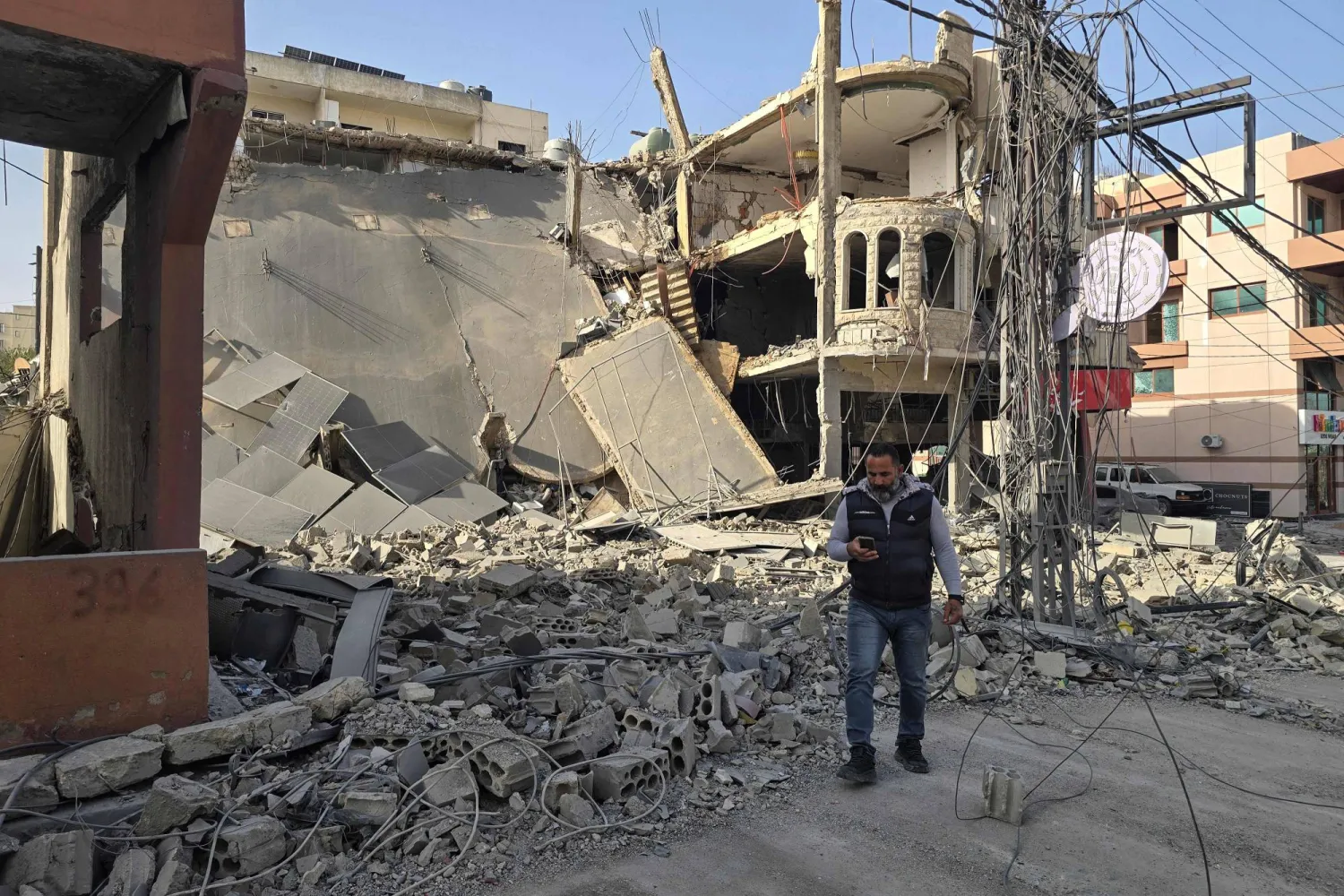
A man stands by the rubble of a destroyed building in the aftermath of overnight Israeli airstrikes in the southern Lebanese coastal city of Tyre on March 12, 2026. (Photo by Kawnat HAJU / AFP)
TT

Israel Orders Army to Prepare for 'Expanding' Lebanon Operations

A man stands by the rubble of a destroyed building in the aftermath of overnight Israeli airstrikes in the southern Lebanese coastal city of Tyre on March 12, 2026. (Photo by Kawnat HAJU / AFP)

Israeli Defense Minister Israel Katz said Thursday that he had ordered the military to prepare for expanding operations in Lebanon after Hezbollah fired a heavy barrage of rockets ⁠at Israel overnight.

"The Prime Minister and I have instructed the IDF to prepare for expanding IDF operations in Lebanon and for restoring quiet and security to the northern communities," Katz was quoted as saying in a statement.

"I warned the President of Lebanon that if the Lebanese government does not know how to control the territory and prevent Hezbollah from threatening northern communities and firing toward Israel -- we will take the territory and do it ourselves," Katz said in a situation assessment, according to the statement from his ministry.


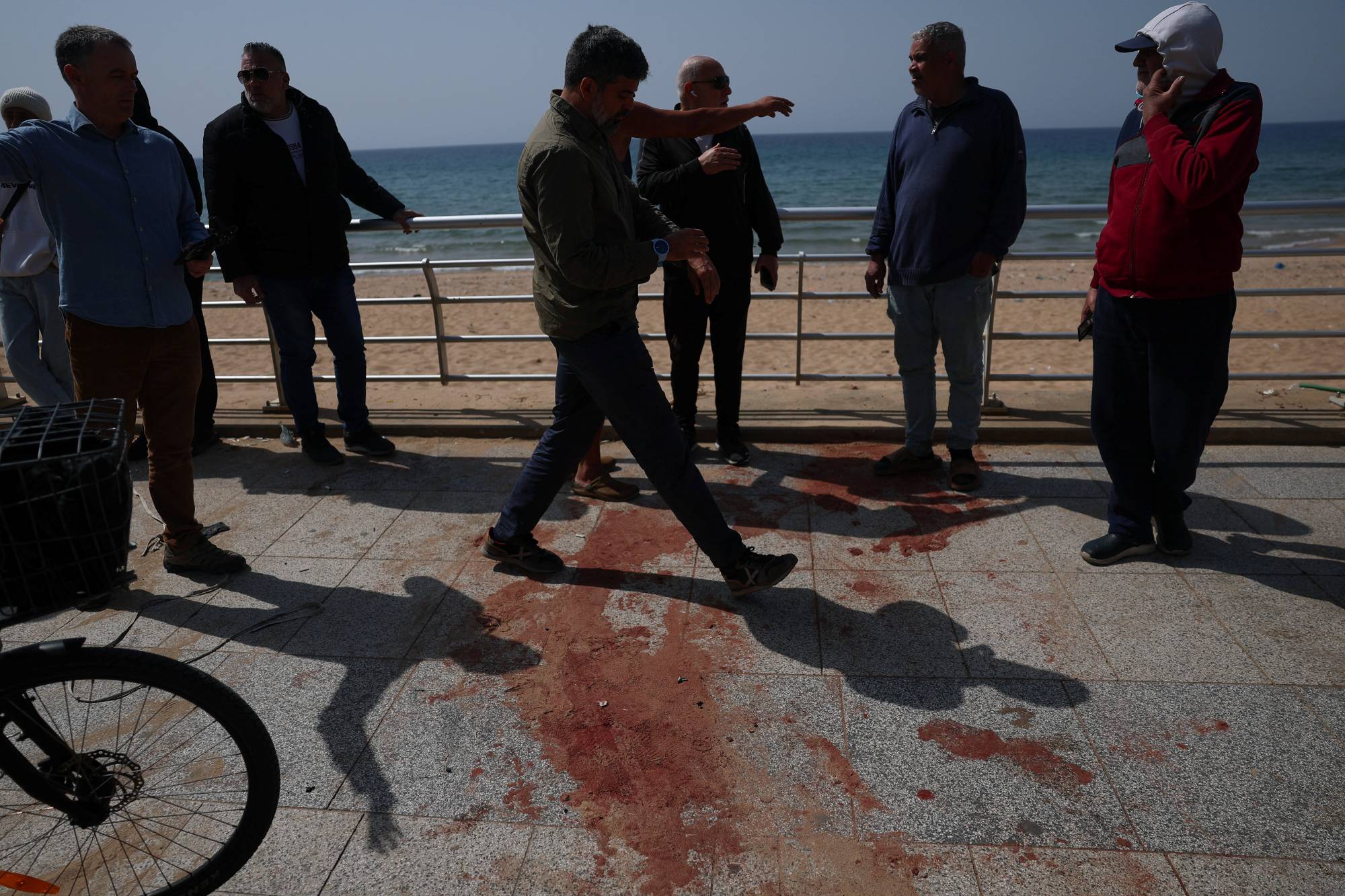
A man walks over blood stains, in the aftermath of an Israeli strike in Ramlet al-Bayda at Corniche Beirut, in Beirut, Lebanon, March 12, 2026. REUTERS/Claudia Greco


An Israeli strike hit a car Thursday in Ramlet al-Bayda, a major seaside tourist area of Beirut where dozens of displaced people have been sheltering. Eight people were killed and 31 others were wounded, the Lebanese Health Ministry said.

In Aramoun, a town about 10 kilometers south of Beirut, another three people were killed and a child was wounded in another early Israeli attack.

At least 634 people have been killed in Lebanon since the latest fighting began, the Health Ministry said.

Lebanon was drawn into the Middle East war last week when Hezbollah attacked Israel in response to the killing of Iranian supreme leader Ali Khamenei in US-Israeli strikes.

Hezbollah launched some 200 rockets at Israel’s north and deeper into the country overnight, the Israeli military says.

Many rockets were intercepted and no serious injuries were reported.


Strikes Kill Nine Iran-backed Fighters near Iraq-Syria Border

Fighters raise the "Hashed" logo during military exercises (Archival - Popular Mobilization Forces)
TT

Strikes Kill Nine Iran-backed Fighters near Iraq-Syria Border

Fighters raise the "Hashed" logo during military exercises (Archival - Popular Mobilization Forces)

Air strikes killed at least nine Iran-backed fighters in Iraq on Thursday near the Iraqi-Syrian border, two senior security officials told AFP.

Another 10 fighters were wounded in the strikes that targeted a base belonging to the US-blacklisted Harakat Ansar Allah al-Awfiya, the officials added on condition of anonymity, with one saying that the death toll could rise.

"The base was destroyed, and the rescue teams who arrived at the site were also targeted," one of the officials said.

He added that it remained unclear who was behind the attack. But the Iran-backed faction said in a statement that a "Zionist-American aggression" targeted their fighters, though it did not provide a death toll.

Iraq has long been a proxy battleground between the United States and Iran, with the country's successive governments struggling to balance relations between the two rivals.

After decades of conflicts, it had recently regained some stability, but it remains volatile with increasingly influential armed groups operating outside the state's control.

Iraq was immediately dragged into the Middle East war triggered when the United States and Israel attacked Iran on February 28.

The base that was hit on Thursday belongs to the Hashed al-Shaabi or the Popular Mobilization Forces (PMF), a former paramilitary group now integrated into the regular army.

The Hashed also encompasses brigades from Iran-backed groups, which have been repeatedly targeted in attacks blamed on the United States and Israel since the start of the war.

The contingent on the base is made up of members of Harakat Ansar Allah al-Awfiya.

Iraq's national security advisor Qassem al-Araji mourned in a post on X dozens "of martyrs and wounded" from the Hashed forces in what he described as a "terrorist attack".


Indonesia Minister Says Gaza Deployment Hinges on Board of Peace Dynamic

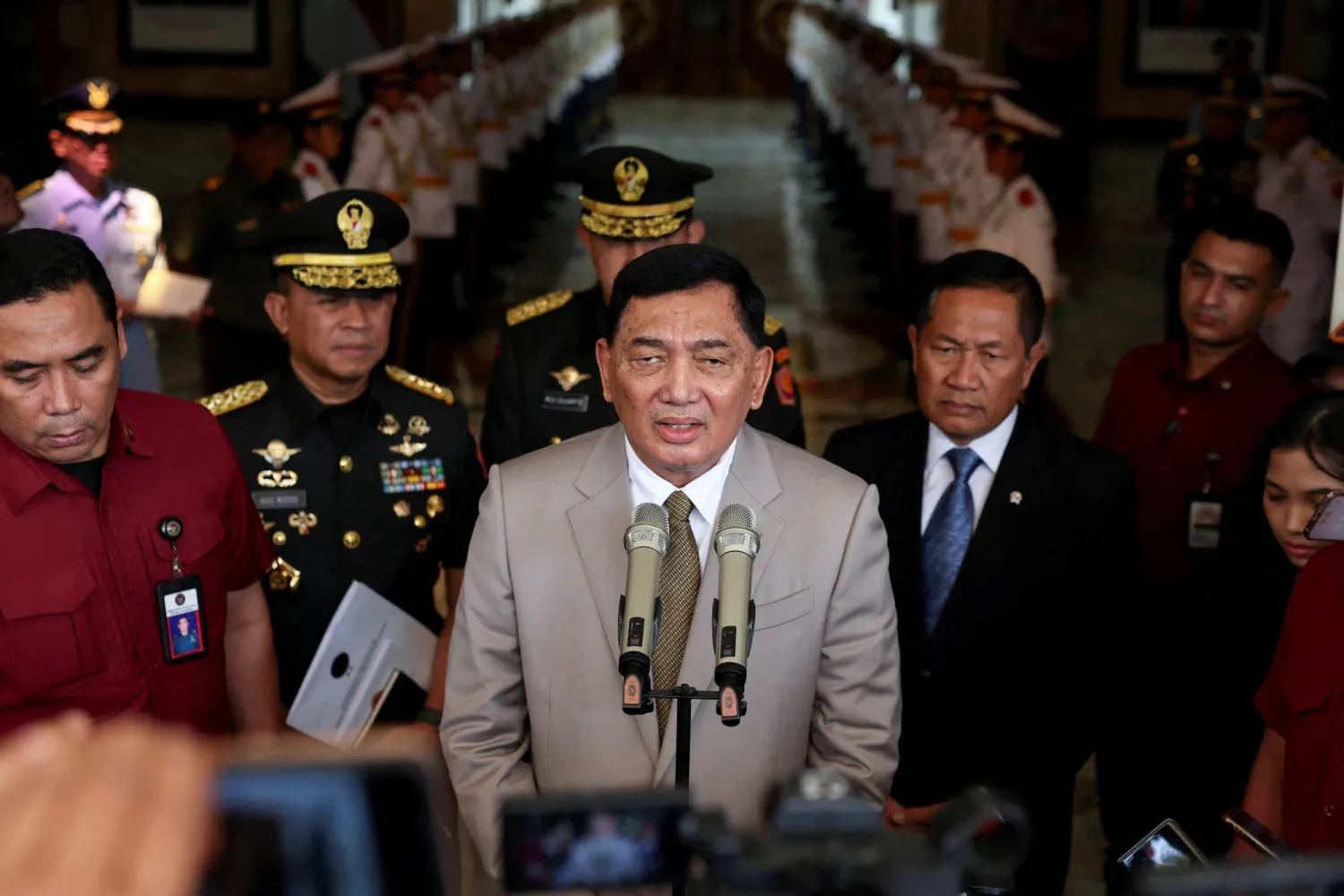
Indonesia's Defense Minister Sjafrie Sjamsoeddin speaks to journalists following his meeting with Australian Deputy Prime Minister and Minister for Defense Richard Marles in Jakarta, Indonesia, March 12, 2026. REUTERS/Willy Kurniawan     TPX IMAGES OF THE DAY
Indonesia's Defense Minister Sjafrie Sjamsoeddin speaks to journalists following his meeting with Australian Deputy Prime Minister and Minister for Defense Richard Marles in Jakarta, Indonesia, March 12, 2026. REUTERS/Willy Kurniawan TPX IMAGES OF THE DAY
TT

Indonesia Minister Says Gaza Deployment Hinges on Board of Peace Dynamic

Indonesia's Defense Minister Sjafrie Sjamsoeddin speaks to journalists following his meeting with Australian Deputy Prime Minister and Minister for Defense Richard Marles in Jakarta, Indonesia, March 12, 2026. REUTERS/Willy Kurniawan     TPX IMAGES OF THE DAY
Indonesia's Defense Minister Sjafrie Sjamsoeddin speaks to journalists following his meeting with Australian Deputy Prime Minister and Minister for Defense Richard Marles in Jakarta, Indonesia, March 12, 2026. REUTERS/Willy Kurniawan TPX IMAGES OF THE DAY

Indonesia's deployments for the international security force in Gaza would ‌depend ‌on ​the current ‌dynamic ⁠of ​the Board ⁠of Peace, its defense minister said on Thursday.

Sjafrie Sjamsoeddin ⁠told reporters ‌Indonesia ‌had ​been prepared ‌to send ‌20,000 troops for the force but was ‌now ready to deploy 8,000, introduced ⁠gradually, ⁠adding that other countries had pledged to send lower numbers.

The Board of Peace (BoP) is an international organization established by US President Donald Trump, chaired by him for life, and formally instituted in January 2026. Its primary purpose is to oversee the implementation of the Gaza peace plan, including managing ceasefire processes, coordinating reconstruction, mobilizing international resources, ensuring accountability, and facilitating the transition of Gaza from conflict to stability.