

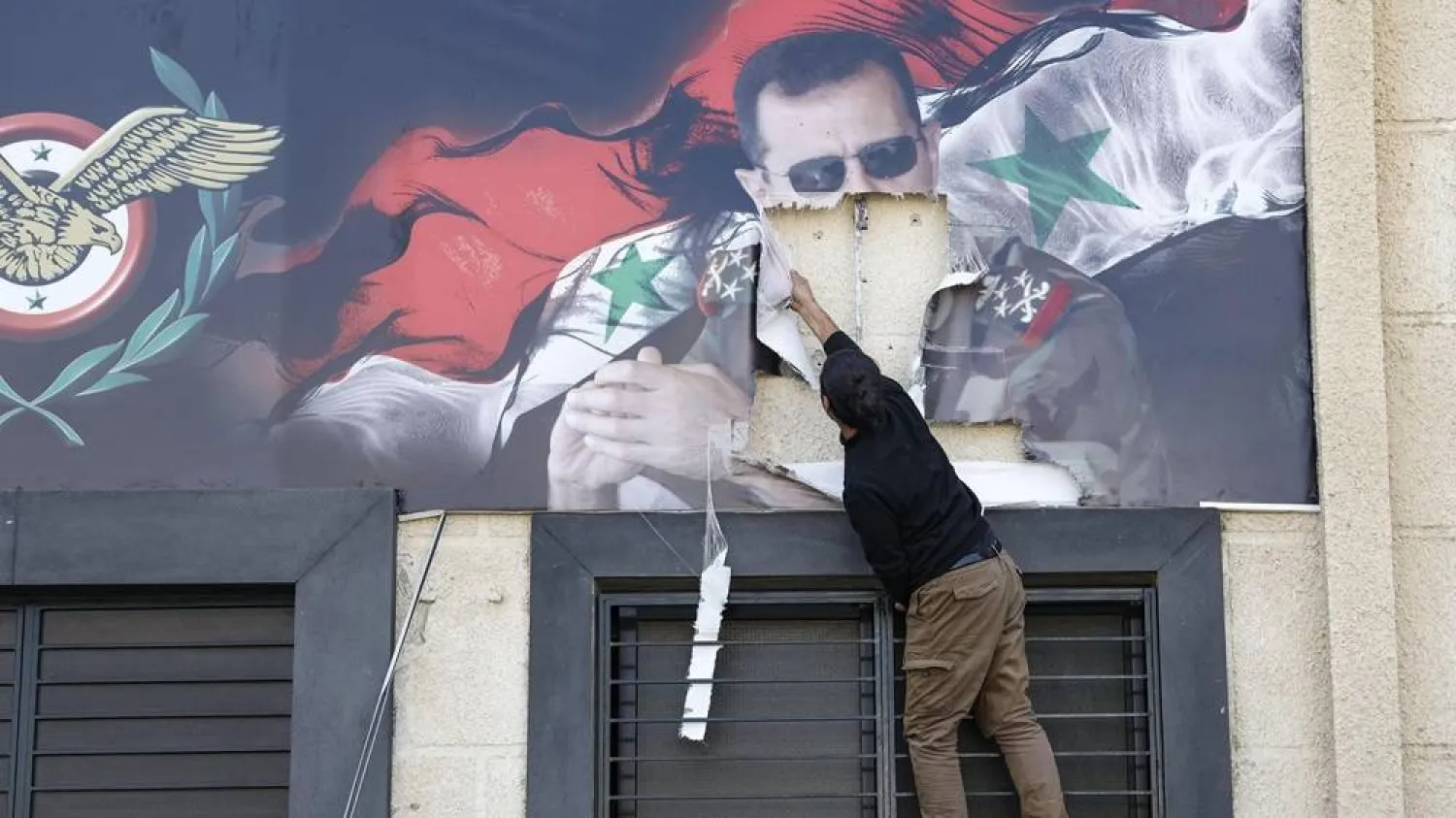

Assad Curses Ghouta, Mocks Syrian Troops in Leaked Videos

Bashar al-Assad was overthrown after 24 years in power. (EPA)
TT

Assad Curses Ghouta, Mocks Syrian Troops in Leaked Videos

Bashar al-Assad was overthrown after 24 years in power. (EPA)

As Syrians gear up to mark the one-year anniversary of the ouster of President Bashar al-Assad's regime on Monday, Al Arabiya television released videos of the toppled leader recorded a few years ago showing him cursing the region of al-Ghouta and mocking his own troops even amid the civil war.

The videos released on Saturday showed Assad as he was driving his car through Damascus with his late media advisor Luna al-Shibl. The videos are undated but suspected to have been recorded around 2018 after opposition fighters were forced out of Ghouta. They were filmed by a third person in the vehicle with Assad and Shibl.

In one video, Assad is heard cursing Ghouta, saying: “To hell with it.” Other shots showed him mocking his own soldiers when they would kiss the president’s hands in a show of loyalty.

At one point, Shibl asked Assad how he feels about seeing posters of himself on the streets of Syria, to which he replied that he feels “nothing” about them.

On the situation in war-torn Syria, Assad said he was “not only ashamed but disgusted.”

Assad at one point mocks even his family name, which translates to “lion” in Arabic, saying maybe he should change it to “some other animal.”

Assad and Shibl even mocked Lebanon's Hezbollah that had sent its fighters to Syria to prop up the regime.

Commenting on the leaks, Syrians dismissed them, while other said they were further evidence of his lack of loyalty to forces that had stood by him during the war.

Journalist Wael Youssef said he did not care about the leaks, saying Assad and Shibl were now part of the past.

He added that he was disturbed even hearing their voices. “Personally, I could never listen to Bashar when he was delivering an allegedly important speech. If it was really important, I would get a copy of it to read. Today they are now behind us, thank God.”
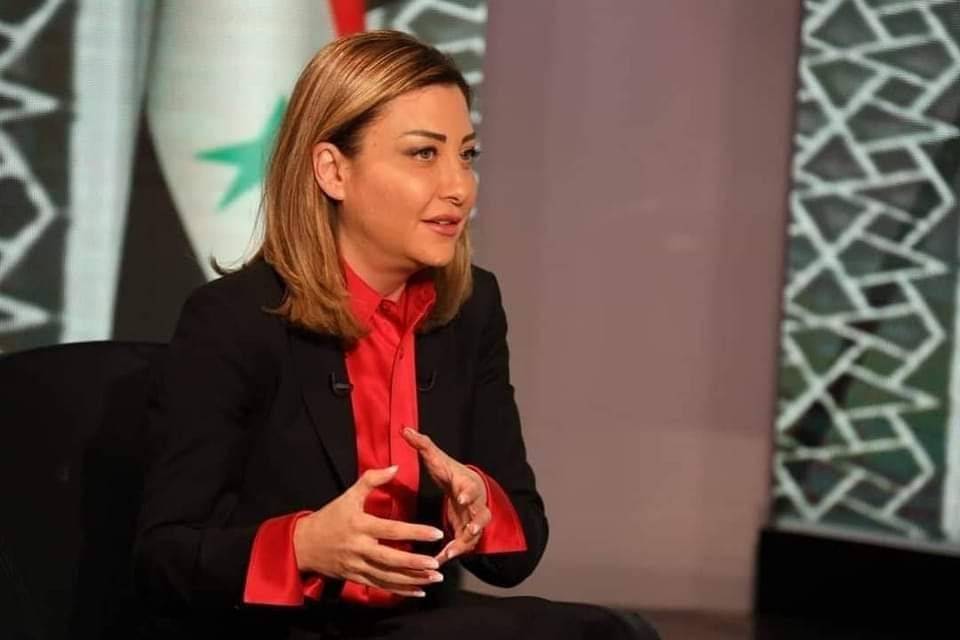
Assad's late media advisor Luna al-Shibl.

Radwan, a resident of Damascus’ Jobar neighborhood that was destroyed by regime forces during the war, described Assad as an “idiot, which is why we rose up against him”.

“When he would bomb us with planes, we would often wonder how he could possibly call himself Syrian because he has an unnatural animosity to Syria and its people,” he said. “The videos are evidence of this.”

Lawyer Nibal Hamdoun said she was not surprised by Assad’s comments in the leaks. “We had experienced his sentiments during 14 years of killing and destruction during the war,” she remarked.

“If he believes Syria is disgusting, then it is because of his corrupt rule and the corruption of his father (late President Hafez al-Assad),” she stressed, adding that he should be ashamed of himself.

Another Syrian, Badr Rahmeh said he was curious to learn how Assad feels in his Moscow exile as he watches Syria prepare to celebrate a year since his ouster.

“Will he watch as we trample posters of his image that he allegedly didn’t like to see on the streets where we were forced to hang them?” he wondered.

“I want to know how the supporters Shibl had called on to persevere during the war now feel as they watch these videos that mock their loyalty,” he went on to say.

Shibl had died in mysterious circumstance in 2024. The official story was that she died in a car accident, while skeptics say that the accident was deliberate and staged by the regime after she had fallen afoul of it.

She had worked for years as the director of the presidency media office before being promoted to Assad’s media advisor.



Israel’s Netanyahu to Discuss Second Phase of Gaza Plan with Trump Later This Month

Israeli Prime Minister Benjamin Netanyahu (R) and German Chancellor Friedrich Merz address a joint press conference in Jerusalem, 07 December 2025. (EPA)
TT

Israel’s Netanyahu to Discuss Second Phase of Gaza Plan with Trump Later This Month

Israeli Prime Minister Benjamin Netanyahu (R) and German Chancellor Friedrich Merz address a joint press conference in Jerusalem, 07 December 2025. (EPA)

Israeli Prime Minister Benjamin Netanyahu said on Sunday that the second phase of a US plan to end the war in Gaza was close, but cautioned several key issues still needed to be resolved, including whether a multinational security force would be deployed. 

Netanyahu, speaking to reporters alongside German Chancellor Friedrich Merz in Jerusalem, said that he would hold important discussions with US President Donald Trump at the end of the month on how to ensure the plan's second phase was achieved. 

The prime minister's office in November said that Trump had invited Netanyahu to the White House "in the near future", although a date for the visit has not yet been made public. 

Netanyahu said that he would discuss with Trump how to bring an end to Hamas rule in Gaza. A ceasefire between Israel and Hamas is entering its second month, although both sides have repeatedly accused each other of violating the truce agreement. 

Netanyahu said that it was important to ensure Hamas not only upholds the ceasefire but also follows through on "their commitment" to the plan to disarm and for Gaza to be demilitarized. 

Israel retained control of 53% of Gaza under the first phase of Trump's plan, which involved the release of hostages held by fighters in Gaza and of Palestinians detained by Israel. The final hostage remains to be handed over are those of an Israeli police officer killed on October 7, 2023 fighting Gazan gunmen who had invaded Israel. 

"We'll get him out," Netanyahu said. 

Since the ceasefire started in October, the militant group has reestablished itself in the rest of Gaza. 

GERMAN CHANCELLOR: PHASE TWO MUST COME NOW 

According to the plan, Israel is to pull back further in the second phase as a transitional authority is established in Gaza and a multinational security force is deployed, Hamas is disarmed, and reconstruction begins. 

A multinational coordination center has been established in Israel, but there are no deadlines in the plan and officials involved say that efforts to advance it have stalled. 

"What will be the timeline? What are the forces that are coming in? Will we have international forces? If not, what are the alternatives? These are all topics that are being discussed," Netanyahu said, describing them as central issues. 

Merz said that Germany was willing to help rebuild Gaza but would wait for Netanyahu's meeting with Trump, and for clarity on what Washington was prepared to do, before Berlin decides what it would contribute but that phase two "must come now". 

Israel has repeatedly carried out air strikes since the ceasefire came into effect that it says are fending off attacks or destroying militant infrastructure. Gaza's health ministry says 373 Palestinians have been killed since the ceasefire started. Three Israeli soldiers have been killed by gunmen. 

Netanyahu said that he would also discuss with Trump "opportunities for peace", an apparent reference to US efforts for Israel to establish formal ties with Arab and Muslim states. 

"We believe there's a path to advance a broader peace with the Arab states, and a path also to establish a workable peace with our Palestinian neighbors," Netanyahu said, asserting Israel would always insist on security control of the West Bank. 

Trump has said he promised Muslim leaders that Israel would not annex the occupied West Bank, where Netanyahu's government is backing the development of Jewish settlements. 

The "question of political annexation" of the West Bank remains a subject of discussion, Netanyahu said. 


Al-Sharaa: Israel’s Push for a Buffer Zone in Southern Syria Puts the Region at Risk

Syrian President Ahmad al-Sharaa speaks during the 23rd annual Doha Forum (Reuters). 
TT

Al-Sharaa: Israel’s Push for a Buffer Zone in Southern Syria Puts the Region at Risk

Syrian President Ahmad al-Sharaa speaks during the 23rd annual Doha Forum (Reuters). 

Syrian President Ahmad al-Sharaa warned on Saturday that Israel’s effort to establish a demilitarized buffer zone in southern Syria risks pushing the country into a “dangerous place.”

Speaking on the sidelines of the Doha Forum, al-Sharaa said US-mediated negotiations with Israel remain underway to address the “security concerns” of both sides.

Following the ouster of Bashar al-Assad on Dec. 8, Israel has carried out hundreds of airstrikes on Syrian military positions, saying its goal is to prevent the new authorities from seizing the former army’s weapons arsenal.

Over the past year, Israel has repeatedly publicized ground operations and arrests of individuals it accuses of “terrorist” activity in southern Syria. Israeli forces have also entered the Golan Heights disengagement zone established under the 1974 cease-fire agreement.

Al-Sharaa said all major international actors back Syria “in its demand that Israel withdraw and reposition to the lines of Dec. 8.” He emphasized that Damascus insists on full respect for the 1974 accord, describing it as a durable, internationally supported agreement.

“Tampering with this agreement, while proposing alternatives such as a new buffer zone, could drive us into dangerous territory,” he said.

Al-Sharaa accused Israel of “fighting ghosts” and “searching for enemies” in the wake of the Gaza war, adding that since assuming office a year ago he has sent “positive messages about peace and regional stability.”

Thirteen people were killed in late November during an Israeli incursion into the southern town of Beit Jin, a raid Damascus denounced as a “war crime.” Israel said the operation targeted suspects linked to the ISIS group.

Though Syria and Israel maintain no diplomatic relations and remain technically at war, several US-brokered ministerial meetings have been held in recent months.

“Negotiations are ongoing, and the United States is fully engaged,” al-Sharaa said, noting broad international support for addressing “legitimate security concerns so both sides can feel secure.”

He asked: “Syria is the one under attack, so who should be demanding a buffer zone and withdrawal?”

In September, al-Sharaa warned in New York of the risk of renewed Middle East instability if Damascus and Tel Aviv fail to reach a security arrangement, accusing Israel of “delaying negotiations and continuing to violate our airspace and territory.”

Israeli Prime Minister Benjamin Netanyahu visited Israeli forces deployed in the buffer zone outside the occupied Golan Heights in November, a move Damascus condemned as “illegitimate.”

Domestically, al-Sharaa said all segments of Syrian society are now represented in government “on the basis of competence, not sectarian quotas.” Syria, he said, is charting a “new path” for post-conflict governance. He acknowledged the country inherited “deep problems” from the former regime and said investigative bodies are working to address alleged crimes in the coastal region and Sweida.

He stressed that Syria is “a state of law, not a collection of sects,” and that accountability and institutional reform are essential to rebuilding the state.

The Syrian president added that economic revitalization is crucial for lasting stability, which is why Damascus continues to argue for the lifting of the Caesar Act sanctions.


Arab Parliament Backs UNRWA Mandate Renewal, Reaffirms Support for Palestinian Rights

Arab Parliament Backs UNRWA Mandate Renewal, Reaffirms Support for Palestinian Rights
TT

Arab Parliament Backs UNRWA Mandate Renewal, Reaffirms Support for Palestinian Rights

Arab Parliament Backs UNRWA Mandate Renewal, Reaffirms Support for Palestinian Rights

Speaker of the Arab Parliament Mohamed Alyammahi welcomed the UN General Assembly’s decision to renew the mandate of the United Nations Relief and Works Agency for Palestine Refugees in the Near East (UNRWA) for another three years, saying the vote reflects broad international support for Palestinian rights and a clear rejection of efforts to undermine their cause.

Alyammahi stressed that the mandate’s renewal is particularly critical amid the continued aggression and blockade facing Palestinians, ensuring the agency can maintain its essential services. He noted the strong backing for related resolutions calling for an end to the occupation and the establishment of an independent Palestinian state with Jerusalem as its capital.

The speaker urged leveraging this growing international consensus to halt the assault on Gaza, facilitate the entry of humanitarian aid, intensify legal and diplomatic action against the occupation, and advance a credible political process that can help ease the suffering of the Palestinian people.