


Fighting between Thailand and Cambodia Spreads along Contested Border

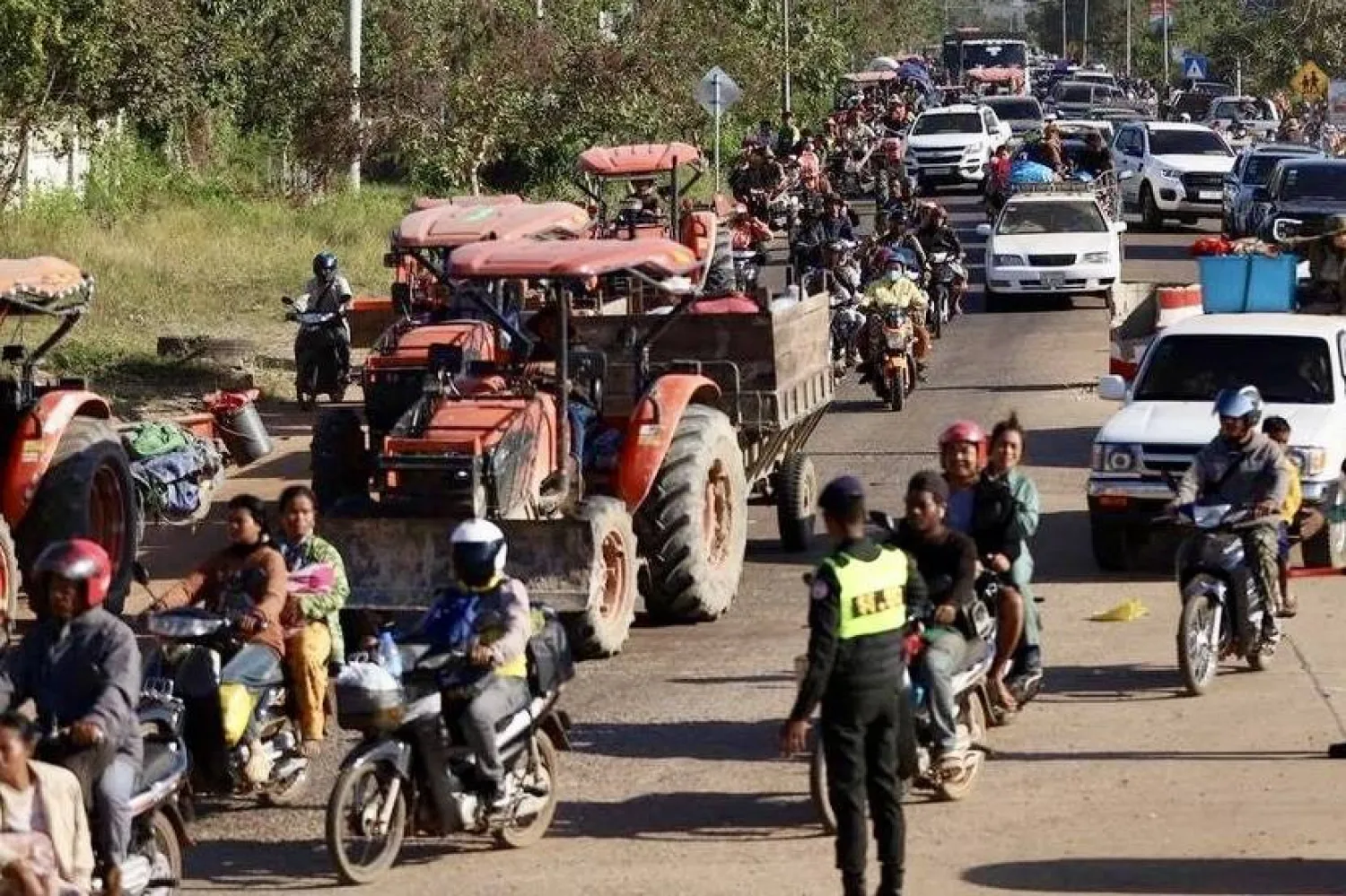
A handout photo made available by Agence Kampuchea Presse (AKP) shows people fleeing from a disputed area along a street in Oddar Meanchey Province, Cambodia, 08 December 2025. EPA/Agence Kampuchea Presse (AKP)
TT

Fighting between Thailand and Cambodia Spreads along Contested Border

A handout photo made available by Agence Kampuchea Presse (AKP) shows people fleeing from a disputed area along a street in Oddar Meanchey Province, Cambodia, 08 December 2025. EPA/Agence Kampuchea Presse (AKP)

Fighting between Cambodia and Thailand escalated along their contested border on Tuesday, as the Southeast Asian neighbors both said they would not back down in defending their sovereignty. With each side blaming the other for starting Monday's renewed clashes, it was unclear how or if a fragile ceasefire brokered by US President Donald Trump in July could be salvaged.

Cambodia's influential former leader Hun Sen said his country waited 24 hours to honor the ceasefire and allow for evacuations before launching counterattacks overnight against Thai forces.

"Cambodia needs peace, but Cambodia is compelled to counterattack to defend our territory," he said in a Facebook post, saying strong bunkers and weapons gave Cambodian forces the advantage in defending against an "invading enemy". In Thailand, military officials said there were clashes in five border provinces, and a Navy-led operation in its Trat Province to expel Cambodian soldiers was expected to end soon. They said Cambodia was using artillery, rocket launchers, and bomb-dropping drones to attack Thai forces.

"Thailand is determined to defend its sovereignty and territorial integrity and therefore military measures must be taken as necessary," Defense Ministry spokesperson Rear Admiral Surasant Kongsiri told the media briefing where other military officials also spoke. Cambodia's Defense Ministry accused Thailand of "brutal and unlawful actions", saying nine civilians were killed since Monday and 20 seriously injured. Thai officials said three soldiers had died in the fighting and 29 people had been injured, Reuters reported.

Cambodian Prime Minister Hun Manet, Hun Sen's son, said late on Monday that Thailand "must not use military force to attack civilian villages under the pretext of reclaiming its sovereignty". Both countries said they had evacuated hundreds of thousands of people from border areas. Tensions have simmered since Thailand last month suspended de-escalation measures that were agreed at a summit overseen by Trump, after a Thai soldier was maimed by a landmine that Bangkok said Cambodia had recently laid. Monday's clashes were the fiercest since a five-day exchange of rockets and heavy artillery in July, when at least 48 people were killed and 300,000 displaced, before Trump intervened to broker a ceasefire.

In May, tensions rose following the killing of a Cambodian soldier during a skirmish, which led to a major troop buildup at the border and escalated into diplomatic breakdowns and armed clashes. Thailand has superior military capabilities, with armed forces that dwarf its neighbor in terms of personnel, budget and weaponry, and fighter jets that have been carrying out air strikes to support its ground forces. Thailand and Cambodia have for more than a century contested sovereignty at undemarcated points along their 817-km (508-mile) land border, with disputes over ancient temples stirring nationalist fervor and occasional armed flare-ups, including a deadly week-long artillery exchange in 2011.



Pezeshkian Puts Conditions to End the War as Trump Insists Iran is ‘at the End of the Line’

This satellite image taken and released on March 11, 2026 courtesy of Vantor shows a view of damaged buildings after airstrikes at Hakimabad garrison, some 30 kms (20 miles) south of Tehran, Iran. MANDATORY CREDIT "AFP PHOTO / Satellite image 2026 Vantor
TT

Pezeshkian Puts Conditions to End the War as Trump Insists Iran is ‘at the End of the Line’

This satellite image taken and released on March 11, 2026 courtesy of Vantor shows a view of damaged buildings after airstrikes at Hakimabad garrison, some 30 kms (20 miles) south of Tehran, Iran. MANDATORY CREDIT "AFP PHOTO / Satellite image 2026 Vantor

American and Israeli strikes on Thursday pounded Iran with no sign of an end to the war in sight as unrelenting Iranian attacks on shipping traffic and energy infrastructure pushed oil above $100 a barrel.

Iranian Supreme Leader Mojtaba Khamenei hasn't yet made a statement or been seen since being chosen to succeed his father Ali Khamenei, who was killed in the opening day of the conflict.

But Iranian President Masoud Pezeshkian has suggested that Tehran sought the world to recognize Iran’s “legitimate rights, payment of reparations” and international guarantees against future attacks to see an end of the war.

His comment came as US President Donald Trump reiterated his insistence that US-Israeli strikes had already practically defeated Iran.

"They are pretty much at the end of the line," he told reporters, after delivering a speech to supporters in which he declared: "We've won... we won -- in the first hour it was over."

Trump suggested that Iran’s halting of attacks was not imminent, however, promising to “finish the job” even though he claimed Iran is “virtually destroyed.”

“We don’t want to leave early do we? We’ve got to finish the job," he said at an event Wednesday in Kentucky.

In addition to attacking energy infrastructure around the region, Iran has a stranglehold on the Strait of Hormuz, the waterway leading from the Arabian Gulf toward the Indian Ocean through which a fifth of the world's oil is transported.

With traffic in the strait effectively stopped, the price of Brent crude oil, the international standard, rose another 9% to more than $100 a barrel, up some 38% over what it cost when the war started.


CENTCOM Warns Civilians to Avoid Iranian Ports Used for Military Purposes

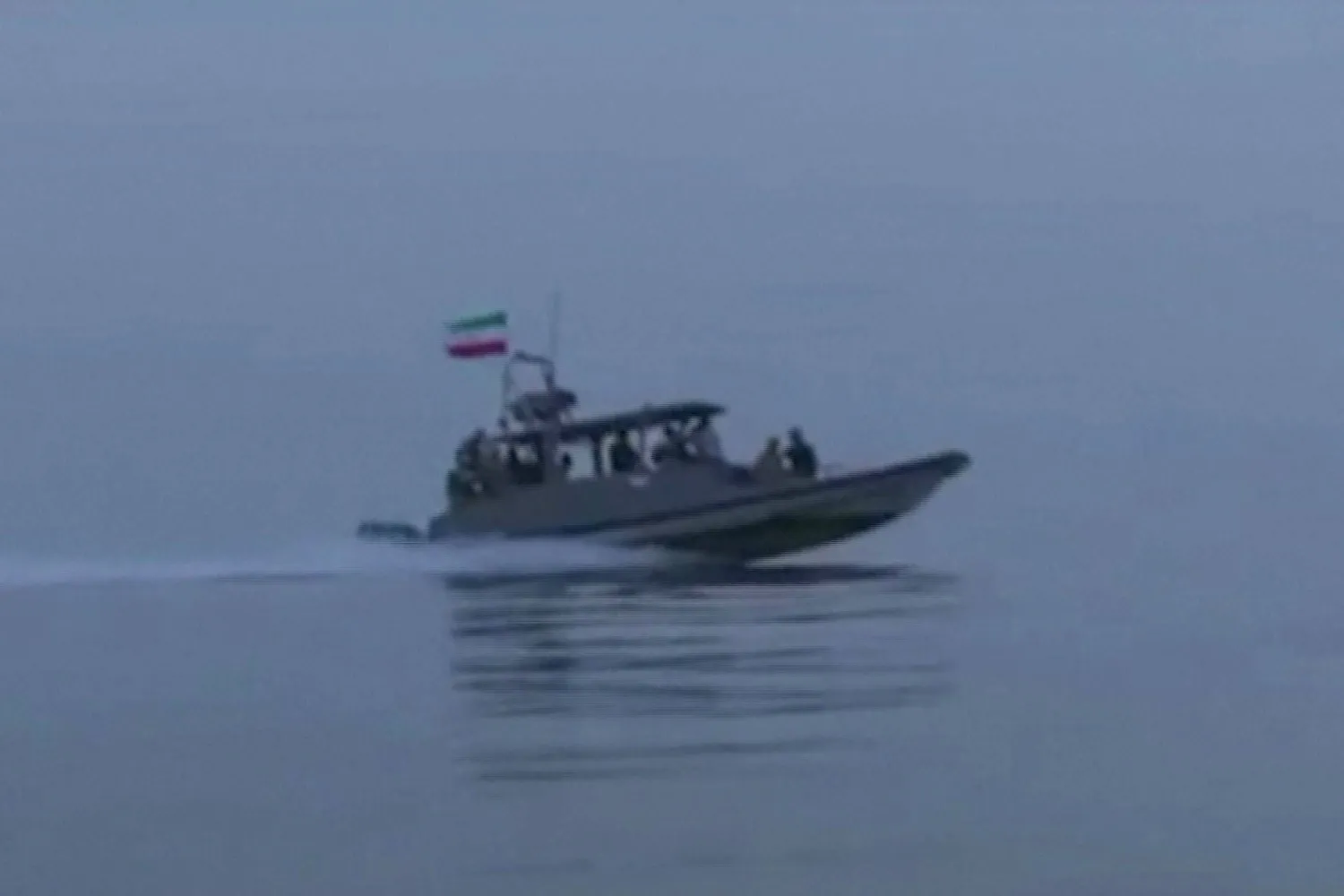
A photo shows an Iranian vessel before a strike near the Strait of Hormuz (Photo by US Central Command/AFP) 
TT

CENTCOM Warns Civilians to Avoid Iranian Ports Used for Military Purposes

A photo shows an Iranian vessel before a strike near the Strait of Hormuz (Photo by US Central Command/AFP) 

The US Central Command (CENTCOM) on Wednesday warned civilians to avoid using ports along the Strait of Hormuz where Iranian forces conduct military operations that threaten international shipping.

“This dangerous action risks the lives of innocent people,” it said in a statement issued from its headquarters in Tampa, Florida. “Civilian ports used for military purposes lose protected status and become legitimate military targets under international law.”

CENTCOM also urged civilians in Iran to immediately avoid all port facilities where Iranian naval forces are operating. Iranian dockworkers, administrative personnel, and commercial vessel crews should avoid Iranian naval vessels and military equipment.

It said Iranian naval forces have positioned military vessels and equipment within civilian ports serving commercial maritime traffic.

Although the US military also cannot guarantee civilian safety in or near facilities used by the Iranian regime for military purposes, CENTCOM said US forces will continue taking every feasible precaution to minimize harm to civilians.

On Wednesday, spokesperson of Iran’s armed forces, Abolfazl Shekarchi, warned that his forces would target ports across the region if Iranian maritime infrastructure is attacked, urging neighboring states to expel US forces.

Quoted by state TV, Shekarchi said, “If our ports and docks are threatened, all ports and docks in the region will be our legitimate targets.”

He officially denied accusations that naval vessels from the Iranian Revolutionary Guard Corps (IRGC) were hiding in commercial or economic ports.


Switzerland Closes Tehran Embassy but Maintains 'Open Line' between US, Iran

07 March 2026, Iran, Tehran: Members of the Iranian Red Crescent Society (IRCS) rescue teams work at the site of a building damaged in an airstrike in Iran, following the strikes launched by the United States and Israel on February 28, which killed Supreme Leader Ali Khamenei and senior military officials, prompting Iran to retaliate with strikes on Israel and Gulf states. Photo: IRCS via ZUMA Press Wire/dpa
TT

Switzerland Closes Tehran Embassy but Maintains 'Open Line' between US, Iran

07 March 2026, Iran, Tehran: Members of the Iranian Red Crescent Society (IRCS) rescue teams work at the site of a building damaged in an airstrike in Iran, following the strikes launched by the United States and Israel on February 28, which killed Supreme Leader Ali Khamenei and senior military officials, prompting Iran to retaliate with strikes on Israel and Gulf states. Photo: IRCS via ZUMA Press Wire/dpa

Switzerland said Wednesday it was temporarily closing its embassy in Tehran due to the Middle East war but maintaining an "open line" of communication between the United States and Iran.

For decades, neutral Switzerland has played a key role in maintaining basic diplomatic contacts between Iran and the United States, AFP said.

The foreign ministry in Bern said that in view of the war in the Middle East and the increasing security risk, it had "decided to temporarily close the Swiss embassy in Tehran".

Ambassador Olivier Bangerter and the remaining five other Swiss staff members left Iran by land earlier on Wednesday and will return to Tehran once the situation allows.

"As part of its good offices, Switzerland will continue to maintain an open line of communication between the United States and Iran, in consultation with the two countries," said the ministry statement.

Both the United States and Iran were informed of the temporary closure of the embassy and the departure of its Swiss staff.

"Switzerland will continue to be available to channel communications that the parties consider useful," the statement added.

"The protecting power mandate, under which Switzerland represents US interests in Iran, can be exercised independently of geographical location."

- The protecting power -

Renowned for its neutrality, Switzerland has been representing US interests in Iran since Washington broke off relations with Tehran after the 1980 hostage crisis, a year after the Iranian revolution.

In its role as the so-called protecting power, Switzerland has for decades allowed the two feuding nations to maintain a minimum of diplomatic and consular relations.

The Swiss embassy in Tehran handles all consular affairs between the United States and Iran, including passport requests, altering civil status and consular protection for US citizens in Iran.

Under the protecting power mandate, "Switzerland can either offer to act as a go-between on its own initiative or can fulfil this function at the request of the parties concerned, provided that all those involved agree," the foreign ministry says on its website.

The United States and Iran held a third round of indirect talks through Omani negotiators, on Iran's nuclear program, in the Swiss city of Geneva on February 26.

Two days later, the United States and Israel launched the first wave of attacks in a war that has seen Iran strike targets in multiple countries around the Gulf.

Switzerland has called for de-escalation and a return to diplomacy.