


Israeli Army Takes Journalists into a Tunnel in a Gaza City It Seized and Largely Flattened

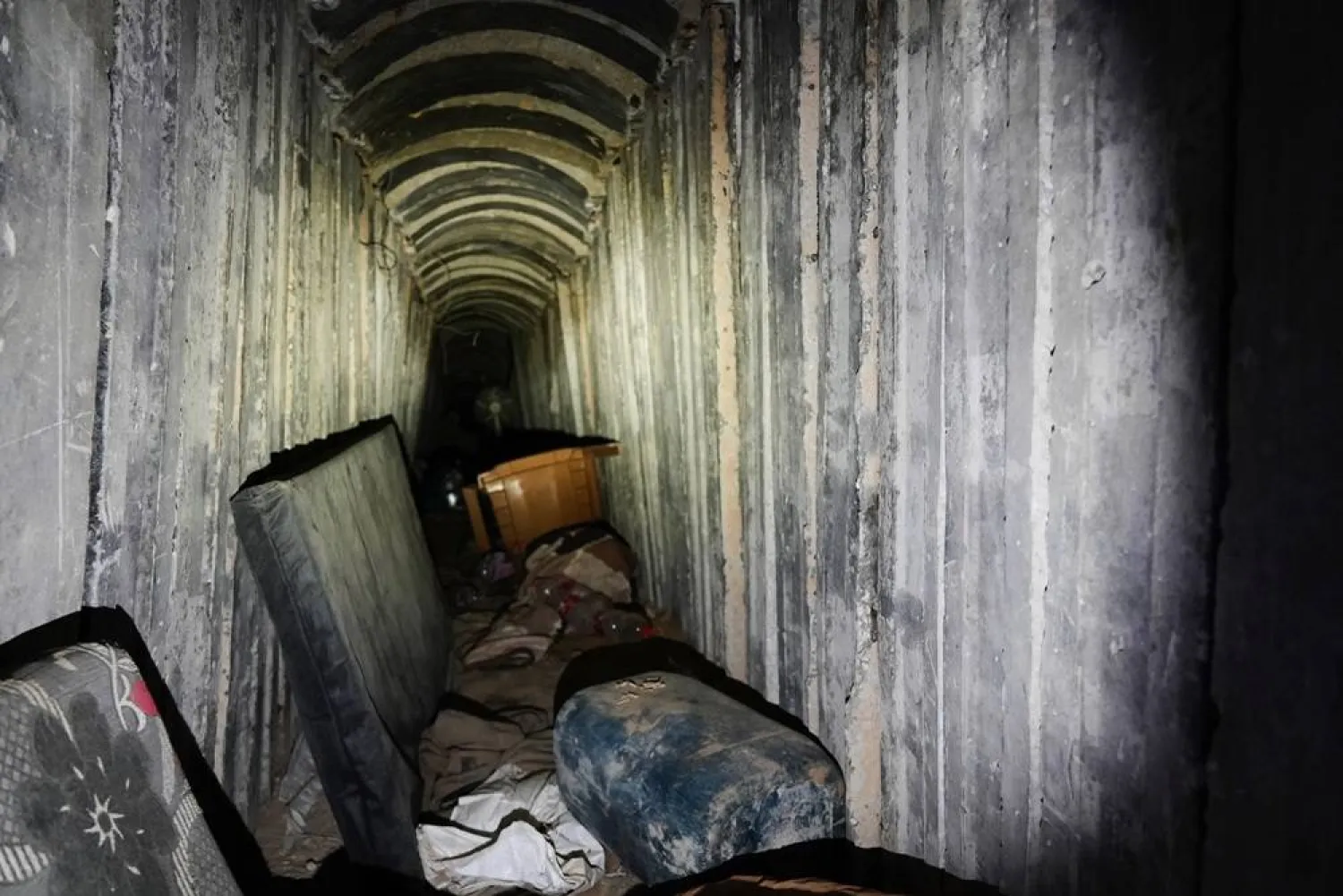
Mattresses and a plastic chair lie on the floor inside a tunnel in Rafah, Gaza Strip, Monday, Dec. 8, 2025. (AP)
TT

Israeli Army Takes Journalists into a Tunnel in a Gaza City It Seized and Largely Flattened

Mattresses and a plastic chair lie on the floor inside a tunnel in Rafah, Gaza Strip, Monday, Dec. 8, 2025. (AP)

One by one, the soldiers squeezed through a narrow entrance to a tunnel in southern Gaza. Inside a dark hallway, some bowed their heads to avoid hitting the low ceiling, while watching their step as they walked over or around jagged concrete, crushed plastic bottles and tattered mattresses.

On Monday, Israel's military took journalists into Rafah — the city at Gaza's southernmost point that troops seized last year and largely flattened — as the two-month-old Israel-Hamas ceasefire reaches a critical point. Israel has banned international journalists from entering Gaza since the war began more than two years ago, except for rare, brief visits supervised by the military, such as this one.

Soldiers escorted journalists inside a tunnel, which they said was one of Hamas' most significant and complex underground routes, connecting cities in the embattled territory and used by top Hamas commanders. Israel said Hamas had kept the body of a hostage in the underground passage: Hadar Goldin, a 23-year-old soldier who was killed in Gaza more than a decade ago and whose remains had been held there.

Hamas returned Goldin's body last month as part of a US-brokered ceasefire in the war triggered by the fighters' Oct. 7, 2023, attack on southern Israel in which 1,200 people were killed and hundreds taken hostage. Israel’s retaliatory offensive has killed more than 70,000 Palestinians, according to Gaza’s Health Ministry, which operates under the Hamas-run government. The ministry does not differentiate between civilians and combatants, but says roughly half the dead have been women and children.

Israel and Hamas are on the cusp of finishing the first phase of the truce, which mandated the return of all hostages, living and dead, in exchange for Palestinians held by Israel. The body of just one more hostage remains to be returned.

Mediators warn the second phase will be far more challenging since it includes thornier issues, such as disarming Hamas and Israel’s withdrawal from the strip. Israel currently controls more than half of Gaza.

Israeli Prime Minister Benjamin Netanyahu is set to travel to Washington this month to discuss those next steps with US President Donald Trump.
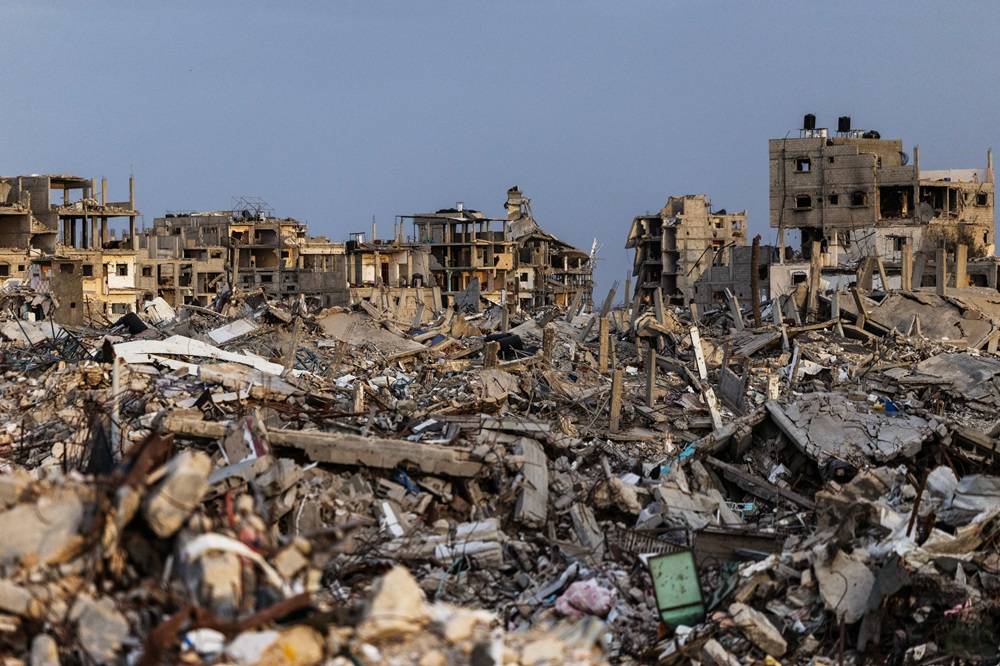
Buildings lie in ruins amidst the rubble in Rafah in the southern Gaza Strip, December 8, 2025. (Reuters)

Piles of rubble line Rafah's roads

Last year, Israel launched a major operation in Rafah, where many Palestinians had sought refuge from offensives elsewhere. Heavy fighting left much of the city in ruins and displaced nearly one million Palestinians. This year, when the military largely had control of the city, it systematically demolished most of the buildings that remained standing, according to satellite photos.

Troops also took control of and shut the vital Rafah crossing, Gaza’s only gateway to the outside world that was not controlled by Israel.

Israel said Rafah was Hamas’ last major stronghold and key to dismantling the group’s military capabilities, a major war aim.

On the drive around Rafah on Monday, towers of mangled concrete, wires and twisted metal lined the roads, with few buildings still standing and none unscathed. Remnants of people's lives were scattered the ground: a foam mattress, towels and a book explaining the Quran.

Last week, Israel said it was ready to reopen the Rafah crossing but only for people to leave the strip. Egypt and many Palestinians fear that once people leave, they won't be allowed to return. They say Israel is obligated to open the crossing in both directions.

Israel has said that entry into Gaza would not be permitted until Israel receives all hostages remaining in the strip.
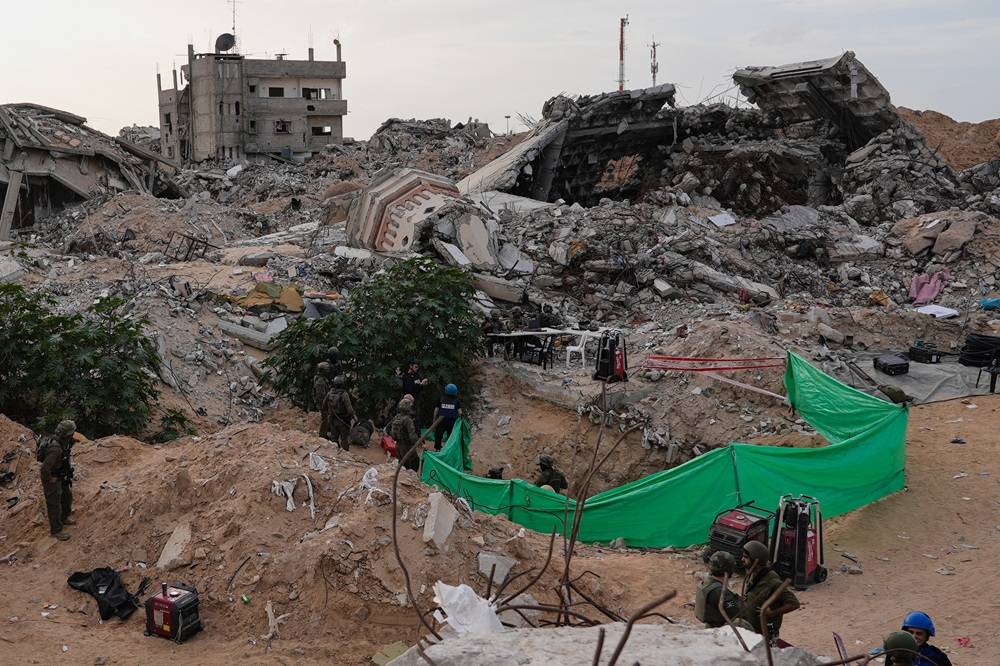
Israeli soldiers gather next to the entrance of a tunnel where the army says the body of soldier Hadar Goldin was held in Rafah, Gaza Strip, Monday, Dec. 8, 2025. (AP)

Inside the tunnel

The tunnel that journalists were escorted through runs beneath what was once a densely populated residential neighborhood, under a United Nations compound and mosques. Today, Rafah is a ghost town. Underground, journalists picked their way around dangling cables and uneven concrete slabs covered in sand.

The army says the tunnel is more than 7 kilometers (4 miles) long and up to 25 meters (82 feet) deep and was used for storing weapons as well as long-term stays. It said top Hamas commanders were there during the war, including Mohammed Sinwar, who was believed to have run Hamas’ armed wing and was the younger brother of Yahya Sinwar, the Hamas leader who helped mastermind the Oct. 7 attack. Israel has said it has killed both of them.

“What we see right here is a perfect example of what Hamas did with all the money and the equipment that was brought into Gaza throughout the years," said Lt. Col. Nadav Shoshani. "Hamas took it and built an incredible city underground for the purposes of terror and holding bodies of hostages.”

Israel has long accused Hamas of siphoning off money for military purposes. While Hamas says the Palestinians are an occupied people and have a right to resist, the group also has a civilian arm and ran a government that provided services such as health care, a police force and education.

The army hasn’t decided what to do with the tunnel. It could seal it with concrete, explode it or hold it for intelligence purposes among other options.

Since the ceasefire began, three soldiers have been killed in clashes with about 200 Hamas fighters that Israeli and Egyptian officials say remain underground in Israeli-held territory.

Hamas has said communication with its remaining units in Rafah has been cut off for months and that it was not responsible for any incidents occurring in those areas.

Both Israel and Hamas have accused each other of repeated violations of the deal during the first phase. Israel has accused Hamas of dragging out the hostage returns, while Palestinian health officials say over 370 Palestinians have been killed in continued Israeli strikes since the ceasefire took effect.



UN Condemns Houthi Referral of UN Staff to Court

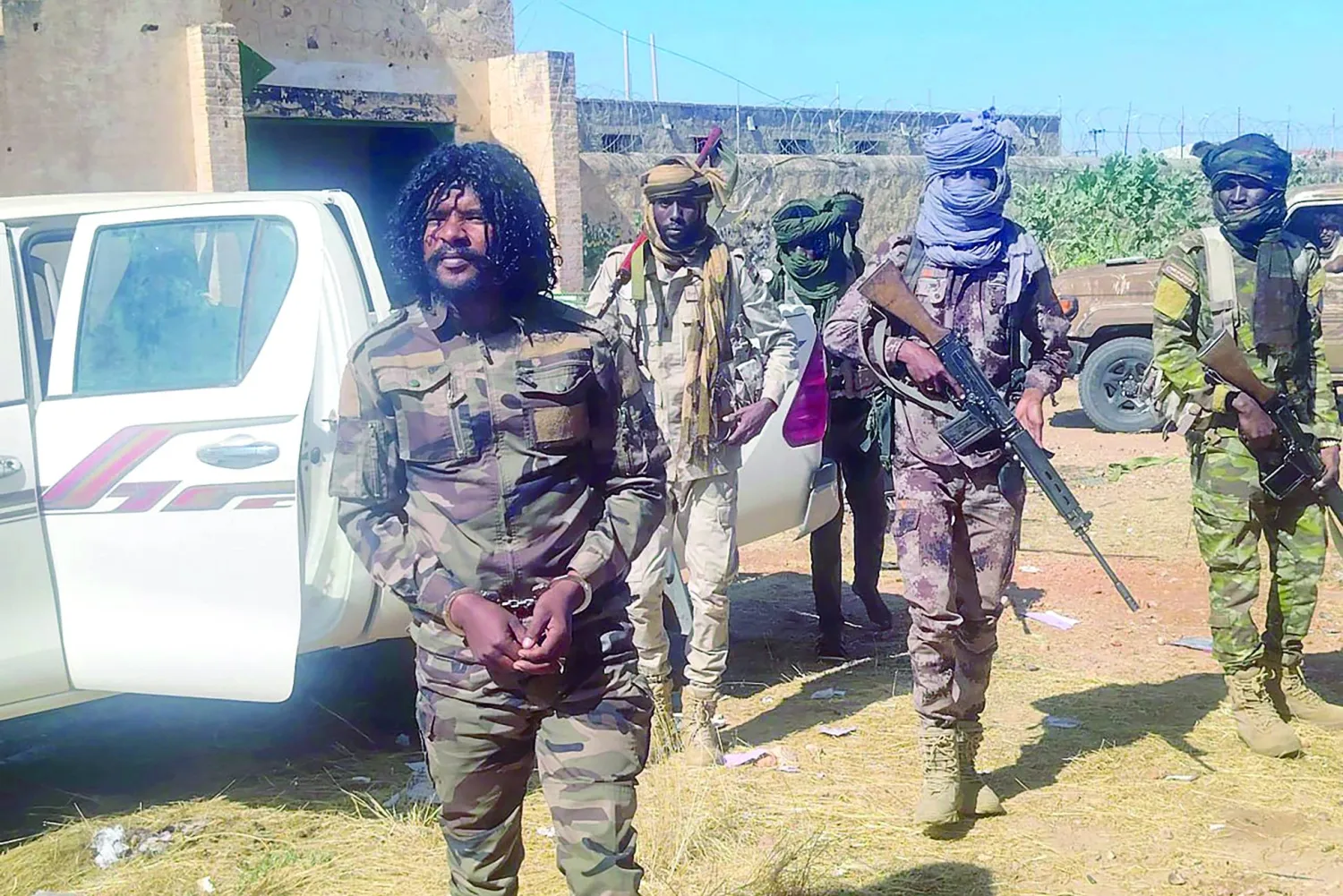
Houthi gunmen display their strength during a gathering north of Sanaa (AFP).  
TT

UN Condemns Houthi Referral of UN Staff to Court

Houthi gunmen display their strength during a gathering north of Sanaa (AFP).  

The United Nations on Tuesday condemned a referral by Yemen's Houthis of some of the dozens of UN staff they have detained to a special criminal court.

The condemnations came while officials in the Yemeni government stressed the need to strengthen military coordination to face the Iran-backed group, enhance the presence of state institutions and improve the operational environment for humanitarian organizations.

UN Secretary-General Antonio Guterres said the Houthis have arbitrarily detained 59 Yemeni UN personnel, who have been held “incommunicado - some for years - without any due process, in violation of international law,” according to his spokesperson Stephane Dujarric.

He said, “United Nations personnel, including those who are nationals of Yemen, are immune from legal process in respect of all acts performed by them in their official capacity.”

The United Nations has repeatedly rejected Houthi accusations that UN staff or UN operations in Yemen were involved in spying.

“We call on the de facto authorities to rescind the referral and work in good faith toward the immediate release of all detained personnel,” Dujarric said.

“The United Nations remains committed to supporting the people of Yemen and delivering principled humanitarian assistance.”

Meanwhile, the Yemeni Social Affairs Ministry welcomed the decision of UN children’s agency UNICEF to relocate its main headquarters from Sanaa to the temporary Yemeni capital, Aden.

In a statement, the ministry said the move comes in response to its repeated calls for the relocating of UN headquarters from the Houthi-controlled capital, Sanaa, to maintain the safety of their staff.

“The Yemeni government, represented by Social Affairs Minister, Mohammed Al-Zaouri, will provide all forms of support and facilities to enable UNICEF perform its tasks more effectively from its new headquarters.”

Strengthen Military Efforts

In Aden, member of the Presidential Leadership Council (PLC) Abdul-Rahman al-Mahrami held a meeting Tuesday with Defense Minister Gen. Mohsen Mohammed al-Daeri to discuss “the latest military conditions on various fronts, the level of combat readiness, the discipline of military units, as well as the ministry's efforts in the fields of training, rehabilitation and raising defense capabilities,” according to state-run news agency, SABA.

While Al-Daeri said Yemen’s armed forces “act in complete harmony in the face of Houthis,” al-Mahrami stressed the “need to strengthen coordination between military axes, and mobilize forces to face a common enemy (Houthis) and protect liberated areas.”

Meanwhile in Mareb, member of the Presidential Leadership Council Lieutenant General Sultan Al-Arada chaired a meeting with senior security officials, and stressed that a robust national security apparatus is crucial for the country's recovery.

“The recovery of state institutions from the Iran-backed Houthi militias is today an irreplaceable national priority,” he said.

The General also underscored the Presidential Leadership Council's commitment to supporting the armed forces and security agencies, enhancing their capabilities, and raising a culture of accountability and transparency.


Trump Says He Plans to Name Gaza Board of Peace Early Next Year

US President Donald Trump speaks during a roundtable discussion in the Roosevelt Room of the White House in Washington, DC, on December 10, 2025. (Photo by ANDREW CABALLERO-REYNOLDS / AFP)
TT

Trump Says He Plans to Name Gaza Board of Peace Early Next Year

US President Donald Trump speaks during a roundtable discussion in the Roosevelt Room of the White House in Washington, DC, on December 10, 2025. (Photo by ANDREW CABALLERO-REYNOLDS / AFP)

US President Donald Trump said on Wednesday that an announcement about which world leaders will serve on the Gaza Board of Peace should be made early next year.

Trump told reporters during an economic event in the White House Roosevelt Room that a variety of leaders want to be on the board, which was established under a Gaza plan that set up a fragile ceasefire between Israel and Hamas group, reported Reuters.


Lebanon Moves to Reset Syria Ties With Envoy Appointment

Syrian President Ahmed al-Sharaa receives the credentials of Lebanese ambassador Henry Kastoun in Damascus, attended by Foreign Minister Asaad al-Shaibani - (Syrian presidency)
TT

Lebanon Moves to Reset Syria Ties With Envoy Appointment

Syrian President Ahmed al-Sharaa receives the credentials of Lebanese ambassador Henry Kastoun in Damascus, attended by Foreign Minister Asaad al-Shaibani - (Syrian presidency)

The appointment of Lebanese ambassador Henry Kastoun in Damascus, formalized Wednesday when he presented his credentials to Syrian President Ahmed al-Sharaa, signals a significant reset in relations between Lebanon and Syria.

It ends a four year diplomatic vacuum and opens a new chapter in which both governments are expected to confront long standing issues, including the fate of Syrian detainees in Lebanon, the refugee crisis, and cross border smuggling, in a bid to place the relationship on firmer and more transparent footing.

Representation after vacancy

The Syrian presidency said on Wednesday that al-Sharaa received the credentials of Ambassador Kastoun, Lebanon’s envoy to the Syrian Arab Republic, at the People’s Palace in Damascus, in the presence of Foreign Minister and Expatriates Asaad al Shibani.

Kastoun fills a four year vacancy, arriving seventeen years after the establishment of full diplomatic representation between the two countries. Diplomatic ties were formalized in 2008 when Michel el-Khoury was appointed Lebanon’s first ambassador to Syria since independence, a historic step that ended decades of uneven representation.

El-Khoury remained in the post until late 2013, after which the position remained vacant until 2017, when Saad Zakhia took over as the second ambassador and served until the end of 2021.

His term was followed by a second diplomatic void that lasted until Kastoun’s appointment in 2025, restoring the Lebanese diplomatic presence in Damascus.

Amending the relationship

While the appointment ushers in a new path for official engagement, Deputy Prime Minister Tarek Mitri had earlier said that diplomatic exchange would resume soon, noting that the past five decades witnessed an unequal relationship between Lebanon and Syria.

The current phase allows for opening a new diplomatic page based on reciprocity and mutual respect.

It follows the suspension of the Higher Council in October 2024, coinciding with a visit by Syrian Foreign Minister Asaad al-Shaibani to Beirut, during which he spoke of a historic opportunity to shift the relationship from a troubled security driven trajectory to a political and economic partnership.

At the time, authorities announced the suspension of the Lebanese-Syrian Higher Council, which for decades served as the central mechanism for managing joint issues during the period of Syrian influence in Lebanon, a sign of an evolving approach rather than a continuation of previous institutional frameworks.

Detainees

In parallel with the diplomatic step, a senior Lebanese judicial delegation visited Damascus on Wednesday to discuss a draft agreement that would allow the transfer of detainees and convicts to their home countries in a manner that does not conflict with Lebanese law, according to local media reports.

The delegation was headed by Government Commissioner to the Military Court Judge Claude Ghanem and included Judges Mona Hanqir and Jad Maalouf. They met Syrian Justice Minister Mazhar al-Weis and senior judicial officials.

Lebanon’s Al-Jadeed television said the two sides reached an initial draft that requires amendments before final approval. The talks did not cover the cases of convicts involved in fighting against the Lebanese army.