
Saudi Arabia Presses for Easing Tensions, Restoring Stability in East Yemen

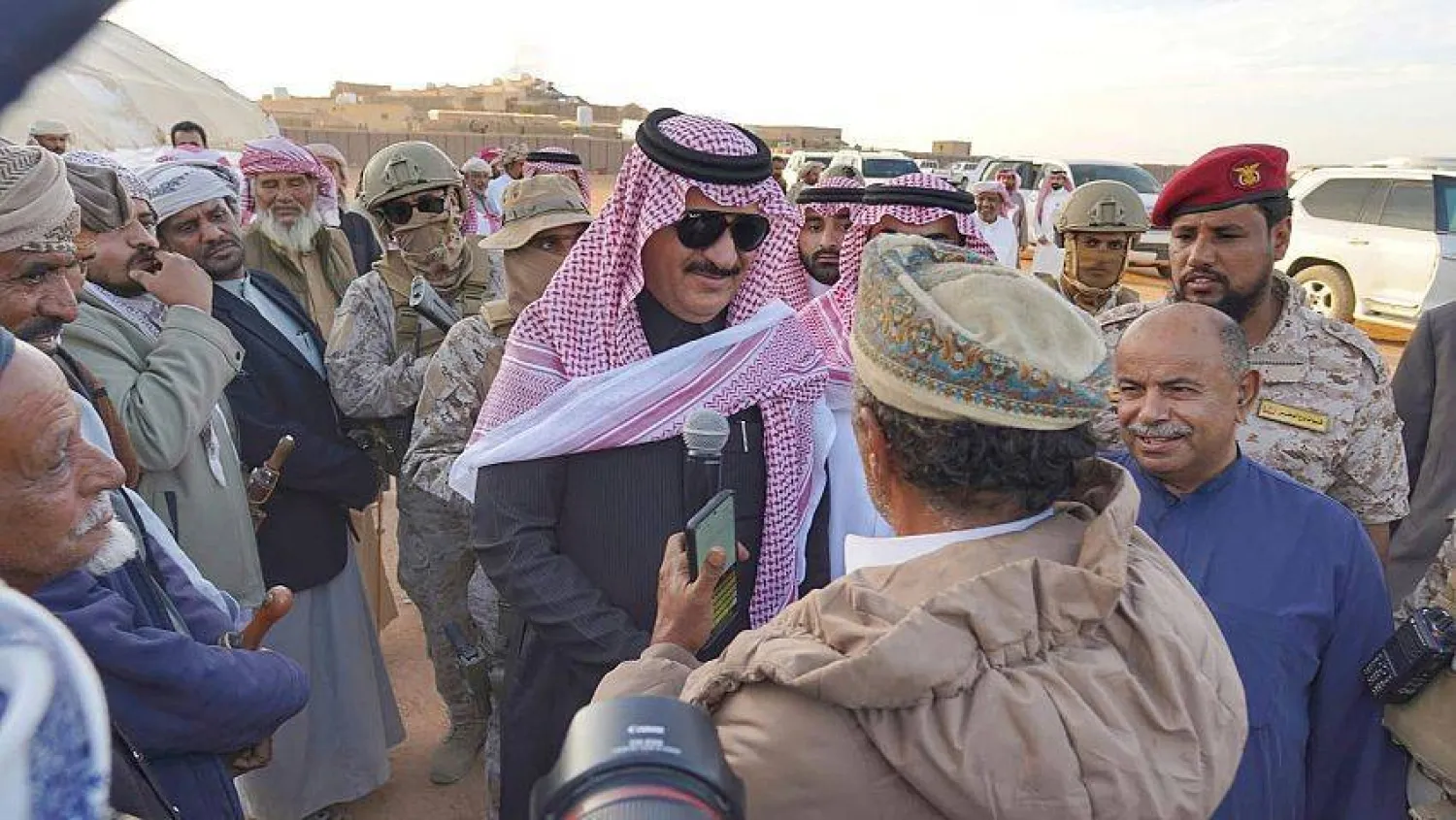
Head of the Saudi delegation to Hadhramaut Lt. Gen. Mohammed al-Qahtani. (Saba)
TT

Saudi Arabia Presses for Easing Tensions, Restoring Stability in East Yemen

Head of the Saudi delegation to Hadhramaut Lt. Gen. Mohammed al-Qahtani. (Saba)

In the wake of the latest military moves by the Southern Transitional Council (STC) in the eastern Yemeni governorates of Hadhramaut and al-Mahra, the head of the visiting Saudi delegation to Hadhramaut, Lt. Gen. Mohammed al-Qahtani, said the Kingdom, which leads the Arab coalition supporting legitimacy in Yemen, is working to defuse the crisis and resolve the conflict.

Yemen’s state media reported that the Saudi delegation arrived in the districts of Wadi and Desert Hadhramaut after concluding meetings in the city of Mukalla and the coastal districts.

Governor of Hadhramaut Salem al-Khenbashi, along with several deputy governors, notables and tribal sheikhs from the region, received the delegation.

According to the government-run Saba news agency, al-Khenbashi welcomed the delegation, saying the visit reinforces the bonds of brotherhood, kinship, neighborhood and shared faith between Yemen and the Kingdom.

He hoped that the visit would support Hadhramaut and its local authorities in easing citizens’ hardships in service, economic and security sectors.

Al-Qahtani reaffirmed Saudi Arabia’s firm position toward Yemen and Hadhramaut, stressing the need to enforce calm, support security and stability, and reject any attempts to impose faits accomplis by force or drag the governorate into new cycles of conflict.

The Saudi official renewed Riyadh’s position calling for all forces affiliated with the STC to withdraw from Hadhramaut and Mahra and restore the situation to its previous state.

Al-Qahtani said Saudi Arabia rejects any moves that obstruct the path of de-escalation.

He noted that Hadhramaut is a cornerstone and a top priority for stability, not a theatre for conflict, and that the province has qualified local cadres capable of managing its affairs and resources.

Hadhramaut must be administered through official state institutions represented by the government and local authorities, he urged.

State media quoted al-Qahtani as saying the delegation’s visit to Hadhramaut resulted in agreement on a comprehensive set of measures to support security, stability and de-escalation with all parties, including the STC.

The Arab coalition is working to end the crisis, resolve the conflict and restore conditions to what they were, he stressed.

Saudi Arabia has historic fraternal ties with all of Yemen, he remarked, saying the southern issue is a just cause that cannot be ignored.

He noted it is reflected in the outcomes of the Yemeni National Dialogue and remains central to any coming political settlement with Saudi Arabia and the United Arab Emirates supporting a comprehensive political solution in Yemen.

Al-Qahtani said the delegation reached an initial arrangement with local authorities and the Hadhramaut Tribes Alliance to ensure continued oil production at PetroMasila, avoid disrupting people’s interests and keep oil facilities away from conflict.

Under the arrangement, forces currently stationed in PetroMasila will withdraw and be replaced by Hadhramaut forces under the direct supervision of the local authority to help restore normal life.

UN Envoy in Riyadh

Amid the recent developments in Hadhramaut and Mahra, United Nations envoy to Yemen Hans Grundberg visited Riyadh, where he met with Yemeni Foreign Minister Shaya al-Zindani, Saudi Ambassador to Yemen Mohammed Al-Jaber, UAE Ambassador to Yemen Mohamed al-Zaabi, representatives of the UN Security Council's five permanent members, and other diplomats.

A statement from the envoy’s office said meetings focused on the latest developments in Hadhramaut and Mahra, noting that eastern Yemen is politically and economically vital.

Grundberg underscored the need for all actors to exercise restraint and reduce escalation through dialogue. He stressed the importance of maintaining space for discussion among Yemeni parties to support stability and serve the interests of the Yemeni people.

During his meetings, the envoy reaffirmed his commitment to continue working with Yemeni, regional and international parties to support de-escalation and strengthen prospects for a negotiated political settlement to the conflict.

Yemen’s state media reported that al-Zindani met Grundberg and reiterated the government’s full support for UN efforts.

He affirmed the government’s readiness to cooperate with the United Nations and the international community in ways that help ease humanitarian suffering and enhance security and stability.

The meeting discussed developments linked to the ongoing negotiations on prisoner and detainee swaps.

Al-Zindani stressed the need for tangible progress on this humanitarian file and for all sides to honor agreements to ensure the release of all prisoners and detainees without exception.

Calls for calm

Following American, British, French and German calls urging calm and support for stability in Yemen, the European Union mission said it supports the Presidential Leadership Council (PLC) and the Yemeni government in their efforts to boost security and stability.

In a post on the X platform, the mission praised the comprehensive briefing by PLC Chairman Rashad al-Alimi on the recent developments in Hadhramaut and Mahra. It emphasized the need to resolve political disputes through political means and dialogue.

The mission welcomed all mediation efforts aimed at de-escalation and reiterated the EU’s support for the Yemeni people and its commitment to their aspirations for freedom, security and prosperity.

Al-Alimi held a meeting in Riyadh with ambassadors of countries sponsoring the political process in Yemen.

He briefed them on the latest political and field developments, especially the recent events in the eastern provinces, which he said undermine the legitimate government, threaten the unity of security and military decision making, and violate the frameworks of the transitional process.

Al-Alimi said one effective path to calm lies in a unified, clear and explicit international stance that rejects unilateral measures, reaffirms full commitment to the references of the transitional phase, and supports the legitimate government as the sole executive authority responsible for safeguarding the country’s higher interests.

He reiterated that the PLC’s position remains unchanged from past experience, which is to not provide political cover for any unilateral actions outside the institutional framework of the state whenever there is genuine national, regional and international will.


IMCTC Signs Cooperation Memorandum with Saudi Fund for Development

The deal was signed on behalf of IMCTC by its Secretary-General Major General Mohammed Al-Moghedi, while SFD was represented by its CEO Sultan bin Abdulrahman Al-Marshad - SPA
TT

IMCTC Signs Cooperation Memorandum with Saudi Fund for Development

The deal was signed on behalf of IMCTC by its Secretary-General Major General Mohammed Al-Moghedi, while SFD was represented by its CEO Sultan bin Abdulrahman Al-Marshad - SPA

The Islamic Military Counter-Terrorism Coalition (IMCTC) signed a cooperation memorandum with the Saudi Fund for Development (SFD) in Riyadh, as part of efforts to strengthen strategic partnership and integrate the two sides’ efforts in supporting development projects and initiatives in the coalition’s member states.

The memorandum was signed on behalf of IMCTC by its Secretary-General Major General Mohammed Al-Moghedi, while SFD was represented by its CEO Sultan bin Abdulrahman Al-Marshad, SPA reported.

The memorandum aims to establish a general framework for cooperation and coordination between the two sides that supports the implementation of sustainable development projects in member states, enhancing their readiness and capacity to confront challenges related to terrorism through a scientific methodology and institutional integration aligned with each side’s mandates.

The areas of cooperation include joint action in managing the coalition’s projects and initiatives across member states, aligning these projects with SFD's activities and programs, exchanging expertise through specialized workshops, benefiting from shared studies and reports, and highlighting the efforts of both sides in regional and international forums.


UN Secretary-General Visits KSrelief Headquarters in Riyadh

Al Rabeeah discussed with Guterres topics of mutual interest related to humanitarian and relief affairs  - SPA
Al Rabeeah discussed with Guterres topics of mutual interest related to humanitarian and relief affairs - SPA
TT

UN Secretary-General Visits KSrelief Headquarters in Riyadh

Al Rabeeah discussed with Guterres topics of mutual interest related to humanitarian and relief affairs  - SPA
Al Rabeeah discussed with Guterres topics of mutual interest related to humanitarian and relief affairs - SPA

United Nations Secretary-General António Guterres and his accompanying delegation visited the headquarters of the King Salman Humanitarian Aid and Relief Center (KSrelief) in Riyadh on Thursday.

During the visit, he met with Advisor at the Royal Court and KSrelief Supervisor-General Dr. Abdullah Al Rabeeah, as well as a number of the center’s senior officials, in the presence of Saudi Permanent Representative to the United Nations Ambassador Dr. Abdulaziz Alwasil, SPA reported.

Al Rabeeah discussed with Guterres topics of mutual interest related to humanitarian and relief affairs, as well as ways to strengthen cooperation between KSrelief and the various UN organizations.

During the meeting, a visual presentation was given on the center’s projects and programs, which have so far reached 3,881 projects in 109 countries, with a total value exceeding $8 billion.

These include specialized initiatives such as the Prosthetic Programs, the Masam Project for clearing landmines in Yemen, the program for reintegrating Yemeni children previously associated with armed conflict, in addition to voluntary medical programs, the Saudi Conjoined Twins Programme, and the establishment of digital humanitarian, volunteer, documentation, and international registration platforms, among many other significant humanitarian initiatives.

Guterres then toured the permanent exhibition in the center’s main hall, which features an interactive map showing countries benefiting from KSrelief projects, audiovisual storytelling stations showcasing impactful humanitarian stories, a screen highlighting the center’s volunteer programs, and a section allowing visitors to write humanitarian messages.

The exhibition also includes virtual reality goggles that let visitors experience the daily lives of refugees and displaced people.

He also met with several Saudi medical volunteers participating in medical missions implemented outside the Kingdom and listened to their personal experiences in carrying out the center’s volunteer projects.

Afterward, he visited the offices of KSrelief’s partner organizations and international agencies, where representatives briefed him on their joint work with the center.

Guterres later affirmed in a press statement to SPA that the Kingdom has maintained its firm commitment to providing humanitarian assistance, particularly during these challenging times in which humanitarian aid is, regrettably, no longer as widespread globally as it once was.

Guterres noted that KSrelief stands as a prominent model of generosity, dedication, efficiency, and the exceptional quality of services it provides to those affected and most in need in numerous countries, including Yemen, Somalia, Syria, and others. He added that visiting the center offers a clear view of the remarkable humanitarian work it carries out and reflects the Kingdom of Saudi Arabia’s commitment to this noble approach.

He also praised the center’s success in building an extensive global network of partnerships, demonstrating its professionalism and leadership in humanitarian work.


OIC Strongly Condemns New Israeli Settlement Plans in Occupied West Bank

The Israeli settlement of Har Homa, seen from the West Bank city of Bethlehem, Tuesday, Dec. 17, 2024. (AP)
TT

OIC Strongly Condemns New Israeli Settlement Plans in Occupied West Bank

The Israeli settlement of Har Homa, seen from the West Bank city of Bethlehem, Tuesday, Dec. 17, 2024. (AP)

The Organization of Islamic Cooperation (OIC) condemned in the strongest terms the Israeli occupation authorities’ approval of annexation and expansion plans via the construction of 764 new settlement units, as well as a plan for 17 new settlements in the occupied West Bank over the next five years, as part of attempts to foist their so-called sovereignty on the occupied Palestinian territory.

The OIC stressed that the Israeli colonial settlement policy constitutes a war crime and flagrant violation of international law and relevant United Nations resolutions, notably Security Council resolution no. 2334 and the legal opinions issued by the International Court of Justice, SPA reported.

The OIC renewed its call on the international community, particularly the Security Council, to assume its responsibility and take immediate measures to end all the crimes and violations being perpetrated by the Israeli occupation against the Palestinian people, their territory, and holy sites.