World Bids Farewell to Pioneering Elephant Conservationist, Fiercest Warrior of Ivory Tradehttps://english.aawsat.com/varieties/5218278-world-bids-farewell-pioneering-elephant-conservationist-fiercest-warrior-ivory
World Bids Farewell to Pioneering Elephant Conservationist, Fiercest Warrior of Ivory Trade
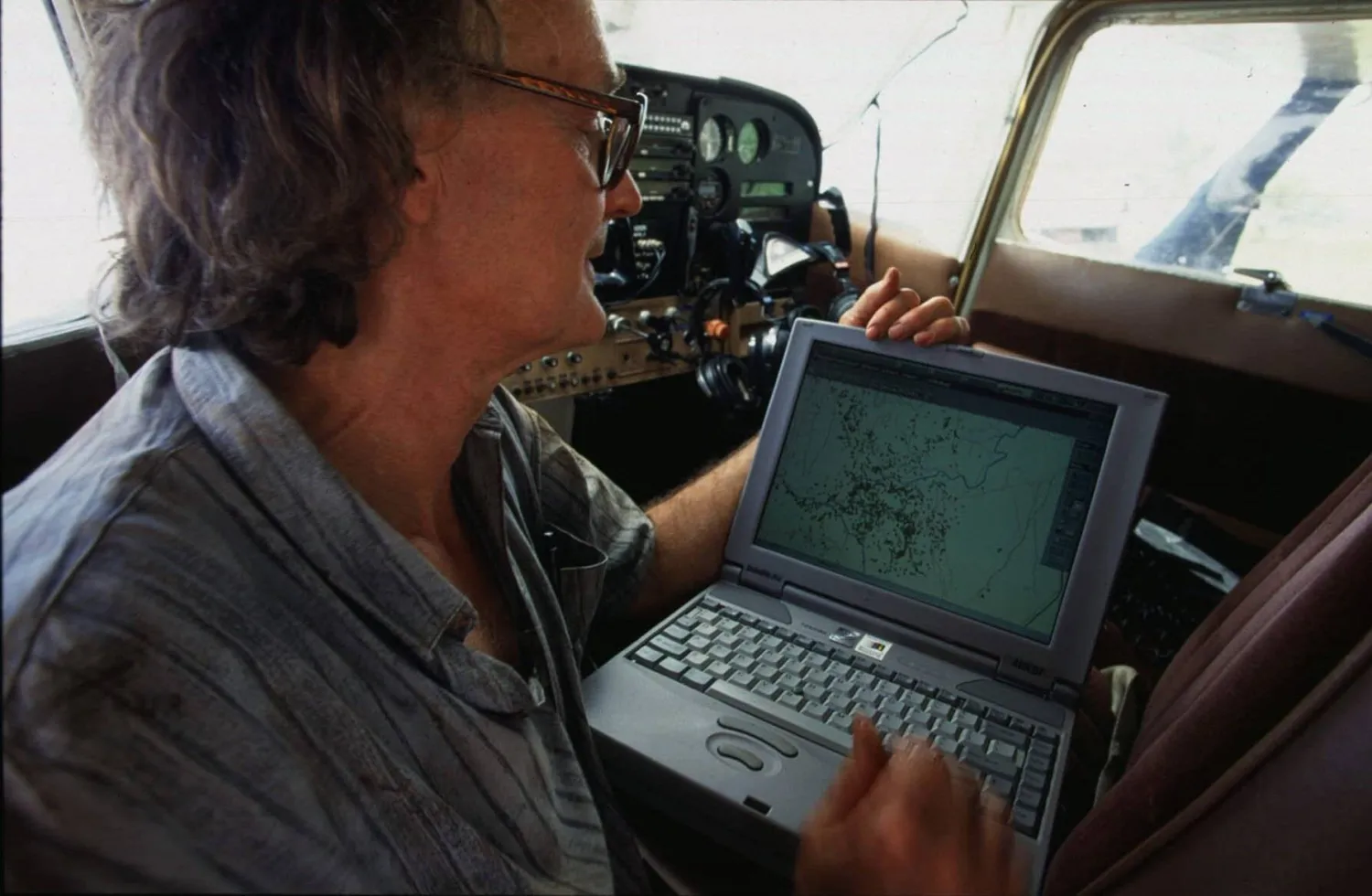
FILE - Dr. Iain Douglas-Hamilton checks on his laptop computer the position of an elephant fitted with a Global Positioning System (GPS) beacon in the Meru National Park, Kenya, May 21, 1998. (AP Photo/Jean-Marc Bouju, File)
World Bids Farewell to Pioneering Elephant Conservationist, Fiercest Warrior of Ivory Trade
FILE - Dr. Iain Douglas-Hamilton checks on his laptop computer the position of an elephant fitted with a Global Positioning System (GPS) beacon in the Meru National Park, Kenya, May 21, 1998. (AP Photo/Jean-Marc Bouju, File)
The Prince of Wales has paid tribute to pioneering elephant conservationist Dr. Iain Douglas-Hamilton, who died aged 83 at his home in Nairobi on Monday.
Douglas-Hamilton spent his life studying and campaigning to protect African elephants, becoming a world-leading expert on their behavior in the wild, BBC reported.
His groundbreaking research exposed the devastating effects of poaching - often at great risk to his own safety - and was instrumental in the banning of the international ivory trade.
Prince William praised the zoologist as “a man who dedicated his life to conservation and whose life's work leaves lasting impact on our appreciation for, and understanding of, elephants.”
“The memories of spending time in Africa with him will remain with me forever,” added Prince William, who is a royal patron for the African wildlife conservation charity, Tusk, of which Douglas-Hamilton was an ambassador.
“The world has lost a true conservation legend today, but his extraordinary legacy will continue,” the charity's founder Charles Mayhew said in a statement.
Born in 1942 to an aristocratic British family in Dorset, England, Douglas-Hamilton studied biology and zoology in Scotland and Oxford before moving to Tanzania to research elephant social behavior.
It was there at Lake Manyara National Park that he began documenting every elephant he encountered, eventually becoming so familiar with the herds he could recognize them by the unique shapes of their ears and wrinkles on their skin.
“The thing about elephants is that they have a lot in common with human beings,” he said in a 2024 documentary about his work, A Life Among Elephants.
Friend and fellow conservationist Jane Goodall, who died in October, was featured in the documentary, and said he had shown the world that elephants are capable of feeling just like humans.
“I think his legacy will be one of a man who did so much to help people understand how majestic, how wonderful elephants are, and to learn more about their way of life,” Goodall said.
All But 2 of Austria's 96 Glaciers Have Retreated Over Last 2 Yearshttps://english.aawsat.com/varieties/5250804-all-2-austrias-96-glaciers-have-retreated-over-last-2-years
All But 2 of Austria's 96 Glaciers Have Retreated Over Last 2 Years
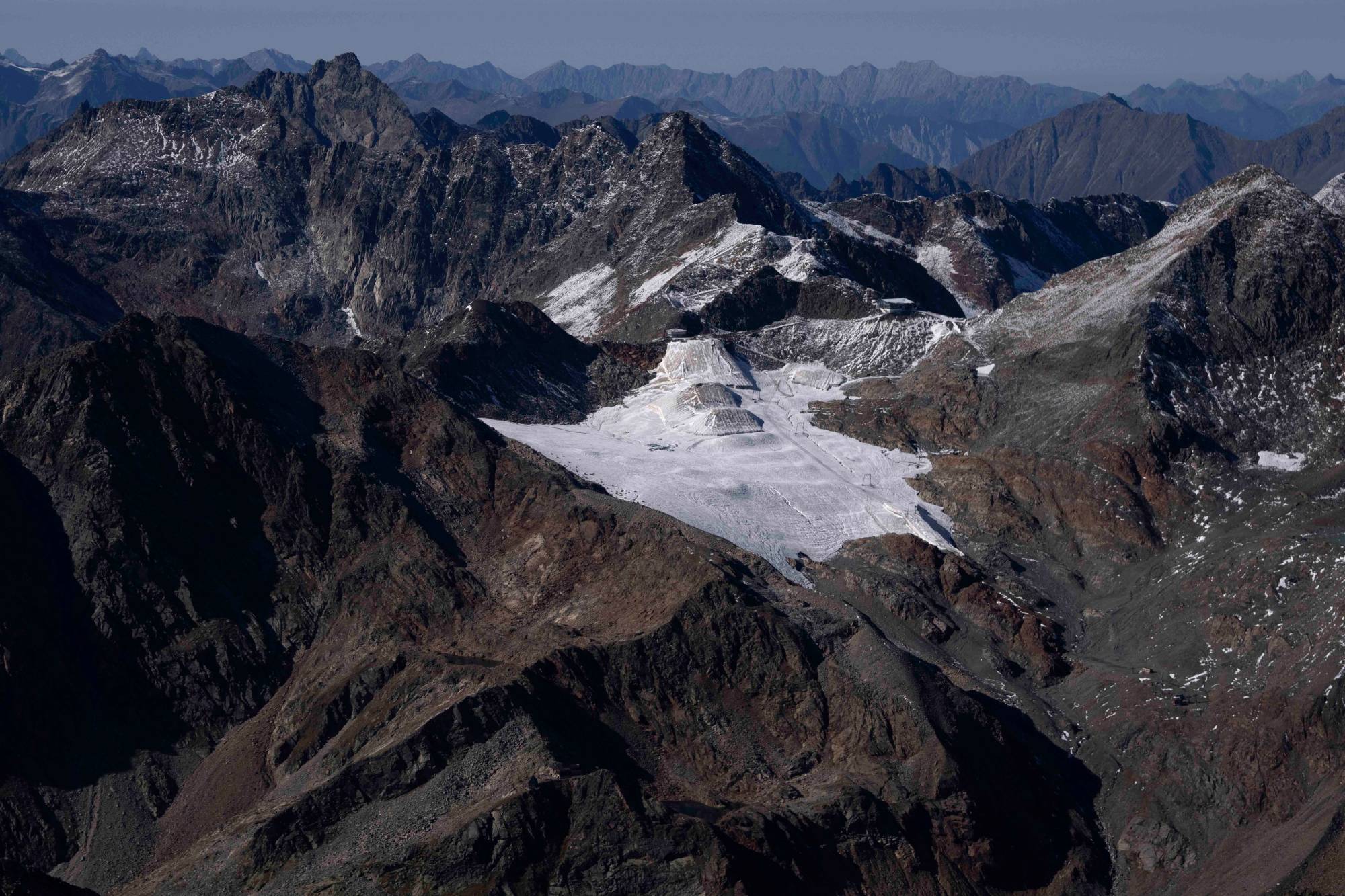
FILE - The Sulzenauferner Glacier is visible near Innsbruck, Austria, on Sept. 25, 2023. (AP Photo/Matthias Schrader, File)
All but two of Austria’s 96 glaciers have retreated over the last two years, monitors in the Alpine country reported Friday, saying the “dramatic development” highlights the impact of climate change.
The latest report from the Austrian Alpine Club shows the Alpeiner Ferner in the western Tyrol region and Stubacher Sonnblickkees in Salzburg to the east are facing the greatest loss, each with a retreat of more than 100 meters (about 330 feet). The average retreat was more than 20 meters (65 feet).
“The disintegration of the glacier tongue is also progressing at the Pasterze, Austria’s largest glacier, making the consequences of climate change visible,” the club said in the report covering 2024 and 2025.
The report, it added, “confirms once again the long-term trend: Glaciers in Austria continue to shrink significantly in length, area, and volume.”
FILE - The Gaisskarferner Glacier is visible near Innsbruck, Austria, Monday, Sept. 25, 2023. (AP Photo/Matthias Schrader, file)
The retreat of glaciers in Europe has vast implications for drinking water, power generation, agriculture, infrastructure, recreational activities, the Alpine landscape and more.
Neighboring Switzerland, which is home to the most glaciers in Europe, has noted a similar retreat in its glaciers in recent years, a trend that has been reported around the world.
Poor weather conditions including low snowfall, warm temperatures including an exceptionally hot June last year — nearly 5 degrees Celsius (9 degrees Fahrenheit) above the average — have contributed to the retreat, The Associated Press quoted the club as saying.
“The glaciers are melting — and with every new report, the urgency grows,” club vice president Nicole Slupetzky said. “It’s no longer a question of whether we can still save the glaciers in their old form; it’s about mitigating the consequences for ourselves.”
Such changes in the Alps should serve as a “wake-up call” for policymakers and the public in its behavior, the club said.
It said the current figure was lower than during the previous two years, but still ranks as the eight-largest retreat in the 135 years of measurements.
Snow Geese Take Off for the Arctic in Mesmerizing Sunrise Displayhttps://english.aawsat.com/varieties/5250797-snow-geese-take-arctic-mesmerizing-sunrise-display
Snow geese take to the sky at sunrise after a stopover at the Middle Creek Wildlife Management Area, Monday, March 9, 2026, in Kleinfeltersville, Pa. (AP Photo/Robert F. Bukaty)
Snow Geese Take Off for the Arctic in Mesmerizing Sunrise Display
Snow geese take to the sky at sunrise after a stopover at the Middle Creek Wildlife Management Area, Monday, March 9, 2026, in Kleinfeltersville, Pa. (AP Photo/Robert F. Bukaty)
A few dozen birdwatchers gathered in the predawn darkness to wait for the moment when thousands of migrating snow geese stopped honking and preening to suddenly take flight from a Pennsylvania reservoir.
The mesmerizing display, about an hour after sunrise, was over almost as soon as it began. The birds circled a few times and then headed out to neighboring farm fields, seeking unharvested grains and other sustenance on their epic annual spring flight northward into New York state and Quebec.
The Pennsylvania reservoir was built a half-century ago to attract waterfowl and over the years the gaggle has grown. Pennsylvania Game Commission environmental education specialist Payton Miller described it as a raucous bird tornado that lifts off the water.
“All it takes is for me to come out here on a really nice morning where there’s a huge morning flight and I’m kind of reminded how awesome it is to see such a large number of such a beautiful bird,” The Associated Press quoted Miller as saying. “I never get sick of it.”
Among those taking it all in was Adrian Binns, a safari guide from Paoli, Pennsylvania, who went to the Middle Creek Wildlife Management Area for “the whole enjoyment of seeing something you don't see every day.”
Snow geese have been arriving in growing numbers at the 6,300-acre (25 square kilometers) Middle Creek property since the late 1990s. At this time of year, they have just spent months along the Atlantic coast, from New Jersey south to the Carolinas, with many of them overwintering on the Delmarva Peninsula that forms the Chesapeake Bay.
They don’t stay long at Middle Creek — it’s just a way station on their journey to summer breeding grounds in the Canadian Arctic and western Greenland.
But for a few short weeks they are the main attraction at Middle Creek, which draws about 150,000 visitors annually — including about a thousand hunters.
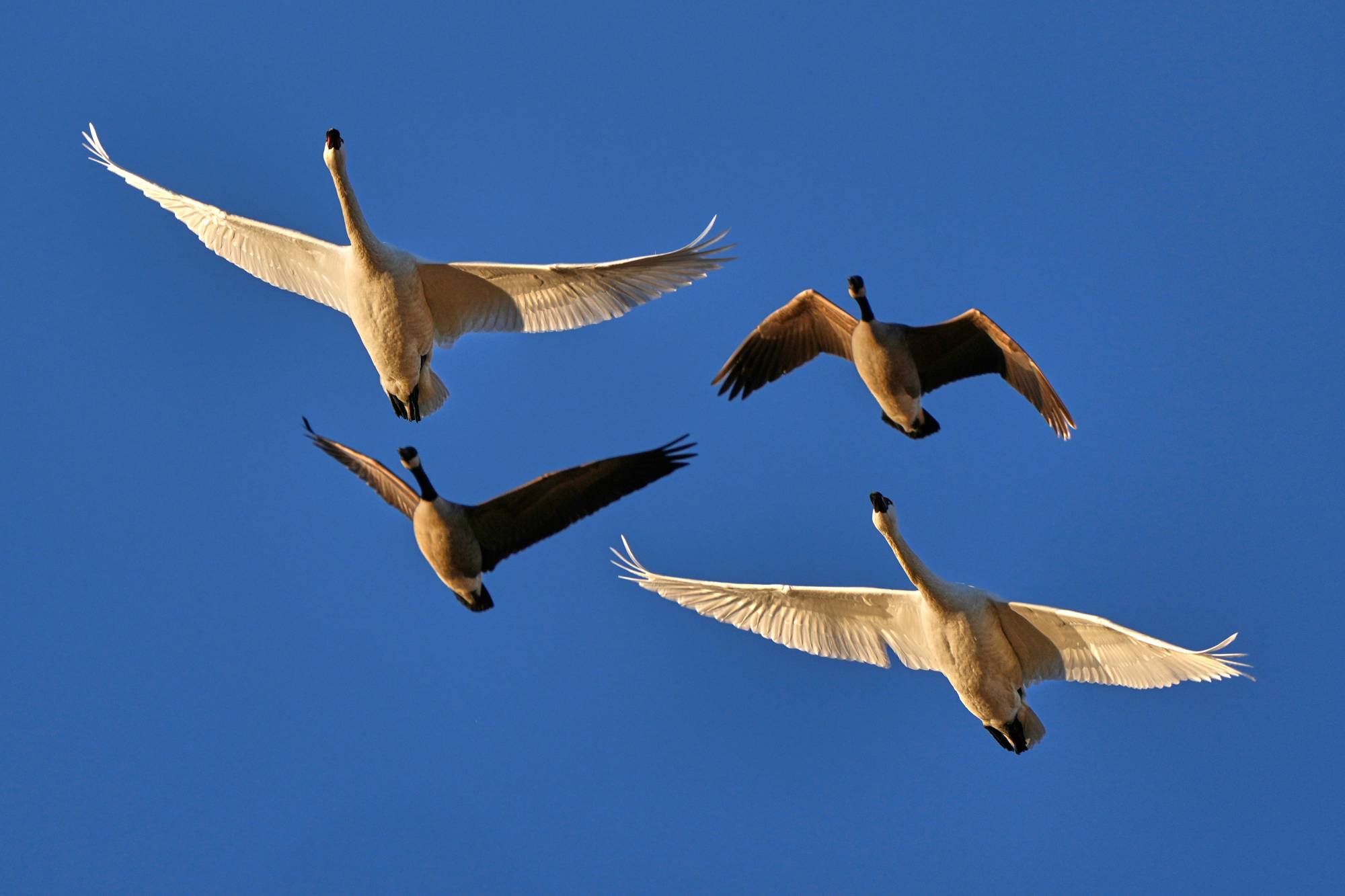
Pairs of tundra swans (larger birds) and Canada geese fly over the Middle Creek Wildlife Management Area, Monday, March 9, 2026, in Kleinfeltersville, Pa. (AP Photo/Robert F. Bukaty)
The Pennsylvania Game Commission, which owns Middle Creek, says about 100,000 snow geese were roosting there on the busiest day last year, on par with recent peak activity but below the single-day record of about 200,000 on Feb. 21, 2018.
Snow geese are doing well, but their large numbers have come with a cost.
According to a 2017 study published by Springer Nature, greater snow geese grew in population from about 3,000 in the early 20th century to some 700,000 by the 1990s. By some estimates, there are about a million of the birds now — along with maybe 10 million of lesser snow geese, which are smaller — that also breed in the Arctic.
The number of migrating tundra swans at Middle Creek, while far lower, has also increased over time, from a dozen or so in the mid-1970s to 5,000 or more in recent years. Middle Creek birders have also identified more than 280 bird species on the site, among them bald eagles, northern harriers, ospreys and owls.
As snow geese numbers have boomed in recent decades, wildlife officials in the US and Canada have navigated a balancing act involving hunting regulations, concerns about crop damage, shifts in snow geese migration and changes to overwintering patterns. Environmental damage from overgrazing in the Arctic has led experts to conclude the birds are overabundant.
David M. Bird, a McGill University wildlife biology professor, described the population as “probably one of the biggest conservation problems facing wildlife biologists in North America today.” Snow geese feed by pulling up plants by the roots, which damages habitats for themselves, various birds and other kinds of wildlife.
The Pennsylvania Game Commission reported recently that avian influenza viruses, present in the state since 2022, continue to circulate among the state’s wild birds. The game agency asked for the public’s help in reporting sick or dead wild birds and reported that about 2,000 wild bird carcasses — mostly snow geese — had to be removed from a quarry a few miles north of Bethlehem in December and January.
Bird said that for nature lovers, snow geese can be a delight but for farmers, they're a pest. For hunters, they're food but for animal rights advocates, they're a species that needs protection, he said.
“But if you are a paid professional wildlife manager at a municipal, state or federal level whose challenging job is to try to please all of the aforementioned parties, then you will undoubtedly experience many sleepless nights in the fall when the geese arrive,” Bird said.
London’s Most Urban Riding School Transforms Lives Through Horseshttps://english.aawsat.com/varieties/5250746-london%E2%80%99s-most-urban-riding-school-transforms-lives-through-horses
Children ride horses around a paddock during a class at the Ebony Horse Club in Brixton, Britain's most urban riding school, where children from under-privileged communities are taught to ride horses, in London, Britain, March 10, 2026. (Reuters)
TT
TT
London’s Most Urban Riding School Transforms Lives Through Horses
Children ride horses around a paddock during a class at the Ebony Horse Club in Brixton, Britain's most urban riding school, where children from under-privileged communities are taught to ride horses, in London, Britain, March 10, 2026. (Reuters)
Sandwiched between social housing blocks and busy train tracks in south London is Britain's most urban riding school, where children from disadvantaged backgrounds learn to ride horses as part of a project aimed at improving their well-being.
About 160 children each week attend the Ebony Horse Club, a 30-year-old charity in the Brixton area of the capital which ranks amongst the most deprived in England and is a hotspot for knife crime.
Outside the stables, opened in 2011 by Queen Camilla, nine-year-old Matthew Sanchez shoveled horse dung into a wheelbarrow before his lesson.
Like many of the children who come for classes, he had never encountered a horse before. But riding teacher Rachel Scott-Hayward, 37, said the children grow in confidence over weeks, learning to ride, grooming the animals and mucking out the stables.
Nylah Murray Charles, aged nine, said she was nervous before trotting on a horse for the first time.
"I got scared a bit, but I was like maybe I should just give it a try... when I tried, it was actually great and I had fun," she said.
The club is an oasis of rural charm in Brixton, about three miles (5 km) from central London, where the smell of hay hangs in the air. Lessons are free - a contrast to similar stables in wealthier parts of the city, where a 30-minute class can cost around 50 pounds ($67).
Scott-Hayward said while horse riding was traditionally "a white, upper-class hobby", the charity made it accessible to local children, about 45% of whom identify as being from an ethnic minority.
The stables have become a home-from-home for Shanice Reid, 29, since she first learnt to ride with the project as a schoolgirl. She now teaches at the club and said it offers "somewhere to escape" for those with difficult home or school lives.
Between 2010 and 2019, about a third of London's youth clubs closed due to cuts to public funding, shrinking services for young people just as the pandemic hit.
Scott-Hayward said that horse riding can also be an antidote to the anxiety that she increasingly sees in children who spend a lot of time on screens and social media.
"When you're on a horse, you can't really think about too much else," she said.
لم تشترك بعد
انشئ حساباً خاصاً بك لتحصل على أخبار مخصصة لك ولتتمتع بخاصية حفظ المقالات وتتلقى نشراتنا البريدية المتنوعة