App Developers Urge EU Action on Apple Fee Practices 

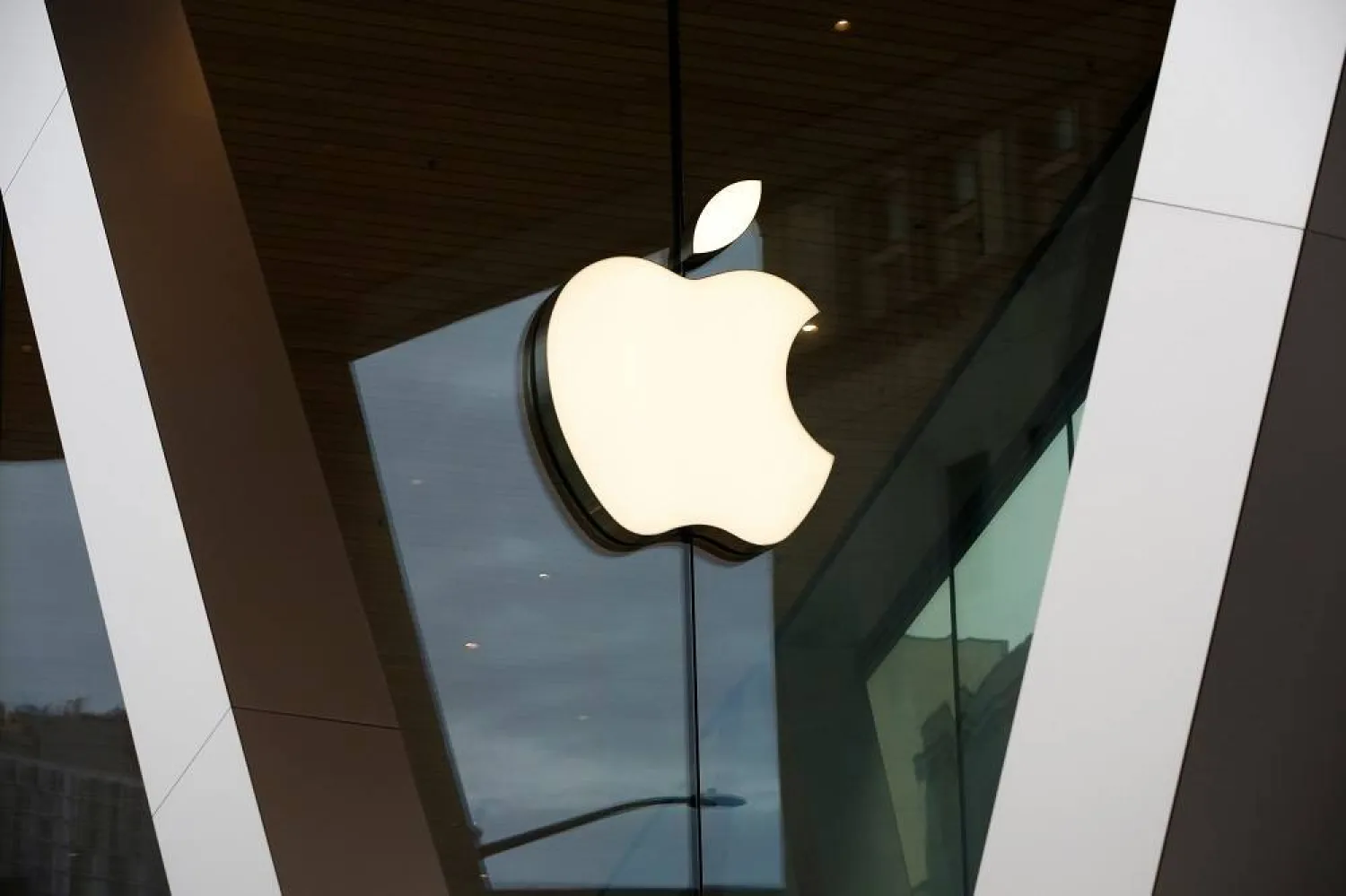
An Apple logo adorns the façade of the downtown Brooklyn Apple store on March 14, 2020, in New York. (AP)
TT

App Developers Urge EU Action on Apple Fee Practices 

An Apple logo adorns the façade of the downtown Brooklyn Apple store on March 14, 2020, in New York. (AP)

A coalition of 20 app developers and consumer groups on Tuesday called upon European regulators to enforce EU laws against Apple, saying the company's fee structure unfairly disadvantages European developers compared to their US rivals after a recent court decision in the United States.

The European Union's Digital Markets Act (DMA), implemented in 2023, mandates that large tech platforms labelled "gatekeepers", such as Apple, facilitate in-app transactions outside their ecosystem at no charge.

The coalition's appeal reflects concerns over a disparity following a US court ruling that restricts Apple's ability to impose fees on external transactions.

The European Commission earlier this year fined Apple 500 million euros ($588 million) for breaching the DMA by obstructing developers from guiding users to alternative payment methods.

In response to the EU ruling, Apple revised its terms to impose fees ranging from 13% for smaller businesses to up to 20% for App Store purchases, alongside penalties of 5% to 15% on external transactions.

The Coalition for Apps Fairness (CAF), representing firms such as Deezer and Proton, argues these revised fees still violate DMA stipulations and says that US developers benefit from more favorable terms after the court decision.

"This situation is untenable and damaging to the app economy," CAF said in a statement, accusing Apple of undermining transparency and stifling innovation.

Global Policy Counsel for CAF, Gene Burrus, said that developers in the EU have to either bear the cost of those fees or pass them down to customers.

"It is bad for European companies, and it is bad for European consumers," he said.

According to CAF, European developers remain disadvantaged six months after the Commission declared Apple's policies illegal under the DMA.

Although Apple has announced further policy changes to take effect in January, it has yet to specify what these revisions will entail, fueling dissatisfaction among developers over the lack of clarity.

"We want the EU Commission to tell Apple that the law is the law and that free of charge means free of charge," Burrus said, adding that the European authorities should consider referring the issue to the European Court of Justice if necessary.


Will OpenAI Be the Next Tech Giant or Next Netscape?

While OpenAI does not expect to be profitable before 2029, the startup's valuation keeps climbing in funding rounds baffling some financial analysts. Kirill KUDRYAVTSEV / AFP
TT

Will OpenAI Be the Next Tech Giant or Next Netscape?

While OpenAI does not expect to be profitable before 2029, the startup's valuation keeps climbing in funding rounds baffling some financial analysts. Kirill KUDRYAVTSEV / AFP

Three years after ChatGPT made OpenAI the leader in artificial intelligence and a household name, rivals have closed the gap and some investors are wondering if the sensation has the wherewithal to stay dominant.

Investor Michael Burry, made famous in the film "The Big Short," recently likened OpenAI to Netscape, which ruled the web browser market in the mid-1990s only to lose to Microsoft's Internet Explorer.

"OpenAI is the next Netscape, doomed and hemorrhaging cash," Burry said recently in a post on X, formerly Twitter.

Researcher Gary Marcus, known for being skeptical of AI hype, sees OpenAI as having lost the lead it captured with the launch of ChatGPT in November 2022.

The startup is "burning billions of dollars a month," Marcus said of OpenAI.

"Given how long the writing has been on the wall, I can only shake my head" as it falls.

Yet ChatGPT was a tech launch like no other, breaking all consumer product growth records and now boasting more than 800 million -- paid subscription and unpaid -- weekly users.

OpenAI's valuation has soared to $500 billion in funding rounds, higher than any other private company.

But the ChatGPT maker will end this year with a loss of several billion dollars and does not expect to be profitable before 2029, an eternity in the fast-moving and uncertain world of AI.

Nonetheless, the startup has committed to paying more than $1.4 trillion to computer chip makers and data center builders to build infrastructure it needs for AI.

The fierce cash burn is raising questions, especially since Google claims some 650 million people use its Gemini AI monthly and the tech giant has massive online ad revenue to back its spending on technology.

Rivals Amazon, Meta and OpenAI-investor Microsoft have deep pockets the ChatGPT-maker cannot match.

Turbulence ahead?

A charismatic salesman, OpenAI chief executive Sam Altman flashed rare annoyance when asked about the startup's multi-trillion-dollar contracts in early November.

A few days later, he warned internally that the startup is likely to face a "turbulent environment" and an "unfavorable economic climate," particularly given competitive pressure from Google.

And when Google released its latest model to positive reactions, Altman issued a "red alert," urging OpenAI teams to give ChatGPT their best efforts.

OpenAI unveiled its latest ChatGPT model last week, that same day announcing Disney would invest in the startup and license characters for use in the bot and Sora video-generating tool.

OpenAI's challenge is inspiring the confidence that the large sums of money it is investing will pay off, according to Foundation Capital partner Ashu Garg.

For now OpenAI is raising money at lofty valuations while returns on those investments are questionable, Garg added.

Yet OpenAI still has the faith of the world's deepest-pocketed investors.

"I'm always expecting OpenAI's valuation to come down because competition is coming and its capital structure is so obviously inappropriate," said Pluris Valuation Advisors president Espen Robak.

"But it only seems to be going up."

Opinions are mixed on whether the situation will result in OpenAI postponing becoming a publicly traded company or instead make its way faster to Wall Street to cash in on the AI euphoria.

Few AI industry analysts expect OpenAI to implode completely, since there is room in the market for several models to thrive.

"At the end of the day, it's not winner take all," said CFRA analyst Angelo Zino.

"All of these companies will take a piece of the pie, and the pie continues to get bigger," he said of AI industry frontrunners.

Also factored in is that while OpenAI has made dizzying financial commitments, terms of deals tend to be flexible and Microsoft is a major backer of the startup.


China Approves First Two Level-3 Autonomous Driving Cars from State-owned Automakers

People pass by the entrance to Volkswagen (China) Technology Company, a 3 billion euros ($3.5 billion) R&D center in Hefei in eastern China's Anhui province, on Feb. 25, 2025. (AP Photo/Ken Moritsugu)
TT

China Approves First Two Level-3 Autonomous Driving Cars from State-owned Automakers

People pass by the entrance to Volkswagen (China) Technology Company, a 3 billion euros ($3.5 billion) R&D center in Hefei in eastern China's Anhui province, on Feb. 25, 2025. (AP Photo/Ken Moritsugu)

China's industry regulator on Monday approved two Chinese cars with level-3 autonomous driving capabilities, marking the first time such vehicles have been cleared by the national regulator as legitimate products ready for mass adoption.

The Ministry of Industry and Information Technology approved the two electric sedans from state-owned automakers Changan Auto and BAIC Motor in its latest automobile product entry category, said Reuters.

The two models are allowed to activate conditional autonomous driving in designated areas of Chongqing and Beijing with speed limits of 50km/h and 80km/h, respectively, the ministry said in a statement. The automakers will conduct trial operation with the cars on the specific roads via their ride-hailing units, it added.

The auto industry has defined five levels of autonomous driving, from cruise control at level one to fully self-driving cars at level five, and level three allows drivers to take their eyes and hands off the road in certain situations.

The move underscored China's ambition to lead the development and adoption of autonomous driving, a technology poised to disrupt the auto industry globally. Last year, China lined up nine automakers for public tests to advance the adoption of self-driving cars.

Chinese regulators earlier this year had sharpened scrutiny of the assisted driving technologies following an accident involving a Xiaomi SU7 sedan in March. That incident killed three occupants when their car crashed seconds after the driver took control from the assisted-driving system.

But government officials are pressing Chinese automakers to rapidly deploy even more advanced systems. In their level-3 push, Chinese regulators also are upping the regulatory ante by holding automakers and parts suppliers liable if their systems fail and cause an accident.

Autonomous driving developers such as Pony AI and WeRide have been testing their level-4 cars with licenses granted by local governments across China.

Tesla's Full Self-Driving, a level-2 driver assistance system, has been partially approved in China since February and falls short of its capabilities in the United States.


Elm Company Named Strategic Partner for International Data and AI Conference

Elm Company Named Strategic Partner for International Data and AI Conference
TT

Elm Company Named Strategic Partner for International Data and AI Conference

Elm Company Named Strategic Partner for International Data and AI Conference

The Saudi Data and Artificial Intelligence Authority (SDAIA) announced a strategic partnership with Elm Company for the International Conference on Data and AI Capacity Building (ICAN 2026), enhancing collaboration to empower the data and artificial intelligence ecosystem and promote innovation in education and human capacity development.

This partnership comes as part of preparations for ICAN 2026, organized by SDAIA from January 28 to 29 at King Saud University in Riyadh, with the participation of a select group of specialists and experts from around the world, SPA reported.

The step represents a qualitative addition that contributes to enriching the conference’s knowledge content and expanding partnerships with leading national entities.

Elm Company brings extensive experience in designing digital solutions and building technical capabilities, reinforcing its role as a strategic partner in supporting the conference. It contributes by developing training tracks and digital empowerment programs, participating in the technology exhibition, and presenting qualitative initiatives that help empower national competencies in the fields of data and artificial intelligence.