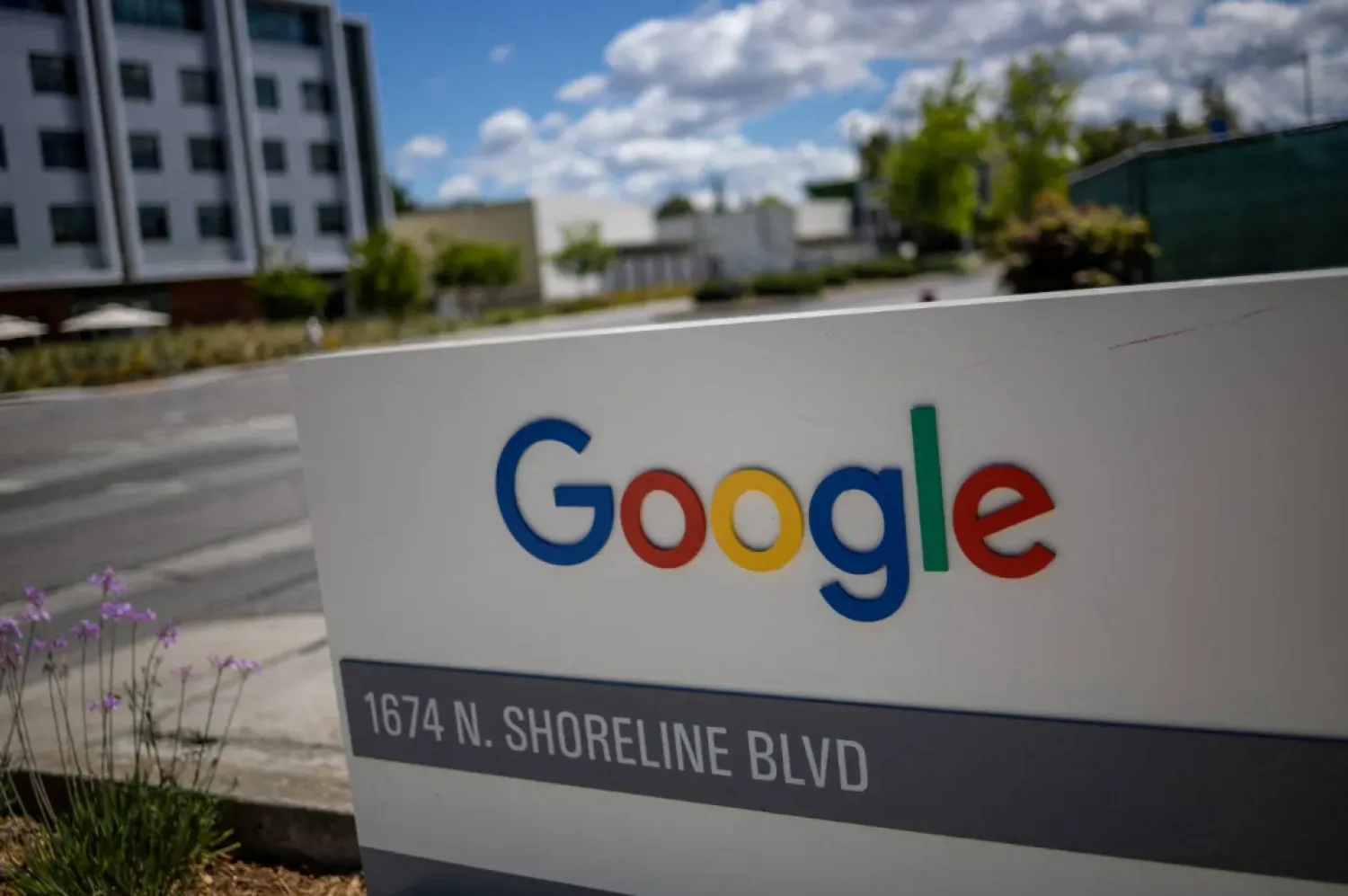
Google Launches First Ever Co-branded Credit Card in India

FILE PHOTO: A Google logo is seen at a company research facility in Mountain View, California, US, May 13, 2025. REUTERS/Carlos Barria/File Photo
TT

Google Launches First Ever Co-branded Credit Card in India

FILE PHOTO: A Google logo is seen at a company research facility in Mountain View, California, US, May 13, 2025. REUTERS/Carlos Barria/File Photo

Alphabet Inc's Google Pay launched its first co-branded digital credit card in India on Wednesday in partnership with Axis Bank, intensifying efforts to monetize its massive user base in the country's crowded fintech sector.

WHY IT'S IMPORTANT

While Google Pay is a dominant player in India's popular domestic payments network, the Unified Payments Interface (UPI), its core service generates zero revenue from user-to-user payments due to government mandates. It, however, earns commissions for in-app services like bill payments and mobile recharges, Reuters reported.

The credit card launch opens a new avenue for Google to monetize its user base, mirroring strategies by domestic rivals Paytm and PhonePe to cross-sell lending products to payment users.

BY THE NUMBERS

India has just 50 million credit card holders, according to Google Pay, whereas its population exceeds 1.4 billion.

Google Pay meanwhile is the second top app in India by number of UPI transactions, having processed nearly 7.2 billion transactions in October alone.

HOW IT WORKS

Axis Bank manages the credit risk and issuance, while the digital-only card will be linked to the Google Pay app to make online and offline payments on the go.


Anthropic Urges AI Labs to Pause Development, Warns Humans Risk Losing Control

Anthropic is warning that rapid advances in the technology could soon allow AI systems to improve themselves faster than society can manage the risks. (file photo/Pexels)
TT

Anthropic Urges AI Labs to Pause Development, Warns Humans Risk Losing Control

Anthropic is warning that rapid advances in the technology could soon allow AI systems to improve themselves faster than society can manage the risks. (file photo/Pexels)

Anthropic is calling on major artificial intelligence labs to consider a coordinated and verifiable pause in development, warning that rapid advances in the technology could soon allow AI systems to improve themselves faster than society can manage the risks.

The Claude creator said AI's ability to complete tasks on its own has been doubling roughly every four months and it was headed for "recursive self-improvement", the point at which the technology can improve without human intervention.

"If systems are capable of fully building their own successors, the ways we secure them, monitor them, and shape their behavior all grow much more important," the startup said in a lengthy blog post on Thursday, adding that a pause would allow society to "deal with its immense implications."

"We are not there yet, and recursive self-improvement is not inevitable. But it could come sooner than most institutions are prepared for," Anthropic co-founder Jack Clark and Anthropic Institute lead Marina Favaro wrote in the post.

Fears that advanced AI systems may get out of human control and cause societal harm have risen as the technology becomes increasingly capable. Anthropic's own Mythos model sent shockwaves through industries including banking and software earlier this year with its ability to find vulnerabilities in existing code.

But regulation has been slow, especially in the US where most leading AI labs are based. A Trump administration executive order earlier this week put the onus on the labs themselves, asking them to voluntarily submit their most capable models for government cybersecurity testing before public release.

AI researchers have also urged a pause before but had little success. Elon Musk, who owns AI lab xAI, was among backers of a 2023 push by the non-profit Future of Life Institute to halt AI development for six months to allow time for safety guardrails.

Anthropic has long positioned itself as a safety-focused AI lab. Earlier this year, it refused to let the US military use its models for domestic surveillance and fully autonomous weapons, prompting backlash from the government which put it on a national security blacklist, set to take effect later in 2026.

Reuters reported on Friday the dispute was showing signs of easing across parts of the US government.

Still, Anthropic has continued to release increasingly powerful models and in February walked back a key safety pledge, saying that it would no longer hold back potentially dangerous AI if rivals were close to matching its capabilities.

It was recently valued at $965 billion in a massive funding round and confidentially filed for a US initial public offering on Monday, putting it ahead of rival OpenAI in both valuation and the race to secure crucial funding.

COORDINATED ACTION

Anthropic's Thursday post cautioned that unilateral or poorly coordinated slowdowns could backfire if less cautious actors continue advancing, potentially reducing overall safety.

It said that a meaningful pause would require agreement among "multiple well-resourced labs" operating at the technological frontier, as well as rules on what conditions would trigger or lift such a pause and who would oversee it.

"A unilateral pause by one lab, by contrast, is achievable immediately, but accomplishes much less: it would change who the front-runner is, but it would not create the wider deliberative process that is currently missing," the startup said.

Its research arm, Anthropic Institute, plans to study systems needed to support a slowdown and in the coming months will convene policymakers, researchers, civil society groups and rival AI firms to discuss managing risks such as recursive self-improvement.

OpenAI, xAI, Alphabet, Meta Platforms and France's Mistral did not immediately respond to requests for comment on whether they would join the call.


China Bets on AI to Promote President Xi Jinping's Thinking

In this pool photograph distributed by the Russian state agency Sputnik, China's President Xi Jinping gives a speech during the opening ceremony of the Years of Russian-Chinese Cooperation in Education in Beijing on May 20, 2026. (Photo by Kristina Solovyova / POOL / AFP)
TT

China Bets on AI to Promote President Xi Jinping's Thinking

In this pool photograph distributed by the Russian state agency Sputnik, China's President Xi Jinping gives a speech during the opening ceremony of the Years of Russian-Chinese Cooperation in Education in Beijing on May 20, 2026. (Photo by Kristina Solovyova / POOL / AFP)

Xinhuanet, owned by China's official Xinhua news agency, plans to invest over 1.1 billion yuan ($162.38 million) on an "authoritative" AI agent to help promote President Xi Jinping's thinking, Shanghai Stock Exchange filings showed.

The project, known as "Xinhua Yudian," meaning Xinhua lexicon, is "an intelligent agent for learning, researching, and disseminating Xi Jinping Thought on Socialism with Chinese Characteristics for a New Era," the company said.

Driven by mainstream values and dedicated to "spreading the positive voice," the agentic AI will also provide users ⁠with current affairs and ⁠political news content to help them deal with information overload and "a dilemma of trust in distinguishing truth from falsehood.”

China in March launched a sweeping "AI+" blueprint to encourage the adoption of artificial intelligence across all sectors of the economy. It also ⁠follows previous tech-driven efforts to broaden the reach of official state ideology among an online-savvy younger generation.

In 2019, China rolled out a hit propaganda app known as "Xuexi Qiangguo," which literally translates as "Study to make China strong." At one point after its launch, it overtook WeChat and the Chinese version of TikTok to become the most popular app on Apple's China app store.

Xinhua's proposed agentic AI will ⁠present the ⁠essence of Xi's discourses to its users, who can rely on the tool as a politically sensitive citation checker, ensuring references to Xi's words "in official document writing and policy interpretation are accurate and error-free."

To be built on the state-run news agency's "pure and clean" corpus library, the AI will help deliver the party's voice to all sectors of Chinese society, lending further support to "consolidating the ideological and public opinion foundation," the company said.


Anthropic Calls for Pause of Global AI Development

FILE PHOTO: Anthropic logo is seen in this illustration created on March 1, 2026. REUTERS/Dado Ruvic/Illustration/File Photo
TT

Anthropic Calls for Pause of Global AI Development

FILE PHOTO: Anthropic logo is seen in this illustration created on March 1, 2026. REUTERS/Dado Ruvic/Illustration/File Photo

Artificial intelligence company Anthropic suggested Thursday a global pause on building the most powerful AI systems as the latest models are beginning to show signs they could escape human control.

The San Francisco-based company, which makes the Claude family of AI models, said in a report that a worldwide slowdown in cutting-edge AI development would "likely be a good thing" -- but warned that if only one company stopped, rivals would simply race ahead.

"We believe it would be good for the world to have the option to slow or temporarily pause frontier AI development to enable societal structures and alignment research to keep up with the advance of the technology," AFP quoted it as saying.

Getting a real pause to work would mean multiple major AI companies in multiple countries -- most notably the United States and China -- all agreeing to stop at the same time, under rules everyone could actually verify, Anthropic said.

That idea may prove somewhat unpopular with the likes of Elon Musk, as the hotly anticipated stock market debut of his SpaceX company -- which owns his artificial intelligence venture xAI -- is expected to make him the world's first trillionaire.

"Without a global coordination mechanism, companies and governments will have to make difficult decisions about safety while under competitive and geopolitical pressures," Anthropic said.

The company has faced pushback from others in the industry -- and officials in the White House -- who say its focus on worst-case scenarios overstates the risks and amounts to a strategy for slowing rivals under the cover of safety concerns.

Still, the White House has acknowledged the power of the company's Mythos model -- which has not been made available to the general public due to its cybersecurity capabilities and is currently deployed only to a small number of vetted organizations.

The proposal would face an uphill battle in Washington and Silicon Valley, where US officials and tech executives have repeatedly argued that any slowdown in AI development risks handing China a decisive strategic edge in what many see as the defining technology race of the century.

US President Donald Trump, however, said he discussed the possibility of cooperating with China on AI safety issues during his recent visit to Beijing.

Trump also signed an executive order this week that allows the government 30 days to conduct a preliminary review of the most powerful US AI models before their release.

Anthropic compared the problem to nuclear arms control treaties, but said it would be even harder to get a handle on since AI training is far easier to hide than a missile silo, and the temptation to quietly keep going would be enormous.

"You want the option to be able to take your foot off the gas and put your foot on the brake," Anthropic's co-founder Jack Clark told Britain's BBC Newsnight on Thursday.

"Right now, it's like the AI industry has a gas pedal, but it doesn't have a brake pedal."

The company said it plans to bring together government officials, scientists, advocacy groups and competing AI firms in coming months to figure out how such a system could work.

The call for coordination comes alongside internal data showing that AI is already dramatically speeding up the development of AI itself, Anthropic said.

That acceleration creates a feedback loop that Anthropic warned could eventually lead to what researchers call "recursive self-improvement."

That's the idea of an AI system that becomes capable of essentially teaching itself to get smarter, without much human help.

"We are not there yet, and recursive self-improvement is not inevitable," the Anthropic report said, while adding that it could arrive sooner than most governments and institutions are ready for.

"The evidence suggests that the human role is narrowing at each step in the AI development process," the company said.