Brazil to Get Satellite Internet from Chinese Rival to Starlink in 2026

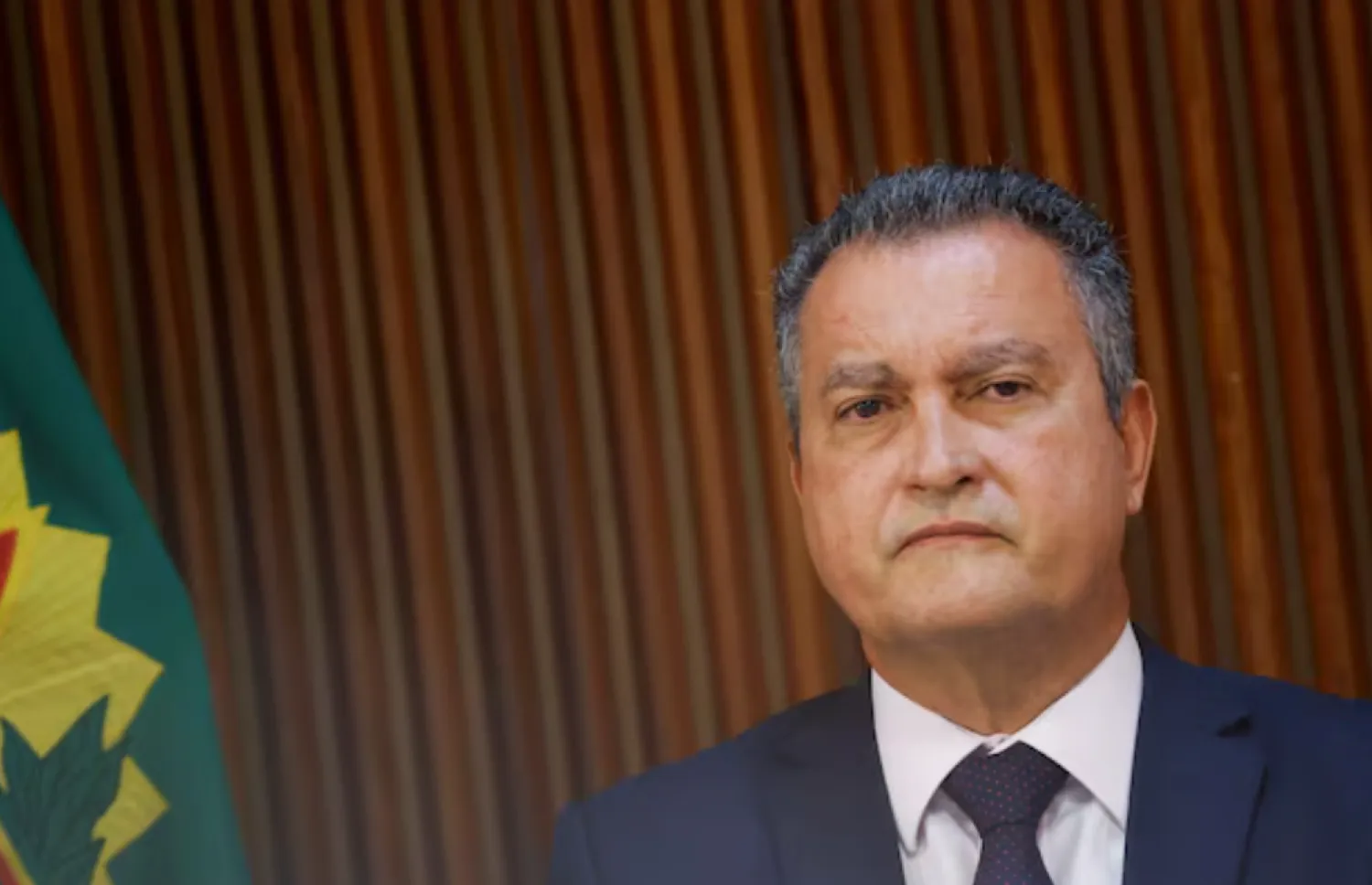
Brazil's new Chief of Staff of the Presidency Rui Costa attends a ministerial meeting at the Planalto Palace in Brasilia, Brazil January 6, 2023. REUTERS/Adriano Machado
TT

Brazil to Get Satellite Internet from Chinese Rival to Starlink in 2026

Brazil's new Chief of Staff of the Presidency Rui Costa attends a ministerial meeting at the Planalto Palace in Brasilia, Brazil January 6, 2023. REUTERS/Adriano Machado

Chinese low Earth orbit satellite company SpaceSail will start providing internet access to remote areas in Brazil in the first half of 2026, President Luiz Inacio Lula da Silva's chief of staff, Rui Costa, said on Wednesday, Reuters reported.

SpaceSail and Brazil's state-owned telecom Telebras had signed a memorandum of understanding in late 2024 to offer satellite internet services for schools, hospitals and other essential services in the South American country.

SpaceSail competes directly with Elon Musk's Starlink in the satellite internet market.


Google Launches First Ever Co-branded Credit Card in India

FILE PHOTO: A Google logo is seen at a company research facility in Mountain View, California, US, May 13, 2025. REUTERS/Carlos Barria/File Photo
TT

Google Launches First Ever Co-branded Credit Card in India

FILE PHOTO: A Google logo is seen at a company research facility in Mountain View, California, US, May 13, 2025. REUTERS/Carlos Barria/File Photo

Alphabet Inc's Google Pay launched its first co-branded digital credit card in India on Wednesday in partnership with Axis Bank, intensifying efforts to monetize its massive user base in the country's crowded fintech sector.

WHY IT'S IMPORTANT

While Google Pay is a dominant player in India's popular domestic payments network, the Unified Payments Interface (UPI), its core service generates zero revenue from user-to-user payments due to government mandates. It, however, earns commissions for in-app services like bill payments and mobile recharges, Reuters reported.

The credit card launch opens a new avenue for Google to monetize its user base, mirroring strategies by domestic rivals Paytm and PhonePe to cross-sell lending products to payment users.

BY THE NUMBERS

India has just 50 million credit card holders, according to Google Pay, whereas its population exceeds 1.4 billion.

Google Pay meanwhile is the second top app in India by number of UPI transactions, having processed nearly 7.2 billion transactions in October alone.

HOW IT WORKS

Axis Bank manages the credit risk and issuance, while the digital-only card will be linked to the Google Pay app to make online and offline payments on the go.


UK Looks to Restart Cooperation after US Suspends Tech Deal

Pedestrians walk across Westminster Bridge as early morning fog covers the streets of London on December 17, 2025. (Photo by JUSTIN TALLIS / AFP)
TT

UK Looks to Restart Cooperation after US Suspends Tech Deal

Pedestrians walk across Westminster Bridge as early morning fog covers the streets of London on December 17, 2025. (Photo by JUSTIN TALLIS / AFP)

The UK government on Wednesday said it was focused on resuming talks promptly after the United States suspended implementation of a tech cooperation deal with Britain.

The deal was signed during US President Donald Trump's pomp-filled state visit to the UK in September.

But on Tuesday Michael Kratsios, head of the White House Office of Science and Technology Policy, said on X that the UK must make "substantial progress" on trade talks for the deal to resume.

The US and UK have been trying to implement the "Economic Prosperity Deal," agreed in May and one of the first international agreements signed after Trump threatened the world with punishing tariffs on goods entering the United States.

The US-UK Technology Prosperity Deal agreed in September 2025 was a non-binding agreement to sit alongside the broader Economic Prosperity Deal.

It was designed to align the two countries on tech innovation while spurring mostly private-sector investment, Agence France Presse reported.

Following the White House announcement, a UK government spokesperson said: "We look forward to resuming work on this partnership as quickly as possible... and working together to help shape the emerging technologies of the future."

Business and Trade Secretary Peter Kyle held trade talks with US counterparts in Washington DC last week to progress the Economic Prosperity Deal, the spokesperson said.

"They celebrated the success of the recent pharma deal and both sides agreed to continue further negotiations next year."

According to the Financial Times, US officials have become increasingly frustrated with Britain's lack of willingness to address non-tariff barriers, including rules and regulations governing food and industrial goods.


With Freebies, OpenAI, Google Vie for Indian Users and Training Data

FILE PHOTO: A message reading "AI artificial intelligence", a keyboard, and robot hands are seen in this illustration taken January 27, 2025. REUTERS/Dado Ruvic/Illustration/File Photo
TT

With Freebies, OpenAI, Google Vie for Indian Users and Training Data

FILE PHOTO: A message reading "AI artificial intelligence", a keyboard, and robot hands are seen in this illustration taken January 27, 2025. REUTERS/Dado Ruvic/Illustration/File Photo

OpenAI, Google and Perplexity have begun an unprecedented fight for artificial intelligence users in India, rolling out freebies in a strategy seen as a way to harvest troves of multilingual training data in the world's most populous nation.

India is the second-biggest smartphone market with 730 million devices. On average, Indians consume 21 gigabytes of data each month, paying 9.2 cents per gigabyte, one of the world's lowest mobile data rates. To lure price-conscious users, Google in November started giving its $400 Gemini AI Pro subscription for free for 18 months to 500 million customers of Reliance Jio, India's biggest telecom player.

Last week, it added India to dozens of countries where it is offering its heavily discounted "AI Plus" package. OpenAI has also made its ChatGPT Go plan, which offers extended but not unlimited usage compared with existing plans, free for a year.

The plan incurs charges in more than 100 countries and was $54 in India before being made free to everyone in the country in November, Reuters reported.

Just like Google's AI Pro, the free package is only available in India.

Early download data suggests a jump in usage due to the free plans, with daily active users of ChatGPT in India surging 607% year-on-year to 73 million as of last week - more than double the number in the US, according to data from market intelligence firm Sensor Tower compiled for Reuters.

Gemini's daily users in India rose 15% from when it launched the Reliance Jio offer in November to touch 17 million last week, compared to 3 million in the US, the data showed.

Perplexity, meanwhile, has made its Pro tool - priced at $200 a year globally - free for a year for users of Indian telecom company Airtel. It says the plan gives unlimited access to its most advanced research tools.

India now accounts for more than a third of Perplexity's global daily active users, up from just 7% last year, Sensor Tower data showed. OpenAI, Perplexity and Google did not respond to Reuters requests for comment.

TRAINING FILLS DATA GAPS
OpenAI's India executive, Pragya Misra, has said on social media the company's decision to make ChatGPT Go free was part of its "continued India-first commitment" and to make tools more accessible to everyone.

Five AI analysts, however, said the freebies strategy would help companies gain from India's linguistic diversity to secure crucial data for AI training.

They view the training data generated by Indian users, characterized by a mix of languages and dialects, as a critical stress test that will help AI models master complex communication patterns that are largely absent from the existing data. Free plans "fill gaps in AI training data sets that currently lack information on user behavior patterns in the region," said Sagar Vishnoi, co-founder at AI think tank Future Shift Labs.

FREEBIES WORK IN INDIA, OFTEN
Indian billionaire Mukesh Ambani's Reliance, which has partnered with Gemini, has repeatedly used aggressive pricing to boost its customer base. Its telecom unit now has more than 500 million users, after luring customers at its 2016 launch with months of free data and voice services.

Reliance and Disney offered cricket streaming for free on their India platforms, before merging their India media operations.

ChatGPT is seeing high app usage -- with 46% of its monthly users opening the app daily in India in November, compared to 20% for Perplexity and 14% for Gemini, Sensor Tower's data showed.

Anees Hassan, a PhD student in Hyderabad, is using the free ChatGPT and Gemini plans for three hours a day to find citations, refine his writing and generate images for presentations.

"The free plan was not good enough as I used to hit chat limit caps faster," said Hassan, 33.

Still, he is also aware that freebies sometimes come with costs.

"I am concerned about data harvesting, so I have used the opt-out feature to stop sharing my data for AI training," he added.