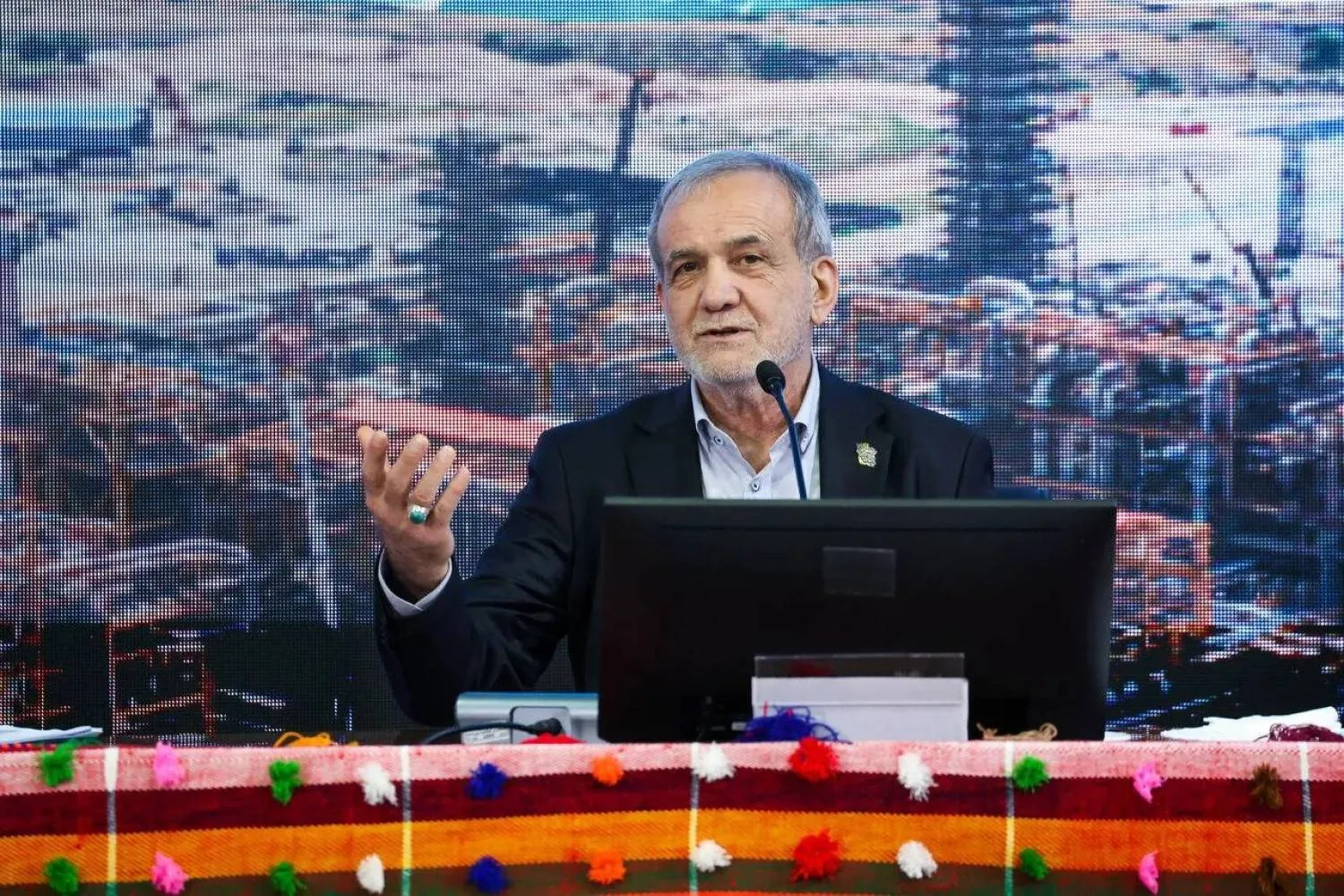

Iranian President Masoud Pezeshkian rejected “humiliating conditions” set by the US for resuming nuclear talks, warning against any attempts to exert coercion, bullying, or any process that undermines Iran’s military capacities in the face of Israel.
At a meeting with a group of political elites, prominent figures and secretaries of parties, held Wednesday evening in Tehran, the President said Iran seeks peace but will not accept humiliating impositions.
“Iran had previously negotiated with the United States and had been ready to reach an agreement, but Washington disrupted the deal by resorting to war,” he noted.
Pezeshkian added, “Now, the US is proposing humiliating conditions for the resumption of talks,” which he said Iran is not prepared to accept. “Iran will not submit to humiliation nor accept a weak and fragmented country.”
Iran had passed a law last July to suspend its cooperation with the IAEA, denying UN inspectors access into the country. The suspension came after US and Israeli airstrikes targeted Iran’s nuclear facilities on June 22.
The Iranian President affirmed that his country does not seek confrontation, noting that Tehran has repeatedly declared it is not pursuing the construction of a nuclear bomb and is ready for any form of verification.
Washington had set conditions for the resumption of talks with Iran. The US has insisted that Iran must completely halt its uranium enrichment program. Tehran rejected Washington’s demands, describing them as an “unacceptable infringements on its national sovereignty.”
Speaking on Thursday during a visit to South Khorasan province, Pezeshkian urged national unity to overcome the country’s difficulties and problems.
“If the Muslim communities were united, and rejected differences and conflicts, Israel would not have committed all these atrocities and crimes in the region,” he said.
IRGC Spokesperson
Commenting on the June war with Israel, a spokesperson for the Iranian Revolution Guards Corps (IRGC) said Iran had built up a complete intelligence database on Israeli targets prior to the 12‑day war, enabling Iranian missiles to strike with precise accuracy.
Brigadier General Mohammad Naeini said “based on intelligence collected from within the Israeli occupied territory, Iranian missile strikes destroyed 47 strategic centers, several science and technology parks, and two power plants.”
He said nearly 80% of Iran’s counterstrikes during the war relied on intelligence gathered in previous years, without which the operations would not have been possible.
Araghchi’s Visit to Russia
Amid a crisis in Iran’s relations with the International Atomic Energy Agency (IAEA) and ongoing disagreements with the West over the nuclear deal, Iranian Foreign Minister Abbas Araghchi kicked off a visit on Tuesday to Moscow, where he held talks with his counterpart, Sergei Lavrov.
Prior to Araghchi’s visit, the Russian diplomat had affirmed the need for the IAEA to fully comply with neutrality when dealing with Iran.
On Wednesday, the foreign ministers inked a cooperation document, which comes following the entry into force of a comprehensive strategic partnership treaty ratified by the Russian parliament and president over the summer, and formally adopted in Iran in early October.
On Thursday, Araghchi wrote on X: “Building on our Strategic Partnership Treaty, Iran and Russia's foreign ministries have agreed on a three-year roadmap to regularize and elevate our cooperation and coordination.”
He added that closer collaboration between Moscow and Tehran will enable stronger action against unlawful Western sanctions, promote regional stability, advance infrastructure projects, and block illegal measures in the UN Security Council.