Miami Talks Aim to Bridge Gaps in Gaza Deal’s Second Phase

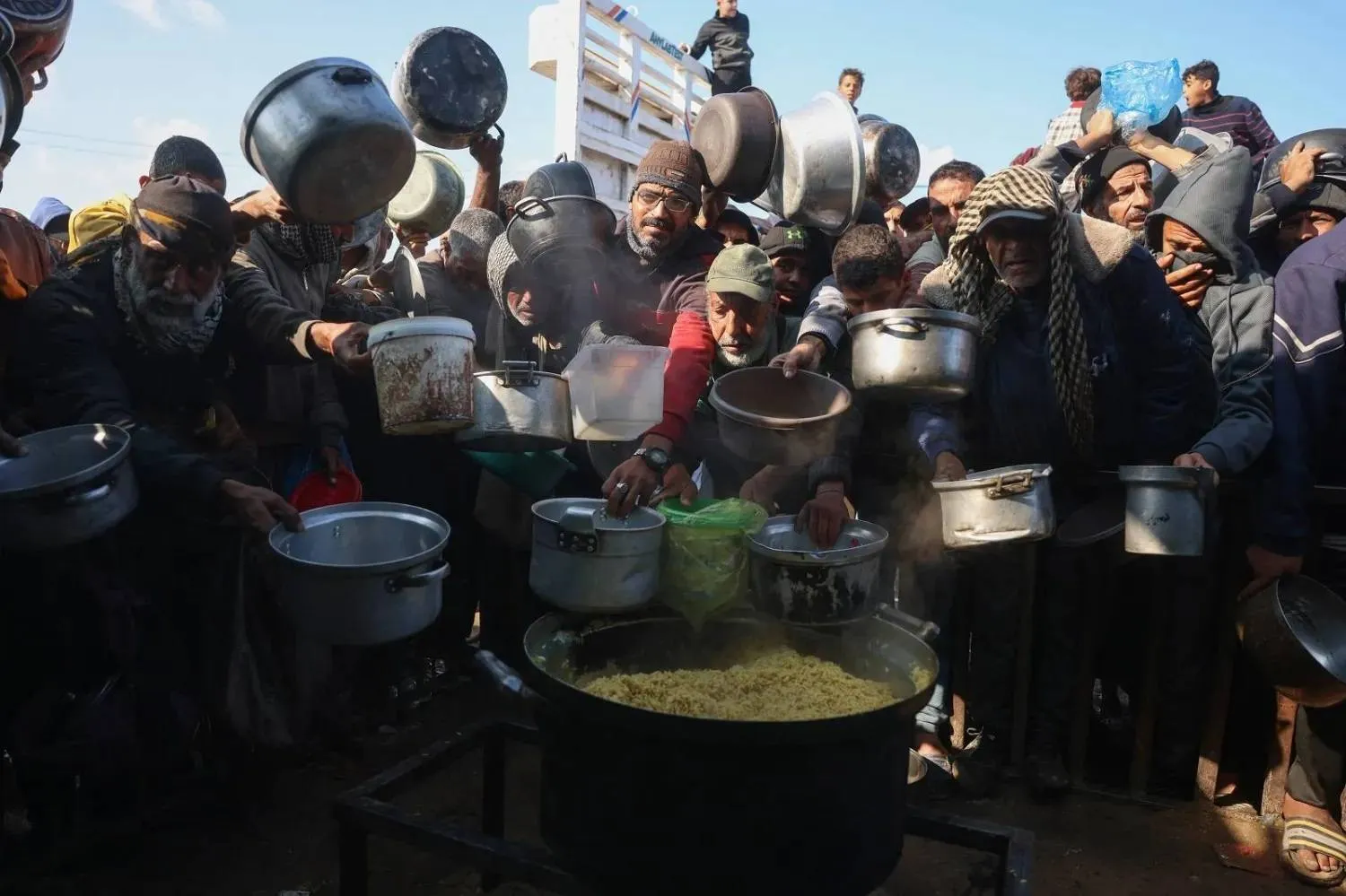
Displaced Palestinians gather to receive food rations at a charity kitchen in Khan Younis, southern Gaza (AFP)
TT

Miami Talks Aim to Bridge Gaps in Gaza Deal’s Second Phase

Displaced Palestinians gather to receive food rations at a charity kitchen in Khan Younis, southern Gaza (AFP)

Mediators are convening for fresh talks in Miami, Florida, as efforts to advance the second phase of the Gaza ceasefire agreement remain stalled, months after the truce came into effect on Oct. 10.

The meeting, which mediators say will focus on outlining a framework for the next phase, comes amid attempts to narrow gaps over key issues, including how Israel’s withdrawal would be carried out, how stabilization forces would be deployed, and the question of Hamas’ disarmament.

An analyst said the momentum could translate into concrete steps as early as next month.

Miami is hosting a meeting between US President’s Special Envoy Steve Witkoff and senior officials from the mediating countries, Qatar, Egypt and Türkiye, aimed at pushing forward the second phase of the ceasefire agreement, a White House official told AFP on Thursday.

Qatari Prime Minister Sheikh Mohammed bin Abdulrahman Al Thani said during a visit to Washington on Wednesday that preparations were under way for a mediators’ meeting on Friday to discuss a framework for advancing the second phase of the Gaza agreement.

Ahead of the Miami talks, Hamas political bureau member Bassem Naim said in remarks that Palestinians expected the talks to result in an agreement to halt all Israeli violations and breaches, and to compel Israel to comply with the provisions of the Sharm el-Sheikh agreement.

Palestinian political analyst Ayman Al-Raqab said the Miami meeting fell within efforts to bridge gaps related to the implementation of Israel’s withdrawal, the deployment of stabilization forces and Hamas’ disarmament. If the momentum continued, he said, concrete steps could be seen next month.

He told Asharq Al-Awsat that Washington’s approach at the Miami meeting should focus on implementing the agreement rather than rebuilding Rafah in a new form or dividing the Gaza Strip.

He said the gaps in the second phase were linked to Israel’s withdrawal, the deployment of stabilization forces and Hamas’ disarmament, adding that discussions should center on practical implementation solutions, not US proposals that serve Israeli ideas.

Egyptian Foreign Minister Badr Abdelatty stressed on Friday, during talks with his Russian counterpart Sergei Lavrov in Cairo, the need to implement UN Security Council Resolution 2803 on the Gaza agreement and to operate the Rafah crossing from both directions.

Lavrov said diplomatic efforts must continue to ensure the sustainability of the Gaza ceasefire.

Abdelatty also discussed the situation with Algerian Foreign Minister Ahmed Attaf in Cairo on Friday, reviewing ongoing Egyptian efforts to solidify and sustain the ceasefire and to implement the requirements of the second phase.

They stressed the need for unimpeded humanitarian aid access, preparing conditions for early recovery and reconstruction, and rejecting any measures that could undermine the unity of Palestinian territory or liquidate the Palestinian cause, according to a statement by Egypt’s Foreign Ministry.

The European Council welcomed, at the conclusion of a summit of leaders from the European Union’s 27 member states in Brussels, UN Security Council Resolution 2803, which calls for the establishment of a Board of Peace and a temporary international stabilization force as part of a plan to end the conflict in Gaza.

European leaders stressed the need to fully implement the resolution and ensure lasting security stability in Gaza, reiterating the EU’s commitment to a two-state solution and international law.

Al-Raqab said Egyptian efforts were banking on achieving a breakthrough alongside Qatar and Türkiye, reaching concrete mechanisms to implement the agreement amid European support for this path.

He added that any arrangements were awaiting a meeting between Israeli Prime Minister Benjamin Netanyahu and US President Donald Trump later this month, describing it as decisive.


53 Killed, More Than 200 Wounded in Houthi Missile Strike on Security Camp in Shabwa

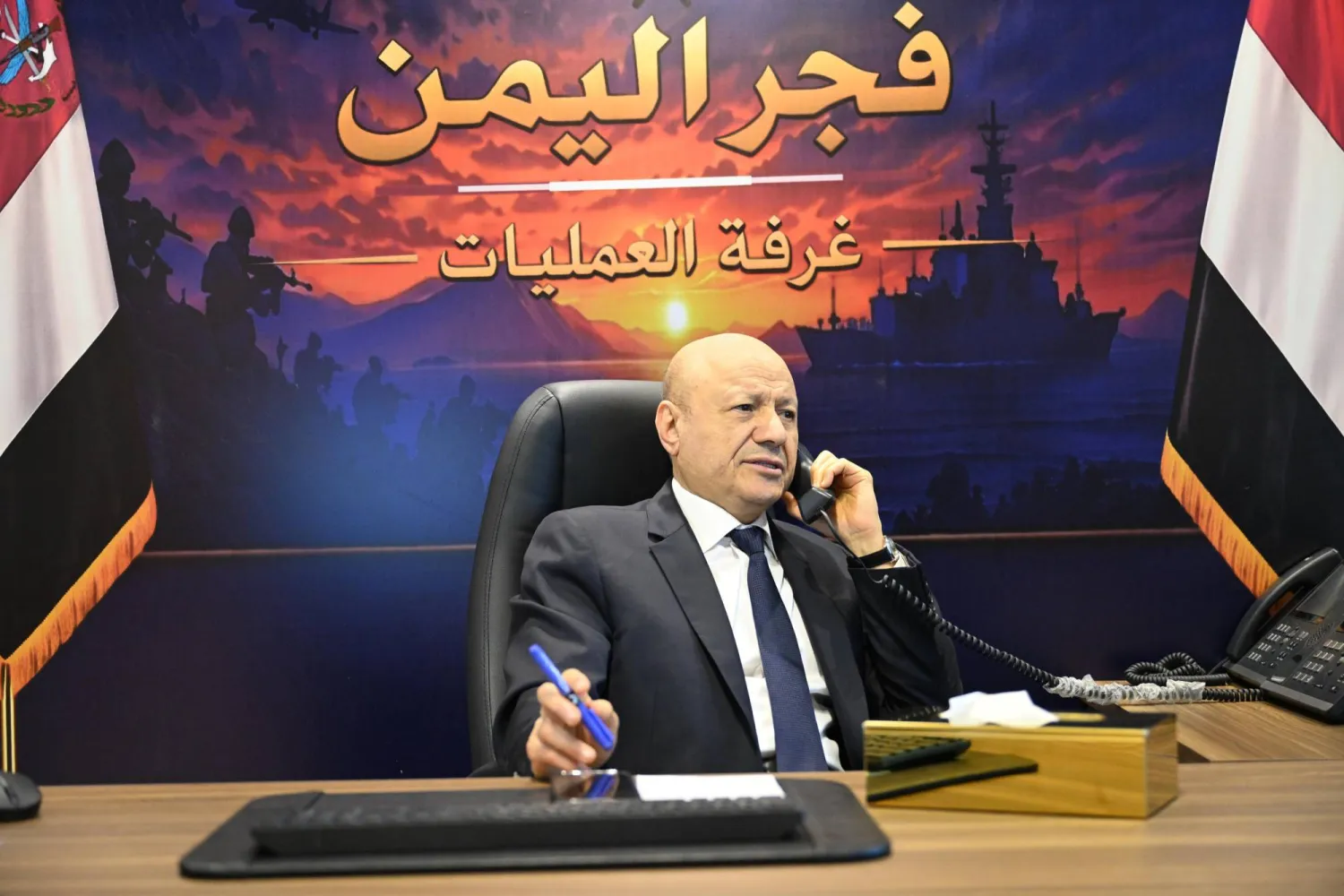
Yemeni Presidential Leadership Council Chairman Rashad al-Alimi (SABA)
TT

53 Killed, More Than 200 Wounded in Houthi Missile Strike on Security Camp in Shabwa

Yemeni Presidential Leadership Council Chairman Rashad al-Alimi (SABA)

The death toll from Monday's Houthi missile attack on a training center for recruits in Yemen's southeastern Shabwa province has risen to 53, with more than 200 wounded, according to preliminary figures released by local authorities. The strike was one of the deadliest attacks targeting security personnel in the province.

Three ballistic missiles struck the Martyr Ahmed Al-Sulaimani Training Center on the outskirts of Ataq, the provincial capital, while new internal security recruits were undergoing training and qualification programs, according to a statement from the local authorities.

The authorities announced that those killed would be officially recognized as having died in the line of duty, with their salaries permanently allocated to their families. They also pledged to safeguard the rights and financial entitlements of the wounded and ensure their payment without delay, while mobilizing the necessary resources to provide medical care.

As part of the emergency medical response, local authorities ordered the General Authority Hospital, the Maternity and Childhood Hospital, and private hospitals to raise their readiness levels, ensure adequate supplies of medicines and emergency medical equipment, and transfer critically injured patients to specialized medical centers when necessary.

They also praised Shabwa residents for turning out to donate blood and support the wounded.

Local authorities held the Iran-backed Houthi group fully responsible for the attack and the resulting casualties, describing the targeting of recruits during training as an extremely serious military escalation. They called for urgent measures to protect military and security facilities and their personnel.

Meanwhile, Yemeni Presidential Leadership Council Chairman Rashad al-Alimi was briefed on developments during a telephone call with Shabwa Governor Awad bin Al-Wazir.

Al-Alimi instructed the relevant authorities to provide necessary medical treatment to the wounded, care for the families of those killed, complete procedures to settle their entitlements and ensure payment of their salaries, and take the necessary measures to respond firmly to the sources of the attack.

He said the targeting of recruits reflected what he described as the Houthis' tendency to resort to attacks whenever they faced pressure or setbacks in plans backed by the Iranian regime.

Al-Alimi stressed that such attacks would not deter the state from fulfilling its responsibilities to protect citizens and restore national institutions.

He also vowed that the victims' deaths would not go unanswered, emphasizing that caring for their families and honoring their sacrifices was a national responsibility.

Earlier, a spokesperson for Yemeni government forces had announced that three ballistic missiles struck a training center for security and police personnel in Shabwa, before local authorities released the preliminary casualty toll of 53 killed and more than 200 wounded.


Beijing Ready to Cooperate with Yemen in Investigating Reports of Military Components Supplied to Houthis

Shao Zheng affirmed that China is closely monitoring recent military developments in Yemen (Photo: Naif Al-Otaibi)
TT

Beijing Ready to Cooperate with Yemen in Investigating Reports of Military Components Supplied to Houthis

Shao Zheng affirmed that China is closely monitoring recent military developments in Yemen (Photo: Naif Al-Otaibi)

Shao Zheng, chargé d'affaires of the Chinese Embassy to Yemen, rejected reports that equipment and components linked to the Houthi group's missile programs had been supplied by Chinese companies, dismissing the allegations as baseless.

He stressed that Beijing maintains strict controls on exports of dual-use materials and complies with relevant UN Security Council resolutions.

In an interview with Asharq Al-Awsat, Shao said China was prepared to receive any information or reports provided by the Yemeni government concerning the allegations and conduct a comprehensive investigation.

He explained that Beijing had repeatedly informed the Yemeni government of its willingness to examine any evidence or reports related to the matter and investigate them thoroughly.

The Chinese diplomat also said his country was closely monitoring military developments in Yemen and continued to support the internationally recognized Yemeni government, as well as the country's sovereignty, territorial integrity and national unity.

He urged the Houthis to abandon military action and return to peaceful dialogue.

China-Yemen Relations

Shao said China and Yemen are celebrating the 70th anniversary of their diplomatic relations this year, noting that Beijing is working to strengthen exchanges and cooperation with Yemen in political, economic, cultural, educational, scientific and other fields.

He described Yemen as a close friend, brotherly nation and valued partner, expressing China's readiness to build on seven decades of diplomatic relations to deepen cooperation across various sectors.

The two countries recently organized several events to mark the anniversary, including seminars, interviews and press conferences.

Shao noted that many Yemenis, including government officials, had praised bilateral relations, with some describing the friendship between China and Yemen as deeper than the ocean and higher than the mountains.

He expressed hope that relations would continue to grow stronger.

Coordination with the Yemeni Government

Shao described coordination between China and the Yemeni government as excellent, noting that communication and exchanges between the two sides continue through correspondence, telephone calls and official visits.

He said China had recently hosted several Yemeni officials, including the interior minister, who spent 10 days in the country discussing ways to strengthen cooperation in public security.

A delegation of approximately 10 Yemeni government officials is also scheduled to visit China later this month, with Beijing having prepared a comprehensive program for the visit.

Turning to student exchanges, Shao said a group of around 10 Yemeni students from the University of Aden and other universities visited China last month.

During their visit, the students learned about developments in the country, met Chinese counterparts and toured artificial intelligence centers and Chinese universities.

He said they showed considerable interest in what they saw.

Military Developments in Yemen

Shao said China was closely following recent developments in Yemen, noting that events had accelerated significantly over the past several months, with new developments emerging almost daily.

He reaffirmed Beijing's consistent support for the internationally recognized Yemeni government, as well as Yemen's sovereignty, territorial integrity and national unity, stressing that China would maintain this position.

Navigation in the Red Sea and Bab el-Mandeb

Shao emphasized China's opposition to attacks on vessels in the Red Sea and the Bab el-Mandeb Strait, stressing the importance of ensuring the uninterrupted flow of international trade and supplies.

He said Beijing supports freedom of navigation in both waterways and hopes to see an end to the war in Yemen, which has lasted nearly 12 years.

The Yemeni people have suffered greatly throughout the conflict, he said, adding that China is providing additional humanitarian assistance and hopes for de-escalation and an eventual peaceful settlement.

Shao reaffirmed China's commitment to safe passage for vessels through Bab el-Mandeb and the Red Sea, as well as other strategic waterways, including the Strait of Hormuz.

He noted that Beijing had repeatedly emphasized, both at the UN Security Council and in regional forums, the need to prevent attacks on shipping.

Shao said approximately 10 percent of international trade passes through the Bab el-Mandeb Strait, including shipments of gas, oil, fertilizers and grain.

Many developing countries depend on these essential commodities, particularly fertilizers needed for agricultural production, he explained.

He stressed that China is working with other countries to protect trade flows and maritime navigation.

Attacks on Civilians in Saudi Arabia

Shao also conveyed China's condemnation of attacks targeting airports and other similar facilities in Saudi Arabia. He called for de-escalation and urged all parties to take steps to prevent further tensions in the region and beyond.

He reaffirmed Beijing's support for peaceful dialogue and a political settlement to achieve regional peace and stability.

Contacts with the Houthis

Asked whether China maintains any contact with the Houthis, Shao emphasized Beijing's support for the internationally recognized Yemeni government, Presidential Leadership Council Chairman Rashad al-Alimi, the council itself, the prime minister and the new government formed earlier this year.

He said China was calling on all Yemeni parties to return to the negotiating table and urging the Houthis to abandon military action in favor of peaceful dialogue.

Shao stressed that China's efforts remain focused on reducing tensions, restoring peace and stability, and helping Yemen return to calm as soon as possible.

Reports of Chinese Equipment Reaching the Houthis

Responding to reports that Chinese suppliers had provided the Houthis with equipment and components associated with military applications, Shao said Beijing strictly regulates exports of dual-use materials and goods.

He stressed that China complies with UN Security Council Resolution 2216 and other relevant resolutions.

Shao rejected the allegations against China as entirely unfounded, insisting that the country's strict export controls meant the claims would not withstand scrutiny.

Asked whether Beijing had discussed the issue with the Yemeni government, he said communication and exchanges between the two sides were continuing at various levels.

He explained that China had made its position on controlling exports of such goods clear to the Yemeni authorities and would continue enforcing its regulations.

Shao reiterated China's readiness to investigate any information submitted by the Yemeni government, saying Beijing would welcome relevant materials or reports and conduct a comprehensive investigation into their contents.

He also denied that any Chinese personnel were stationed in Sanaa.

China withdrew all its diplomats from the city after the war broke out in 2015, he explained, and the embassy has since operated from temporary premises in Riyadh.

Chinese Projects in Yemen

Shao said China has undertaken numerous development and humanitarian projects in Yemen, with approximately 100 such projects in place before the war.

He revealed that Beijing signed a new development assistance agreement earlier this year, providing the Yemeni government with an additional grant of 50 million yuan, building on previous commitments.

China is also working to provide further investments and assistance, he said.

Shao noted that he had held discussions with several Yemeni ministers and officials, including representatives of the Interior Ministry, to explore ways of strengthening the ministry's capabilities and improving working conditions in public security.

He also highlighted China's announcement that it would apply zero tariffs to all Yemeni exports, allowing Yemeni products, including fisheries products, to enter the Chinese market directly.

On education, Shao said China encourages Yemeni students to pursue their studies at Chinese institutions.

Approximately 6,500 Yemeni students are currently studying in China, he said, adding that Beijing is offering additional scholarships.

Coordination with Saudi Arabia

Shao confirmed that he maintains frequent contact and exchanges with Saudi Ambassador to Yemen Mohammed Al-Jaber.

He said the two diplomats meet regularly and communicate by telephone whenever necessary, describing their relationship as one of friendship and partnership.

Shao expressed hope that China and Saudi Arabia could cooperate in helping Yemen rebuild and achieve lasting peace and stability as soon as possible.

He praised Saudi Arabia's efforts to assist the Yemeni people, including the construction of schools, hospitals, bridges and other development projects.

The Chinese diplomat said his country possesses extensive expertise in reconstruction and development, noting that discussions with the Saudi side have included the possibility of implementing solar energy projects and other initiatives.

He added that trilateral cooperation involving China, Saudi Arabia and Yemen could provide an opportunity to explore a wide range of development projects.


UN Experts Urge Israel to Protect West Bank Olive Farmers

Palestinian volunteers douse an olive tree set on fire by Israeli settlers, near the village of Turmus Ayya, north of Ramallah, in the Israeli-occupied West Bank on October 16, 2026.  Ahmad Gharabli, AFP
Palestinian volunteers douse an olive tree set on fire by Israeli settlers, near the village of Turmus Ayya, north of Ramallah, in the Israeli-occupied West Bank on October 16, 2026. Ahmad Gharabli, AFP
TT

UN Experts Urge Israel to Protect West Bank Olive Farmers

Palestinian volunteers douse an olive tree set on fire by Israeli settlers, near the village of Turmus Ayya, north of Ramallah, in the Israeli-occupied West Bank on October 16, 2026.  Ahmad Gharabli, AFP
Palestinian volunteers douse an olive tree set on fire by Israeli settlers, near the village of Turmus Ayya, north of Ramallah, in the Israeli-occupied West Bank on October 16, 2026. Ahmad Gharabli, AFP

UN rights experts on Monday called on Israel to protect Palestinian farmers in the West Bank as settler attacks worsen with the annual olive harvest.

"Palestinian farmers must be protected and able to access their land safely. Yet, year after year, the violence, destruction and restrictions intensify," the experts said in a statement.

"The olive harvest should be a time when farmers can enjoy, in safety and dignity, the food and livelihoods their nature and land provide, not another season of fear, loss, violence and destruction."

The experts urged Israel to ensure that its forces protect Palestinian farmers from settler attacks and refrain from interference with their access to land. They also urged the international community to "exercise maximum pressure to protect Palestinian civilians", reported AFP.

Israel has occupied the West Bank since 1967. About 500,000 Israelis live in the West Bank, alongside three million Palestinians.

Violence is surging in the territory ahead of Israel's bitterly fought October 27 elections. The vote coincides with Palestinians' annual olive harvest which has been repeatedly disrupted by Israeli settlers as Prime Minister Benjamin Netanyahu seeks to shore up his pro-settlement right-wing base.

According to the UN humanitarian agency OCHA, 178 settler attacks related to the 2025 olive harvest were recorded in the West Bank, affecting 88 Palestinian communities.

More than 6,000 trees and saplings were "vandalised", it said -- nearly double the number in 2024 and the highest figure in six years.

"The olive harvest is an essential source of food, income and livelihood for thousands of Palestinian families," the UN experts said.

"Olive trees take years to mature and can sustain families for generations. Their destruction deprives families of far more than a single harvest: it undermines local food systems, cultural practices and ways of life, as well as the right to food and the food sovereignty of Palestinian communities."

The seven signatories to the statement include Sofia Monsalve Suarez, special rapporteur on the right to food; and Francesca Albanese, special rapporteur on human rights in the occupied Palestinian territories.

The special rapporteurs are independent experts mandated by the Human Rights Council. They do not speak for the United Nations itself.