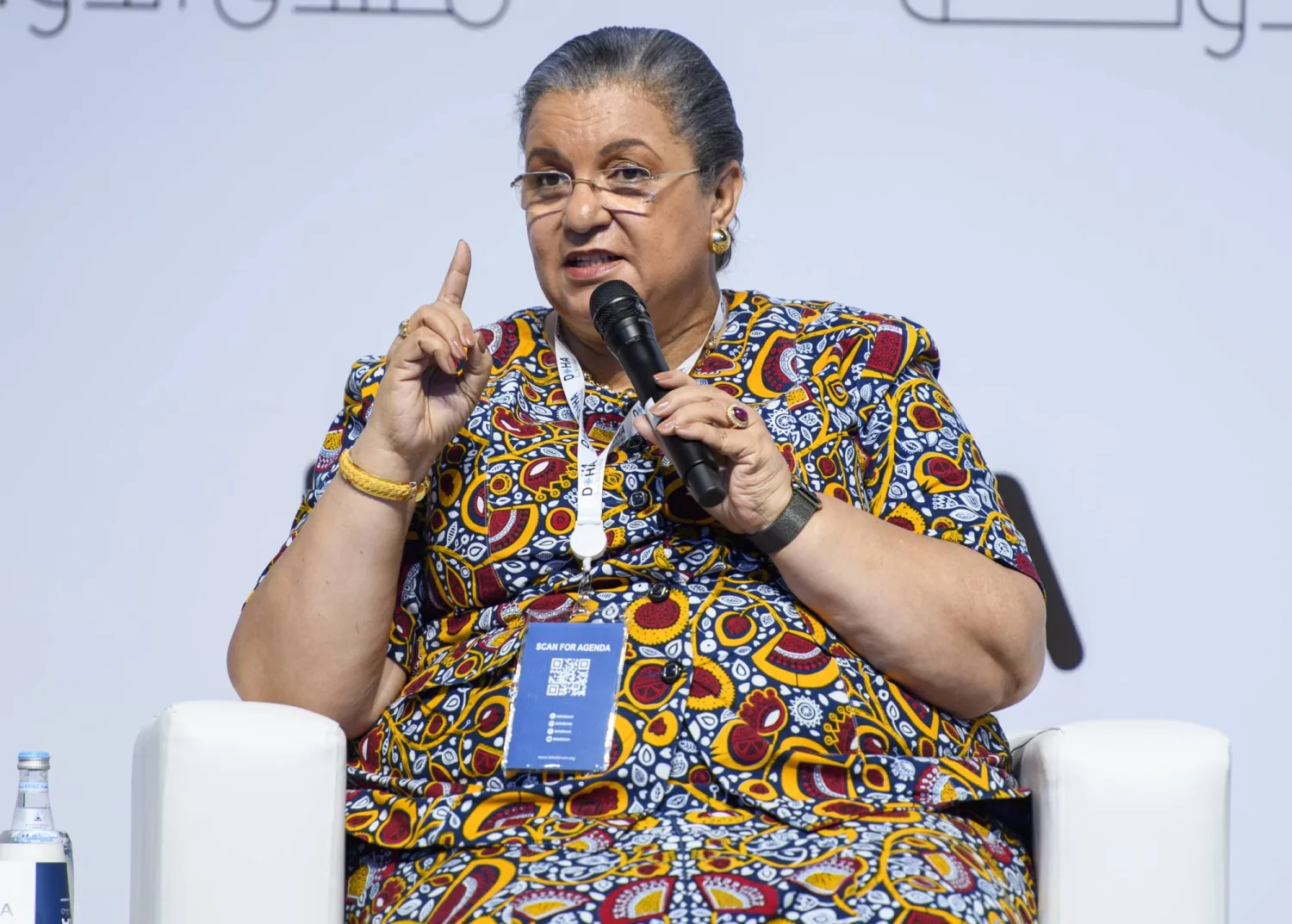

Special Representative of the Secretary-General for Libya and Head of the United Nations Support Mission in Libya Hanna Tetteh has accused Libya’s stakeholders of stalling political progress on the UN-backed roadmap intended to lead the country toward national election.
“Four months have elapsed since I first presented the Roadmap to this Council on 21 August and UNSMIL has been engaging Libyan stakeholders with regard to its implementation, which I admit has been quite challenging,” Tetteh told the Security Council in New York on Friday.
She said efforts to advance electoral preparations had failed to meet agreed timelines, despite repeated engagement with Libya’s rival political bodies.
She recalled that committees from the House of Representatives and the High Council of State had agreed in October to reconstitute the High National Elections Commission within two weeks, but “despite multiple efforts and engagements with these institutions, this did not happen.”
Tetteh said a subsequent agreement signed last November, under UN auspices, established a mechanism to select new HNEC board members, with a deadline of December 11 to finalize the process. That deadline also passed without action.
“It is my assessment that the delays are a manifestation of the lack of trust between the two institutions, their own internal divisions, and the inability to overcome their differences and agree on the way forward to resolve the current impasse,” Tetteh said.
She listed the obstacles facing the amendment of the constitutional and legal framework for elections.
Despite the setbacks, Tetteh highlighted the launch of a new UN-facilitated dialogue process held in Libya earlier this month, describing it as a key component of the roadmap.
On December 14 and 15 “UNSMIL launched the inaugural meeting of the Structured Dialogue which is one of the three core components of the Roadmap,” she said. “This is the first process of this magnitude to be held on Libyan soil.”
She said 124 participants included representatives from sovereign institutions, civil society, political parties, academia and cultural and linguistic groups, alongside other state institutions.
The dialogue aimed to define guiding principles for state-building, formulate political and legislative recommendations covering governance, economy, security, and national reconciliation.
On the economy, Tetteh said Libya's persistent financial fragmentation continues to undermine its dinar.
The UN envoy also said that the security environment in Tripoli has stabilized to a certain extent, however the situation remains fragile with sporadic outbreaks of armed clashes in southern Tripoli and elsewhere.
Tetteh commented on UN Security Council Resolution 2796 (2025) of October 31, which extended UNSMIL’s mandate for one year.
She said UNISMIL formed an internal task force to gradually implement key decisions and recommendations, due to limited resources.