


Israel Says it Is Facing an ‘Existential Threat’ as Iran Builds up its Military Capacities  

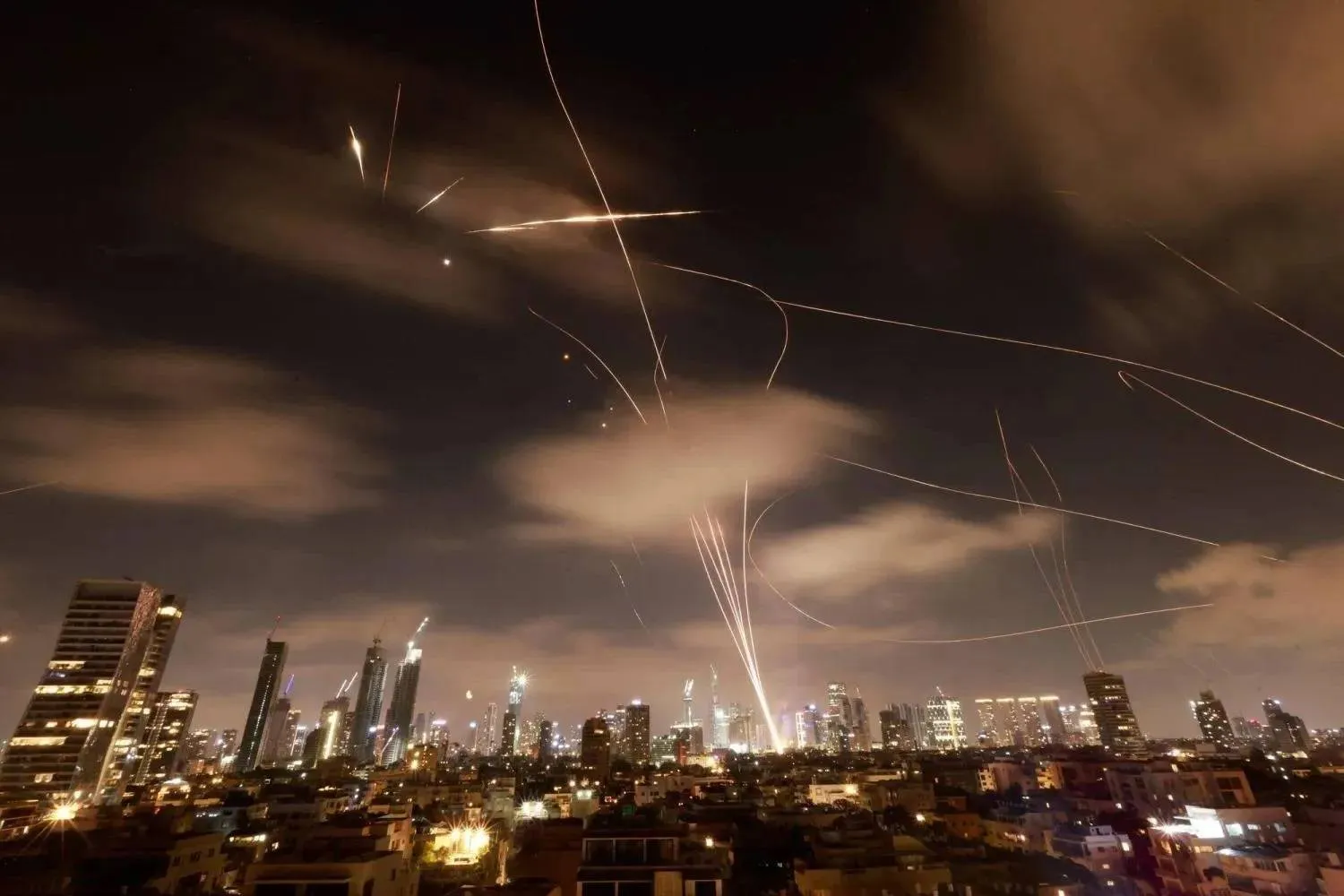
Israeli defenses intercept Iranian missiles over Tel Aviv on June 22. (AFP)
TT

Israel Says it Is Facing an ‘Existential Threat’ as Iran Builds up its Military Capacities  

Israeli defenses intercept Iranian missiles over Tel Aviv on June 22. (AFP)

Iran is making “hysteric” efforts to produce up to 3,000 ballistic missiles per month, Israel's Maariv newspaper reported on Sunday.

“Although such missiles are considered old-fashioned, imprecise, and can be shot down before they reach their targets, the time they reach their targets is enough to cause serious damage,” the newspaper said quoting Israeli security sources.

In an article published in Maariv, writer Anna Persky said Iran is reviving its nuclear program and is resuming the production of ballistic missiles, but not yet its uranium enrichment.

Quoting Israeli security sources, she wrote: “There has been an ongoing movement in recent weeks around the nuclear reactors that were destroyed in the recent Israeli-US attacks on Iran.”

The sources stressed that the Israeli army’s new military doctrine is based on preemptive strikes to prevent threats before they materialize, but at the same time, they did not rule out a preemptive attack from Tehran.

Persky wrote that Iran is restoring facilities related to the production of ballistic missiles and nuclear facilities damaged by strikes during the 12-day war in June.

For Israel, Iran's nuclear program still remains a serious concern.

“Israeli Prime Minister Benjamin Netanyahu plans to present the Iranian threat during his scheduled meeting with US President Donald Trump” on December 29. “He will try to figure out if Trump is willing to participate in a new war against Iran,” she said.

Persky wrote that Netanyahu will present to the US President with a number of alternatives, including an independent Israeli attack with limited US assistance, a joint strike or a full-scale US operation.

“At the meeting, the main issue will not be what Israel wants to do, but what the United States is willing to offer,” she noted.

In Israel, the “inevitability of a war with Iran” was the headline of all Israeli newspapers over the weekend.

“Iran ramps up missile tests and military drills, renews threats toward Israel,” wrote Yedioth Ahronoth in its headline on Sunday.

It said amid recent reports that Tehran is producing ballistic missiles at a rapid pace and in large quantities, Iran has returned to threatening Israel and showcasing its military capabilities, much as it did before the June war.

But Maariv said the war initiative will rather come from Israel, which perceives Iran’s nuclear program as an existential threat.

Israel is worried about missing the current opportunity. “Today, Iran is still in the midst of reconstruction, but tomorrow it will be more protected, more distributed, and its offensive capability will be more expensive and more dangerous,” Persky wrote.



Police Warn Sydney Protesters ahead of Israeli President’s Visit

 01 February 2026, Australia, Sydney: A protester holds a poster during a Free Palestine rally protesting the invitation of Isaac Herzog to Australia at the State Library of Victoria in Melbourne. (Jay Kogler/AAP/dpa)
01 February 2026, Australia, Sydney: A protester holds a poster during a Free Palestine rally protesting the invitation of Isaac Herzog to Australia at the State Library of Victoria in Melbourne. (Jay Kogler/AAP/dpa)
TT

Police Warn Sydney Protesters ahead of Israeli President’s Visit

 01 February 2026, Australia, Sydney: A protester holds a poster during a Free Palestine rally protesting the invitation of Isaac Herzog to Australia at the State Library of Victoria in Melbourne. (Jay Kogler/AAP/dpa)
01 February 2026, Australia, Sydney: A protester holds a poster during a Free Palestine rally protesting the invitation of Isaac Herzog to Australia at the State Library of Victoria in Melbourne. (Jay Kogler/AAP/dpa)

Australian authorities warned protesters to avoid violence in Sydney's streets when Israeli President Isaac Herzog visits on Monday to honor victims of the Bondi Beach mass shooting.

Police say they will deploy in large numbers for the Israeli head of state's visit following the December 14 attack on a Jewish Hanukkah celebration that killed 15 people.

"It's really important that there's no clashes or violence on the streets in Sydney," New South Wales Premier Chris Minns told reporters on Saturday.

"Our clear message is in an unambiguous way that we're hoping that people can remain calm and respectful during that presidential visit."

The state premier promised a "massive policing presence" in Sydney on Monday afternoon.

State police declared the Sydney visit to be a "major event", a designation that allows them to separate different groups to reduce the risk of confrontation.

Herzog has said he will "express solidarity and offer strength" to the Jewish community in Australia during his four-day visit, which starts Monday.

The trip has been welcomed by many Jewish Australians.

"His visit will lift the spirits of a pained community," said Alex Ryvchin, co-chief executive of the Executive Council of Australian Jewry, the community's peak body.

Pro-Palestinian activists have called for protests nationwide, however, including in parts of central Sydney where police have refused to authorize demonstrations under new powers granted after the Bondi Beach attack.

- 'Full immunity' -

Amnesty International Australia has also urged supporters to rally for an end to "genocide" against Palestinians, and urged Herzog be investigated for alleged war crimes.

High-profile Australian human rights lawyer Chris Sidoti -- a member of a UN-established inquiry into rights abuses in Israel and the Palestinian territories -- called this week for Herzog's invitation to be withdrawn, or for his arrest on arrival.

The UN's Independent International Commission of Inquiry found in 2025 that Herzog "incited the commission of genocide" by saying all Palestinians -- "an entire nation" -- were responsible for the Hamas attack on October 7, 2023.

Australia's federal police have ruled out an arrest, with senior officials telling lawmakers this week that they received legal advice Herzog had "full immunity" covering civil and criminal matters, including genocide.

Critics have accused Prime Minister Anthony Albanese's center-left government of moving too slowly to protect Jewish Australians ahead of the Bondi Beach shooting despite a rise in antisemitic attacks since 2023.

Alleged Bondi Beach gunman Sajid Akram, 50, was shot and killed by police during the attack.

An Indian national, he entered Australia on a visa in 1998.

His 24-year-old son Naveed, an Australian-born citizen who remains in prison, has been charged with terrorism and 15 murders.


Cuba to Protect Essential Services as US Moves to Cut Off Oil Supply

 People wait for transportation as Cubans brace for fuel scarcity measures after US tightens oil supply blockade, in Havana, Cuba, February 6, 2026. (Reuters)
People wait for transportation as Cubans brace for fuel scarcity measures after US tightens oil supply blockade, in Havana, Cuba, February 6, 2026. (Reuters)
TT

Cuba to Protect Essential Services as US Moves to Cut Off Oil Supply

 People wait for transportation as Cubans brace for fuel scarcity measures after US tightens oil supply blockade, in Havana, Cuba, February 6, 2026. (Reuters)
People wait for transportation as Cubans brace for fuel scarcity measures after US tightens oil supply blockade, in Havana, Cuba, February 6, 2026. (Reuters)

Cuba detailed a wide-ranging plan on Friday to protect essential services and ration fuel as the communist-run government dug in its heels in defiance of a US effort to cut off oil supply to the Caribbean island.

The rationing measures are the first to be announced since President Donald Trump threatened to slap tariffs on the US-bound products of any country exporting fuel to Cuba and suggested hard times ahead for Cubans already suffering severe shortages of food, fuel ‌and medicine.

Government ‌ministers said the measures would guarantee ‌fuel supply ⁠for key sectors, ‌including agricultural production, education, water supply, healthcare and defense.

Commerce Minister Oscar Perez-Oliva struck a defiant tone as he laid out details of the government plan.

"This is an opportunity and a challenge that we have no doubt we will overcome," Perez-Oliva told a television news program. "We are not going to collapse."

The government will supply fuel to the ⁠tourism and export sectors, including for the production of Cuba's world-famous cigars, to ensure ‌the foreign exchange necessary to fund other basic ‍programs, Perez-Oliva said, adding, "If we ‍don't have income, then we will not overcome this situation."

Domestic ‍and international air travel will not be immediately affected by the fuel rationing, although drivers will see cutbacks at the pump until supply normalizes, he said.

The government said it would protect ports and ensure fuel for domestic transportation in a bid to protect the island nation's import and export sectors.

Perez-Oliva also announced an ambitious ⁠plan to plant 200,000 hectares (500,000 acres) of rice to guarantee "an important part of our demand," but acknowledged fuel shortfalls would push the country to depend more on renewable energy for irrigation needs and animal-power for tilling fields.

Education Minister Naima Ariatne, appearing on the same program, said infant-care centers and primary schools would remain open and in person, but secondary schools and higher education would implement a hybrid system that would require more "flexibility" and vary by institution and region.

"As a priority, we want to leave (open) our primary schools," Ariatne said.

Top officials said ‌health care would also be prioritized, with special emphasis on emergency services, maternity wards and cancer programs.


Trump Signs Order Preparing for Tariffs on Iran’s Trade Partners

A man walks past a mural depicting the US Statue of Liberty with the torch-bearing arm broken, painted on the outer walls of the former US embassy, in Tehran on February 6, 2026. (AFP)
TT

Trump Signs Order Preparing for Tariffs on Iran’s Trade Partners

A man walks past a mural depicting the US Statue of Liberty with the torch-bearing arm broken, painted on the outer walls of the former US embassy, in Tehran on February 6, 2026. (AFP)

US President Donald Trump on Friday signed an executive order threatening tariffs on Iran's trade partners, after he pledged a further round of talks with Tehran next week.

The order, effective from Saturday, called for a fresh "imposition of tariffs" on countries still doing business with Iran.

It comes amid heightened tensions between Washington and Tehran, with an American naval group led by an aircraft carrier in Middle Eastern waters and indirect talks held on Tehran's nuclear program in Oman on Friday.

The levies "may be imposed on goods imported into the United States that are products of any country that directly or indirectly purchases, imports, or otherwise acquires any goods or services from Iran", the order said.

Trump issued a threat of 25 percent tariffs on any country trading with Iran last month.

This order establishes a process for his administration to impose tariffs on goods from those countries.

The rate is to be determined by Secretary of State Marco Rubio, although the order specifies that it could be "for example" 25 percent, the level first mentioned by the US president in mid-January.

Tariffs would affect trade with a number of countries including Russia, Germany, Türkiye and the United Arab Emirates.

More than a quarter of Iran's trade is with China, with $18 billion in imports and $14.5 billion in exports in 2024, according to World Trade Organization data.

The talks on Friday in Muscat, mediated by Oman, were the first between the two foes since the United States joined Israel's war with Iran in June with strikes on nuclear sites.

"We likewise had very good talks on Iran," Trump told reporters on board Air Force One en route to his Mar-a-Lago resort in Florida, adding, "we're going to meet again early next week."

Diplomatic relations between Iran and the US broke down with the 1979 revolution that brought the current government into power after hostages were taken at the US embassy in Tehran for 444 days.

Direct engagement has been rare in the decades since.

Iran remains under an internet blackout amid a harsh government crackdown on economic protests that began in December across the country.

The US-based Human Rights Activists News Agency (HRANA) said Friday it has confirmed 6,505 protesters were killed, as well as 214 members of the security forces and 61 bystanders.