Uber, Lyft to Test Baidu Robotaxis in UK from Next Year 

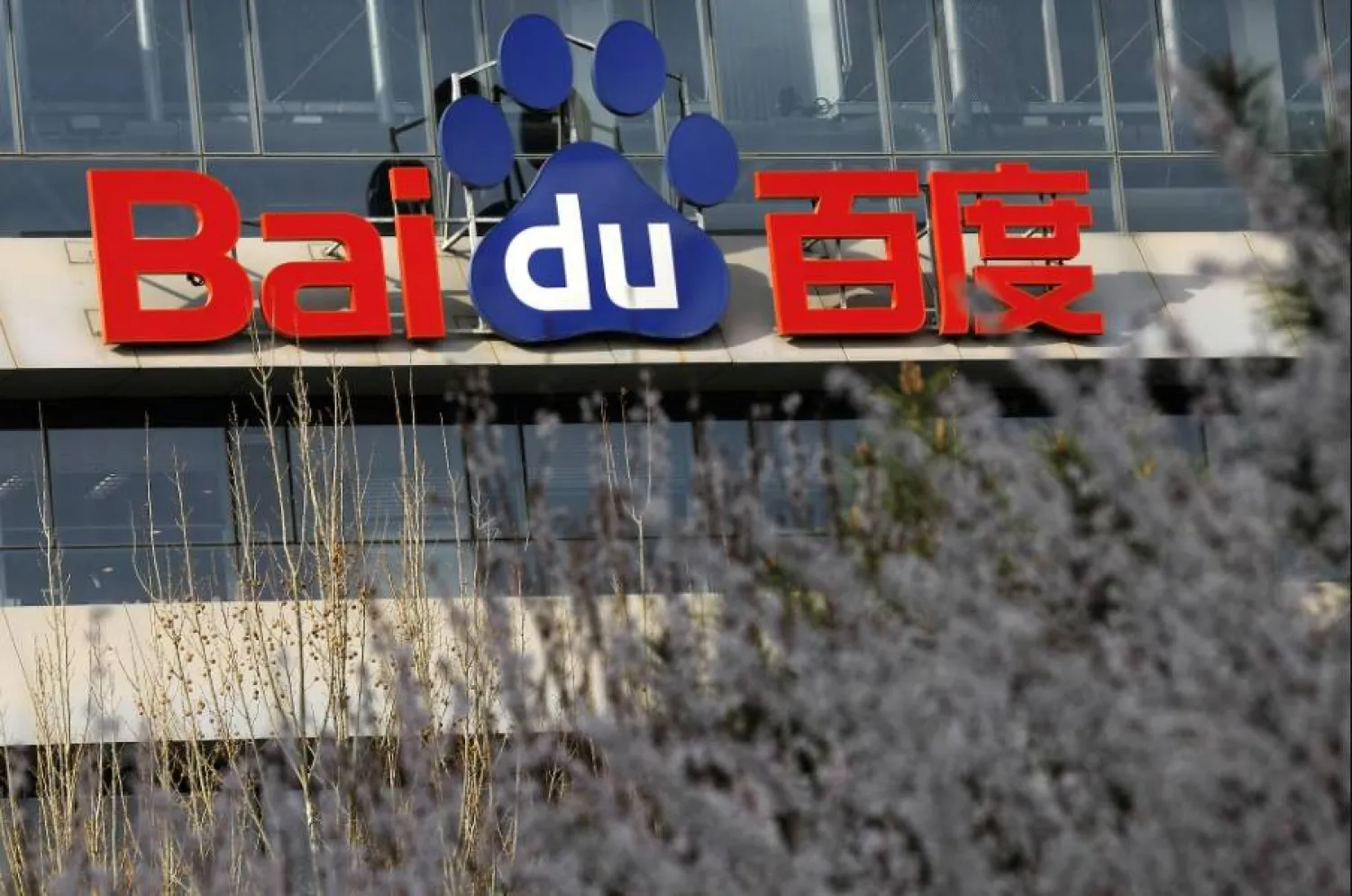
A sign of Baidu is pictured at the company's headquarters in Beijing, China March 16, 2023. (Reuters)
TT

Uber, Lyft to Test Baidu Robotaxis in UK from Next Year 

A sign of Baidu is pictured at the company's headquarters in Beijing, China March 16, 2023. (Reuters)

Uber Technologies and Lyft are teaming up with Chinese tech giant Baidu to try out driverless taxis in the UK next year, marking a major step in the global race to commercialize robotaxis.

It highlights how ride-hailing platforms are accelerating autonomous rollout through partnerships, positioning London as an early proving ground for large-scale robotaxi services ‌in Europe.

Lyft, meanwhile, plans ‌to deploy Baidu's ‌autonomous ⁠vehicles in Germany ‌and the UK under its platform, pending regulatory approval. Both companies have abandoned in-house development of autonomous vehicles and now rely on alliances to accelerate adoption.

The partnerships underscore how global robotaxi rollouts are gaining momentum. ⁠Alphabet's Waymo said in October it would start ‌tests in London this ‍month, while Baidu ‍and WeRide have launched operations in the ‍Middle East and Switzerland.

Robotaxis promise safer, greener and more cost-efficient rides, but profitability remains uncertain. Public companies like Pony.ai and WeRide are still loss-making, and analysts warn the economics of expensive fleets could pressure margins ⁠for platforms such as Uber and Lyft.

Analysts have said hybrid networks, mixing robotaxis with human drivers, may be the most viable model to manage demand peaks and pricing.

Lyft completed its $200 million acquisition of European taxi app FreeNow from BMW and Mercedes-Benz in July, marking its first major expansion beyond North America and ‌giving the US ride-hailing firm access to nine countries across Europe.


Saudi Arabia to Host Fourth UNESCO Global Forum on the Ethics of AI in Riyadh

Buildings are seen in Riyadh, Saudi Arabia, December 18, 2017. REUTERS/Faisal Al Nasser 
TT

Saudi Arabia to Host Fourth UNESCO Global Forum on the Ethics of AI in Riyadh

Buildings are seen in Riyadh, Saudi Arabia, December 18, 2017. REUTERS/Faisal Al Nasser 

The Kingdom of Saudi Arabia, represented by the Saudi Data and AI Authority (SDAIA), and the UNESCO will co-host the fourth edition of the Global Forum on the Ethics of AI, in collaboration with the International Center for AI Research and Ethics (ICAIRE).

The forum will take place in Riyadh from September 14 to 17, 2026, reflecting growing international confidence in Saudi Arabia’s standing and reinforcing its leadership in advancing global efforts toward responsible and ethical AI.

This builds on Saudi Arabia’s continued efforts to strengthen international partnerships with UNESCO and its sustained support for the development of ethical AI frameworks. The International Center for AI Research and Ethics (ICAIRE), a Category 2 Center headquartered in Riyadh under the auspices of UNESCO, plays a pivotal role in advancing international research and policy on AI ethics, SPA reported.

The hosting of the forum reflects Saudi Arabia’s firm commitment to promoting the responsible use of AI and to actively shaping an ethical and inclusive digital future, while also supporting the achievement of the Sustainable Development Goals.

The UNESCO Global Forum on the Ethics of AI serves as a high-level international platform dedicated to addressing the ethical challenges and opportunities associated with the development and use of AI technologies. It brings together leading decision-makers, experts, ministers, and representatives of international organizations from across the globe to support the implementation of relevant international principles and to balance technological advancement with social responsibility.

Saudi Arabia’s hosting of the forum in Riyadh coincides with the designation of 2026 as the Year of Artificial Intelligence, as well as SDAIA’s organization of the fourth edition of the Global AI Summit, scheduled to take place from September 15 to 17, 2026. The summit will be held under the patronage of His Royal Highness Prince Mohammed bin Salman bin Abdulaziz Al Saud, Crown Prince, Prime Minister, and Chairman of SDAIA’s Board of Directors, further reinforcing Riyadh’s position as a leading global destination for major international AI events.


Microsoft Bets Big on AI in Australia with $18 Billion Investment

FILE PHOTO: A Microsoft logo is seen next to a cloud in Los Angeles, California, US June 14, 2016. REUTERS/Lucy Nicholson/File Photo
TT

Microsoft Bets Big on AI in Australia with $18 Billion Investment

FILE PHOTO: A Microsoft logo is seen next to a cloud in Los Angeles, California, US June 14, 2016. REUTERS/Lucy Nicholson/File Photo

Microsoft said on Thursday that it will invest A$25 billion ($17.9 billion) in Australia by the end of 2029 to boost computing and artificial intelligence capacity, betting on growing demand for the technology in the country.

The US tech giant's latest investment reflects rising demand for AI technologies and positions Australia as a key growth market.

According to Reuters, Microsoft said the investment will support the expansion of its Azure AI supercomputing and cloud infrastructure, strengthen cybersecurity and promote AI skills development across the country.

"Australia has an enormous opportunity to translate AI into real economic growth and societal ⁠benefit," Microsoft CEO ⁠Satya Nadella, currently visiting Sydney as part of the company's global AI tour, said in a statement.

He described the initiative as Microsoft's largest investment in Australia to date.

Microsoft and its Big Tech rivals Alphabet, Amazon and Meta will collectively invest about $650 billion to scale up AI-related infrastructure this year, according to Bridgewater Associates.

"This is a serious vote of confidence in Australia as a tier-one AI market," ⁠eToro Analyst Josh Gilbert said.

"For a long time, the AI capex conversation has been a US story, with occasional nods to Japan, Singapore, and even the Middle East. The fact that Microsoft is now putting this kind of capital behind Australia, alongside similar moves across the globe, shows the region is squarely in the AI build-out plan," Gilbert added.

The investment also comes at a time when Microsoft faces growing competition in AI assistants, with its Copilot tool competing against offerings such as Anthropic's Claude and Google's Gemini. The Windows maker has been racing to improve Copilot to drive better adoption.

Microsoft also announced plans to ⁠expand its commercial cloud ⁠and AI, including graphics processing unit offerings, for Australian customers by more than 140% by the end of 2029.

For Microsoft, the investment "is about defending Azure's turf, locking in enterprise customers, and buying distribution in a market where the AI race is still wide open," eToro's Gilbert added.

The latest commitment builds on Microsoft's A$5 billion investment in 2023 aimed at expanding its hyperscale cloud computing and AI infrastructure in Australia.

"More training, better technology and new opportunities for Australians to get ahead. That's what the massive AI investment Microsoft announced today will mean for Australia," Prime Minister Anthony Albanese said in a post on X.

The Australian government welcomed the announcement, and said it will collaborate with Microsoft to forecast infrastructure needs and strengthen the country's energy systems.


Ping-Pong Robot Ace Makes History by Beating Top-Level Human Players

Sony AI autonomous robot Ace returns a shot back against its human opponent, table tennis player Yamato Kawamata, during a match in December 2025, as seen in this photograph released on April 22, 2026. (Sony AI/Handout via Reuters)
TT

Ping-Pong Robot Ace Makes History by Beating Top-Level Human Players

Sony AI autonomous robot Ace returns a shot back against its human opponent, table tennis player Yamato Kawamata, during a match in December 2025, as seen in this photograph released on April 22, 2026. (Sony AI/Handout via Reuters)

An autonomous robot ping-pong player dubbed Ace has achieved a milestone for AI and robotics in Tokyo by competing against and sometimes defeating top-level human players at table tennis, a feat that could presage an array of other applications for similarly adept robots.

Ace, created by the Japanese company Sony's AI research division, is the first robot to attain expert-level performance in a competitive physical sport, one that requires rapid decisions and precision execution, the project's leader said. Ace did so by employing high-speed perception, AI-based control and a state-of-the-art robotic system.

There have been various ping-pong-playing robots since 1983, but until now they were unable to rival highly skilled human competitors. Ace changed that with its performances against human elite-level and professional players in matches following the rules of the International Table Tennis Federation, the sport's governing body, and officiated by licensed umpires.

"Unlike computer games, where prior AI systems surpass human experts, physical and real-time sports such as table tennis remain a major open challenge due to their requirements for fast, precise and adversarial interactions near obstacles and at the edge ‌of human reaction ‌time," said Peter Dürr, director of Sony AI Zurich and leader for Sony AI's project Ace.

The ‌project's ⁠goal was not ⁠only to compete at table tennis but to develop insights into how robots can perceive, plan and act with human-like speed and precision in dynamic environments, Dürr said.

"The success of Ace, with its perception system and learning-based control algorithm, suggests that similar techniques could be applied to other areas requiring fast, real-time control and human interaction - such as manufacturing and service robotics, as well as applications across sports, entertainment and safety-critical physical domains," said Dürr, lead author of a study describing Ace's achievements published on Wednesday in the journal Nature.

In matches detailed in the study, Ace in April 2025 won three out of five versus elite players and lost two matches against professional players, the top skill level in the ⁠sport. Sony AI said that since then Ace beat professional players in December 2025 and last ‌month.

Companies worldwide are making advances with robots. On Sunday, for instance, robots outran human ‌runners in a half-marathon race in Beijing.

'A BLUR TO THE HUMAN EYE'

AI systems already have excelled in digital domains in strategy games such as ‌chess and Go and at complex video games.

While video games take place in simulated environments, table tennis requires rapid decision-making, precise ‌physical execution and continuous adaptation to an unpredictable opponent, Dürr said. The ball moves at high speeds with complex spins and trajectories, pushing humans and robots to operate at the limits of sensing, prediction and motor control, Dürr said.

Ace's architecture integrates nine synchronized cameras and three vision systems to track a spinning ball with exceptional accuracy and speedy processing time.

"This is fast enough to capture motion that would be a blur to the human eye," Dürr ‌said.

The researchers developed a custom robot platform featuring eight joints. This was, Dürr said, the minimum number necessary to execute competitive shots: three for the racket's position, two for its orientation ⁠and three for the shot's speed ⁠and strength.

Mayuka Taira, a professional table tennis player who lost a match to Ace last December, said in comments provided by Sony AI that the robot's strengths "are that it is very hard to predict, and it shows no emotion."

"Because you can't read its reactions, it's impossible to sense what kind of shots it dislikes or struggles with, and that makes it even more difficult to play against," Taira said.

Rui Takenaka, an elite-level player who has won and lost matches against Ace, said in comments provided by Sony AI: "When it came to my serve, if I used a serve with complex spin, Ace also returned the ball with complex spin, which made it difficult for me. But when I used a simple serve - what we call a knuckle serve - Ace returned a simpler ball. That made it easier for me to attack on the third shot, and I think that was the key reason why I was able to win."

Ace has room for improvement, Dürr said.

"Ace has a superhuman ability to read the spin of incoming balls, and superhuman reaction time. As it learns to play not from watching humans play, but is trained by itself in simulation, it also reacts differently from human players and creates surprising situations," Dürr said. "At the same time, professional human athletes are very good at adapting to their opponent and finding weaknesses, which is an area that we are working on."