


UN Expert Decries Detention of Pakistan ex-PM Khan's Wife

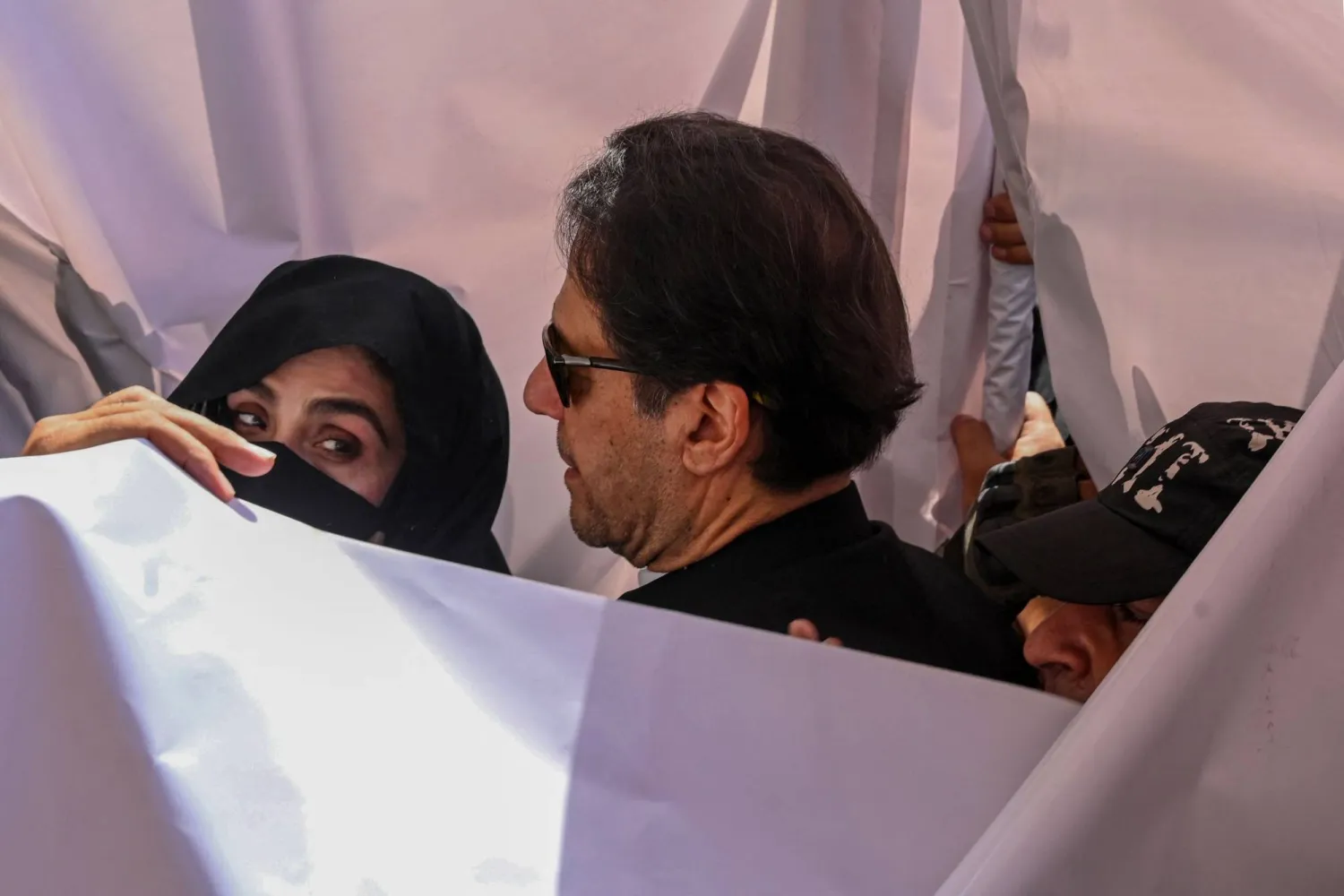
Former Pakistan Prime Minister Imran Khan (C) with his wife Bushra Bibi (L) arrive to appear at a high court in Lahore on May 15, 2023. (Photo by Arif ALI / AFP)
TT

UN Expert Decries Detention of Pakistan ex-PM Khan's Wife

Former Pakistan Prime Minister Imran Khan (C) with his wife Bushra Bibi (L) arrive to appear at a high court in Lahore on May 15, 2023. (Photo by Arif ALI / AFP)

The wife of Pakistan's former prime minister Imran Khan is being held in conditions that could pose a serious risk to her physical and mental health, a UN expert warned Wednesday.

Alice Jill Edwards, the United Nations' special rapporteur on torture and other cruel, inhuman or degrading treatment or punishment, urged the Pakistani authorities to take immediate action to address the situation, said AFP.

Khan and his wife Bushra Bibi were convicted of graft in January, and they were sentenced to 14 years and seven years in prison, respectively.

And on Saturday, a Pakistani court sentenced them to 17 years for corruption involving gifts the jailed ex-premier received while in office.

Both Khan and Bibi were handed a 10-year prison sentence on criminal breach of trust, and seven years on corruption charges in a case alleging the underpricing of state gifts.

"The state has an obligation to protect Mrs. Khan's health and ensure conditions of detention compatible with human dignity," Edwards said in a statement.

Bibi is reportedly confined to a small and dirty cell which is often dark due to power cuts, said Edwards.

"Such conditions fall far below minimum international standards," said Edwards.

"No detainee should be exposed to extreme heat, contaminated food or water, or conditions that aggravate existing medical conditions."

Reports also indicate that she is often in near-total isolation for more than 22 hours a day.

"The authorities must ensure Mrs. Khan has the possibility to communicate with her lawyers and receive visits from family members, and have meaningful human contact throughout her detention," Edwards said.

The special rapporteur has formally raised Bibi's situation with the government in Islamabad.

UN special rapporteurs are independent experts mandated by the Human Rights Council. They do not speak for the United Nations itself.

Earlier this month, Edwards said Khan was being held in conditions that could amount to torture and other inhuman or degrading treatment.

She urged the Pakistani authorities to ensure that the 73-year-old's conditions of detention fully complied with international norms.

Khan, who captained Pakistan to victory in the 1992 Cricket World Cup, upended Pakistani politics by becoming the prime minister in 2018.

He was ousted in 2022 by a no-confidence vote after losing favor with the military.

The former cricket star has been held in custody since August 2023, charged in dozens of cases that he claims are politically motivated.



War-Related Oil Squeeze a ‘Short-Term Pain,’ US Official Insists

 A customer fuels up with regular gasoline priced at $5.29 at a Chevron gas station in Bellevue, Wash., Friday, March 13, 2026. (AP)
A customer fuels up with regular gasoline priced at $5.29 at a Chevron gas station in Bellevue, Wash., Friday, March 13, 2026. (AP)
TT

War-Related Oil Squeeze a ‘Short-Term Pain,’ US Official Insists

 A customer fuels up with regular gasoline priced at $5.29 at a Chevron gas station in Bellevue, Wash., Friday, March 13, 2026. (AP)
A customer fuels up with regular gasoline priced at $5.29 at a Chevron gas station in Bellevue, Wash., Friday, March 13, 2026. (AP)

President Donald Trump's top energy official said Sunday that Americans will have to endure the "short-term pain" of higher prices at the pump as US forces conduct their war against Iran.

Now in the third week of a multi-dimensional Middle East conflict that has seen US and Israeli forces pound Iran's military targets, and Tehran responding with missile and drone attacks against several neighboring states, global energy prices have soared.

And concern has swelled that a lengthy blockage by Iran of the critical Strait of Hormuz could send crude prices through the roof.

"President Trump needed to act now... to stop the killing of American soldiers, to stop the destabilization of the region, and to end Iran's ability to threaten energy markets," US Energy Secretary Chris Wright told ABC News talk show "This Week."

He said economic conditions would grow dramatically worse without the ongoing military operation "to defang the Iranian regime" and ensure it can no longer threaten the world with nuclear weapons.

"This is short-term pain to get through to a much better place where the Middle East can no longer be held hostage by the one rogue nation in Iran," Wright added.

The energy secretary also said he predicted the war could end "in the next few weeks, and we'll see a rebound in (fuel) supplies and a pushing down of prices after that."

Since the war began, gas prices have soared in the United States, where Trump in 2024 campaigned relentlessly on a vow to lower fuel costs for Americans. The issue is a critical one for US voters, who head to the polls in November for the country's mid-term congressional elections.

Gas prices have jumped 25 percent in the past month, to $3.70 per gallon, according to the American Automobile Association.

The Trump administration has stressed other governments should help in a possible effort to unblock the Strait of Hormuz by escorting tankers through the narrow waterway along Iran's coast.

US Transportation Secretary Sean Duffy, speaking on Fox News "Sunday Morning Futures," said oil could soon flow through the strait if such escorts -- and shipping insurance -- are worked out.

"Could be a day, could be a week," Duffy said of possible escorts.


Israel Says ‘No Interceptor Shortage’ After Reports of Scarcity as Iranian Missiles Injure at Least 8

15 March 2027, Israel, Tel Aviv: People watch the site of a projectile impact following an Iranian strike on Tel Aviv. (dpa)
TT

Israel Says ‘No Interceptor Shortage’ After Reports of Scarcity as Iranian Missiles Injure at Least 8

15 March 2027, Israel, Tel Aviv: People watch the site of a projectile impact following an Iranian strike on Tel Aviv. (dpa)

An Israeli military source on Sunday denied media reports that Israel was running low on missile interceptors crucial to its air defenses, adding that the army was "continuously monitoring the situation". 

Citing US officials, news outlet Semafor had reported that Israel had informed the United States that it was "running critically low on ballistic missile interceptors", as the US-Israeli war against Iran entered its third week. 

"As of now, there is no interceptor shortage. The Israeli army is prepared for prolonged combat. We are continuously monitoring the situation," the military source said, in response to media queries. 

Israeli Foreign Minister Gideon Saar also dismissed the reports when questioned by journalists earlier on Sunday. 

At least eight people were injured in Israel Sunday following repeated missile launches from Iran, at least two of which contained cluster munitions according to Israeli authorities. 

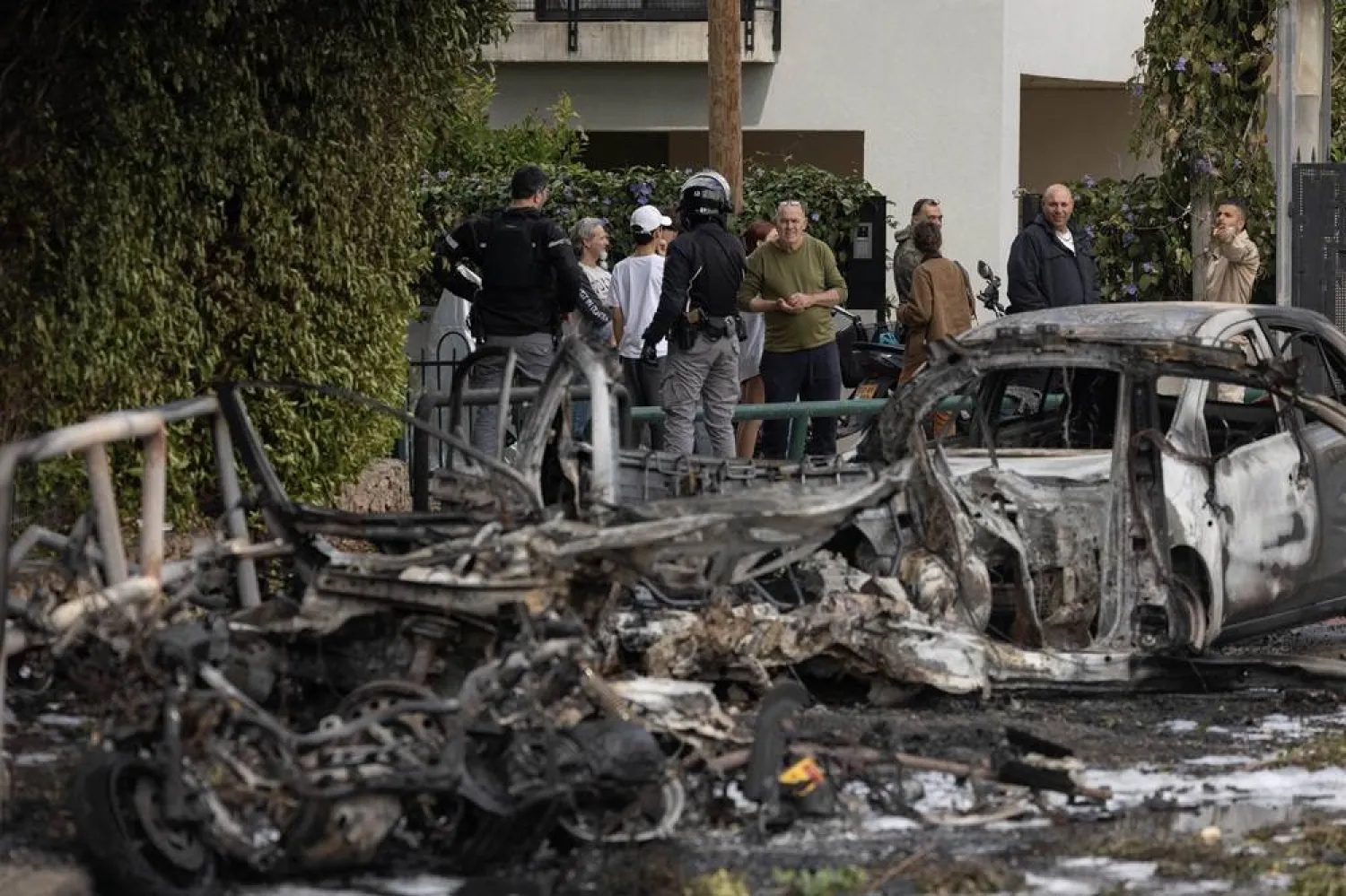
Israeli police released footage from a CCTV camera in the Tel Aviv area showing an impact on a road, saying that it was from "cluster munitions" that caused "damage at several locations". 

Bomblets and shrapnel from the missile wounded four people in various parts of the Tel Aviv metropolitan area, according to the Magen David Adom (MDA) rescue service. 

A man in his 60s was hospitalized with moderate injuries to his head from broken glass, while three were treated due to the shock waves from the blast. 

In another barrage shortly before noon, two men aged 62 and 44 reported minor injuries "from pieces of asphalt that struck them as a result of the blast", according to MDA. 

During a salvo toward the Tel Aviv area at around 3:00 am (0100 GMT), a man and a woman in their 80s suffered light injuries, from glass shards and smoke inhalation respectively. 

Another Iranian missile directed at Israel's southernmost city of Eilat was intercepted before reaching the target, without causing injuries. The municipality of Eilat quoted security sources saying it was a cluster missile. 

By late midday on Sunday, seven missile salvos were launched from Iran toward the State of Israel, some of which were intercepted. 

Saar on Sunday accused Iran of targeting civilian areas, during a visit to the northern Arab Israeli town of Zarzir, hit two days prior by shrapnel from an Iranian missile that lightly wounded almost 60 residents. 

"While we are targeting military objectives... the Iranian regime is targeting civilians," Saar said. 

"All the casualties we faced during these two weeks of confrontation... are civilians from Iranian missiles. This is of course a war crime," he added. 

His words were echoed by police superintendent Shlomi Schlezinger while speaking near the site of one of the impacts on Sunday. 

Iran is "always targeting crowded places, with people, the big major cities," he said in central Tel Aviv. 

He attributed the relatively low number of Israeli casualties to civilians' adherence to safety instructions. 

"We have a lot of collateral damage to cars and buildings, as you can see," he said. 

"We're used to, in the last 16 days, to be in shelters and in safe rooms when we have the alarm." 

According to Haaretz, citing security officials, 250 ballistic missiles had been fired by Iran at Israel as of March 13. 

Twelve people have been killed in Israel by missiles or falling debris since the start of the war, according to an AFP tally of figures given by Israeli authorities and first responders. 


Iran FM Sees No Reason for Talks After Trump Says It Wants Deal

09 September 2025, Egypt, Cairo: Iranian Foreign Minister Abbas Araghchi attends a joint press conference in Cairo. (dpa)
TT

Iran FM Sees No Reason for Talks After Trump Says It Wants Deal

09 September 2025, Egypt, Cairo: Iranian Foreign Minister Abbas Araghchi attends a joint press conference in Cairo. (dpa)

Foreign Minister Abbas Araghchi said Iran was not interested in talks with the United States, pushing back on President Donald Trump's stance that Tehran wants a deal to end the war.

"We are stable and strong enough. We are only defending our people," Araghchi told CBS's "Face The Nation," in an interview aired Sunday.

"We don't see any reason why we should talk with Americans, because we were talking with them when they decided to attack us.

"There is no good experience talking with Americans."

Trump on Saturday said Iran wanted a deal, but that he was not prepared to make one on current terms, without giving further details.

"We never asked for a ceasefire, and we have never asked even for negotiation," Araghchi said.

He added that Iran was ready to talk to countries who want to negotiate for selected oil tankers to pass through the key Strait of Hormuz export route.

"I cannot mention any country in particular, but we have been approached by a number of countries who want to have a safe passage for their vessels," he said.