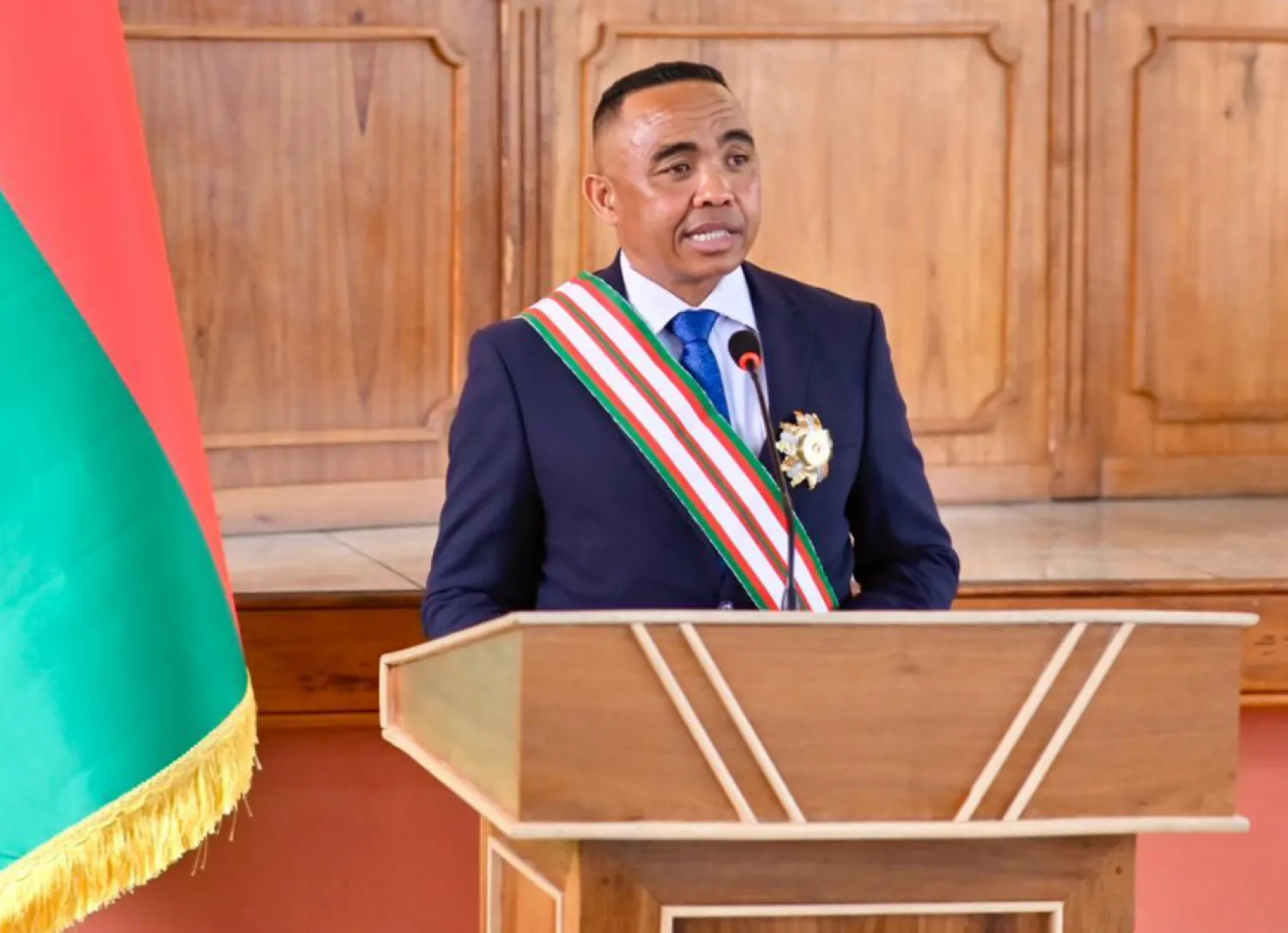

President of Madagascar Michael Randrianirina said his country views Saudi Arabia as its “main partner” in the phase of “refoundation” and in building a new development model, revealing to Asharq Al-Awsat a three-pillar economic plan aimed at restoring political and institutional stability, activating structural sectors, and improving the business environment to attract investment, with a focus on cooperation in mining and natural resources, including rare minerals.
In his first interview with an Arab newspaper since assuming office in October, Randrianirina said in remarks delivered via Zoom from his presidential office that Madagascar “possesses real potential in energy, agriculture, mining, tourism, and human capital,” stressing that driving national revival requires consolidating institutional stability and building balanced partnerships with countries such as Saudi Arabia in order to translate potential into tangible outcomes for citizens and youth.
Three-Pillar Economic Plan
The president explained that his plan is based on three main pillars. The first focuses on restoring political and institutional stability through a clear transitional roadmap, the establishment of an executive body to manage and review projects, and the formation of a supporting committee to ensure an orderly and transparent transition.
The second pillar centers on investment in structural sectors, including energy, ports, digital transformation, health, and mining, in partnership with Saudi Arabia and other partners, with the aim of removing the main obstacles to economic revival.
The third pillar, he said, targets creating an attractive environment for investors by improving the business climate, strengthening public-private partnerships, activating special economic zones, and leveraging regional frameworks such as the African Continental Free Trade Area (AfCFTA) and the Southern African Development Community (SADC) to open broader African markets through Madagascar.
Strategic Partnership and “Investment-Ready” Projects
On plans to enhance economic, investment, and trade cooperation between Saudi Arabia and Madagascar, Randrianirina said his objective is to build a long-term strategic partnership within a clear institutional framework and through flagship projects with tangible impact for both countries.
He proposed the creation of a joint Madagascar–Saudi investment body, to be known as “OIMS,” to coordinate and finance projects in energy, ports, health, digital governance, mining, agriculture, and tourism. He noted that Madagascar is simultaneously preparing a package of investment-ready projects aligned with Saudi Vision 2030 and Africa’s regional integration, in order to provide organized and secure opportunities for Saudi capital and expertise.
Saudi Arabia as the “Main Partner”
Randrianirina emphasized that Madagascar considers Saudi Arabia a key partner in priority sectors. In energy and refining, he said the country plans to establish a national oil refinery, supply fuel directly from the Kingdom, and jointly develop heavy oil resources in western Madagascar.
In ports and logistics, he pointed to efforts to modernize and expand the ports of Toliara and Mahajanga to position Madagascar as a logistics and energy hub in the Indian Ocean.
Regarding digital transformation and secure governance, he said Madagascar aims to launch a secure national digital platform for public administration and security, drawing on Saudi experience.
He also highlighted mining and natural resources, including rare minerals, as a cornerstone of cooperation, with the goal of improving valuation and ensuring traceability of Malagasy gold and other mineral resources in a transparent and mutually beneficial manner. He further expressed interest in the health sector, proposing the establishment of a royal health complex in Antananarivo, followed by a gradual expansion of similar facilities in other regions.
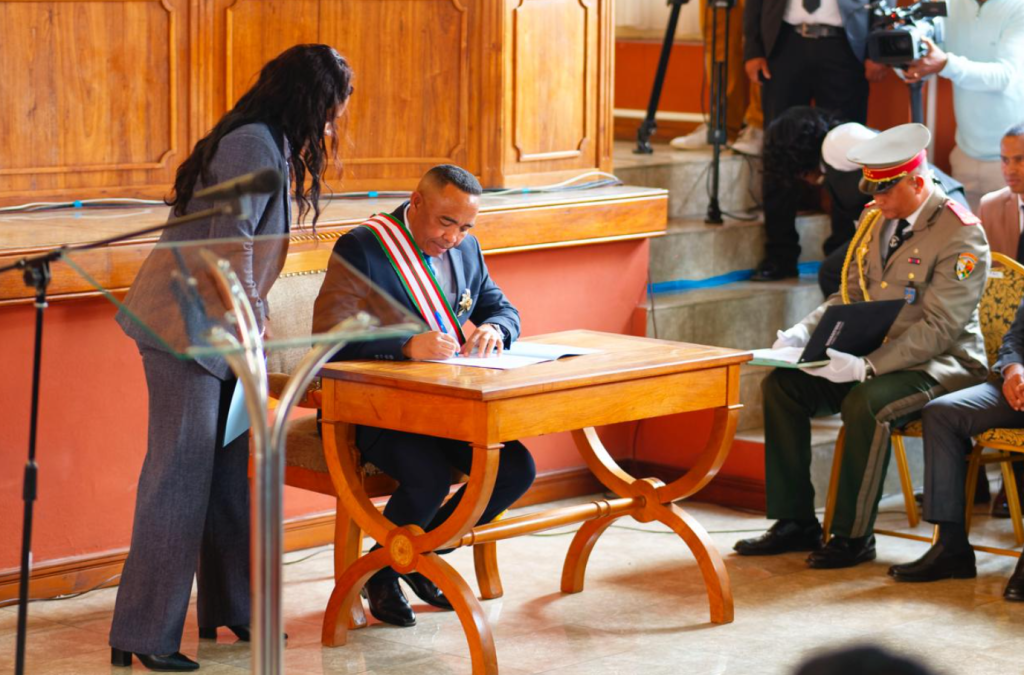
Planned Visit to Riyadh
The President said Madagascar is working with Saudi authorities to arrange an official visit in the near future, with the date to be determined in coordination with the Kingdom.
He described the visit as an important opportunity to meet and engage with Crown Prince Mohammed bin Salman, noting that Vision 2030 has brought about a qualitative transformation in the Kingdom’s image and economic trajectory. He said Saudi Arabia has strengthened its role as a major player in economic modernization, energy diversification, digital transformation, and global investment, while maintaining its central role in the Arab and Islamic worlds.
He added that the reforms and major projects achieved under the vision are a source of inspiration for Madagascar’s refoundation efforts, expressing a desire to benefit from the Saudi experience in areas including energy, infrastructure, digital transformation, health, and natural resource development.
The president said he hopes the visit will include meetings with the Custodian of the Two Holy Mosques King Salman bin Abdulaziz and Crown Prince Mohammed bin Salman, as well as sectoral meetings covering energy, ports, digital transformation, health, mining, defense and security, trade, culture, and sports, alongside discussions on establishing the joint investment body.
Historical Links with the Arab World
Randrianirina noted that Madagascar had historical links with the Arab world prior to the arrival of Western powers, explaining that Arab sailors, traders, and scholars reached its coasts and left their mark on certain languages, place names, and customs.
Three Major Challenges
The president acknowledged three main challenges facing his country: poverty and food insecurity, lack of infrastructure, and weak institutions. He said a large segment of the population still lives in poverty and that food security is not guaranteed in several regions, stressing that addressing these challenges requires investment in agriculture and rural infrastructure and the search for partners to support sustainable value chains that improve farmers’ incomes.
On infrastructure, he said the capacity of the energy and port sectors remains insufficient, hindering growth and trade, noting that upcoming discussions with Saudi Arabia focus on projects such as the refinery, heavy oil development, the ports of Toliara and Mahajanga, and digital infrastructure. He added that repeated crises have weakened institutions, and that his government is working to strengthen the rule of law, anti-corruption mechanisms, and public investment governance through independent oversight and transparent reporting to restore trust.
Combating Corruption
The President said financial corruption is a serious problem in Madagascar as it undermines public trust and diverts resources away from development. He explained that the anti-corruption strategy is based on three levels: establishing an executive body with clear procedures, independent audits, and periodic reporting; using digitalization to improve traceability and reduce misuse; and strengthening anti-corruption bodies while supporting judicial independence.
When asked about allegations of financial corruption linked to the previous leadership, he said his focus is on institutions rather than personal accusations, stressing that addressing any allegations falls under the jurisdiction of the competent judicial and oversight bodies, which must be protected from political interference and allowed to operate in accordance with the law and due process.
Duty to the Country and Its Youth
The president concluded by saying that he assumed office out of a sense of duty toward the country and its youth, noting that young people represent a significant demographic weight in Madagascar and are demanding change, dignity, and a better future through jobs, education, stability, and opportunities within their own country.