


Syria Secures Assad-Era Mass Grave Revealed by Reuters and Opens Criminal Investigation

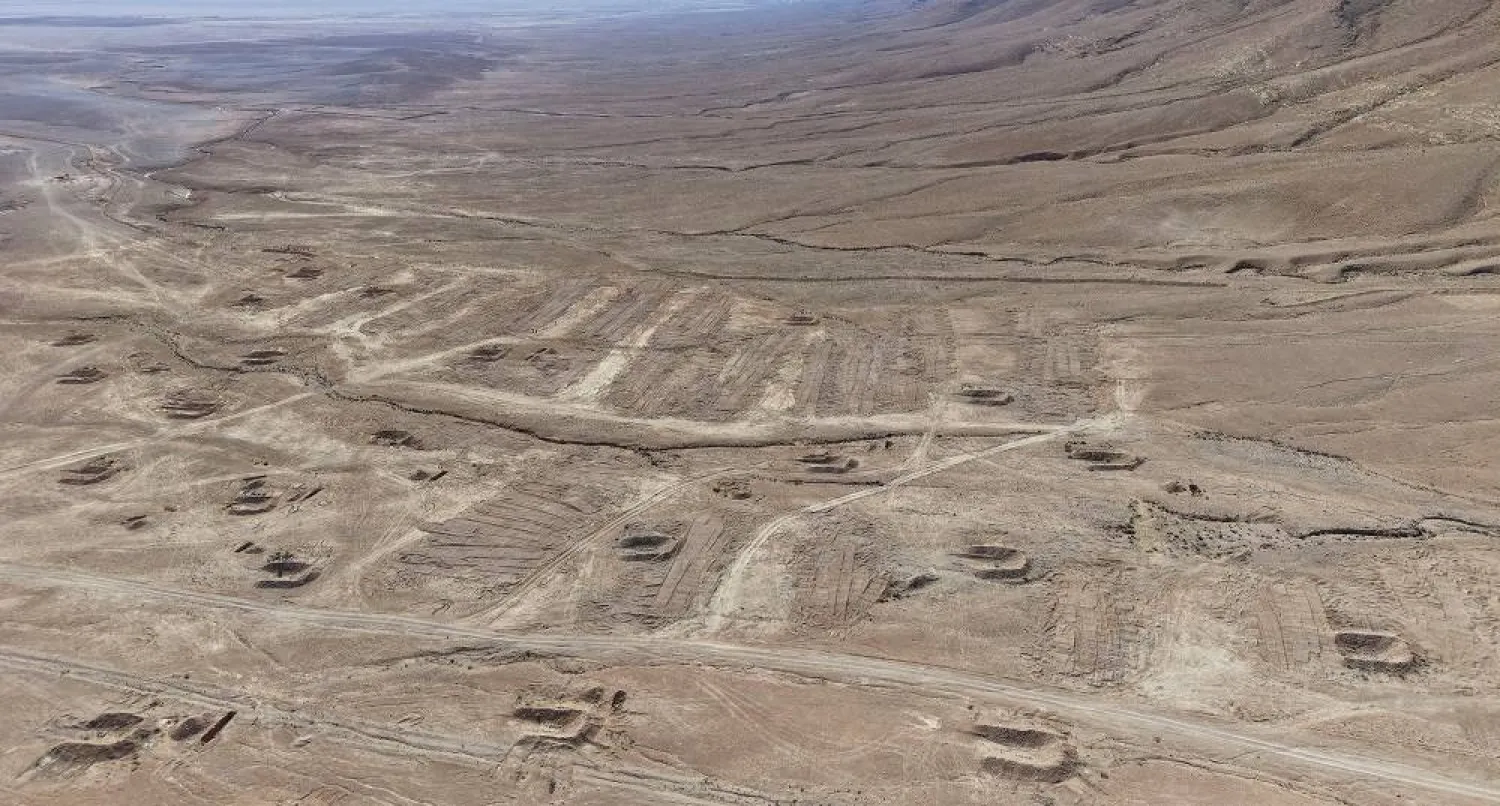
A drone view of the mass grave site in the desert near the eastern Syrian town of Dhumair, February 27, 2025. (Reuters)
TT

Syria Secures Assad-Era Mass Grave Revealed by Reuters and Opens Criminal Investigation

A drone view of the mass grave site in the desert near the eastern Syrian town of Dhumair, February 27, 2025. (Reuters)

Syria’s government has ordered soldiers to guard a mass grave created to conceal atrocities under Bashar al-Assad and has opened a criminal investigation, following a Reuters report that revealed a yearslong conspiracy by the fallen dictatorship to hide thousands of bodies on the remote ​desert site.

The site, in the Dhumair desert east of Damascus, was used during Assad’s rule as a military weapons depot, according to a former Syrian army officer with knowledge of the operation.

It was later emptied of personnel in 2018 to ensure secrecy for a plot that involved unearthing the bodies of thousands of victims of the dictatorship buried in a mass grave on the outskirts of Damascus and trucking them an hour’s drive away to Dhumair.

The plot, orchestrated by the dictator’s inner circle, was called “Operation Move Earth.”

Soldiers are stationed at the Dhumair site again, this time by the government that overthrew Assad.

The Dhumair military installation was also reactivated as a barracks and arms depot in November, after seven years of disuse, according to an army officer posted there in early December, a military official and Sheikh Abu Omar Tawwaq, who is the security chief of Dhumair.

The Dhumair site ‌was completely unprotected over ‌the summer, when Reuters journalists made repeated visits after discovering the existence of a mass grave ‌there.

Within ⁠weeks ​of the ‌report in October, the new government created a checkpoint at the entrance to the military installation where the site lies, according to a soldier stationed there who spoke to Reuters in mid-December. Visitors to the site now need access permits from the Defense Ministry.

Satellite images reviewed by Reuters since late November show new vehicle activity around the main base area.

The military official, who spoke on condition of anonymity, said the reactivation of the base is part of efforts to “secure control over the country and prevent hostile parties from exploiting this open strategic area.” The road through the desert connects one of ISIS’ remaining Syrian strongholds with Damascus.

POLICE INVESTIGATION

In November, police opened an investigation into the grave, photographing it, carrying out land surveys and interviewing witnesses, according to Jalal Tabash, head of the ⁠al-Dhumair police station. Among those interviewed by police was Ahmed Ghazal, a key source for the Reuters investigation that exposed the mass grave.

“I told them all the details I told you about the ‌operation and what I witnessed during those years,” said Ghazal, a mechanic who repaired trucks ‍carrying bodies that broke down at the Dhumair grave site.

Ghazal confirmed ‍that during the time of “Operation Move Earth,” the military installation appeared vacant except for the soldiers involved in accompanying the convoys.

Syria’s Information Ministry ‍did not respond to requests for comment about the re-activation of the base or the investigation into the mass grave.

The National Commission for Missing Persons, which was established after Assad’s ouster to investigate the fate of tens of thousands of Syrians who vanished under his rule, told Reuters it is in the process of training personnel and creating laboratories in order to meet international standards for mass grave exhumations.

Exhumations at Syria’s many Assad-era mass graves, including the site at Dhumair, are scheduled for ​2027, the commission told Reuters.

The police have referred their report on Dhumair to the Adra district attorney, Judge Zaman al-Abdullah.

Al-Abdullah told Reuters that information about Assad-era suspects involved in the Dhumair operation, both inside and outside Syria, is being cross-referenced ⁠with documents obtained by security branches after the dictator’s fall in December 2024. He would not describe the suspects, citing the ongoing investigation.

According to military documents reviewed by Reuters and testimony from civilian and military sources, logistics for “Operation Move Earth” were handled by a key man, Col. Mazen Ismander.

Contacted through an intermediary, Ismander declined to comment on the initial Reuters report or the new investigation into the mass grave.

When the conspiracy was hatched in 2018, Assad was verging on victory in the civil war and hoped to reclaim legitimacy in the international community after years of sanctions and allegations of brutality.

He had been accused of detaining and killing Syrians by the thousands, and the location of a mass grave in the Town of Qutayfah, outside Damascus, had been reported by local human rights activists.

So an order came from the presidential palace: Excavate Qutayfah and hide the bodies on the military installation in the Dhumair desert.

For four nights a week for nearly two years, from 2019 to 2021, Ismander oversaw the operation, Reuters found . Trucks hauled corpses and dirt from the exposed mass grave to the vacated military installation in the desert, where trenches were filled with bodies as the Qutayfah site was excavated.

In revealing the conspiracy, Reuters spoke to 13 people with direct ‌knowledge of the two-year effort and analyzed more than 500 satellite images of both mass graves.

Under the guidance of forensic geologists, Reuters used aerial drone photography to create high-resolution composite images that helped corroborate the transfer of bodies by showing
color changes in the disturbed soil around Dhumair’s burial trenches.



Lebanon: Israel Sprayed Glyphosate Along Southern Border

Lebanese army soldiers inspect the site of an Israeli strike in Kfardounine, southern Lebanon (EPA)
TT

Lebanon: Israel Sprayed Glyphosate Along Southern Border

Lebanese army soldiers inspect the site of an Israeli strike in Kfardounine, southern Lebanon (EPA)

Laboratory tests have identified the chemical sprayed by Israeli aircraft in southern Lebanon as glyphosate, a widely used herbicide that can destroy vegetation when applied intensively, Lebanon’s agriculture minister, Nizar Hani, told Asharq Al-Awsat, saying the substance was used at abnormally high concentrations along the border with Israel.

The spraying of unidentified chemical substances by Israeli aircraft has triggered widespread condemnation.

Lebanese President Joseph Aoun denounced “in the strongest terms the Israeli aircraft’s spraying of toxic pesticides on farmland and orchards in several southern border villages.”

He described the act as “a flagrant violation of Lebanese sovereignty and an environmental and health crime against Lebanese citizens and their land, and a continuation of Israel’s repeated attacks on Lebanon and its people.”

Aoun said the practices, which target agricultural land and citizens’ livelihoods and threaten public health and the environment, require the international community and relevant United Nations bodies to assume their responsibilities to halt the attacks and protect Lebanese sovereignty.

He said he had asked the Foreign Ministry to prepare a documented file, in coordination with the agriculture, environment, and public health ministries, as a prelude to taking all necessary legal and diplomatic steps, including filing complaints with relevant international forums.

High-concentration glyphosate

Lebanese authorities launched an investigation into the substances and subjected samples to scientific testing.

Hani said laboratory results showed the sprayed material was glyphosate, a commonly used herbicide marketed in many countries, but added that it had been applied at “extremely high concentrations, exceeding normal levels by about 20%-30%.”

He said glyphosate, like other herbicides, eliminates vegetation when used at such high levels, directly affecting soil and water and causing negative repercussions for human health.

He noted that the substance is classified as having carcinogenic effects and poses serious risks, particularly to agriculture and plant ecosystems.

Hani said the incident was consistent with known practices along the border, where such substances are used to create vegetation-free zones, effectively resulting in systematic desertification.

State measures: reports and an international file

Hani said the Agriculture Ministry immediately initiated the required procedures and prepared official reports to be submitted to the Foreign Ministry, which will determine the appropriate course of action, including filing complaints or submitting reports to the UN.

He recalled that the ministry had previously prepared a detailed report in cooperation with the Food and Agriculture Organization on agricultural damage caused by Israeli attacks, quantifying direct losses as well as indirect losses linked to production and farming seasons. The report was formally submitted to the Foreign Ministry for the necessary steps to be taken.

Health implications

The use of the substance also carries health consequences. Abdul Rahman Al-Bizri, a member of parliament’s health committee, told Asharq Al-Awsat that glyphosate is a chemical herbicide widely used worldwide to eliminate unwanted weeds.

He condemned spraying the substance in populated civilian areas and on land containing fruit-bearing crops essential for food, noting that glyphosate works by disrupting an enzyme plants need for growth, causing them to wither and die within a short period.

Al-Bizri said the conventional use of the substance is limited to roadside areas or the removal of unwanted vegetation.

Spraying it in these locations, he said, could fall within attempts to remove vegetation for military and security purposes, as well as render land unsuitable for agricultural use in the near term, hindering residents’ return.

Scientific debate and aerial spraying

Al-Bizri pointed to the scientific controversy surrounding the substance, noting that glyphosate is classified by the International Agency for Research on Cancer as “probably carcinogenic to humans,” in addition to its direct and indirect health effects, particularly with repeated or uncontrolled exposure.

He said one of the most dangerous aspects was aerial spraying, a method rarely used for such substances because of its high risks, as it can reach food crops, water sources, and residential areas. He said what is happening appears to be deliberate spraying of the inhabited regions and food crops.

Symptoms and health risks

Al-Bizri said short-term symptoms appear quickly after direct exposure and include skin irritation, rashes, and itching, eye irritation with burning and temporary blurred vision, and respiratory irritation when inhaling the spray, causing coughing and shortness of breath.

He said symptoms may also include nausea, vomiting, and diarrhea in cases of accidental ingestion, along with headaches, fatigue, and general weakness, adding that such effects are more dangerous in children.

He said chronic exposure has been linked to higher rates of lymphoma, blood and blood cell disorders, hormonal disruptions affecting fertility, growth, pregnancy, and overall hormonal balance, as well as potential effects on the nervous system, such as chronic headaches, impaired concentration, and neurological fatigue, and possible links to certain neurological disorders.

While the substance is not immediately lethal, he said, it poses a real health and environmental risk with repeated, unregulated exposure, given its adverse effects on human, animal, and plant health, as well as on ecological balance in general.

Scientific and legal files under Foreign Ministry supervision

The Foreign Ministry has begun procedures to document Israeli attacks involving the spraying of toxic substances and pesticides on agricultural land and orchards in several Lebanese villages.

In a statement, the ministry said it would coordinate with the agriculture, environment, and public health ministries, as well as scientific and research bodies, to prepare a comprehensive scientific and legal file documenting the violations.

The file will identify the substances used and verify whether they violate international law by comparing them with lists of internationally prohibited materials under relevant conventions and treaties.

It will also document affected areas and assess the health, environmental, and agricultural damage resulting from their use, including impacts on humans, soil, vegetation, and water resources.

Once the file is completed, the Foreign Ministry will submit a formal complaint to the United Nations Security Council against Israel.


Famine Spreads to More Towns in Sudan’s Darfur Region, Hunger Experts Warn as War Rages on

People who fled the Zamzam camp for the internally displaced walk in a makeshift encampment in an open field near the town of Tawila in war-torn Sudan's western Darfur region on April 13, 2025. © AFP
TT

Famine Spreads to More Towns in Sudan’s Darfur Region, Hunger Experts Warn as War Rages on

People who fled the Zamzam camp for the internally displaced walk in a makeshift encampment in an open field near the town of Tawila in war-torn Sudan's western Darfur region on April 13, 2025. © AFP

Famine is spreading in war-torn Sudan's western Darfur region and has now engulfed two more towns there, a global hunger monitoring group said Thursday. The announcement came after the group said last year that people in Darfur’s major city of el-Fasher, overrun by the RSF forces after an 18-month siege, were enduring famine.

Since April 2023, war has gripped much of Sudan after a power struggle erupted between the East African country’s military and the powerful Rapid Support Forces. The conflict has triggered what the United Nations calls the world’s worst humanitarian crisis.

The report on the spread of famine by the Integrated Food Security Phase Classification, or IPC, came as an attack Thursday by the RSF on a military hospital in southern Sudan killed 22 people, including the hospital’s medical director and another three members of the medical staff.

The attack, in the town of Kouik in South Kordofan province, also left eight people wounded, the Sudan Doctors’ Network, a group of medical professionals tracking the war said. It was not immediately clear how many of the casualties were civilians.

In a statement, the network said the attack was “not an isolated incident, but rather part of a series of attacks that have plagued South Kordofan" and have left "several hospitals inoperable.”

The UN estimates that over 40,000 people have been killed in the war in Sudan, but aid agencies consider that the true number could be many times higher. Over 14 million people have been forced to flee their homes.

The IPC report said famine has now been detected in the towns of Umm Baru and Kernoi in Darfur. In November, the group said el-Fasher — a major city in the region — was enduring famine and also the city of Kadugli in South Kordofan. At the time, it also said 20 other areas across Sudan were at risk of famine.

In Umm Baru, nearly 53% of children between aged between 6 months and nearly 5 years suffered from acute malnutrition, while 32% of children in Kernoi face the same ordeal.

“These alarming rates suggest an increased risk of excess mortality and raise concern that nearby areas may be experiencing similar catastrophic conditions,” the report said.

The fall of el-Fasher in October 2025 to the RSF set off an exodus of people to nearby towns, straining the resources of neighboring communities and driving up food insecurity rates, the report said.

The IPC has confirmed famine only a few times, most recently in 2025 in northern Gaza during the Israel-Hamas war. It also confirmed famine in Somalia in 2011, and in South Sudan in 2017 and 2020.

With this report, the total number of famine-stricken areas in Sudan rises to nine. In 2024, famine had struck five other areas in North Darfur and also Sudan’s Nuba Mountains region.

The IPC report also warned that more people might face extreme hunger in Kordofan, where the conflict has disrupted food production and supply lines in besieged towns and isolated areas.

“An immediate and sustained ceasefire is critical to avert further destitution, starvation, and death in the affected parts of Sudan,” pled the Rome-based group.

According to experts, famine is determined in areas where deaths from malnutrition-related causes reach at least two people, or four children under 5 years of age, per 10,000 people; at least one in five people or households severely lack food and face starvation; and at least 30% of children under age 5 suffer from acute malnutrition based on a weight-to-height measurement — or 15% based on upper-arm circumference.

On Tuesday, the Sudanese military announced that it had opened a crucial road between Dilling and Kadugli, which had been under siege by the RSF since the start of the war. The RSF launched a drone attack Tuesday that hit a medical center in Kadugli, killing 15 people including seven children, according to Sudan Doctors Network.


US Troops to Leave Al-Shaddadi Base in Syria

US soldiers patrol the countryside of Rumaylan in Syria's northeastern Hasakeh province on June 7, 2023. (AFP) 
TT

US Troops to Leave Al-Shaddadi Base in Syria

US soldiers patrol the countryside of Rumaylan in Syria's northeastern Hasakeh province on June 7, 2023. (AFP) 

US troops at Al-Shaddadi base in Syria's northeastern Al-Hasakah province are preparing to withdraw completely in the coming hours.

“The US forces at the base are preparing for a complete withdrawal outside Syrian territories in the next 24 hours,” a source told Syria TV on Wednesday.

Earlier, the Hasaka Media Center reported that a truck convoy belonging to the international coalition entered from Iraq through the Yaarabiya crossing and headed to Al-Shaddadi base south of Al-Hasakah province.

Civilian sources in the area said the empty trucks were sent to load military equipment from the base.

Local eyewitnesses also reported that the international coalition is evacuating the Kharab al-Jir base, a key United States military installation located in northeastern Al-Hasakah.

Since Tuesday, the sources added, the sound of drones in Qamishli were heard. They said gunshots were also heard intermittently, signaling that international coalition forces were destroying some of their positions in the Kharab al-Jirb base.

Late last month, the Turkish Anadolu Agency said heightened military activity was seen at Al-Shaddadi air base, which is used by the US-led anti-ISIS coalition, according to local sources.

It said observers have reported the landing of a US cargo aircraft.

Syrian government forces entered the Kurdish-majority city of Qamishli on Tuesday as part of a deal agreed last week to gradually integrate the Kurds' forces and institutions into the state and began preparing to take over the airport.

Kurdish forces have ceded swathes of territory to advancing government troops in recent weeks following months of tension and sporadic clashes as Syria's new authorities have sought to impose their authority across the country.

“A convoy of internal security forces began entering the city of Qamishli,” the official SANA news agency said.

Sources explained that the Syrian security forces stopped at the entrance of the Qamishli airport in preparation to enter the facility, in addition to government buildings.

Few people were seen on the streets inside the city amid a curfew in place until Wednesday morning, with Kurdish security forces also lightly deployed.