Arab Coalition Carries out 'Limited' Airstrike on Military Shipment at Yemen's Mukalla Port

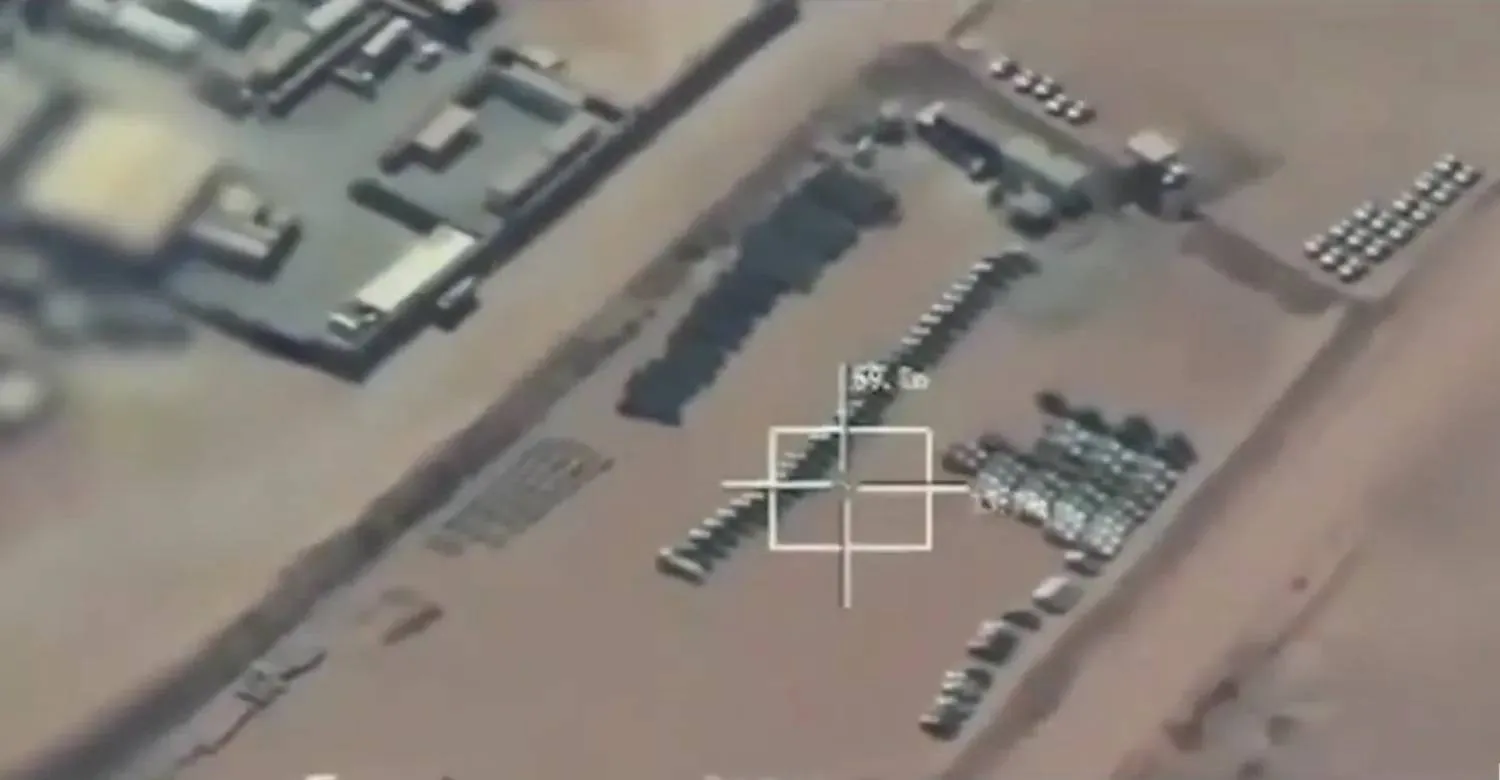
A screengrab shows of the airstrike on Al-Mukalla port. (Arab coalition)
TT

Arab Coalition Carries out 'Limited' Airstrike on Military Shipment at Yemen's Mukalla Port

A screengrab shows of the airstrike on Al-Mukalla port. (Arab coalition)

The Joint Forces Command of the Arab coalition to support legitimacy in Yemen announced that it had carried out a "limited" airstrike targeting a military shipment that had arrived in Yemen's Al-Mukalla port.

In a statement, coalition spokesman Major General Turki al-Malki said the forces detected on Saturday and Sunday the arrival of two vessels from the Port of Fujairah to Mukalla without obtaining any permits from the Joint Forces Command.

"The crew had disabled the tracking devices aboard the vessels, and unloaded a large amount of weapons and combat vehicles in support of the Southern Transitional Council’s forces in Hadhramaut and Al-Mahra governorates in eastern Yemen," it added.

It described the actions as "flagrant violations" of peace efforts and United Nations Security Council resolution 2216.

In response to a request of the president of the Presidential Leadership Council in Yemen that the coalition "take all necessary military measures to safeguard civilians in Hadhramaut and Mahra and considering that the aforementioned weapons are an imminent threat, and an escalation that threatens peace and stability," the Coalition Air Force conducted on Tuesday a limited airstrike targeting the weapons and military vehicles offloaded in Mukalla.

"The airstrike took place following close surveillance and documentation of the cargo, and was conducted in accordance with the Customary International Humanitarian Law, and in a manner that guarantees no collateral damage."

"The Joint Forces Command of the Coalition will continue its de-escalation and pacification in Hadhramaut and Mahra, and will maintain its blocking of any and all military support from whichever country that does so without coordinating with the legitimate Yemeni Government and the coalition, in order to ensure the success of Saudi Arabia and coalition’s efforts to achieve security and stability, and prevent further expansion of the conflict."


Saudi FM, Iranian Counterpart Discuss Regional Developments

Saudi Minister of Foreign Affairs Prince Faisal bin Farhan bin Abdullah
TT

Saudi FM, Iranian Counterpart Discuss Regional Developments

Saudi Minister of Foreign Affairs Prince Faisal bin Farhan bin Abdullah

Saudi Minister of Foreign Affairs Prince Faisal bin Farhan bin Abdullah held a phone call with his Iranian counterpart, Abbas Araghchi, the Saudi Press Agency (SPA) reported on Wednesday.

During the call, they discussed the latest regional developments and the efforts to maintain the region's security and stability, SPA said.


US-Gulf Draft UN Resolution to Hold Iran Accountable over Hormuz Closure

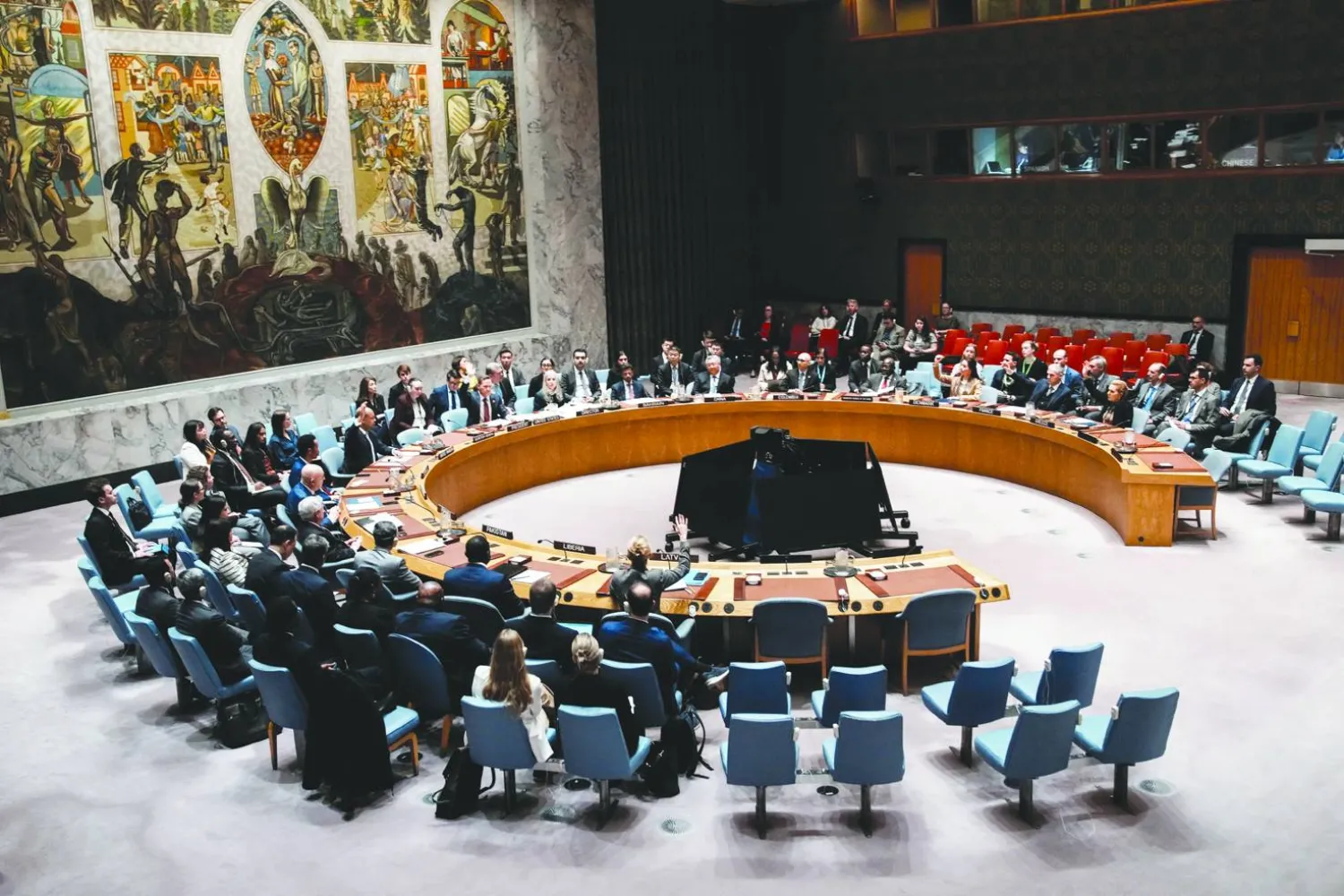
A UN Security Council session held on March 12 (Reuters)
TT

US-Gulf Draft UN Resolution to Hold Iran Accountable over Hormuz Closure

A UN Security Council session held on March 12 (Reuters)

The United States and Bahrain have begun drafting a UN Security Council resolution aimed at holding Iran accountable for closing the Strait of Hormuz and advancing international efforts to reopen it to commercial shipping.

US Ambassador to the UN Mike Waltz, speaking during a phone press conference on Monday, said the draft states that the Security Council strongly condemns repeated attacks and threats by Iran against commercial vessels, as well as actions aimed at obstructing lawful transit through the Strait of Hormuz. These include the laying of naval mines and the imposition of illegal fees on ships.

The proposal determines that such actions constitute a threat to international peace and security, opening the possibility of placing the resolution under Chapter VII of the UN Charter and, consequently, the potential adoption of enforcement measures at a later stage.

It affirms the right of all ships and aircraft to transit the Strait of Hormuz without unlawful interference, in accordance with international law, including the UN Convention on the Law of the Sea.

It further calls on Iran to immediately cease all attacks or threats directed against commercial shipping, as well as any attempts to obstruct or impede freedom of navigation.

A key provision stipulates that Iran must disclose the number of mines it has laid and their precise locations in and around the Strait of Hormuz, and work toward their removal. The draft also calls on Tehran to refrain from interfering in international demining efforts.

Humanitarian corridor

Another clause asks Iran to cooperate with the United Nations in establishing a humanitarian corridor in the Strait of Hormuz, aimed at facilitating the flow of essential goods, including food and fertilizers, which the text says have been disrupted by recent developments in the region.

It also includes a prohibition on any UN member state assisting Iran in closing the strait or restricting transit through it. At the same time, it affirms the right of states to defend their vessels against attacks, in accordance with international law.

This is the latest diplomatic effort by Washington and Manama after China and Russia vetoed a similar resolution hours before a temporary ceasefire was announced in early April.

Waltz said negotiations on the draft would take place this week, adding that it remains unclear whether the resolution will include an enforcement mechanism to secure navigation in the strait.

He revealed that Bahrain is contributing to drafting the text, with input from Saudi Arabia, Kuwait, Qatar and the United Arab Emirates, in a way that would require Iran to halt attacks on commercial vessels and attempts to impose transit fees, as well as to stop laying naval mines and disclose their locations.

Waltz underlined that the draft is narrower in scope than the previous unsuccessful proposal and comes amid a ceasefire with Iran.

The United States and Gulf countries are continuing negotiations this week and are seeking swift adoption of the resolution, provided consensus among the countries concerned is maintained.

Waltz framed the issue not only as part of a confrontation with Iran but also as a matter related to international law and the freedom of global trade, stressing that no country has the right to blackmail global trade.

A previous draft resolution blocked by Russia and China had sought authorization for the use of defensive force to protect navigation in the Strait of Hormuz and free it from Iranian attacks. It also would have allowed states, individually or through voluntary multinational maritime partnerships, to use all necessary and proportionate defensive means, applying to the strait and adjacent waters to secure passage and deter attempts to close, obstruct or otherwise interfere in any way with international navigation through the Strait of Hormuz, through which about one-fifth of the world’s oil passes.



Saudi Arabia Provides New Contribution of $2 Million to Support UNRWA

Saudi Prince Mansour bin Khaled bin Farhan, Ambassador of Saudi Arabia to Jordan, hands UNRWA’s Acting Commissioner-General, Christian Saunders a cheque of $ 2 million as the Kingdom’s annual contribution to UNRWA (Saudi Embassy in Jordan)
TT

Saudi Arabia Provides New Contribution of $2 Million to Support UNRWA

Saudi Prince Mansour bin Khaled bin Farhan, Ambassador of Saudi Arabia to Jordan, hands UNRWA’s Acting Commissioner-General, Christian Saunders a cheque of $ 2 million as the Kingdom’s annual contribution to UNRWA (Saudi Embassy in Jordan)

Saudi Arabia on Tuesday delivered on Tuesday a check worth $2 million to the United Nations Relief and Works Agency for Palestine Refugees in the Near East (UNRWA), representing the Kingdom's annual support for the agency’s budget, programs, and operations in the region.

Saudi Ambassador to Jordan Prince Mansour bin Khalid bin Farhan delivered the check at the embassy to UNRWA’s Acting Commissioner-General, Christian Saunders.

He stressed the Saudi commitment, under the directives of the leadership, to support the Palestinian cause and assist the brotherly Palestinian people.

The Ambassador then highlighted the importance of supporting UNRWA's budget to enable it to fulfill its social, humanitarian, educational, and health responsibilities toward Palestinian refugees, particularly under current conditions.

Prince Mansour noted the agency’s vital role in providing humanitarian services and alleviating suffering.

For his part, Saunders expressed his appreciation to the Kingdom for its continued and steadfast support, which enables UNRWA to implement its programs in service of Palestinian refugees.