



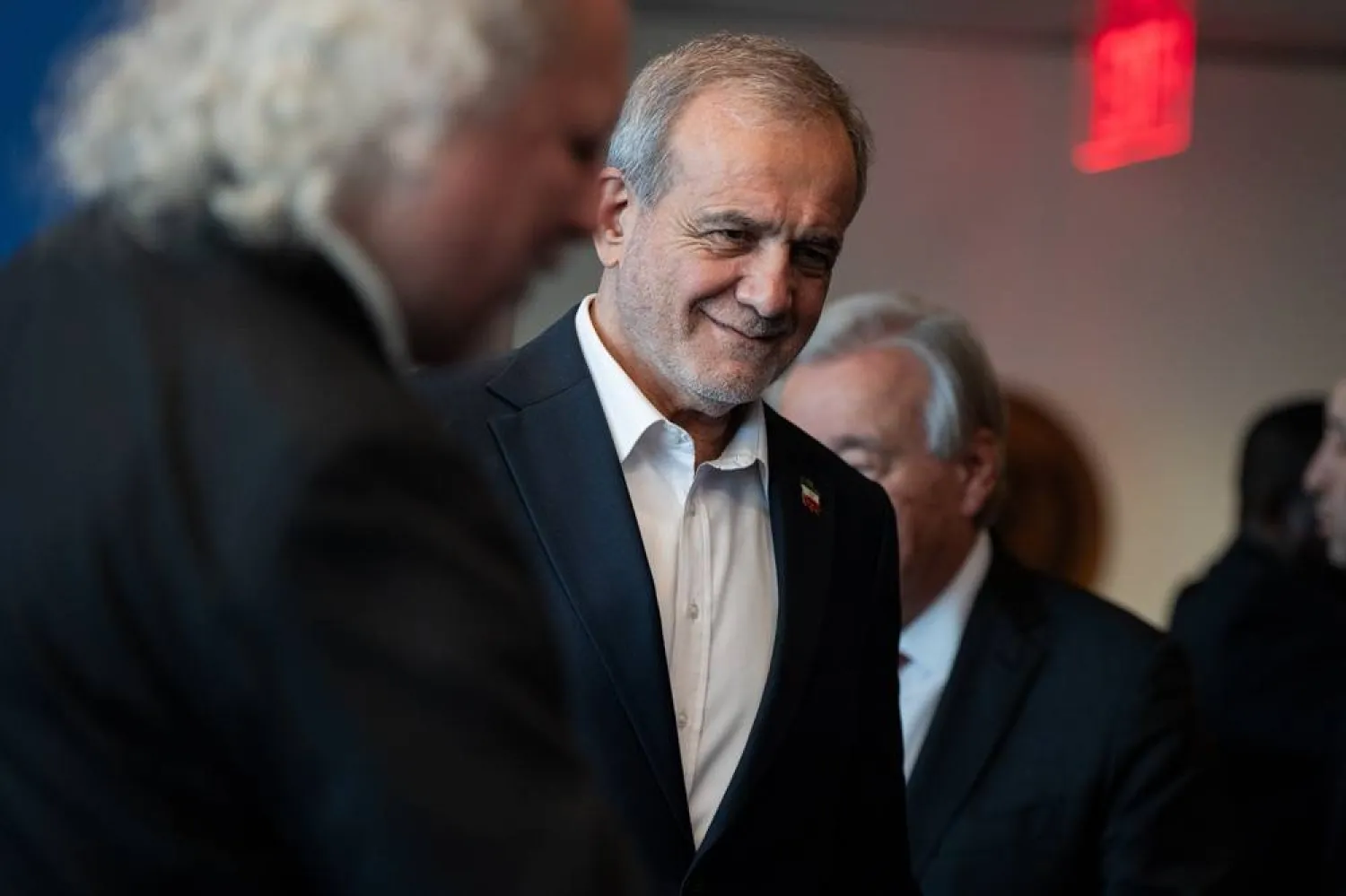

Iranian President Masoud Pezeshkian on Tuesday said his country’s answer to an attack would be harsh, which appeared to be in response to a warning by US President Donald Trump over reconstruction of Iran’s nuclear program.
Iran’s answer “to any cruel aggression will be harsh and discouraging,” Pezeshkian said on the social media platform X.
Pezeshkian did not elaborate, but his statement came a day after Trump suggested the US could carry out military strikes if Iran attempts to reconstitute its nuclear program. Trump made the comment during wide-ranging talks with Israeli Prime Minister Benjamin Netanyahu at Trump's Mar-a-Lago estate in Florida.
“Now I hear that Iran is trying to build up again,” Trump said during a news conference with Netanyahu after their meeting. “And if they are, we’re going to have to knock them down. We’ll knock them down. We’ll knock the hell out of them. But hopefully that’s not happening.”
The two leaders discussed the possibility of renewed military action against Tehran months after a 12-day air war in June that killed nearly 1,100 Iranians including senior military commanders and scientists. Iran’s retaliatory missile barrage killed 28 people in Israel.
Trump suggested Monday that he could order another US strike against Iran.
“If it’s confirmed, they know the consequences, and the consequences will be very powerful, maybe more powerful than the last time,” Trump said.
Pezeshkian said Saturday that tensions between the sides already had risen.
“We are in a full-scale war with the US, Israel and Europe; they don’t want our country to remain stable,” he said.
Iran has insisted it is no longer enriching uranium at any site in the country, trying to signal to the West that it remains open to potential negotiations over its atomic program.
US intelligence agencies and the International Atomic Energy Agency assessed Iran last had an organized nuclear weapons program in 2003, though Tehran had been enriching uranium up to 60%, which is a short, technical step away from weapons-grade levels of 90%.
Meanwhile, some of the largest protests in three years entered a third day Tuesday after the country’s currency plummeted to a record low against the US dollar. The head of the Central Bank resigned on Monday.
According to witnesses and videos on social media, rallies took place in Tehran and other cities and towns. Police fired tear gas in some places. Near a market in downtown Tehran, footage showed people pushing back police and security forces and throwing stones at them.
University students also rallied inside campuses on Tehran University and other major universities, witnesses said.
Pezeshkian met a group of businessmen to listen to their demands, media reported.
"The administration will not spare any effort for solving problems and improving situation of the society,” Pezeshkian said. He also assigned Interior Minister Eskandar Momeni for talks with protesters.
The head of the country’s tax department, Mohammad Hadi Sobhanian, also said the government will revise its tax arrangement in favor of businesses, dropping penalties for delay in paying taxes.
The government announced the closure of offices and banks on Wednesday for managing energy consumption during the winter days, to be followed by weekly holidays on Thursday and Friday. Saturday also is a religious holiday in the country.
