


Asharq Al-Awsat's Mohammed al-Shafei Passes Away Leaving Behind Long Career in Pursuing the Toughest Files

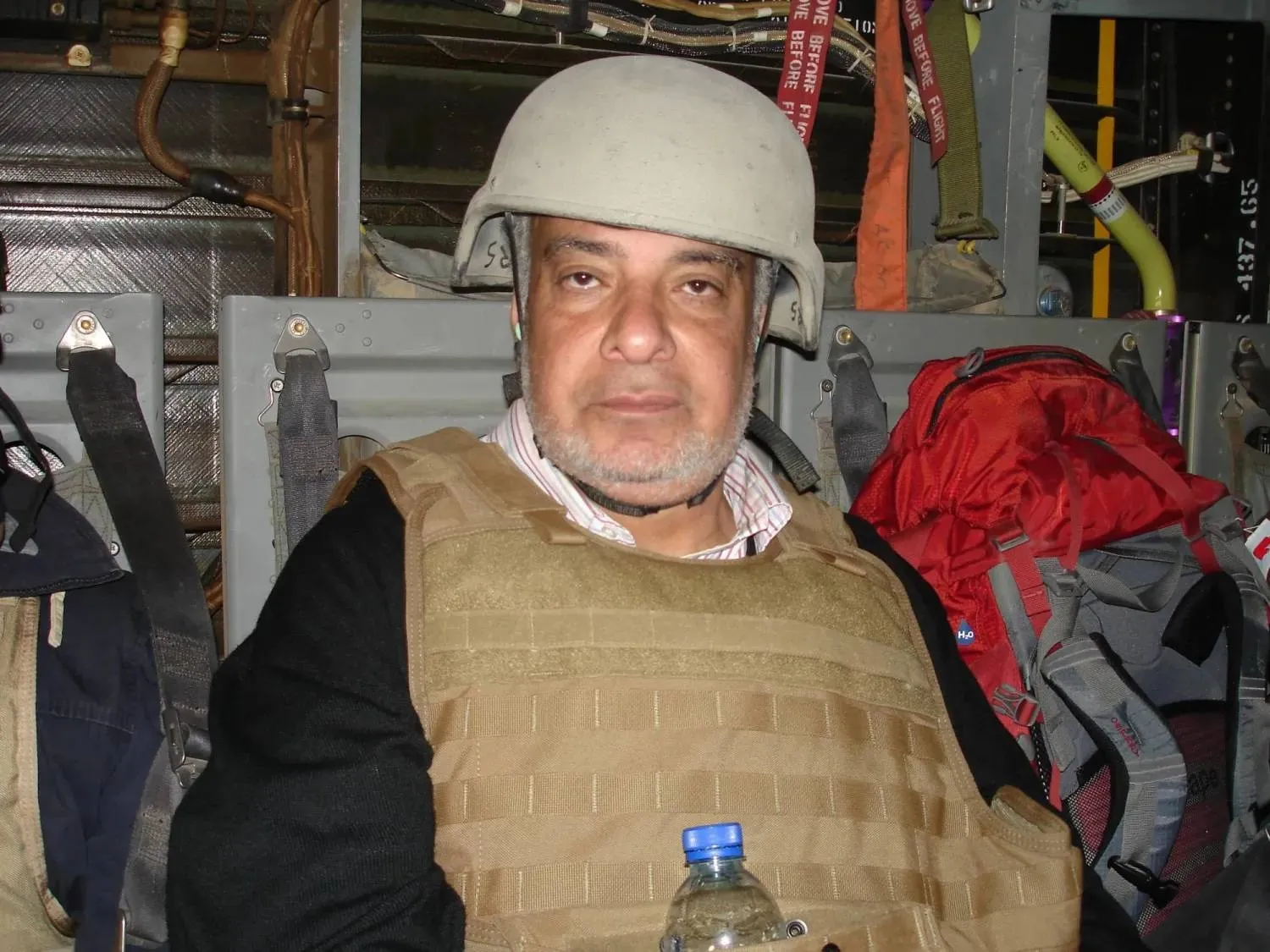
Mohammed al-Shafei on board a military jet on his way to Afghanistan. (Asharq Al-Awsat)
TT

Asharq Al-Awsat's Mohammed al-Shafei Passes Away Leaving Behind Long Career in Pursuing the Toughest Files

Mohammed al-Shafei on board a military jet on his way to Afghanistan. (Asharq Al-Awsat)

Mohammed al-Shafei, one of Asharq Al-Awsat's most prominent journalists, passed away at 74 on Wednesday, leaving behind a career that spanned over 40 years during which he tackled the thorniest and most complex files.

Al-Shafei specialized in extremist groups and was among the first journalists to have written about these issues in Arab press. He pursued his stories with strict professionalism, seeking out sources. He joined Asharq Al-Awsat in 1982, kicking off a long, dedicated career, marked by accuracy, commitment and high professionalism.

Al-Shafei was born in Egypt in 1951. He earned a Bachelor of Islamic Archeology from the University of Cairo in 1974. He traveled to London in 1977 and earned a Postgraduate Diploma in translation from the University of Westminster. He pursued further studies in journalistic translation at the School of Oriental and African Studies (SOAS) in the mid-1980s, forging his unique skills in handling foreign sources, complex documents and sensitive security and political texts.
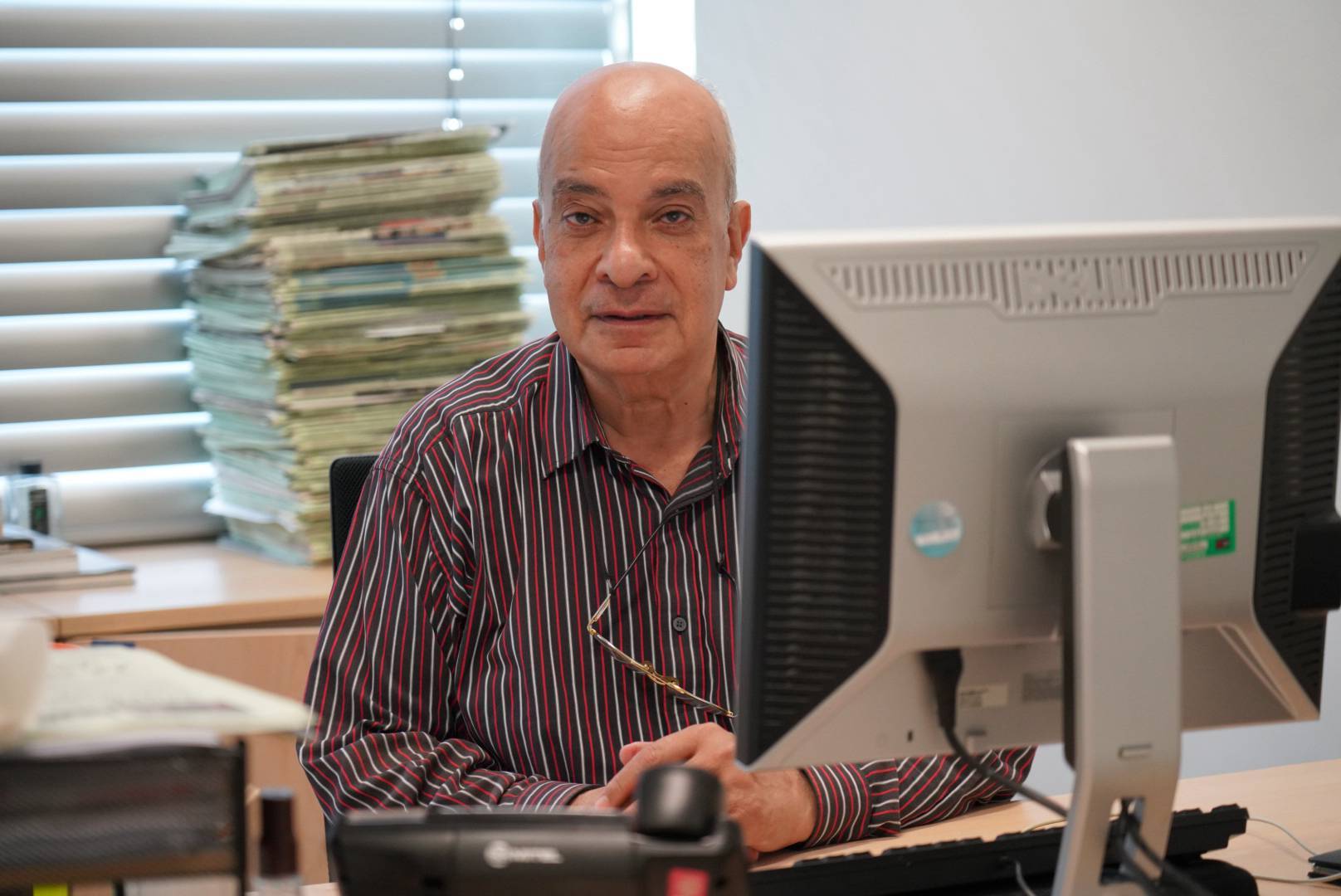
Mohammed al-Shafei at his Asharq Al-Awsat office in, as photographed by his colleague Adil al-Salmi.

He kicked off his journalism career in London in the 1980s. He worked at several Arabic newspapers published abroad, including “Al-Muslimoon” newspaper that was published by the Saudi Research & Publishing Company (SRMG) and the London-based “Al-Arab” newspaper. He returned to SRMG by working for the “Al-Zahira” newspaper that was established after the Iraqi invasion of Kuwait. The years he will spend at the newspaper will shape his deep knowledge of regional conflicts and their complexities.

He joined Asharq Al-Awsat newspaper in 1991, starting off in the sports section, where he worked for 15 years, during which he showed high professionalism and a remarkable ability to follow up and analyze news before moving on to the next step in his career by handling the terrorism file. He became a pioneer in Arab journalism, relying on accurate documentation and deep analyses while steering clear of sensationalism in tackling the most sensitive issues.
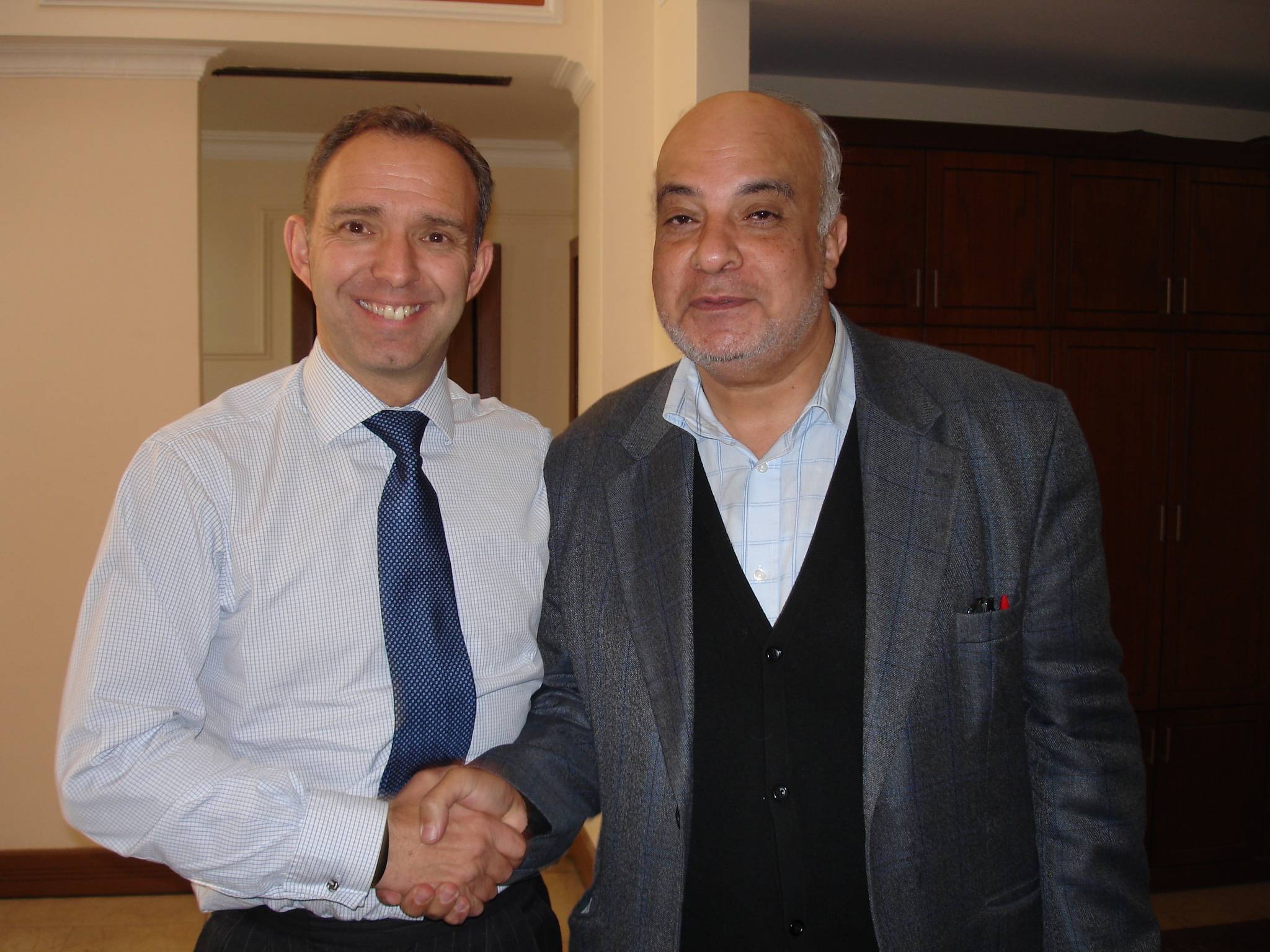
Mohammed al-Shafei with former British Ambassador to Afghanistan Mark Sedwill. (Asharq Al-Awsat)

His accomplishments include holding direct interviews with senior al-Qaeda leaders, including Mullah Omar. He traveled to Afghanistan where he interviewed Taliban leaders during times of heightened tensions. The rare insights offered by his interviews became a main reference for researchers and journalists interested in jihadists groups.

During the war on al-Qaeda, al-Shafei made several field visits to American bases in Afghanistan, joined international forces in conflict zones and carried out investigative reports from the battlefield, offering a glimpse of developments on the ground, the nature of the operations and the complexities of the scene, which was rare in Arab journalism at the time.
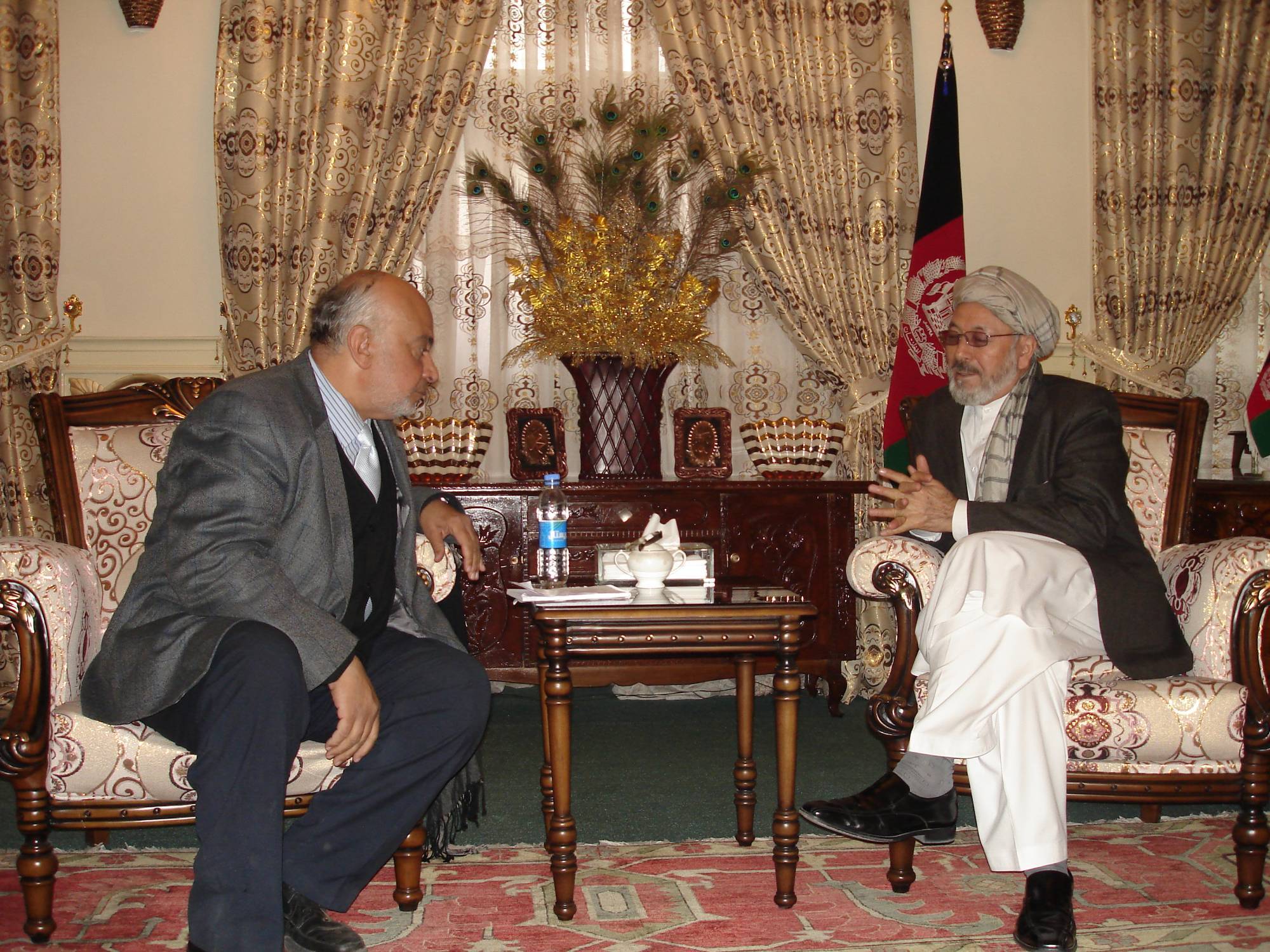
Mohammed al-Shafei interviews former Afghan Vice President Abdul Karim Khalili. (Asharq Al-Awsat)

Al-Shafei also carried out several interviews of Osama bin Laden’s son, presenting a humanitarian angle of the news and underscoring his professional ability to reach what were perceived as inaccessible sources, all without losing his professionalism and objectivity.

He was among the few Arab journalists who carried out interviews from Guantanamo prison where al-Qaeda members were being detained. The interviews offered yet another rare insight into terrorism issues and how these groups operate.

Al-Shafei helped in writing the book, “Al-Qaeda’s Men in Iran... A Safe Haven and Suspicious Alliance”, which was a result of years of research. It is seen as one of the first Arab publications about Iran’s ties to al-Qaeda, revealing that they had existed for years and were based on mutual interests.
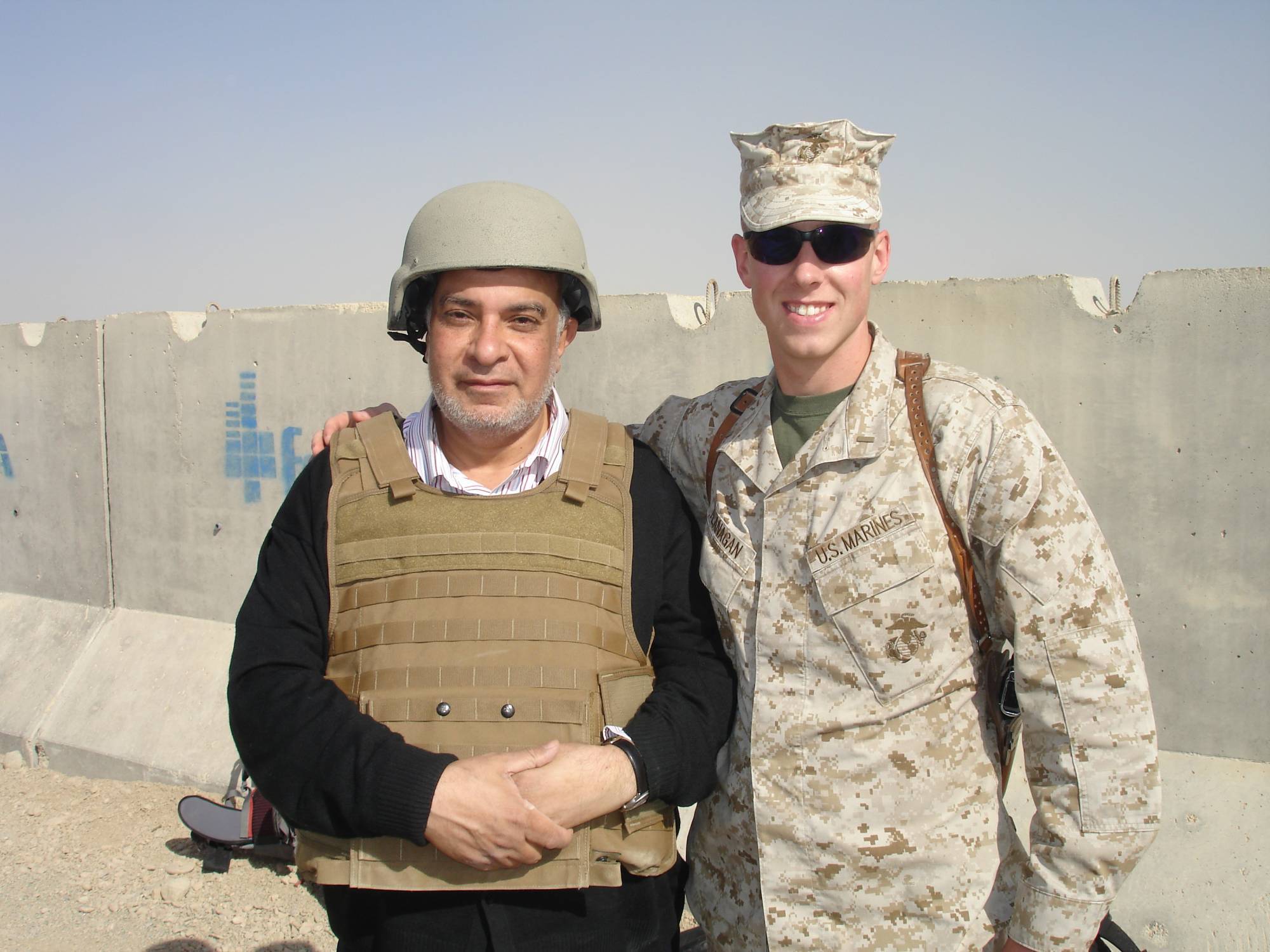
Mohammed al-Shafei with an American soldier in Afghanistan. (Asharq Al-Awsat)

Al-Shafei married a Turkish woman in London in the late 1970s. They have a son and daughter. His son, Mahmoud, followed in his father’s footsteps, pursuing a career in journalism. He worked for Asharq Al-Awsat for three years.

Hours before his passing, al-Shafei remained dedicated to his profession. He wrote several articles that he sent to Asharq Al-Awsat and was in touch with his colleague by telephone to follow up on his work as was his habit throughout his career. With his passing, Arab journalism loses a calm and hardworking journalist, who was known by his colleagues for his discipline and humility.



Rescue Teams Search for Survivors in Building Collapse that Killed at Least 2 in Northern Lebanon

A Lebanese flag is pictured, in the aftermath of a massive explosion, in Beirut's damaged port area, Lebanon August 17, 2020. REUTERS/Hannah McKay
TT

Rescue Teams Search for Survivors in Building Collapse that Killed at Least 2 in Northern Lebanon

A Lebanese flag is pictured, in the aftermath of a massive explosion, in Beirut's damaged port area, Lebanon August 17, 2020. REUTERS/Hannah McKay

At least two people were killed and four rescued from the rubble of a multistory apartment building that collapsed Sunday in the city of Tripoli in northern Lebanon, state media reported.

Rescue teams were continuing to dig through the rubble. It was not immediately clear how many people were in the building when it fell.

The bodies pulled out were of a child and a woman, the state-run National News Agency reported.

Dozens of people crowded around the site of the crater left by the collapsed building, with some shooting in the air.

The building was in the neighborhood of Bab Tabbaneh, one of the poorest areas in Lebanon’s second largest city, where residents have long complained of government neglect and shoddy infrastructure. Building collapses are not uncommon in Tripoli due to poor building standards, according to The AP news.

Lebanon’s Health Ministry announced that those injured in the collapse would receive treatment at the state’s expense.

The national syndicate for property owners in a statement called the collapse the result of “blatant negligence and shortcomings of the Lebanese state toward the safety of citizens and their housing security,” and said it is “not an isolated incident.”

The syndicate called for the government to launch a comprehensive national survey of buildings at risk of collapse.


Israel to Take More West Bank Powers and Relax Settler Land Buys

A view of Israeli settlement of Maale Adumim, in the West Bank, Sunday, June 18, 2023. (AP)
TT

Israel to Take More West Bank Powers and Relax Settler Land Buys

A view of Israeli settlement of Maale Adumim, in the West Bank, Sunday, June 18, 2023. (AP)

Israel's security cabinet approved a series of steps on Sunday that would make it easier for settlers in the occupied West Bank to buy land while granting Israeli authorities more enforcement powers over Palestinians, Israeli media reported.

The West Bank is among the territories that the Palestinians seek for a future independent state. Much of it is under Israeli military control, with limited Palestinian self-rule in some areas run by the Western-backed Palestinian Authority (PA).

Citing statements by Finance Minister Bezalel Smotrich and Defense Minister Israel Katz, Israeli news sites Ynet and Haaretz said the measures included scrapping decades-old regulations that prevent Jewish private citizens buying land in the West Bank, The AP news reported.

They were also reported to include allowing Israeli authorities to administer some religious sites, and expand supervision and enforcement in areas under PA administration in matters of environmental hazards, water offences and damage to archaeological sites.

Palestinian President Mahmoud Abbas said the new measures were dangerous, illegal and tantamount to de-facto annexation.

The Israeli ministers did not immediately respond to requests for comment.

The new measures come three days before Prime Minister Benjamin Netanyahu is scheduled to meet in Washington with US President Donald Trump.

Trump has ruled out Israeli annexation of the West Bank but his administration has not sought to curb Israel's accelerated settlement building, which the Palestinians say denies them a potential state by eating away at its territory.

Netanyahu, who is facing an election later this year, deems the establishment of any Palestinian state a security threat.

His ruling coalition includes many pro-settler members who want Israel to annex the West Bank, land captured in the 1967 Middle East war to which Israel cites biblical and historical ties.

The United Nations' highest court said in a non-binding advisory opinion in 2024 that Israel's occupation of Palestinian territories and settlements there is illegal and should be ended as soon as possible. Israel disputes this view.


Arab League Condemns Attack on Aid Convoys in Sudan

A general view shows the opening session of the meeting of Arab foreign ministers at the Arab League Headquarters (Reuters)
TT

Arab League Condemns Attack on Aid Convoys in Sudan

A general view shows the opening session of the meeting of Arab foreign ministers at the Arab League Headquarters (Reuters)

Arab League Secretary-General Ahmed Aboul Gheit strongly condemned the attack by the Rapid Support Forces on humanitarian aid convoys and relief workers in North Kordofan State, Sudan.

In a statement reported by SPA, secretary-general's spokesperson Jamal Rushdi quoted Aboul Gheit as saying the attack constitutes a war crime under international humanitarian law, which prohibits the deliberate targeting of civilians and depriving them of their means of survival.

Aboul Gheit stressed the need to hold those responsible accountable, end impunity, and ensure the full protection of civilians, humanitarian workers, and relief facilities in Sudan.