


Israeli Leaks Test Prospects for Gaza Deal’s Second Phase

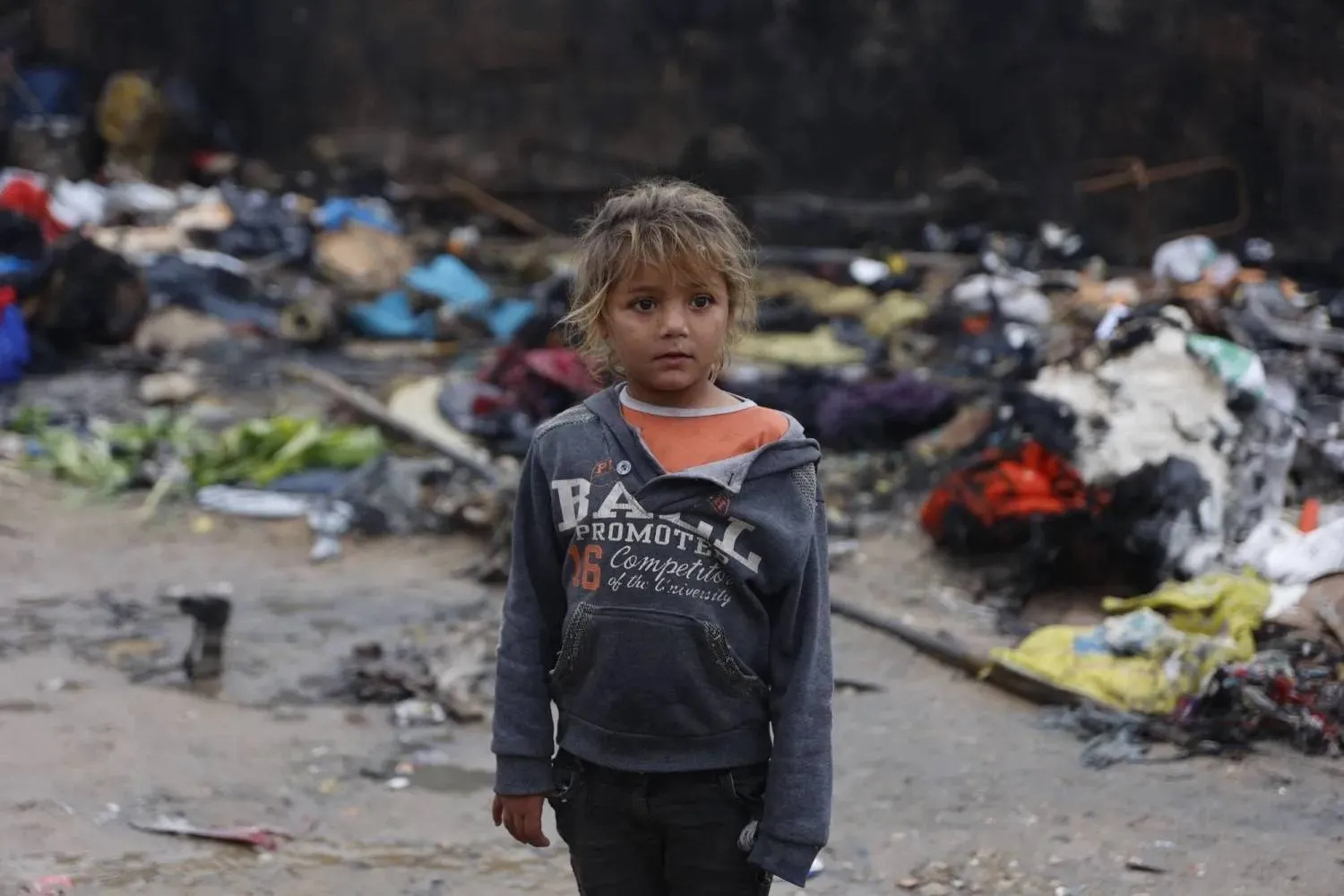
A young girl stands in front of tents that burned after candles were lit for lighting at a displacement camp in Gaza City on Friday (AFP)
TT

Israeli Leaks Test Prospects for Gaza Deal’s Second Phase

A young girl stands in front of tents that burned after candles were lit for lighting at a displacement camp in Gaza City on Friday (AFP)

A stream of Israeli leaks has highlighted moves toward alternative scenarios in Gaza if the disarmament of Hamas is not carried out soon.

The options being floated range from freezing reconstruction across the enclave and limiting rebuilding to areas under Israeli control to the prospect of renewed military operations.

Experts who spoke to Asharq Al-Awsat described the leaks about alternative plans to confront Hamas as pressure tactics and contingency plans, saying they reflect expectations that the main plan to disarm the resistance will not be implemented immediately.

They said such measures further complicate the path of the second phase, making it, even if launched, a lengthy process due to Israeli obstacles.

Israel’s Yedioth Ahronoth newspaper reported on Friday, citing sources, that the army is preparing alternative plans to carry out a new military operation in Gaza to dismantle Hamas infrastructure if an international force fails in its mission.

This followed earlier Israeli talk of starting partial reconstruction in the southern city of Rafah before Hamas is disarmed, according to Israel’s Channel 12. That proposal contradicts efforts by Arab states to pursue a comprehensive reconstruction of Gaza.

The leaks came after a meeting last week between US President Donald Trump and Israeli Prime Minister Benjamin Netanyahu.

Israel Hayom reported at the time that the two had agreed on Jan. 15 as the date to begin the second phase of Trump’s Gaza plan, with a two-month deadline to dismantle Hamas’ weapons, amid presidential threats against the Palestinian movement if it fails to comply.

Mokhtar Ghobashy, Secretary General of the Al-Farabi Center for Strategic Studies, stated that the second phase of the Gaza agreement is inherently complex and that Israel does not want to enter it except on terms that serve its interests.

He said this became clear after the Trump-Netanyahu meeting, noting that there appears to be an agreed path allowing the launch of the second phase, but at a slow pace. Any acceleration, he said, would depend on the interests achieved by both sides, not just the Palestinians.

Barakat Al-Farra, a former Palestinian ambassador to Egypt, said that the repeated Israeli leaks since last week’s Trump-Netanyahu meeting indicate attempts and contingency plans aimed at complicating the second phase, even if it begins, and that its implementation would be delayed due to Israeli obstacles.

Amid the Israeli leaks, the foreign ministers of Saudi Arabia, Egypt, Jordan, the United Arab Emirates, Indonesia, Pakistan, Türkiye and Qatar issued a joint statement on Friday calling for the implementation of Trump’s Gaza agreement.

They stressed the need for the immediate, full and unhindered entry of humanitarian aid into Gaza through the United Nations and its agencies, as well as the rehabilitation of infrastructure and hospitals and the opening of the Rafah crossing in both directions.

The eight ministers emphasized the urgent need to immediately launch and expand early recovery efforts, including providing permanent and dignified shelter to protect residents from harsh winter conditions.

The statement also renewed the eight countries’ full support for UN Security Council Resolution 2803 and for the comprehensive plan presented by Trump.

The ministers said they are committed to contributing to its successful implementation in a way that ensures the sustainability of the ceasefire, ends the war in Gaza, secures a dignified life for Palestinians, and leads to a credible path toward Palestinian self-determination and statehood.

Resolution 2803 was adopted by the Security Council in November and welcomed Trump’s 20-point plan to end the Gaza conflict, which was issued on September 29, 2025.

Despite the end of the war after the ceasefire agreement entered into force on Oct. 10, 2025, living conditions have not improved significantly due to Israel’s failure to meet its commitments under the deal.

These include allowing the agreed-upon quantities of food, relief, and medical supplies, as well as mobile homes, and opening border crossings.

Ghobashy said the joint statement by the eight Arab and Islamic countries extends pressure efforts to accelerate the move toward the second phase and to enforce Israel’s delayed commitments from the first phase, particularly those related to opening the Rafah crossing in both directions and increasing the flow of aid.

Al-Farra, meanwhile, said mediators have no option but to continue applying pressure to prevent any further complications for the second phase, predicting that 2026 will not differ from previous periods since the Gaza agreement began in October.




EU Chief von der Leyen to Visit Syria, Lebanon This Week

European Commission President Ursula von der Leyen, addresses journalists during a visit to Sarajevo, Bosnia and Herzegovina, January 23, 2024. (Reuters)
TT

EU Chief von der Leyen to Visit Syria, Lebanon This Week

European Commission President Ursula von der Leyen, addresses journalists during a visit to Sarajevo, Bosnia and Herzegovina, January 23, 2024. (Reuters)

EU chief Ursula von der Leyen will visit Syria later this week on a first trip to the country since the fall of Bashar al-Assad, a spokeswoman said Monday.

Von der Leyen will head to Syria as part of a tour of the Middle East that will also see her visit Jordan and Lebanon, spokeswoman Paula Pinho said.


Israel Says Ban on Gaza Media Access Should Stay

A Palestinian woman holds her child beside piles of rubble while heading toward Gaza City on Friday. (AFP)
TT

Israel Says Ban on Gaza Media Access Should Stay

A Palestinian woman holds her child beside piles of rubble while heading toward Gaza City on Friday. (AFP)

Israeli authorities have told the Supreme Court that a ban on international media access to Gaza should remain in place, arguing it is necessary for security reasons, according to a government submission filed by the public prosecutor. 

Since the outbreak of the Gaza war in October 2023, triggered by an attack on Israel by the Palestinian group Hamas, Israeli authorities have barred foreign journalists from independently entering the devastated territory, said AFP. 

Instead, Israel has allowed only a limited number of reporters to enter Gaza on a case-by-case basis, embedded with its military forces inside the blockaded territory. 

The Foreign Press Association (FPA), which represents hundreds of foreign journalists working in Israel and the Palestinian territories, filed a petition with the Supreme Court in 2024 seeking immediate and unrestricted access for international media to the Gaza Strip. 

Since then the court has given several extensions to the Israeli authorities to come up with a plan, but at a hearing last month it set January 4 as a final deadline. 

Late on Sunday, the Israeli authorities filed their response with the court, a copy of which was obtained by AFP. 

In the submission, the government said the ban on media access to Gaza should continue, citing security risks in the territory. 

"Even at this time, entry of journalists into the Gaza Strip without escort, as requested in the petition, should not be permitted," said the government submission. 

"This is for security reasons, based on the position of the defense establishment, which maintains that a security risk associated with such entry still exists." 

The Israeli authorities said the ceasefire in Gaza, which came into effect on October 10, continues to face regular threats. 

At least 420 Palestinians have been killed in Gaza by Israeli forces since the ceasefire took effect, according to Gaza's health ministry. 

The Israeli military said three of its soldiers have also been killed by militants during the same period. 

The Israeli authorities said in their submission that the search for the remains of the last hostage held in Gaza is ongoing, suggesting that allowing journalists into the territory at this stage could hinder the operation. 

The remains of Ran Gvili, whose body was taken to Gaza after he was killed during the Hamas attack on October 7, 2023, have still not been recovered despite the ceasefire. 

All other 250 hostages seized on that day - both the living and the deceased - have been returned to Israel. 

The Supreme Court is expected to issue a ruling on the matter, though it is unclear when a decision will be handed down. 


Calls in Lebanon for Immediate Action Against ‘Remnants’ of Assad Regime

The Masnaa border crossing between Lebanon and Syria. (AFP)
TT

Calls in Lebanon for Immediate Action Against ‘Remnants’ of Assad Regime

The Masnaa border crossing between Lebanon and Syria. (AFP)

Reports about the presence of “remnants of the former Syrian regime” in Lebanon have raised concerns that they could destabilize internal security or turn Lebanese territory into a platform for targeting Syria’s security and stability.

Authorities and security agencies have launched a broad campaign to verify these reports as voices across Lebanon warned of the presence of former Syrian officers in certain regions, particularly in the North and Bekaa Valley in the east.

The Lebanese Army Command regularly announces raids and security operations against suspects. The latest such operation was announced on Sunday, when dozens were detained, mostly Syrians, in northern Lebanon and the Bekaa.

In a statement, the Army Command said it carried out operations against wanted suspects, arresting nine Lebanese citizens and 35 Syrians in the regions of Akkar, Tripoli, Batroun, Baalbek and Hermel on charges including opening fire, possession of weapons, drug use, and human smuggling.

The army added that weapons, ammunition, drugs and military equipment were seized, and that investigations had begun under the supervision of the relevant judiciary.

Previously, a number of municipalities in northern Lebanon had issued statements urging security agencies to tighten measures in their areas, saying several former regime members have sought safety in their towns. They also spoke of the daily movement of suspicious vehicles.

Similar warnings have since emerged from the Bekaa. Dar al-Fatwa in Rashaya issued a statement on Sunday calling on the state to take “immediate, swift and decisive action to arrest the remnants of the Syrian regime in Lebanon and return them to Syria for trial.”

MP Wael Abou Faour, a member of the Democratic Gathering bloc, called on “the Lebanese security agencies to fulfill their duties with regard to the large number of officers from the remnants of the regime of former Syrian president Bashar al-Assad who are present in Lebanon.”

He stressed that despite the fall of the regime, “Lebanese-Syrian relations are governed by the Taif Agreement, which clearly stipulates that Lebanon must not be a base or a transit point for any attack on Syria’s security, and vice versa.”

“The Lebanese state must therefore act to uncover the truth and arrest officers from the remnants of the regime who are hiding in Lebanon.”