


Venezuela's Oil Facilities Unscathed in US Strike

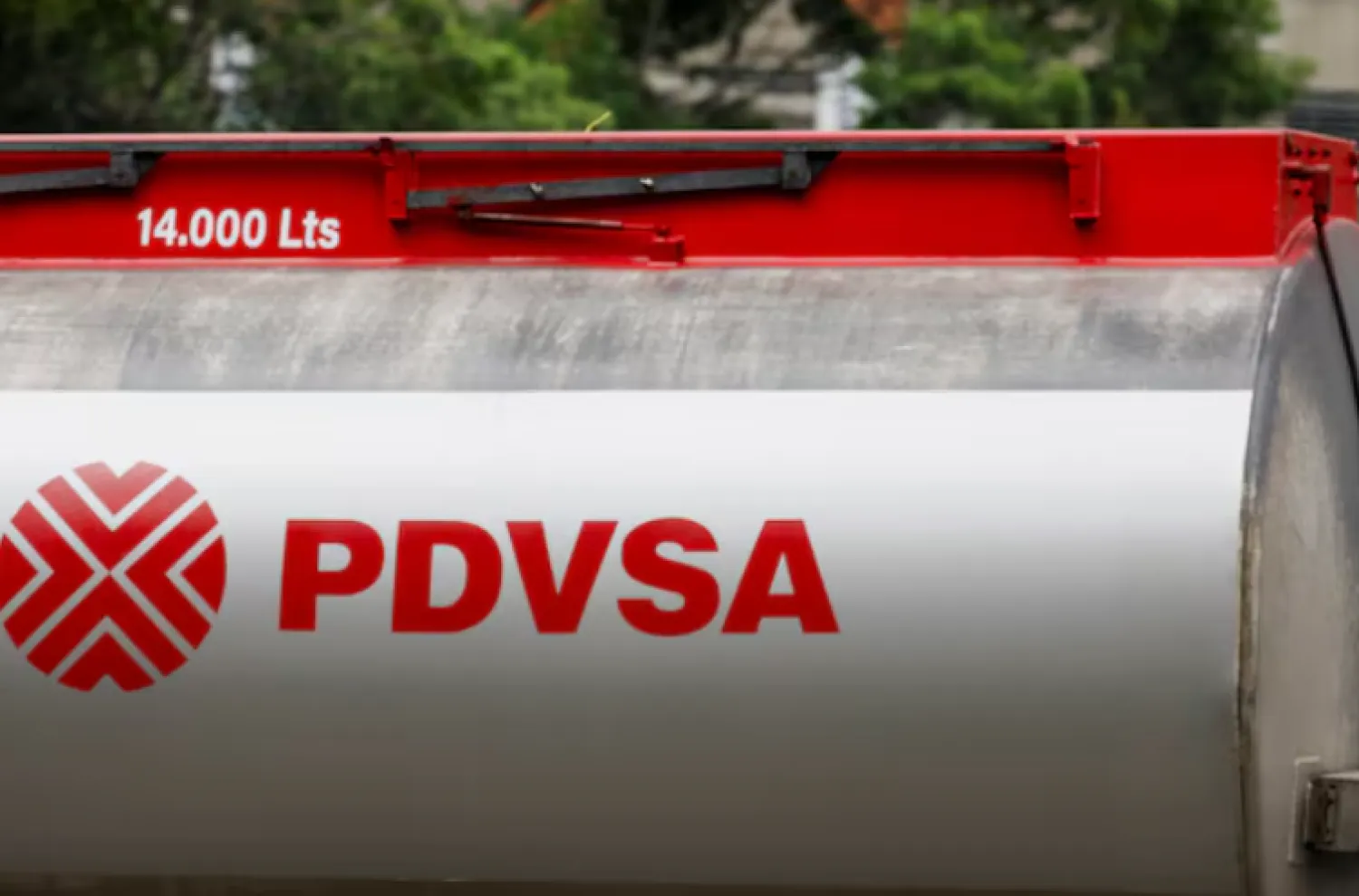
The logo of Venezuelan state oil company PDVSA is seen on a fuel tank truck, in Caracas, Venezuela May 14, 2025. REUTERS/Leonardo Fernandez Viloria
TT

Venezuela's Oil Facilities Unscathed in US Strike

The logo of Venezuelan state oil company PDVSA is seen on a fuel tank truck, in Caracas, Venezuela May 14, 2025. REUTERS/Leonardo Fernandez Viloria

Venezuela's state-run oil production and refining were operating normally on Saturday ​and suffered no damage from a US strike to extract the country's president, two sources with knowledge of the operations of energy company PDVSA said.

US forces captured President Nicolas Maduro, US President Donald Trump said, after months of pressuring ‌him over accusations ‌of drug-running and illegitimacy ‌in ⁠power.

The ​port ‌of La Guaira near Caracas, one of the country's largest but one not used for oil exports, was reported to have suffered severe damage, one of the sources said.

Trump in December announced a blockade ⁠of oil tankers entering or leaving the country and ‌the US seized two ‍cargoes of Venezuelan oil.

That ‍lowered the OPEC country's exports last ‍month to about half of the 950,000 barrels per day (bpd) it shipped in November, according to monitoring data and internal documents.

The US measures ​prompted many vessel owners to divert away from Venezuelan waters, which has ⁠rapidly increased PDVSA's inventories of crude and fuel.

PDVSA has been forced to slow down deliveries at ports and store oil on tankers to avoid crude output or refining cut-backs.

PDVSA's administrative system also has not fully recovered from a cyberattack in December that forced it to isolate terminals, oilfields and refineries from its central system and to ‌resort to written records to continue operations.


Saudi Ports Authority Signs Seven Agreements Worth Over $266 Million to Develop Logistics Centers

A container terminal at one of Saudi Arabia's ports. (SPA)
TT

Saudi Ports Authority Signs Seven Agreements Worth Over $266 Million to Develop Logistics Centers

A container terminal at one of Saudi Arabia's ports. (SPA)

The Saudi Ports Authority (Mawani) has signed seven agreements to establish logistics centers in Jeddah, western Saudi Arabia, with a total value exceeding SAR 1 billion ($266 million).

The signing ceremony was attended by Minister of Transport and Logistic Services Saleh Al-Jasser and Mawani President Suliman Al-Mazroua.

Al-Mazroua said the new agreements provide for the development of logistics centers under concession terms of up to 25 years, supporting efforts to position Jeddah as a global logistics hub. He noted that two agreements were signed with international companies, while five were awarded to Saudi firms with global ambitions. Valued at more than SAR 1 billion, the projects are also expected to create additional jobs.

He said that in February, at the onset of the Strait of Hormuz crisis, the Minister issued urgent directives to prepare the Kingdom's western coast to receive supply chains serving Saudi Arabia and the Gulf region. As a result, all entities involved in the logistics ecosystem worked toward that objective.

Al-Mazroua said Mawani focused on several key areas. The first was strengthening maritime connectivity by increasing shipping services to compensate for the shortfall affecting the Kingdom's eastern region.

During the crisis, more than 27 additional shipping services were introduced on the western coast, increasing capacity by more than 200,000 TEUs (twenty-foot equivalent units) per month to offset the shortfall.

He added that the second area focused on preparing ports to handle higher volumes by streamlining procedures with the Saudi Customs Authority and terminal operators, while expanding equipment capacity. Investments in these measures exceeded SAR 640 million over a three-month period.


Oil Eases as Traders Weigh US-Iran Conflict Risks

A horse grazes near an oil drilling rig in Kazakhstan (Reuters)
TT

Oil Eases as Traders Weigh US-Iran Conflict Risks

A horse grazes near an oil drilling rig in Kazakhstan (Reuters)

Oil prices eased on Thursday as traders weighed escalating tensions between the United States and Iran and the risks to oil supplies moving through the Strait of Hormuz.

Brent crude futures were down 27 cents, or 0.32%, to $84.68 a barrel at 1011 GMT, while US West Texas Intermediate futures were down 11 cents, or 0.14%, to $79.49 a barrel. Both contracts remain close to one-month highs.

"The market is still reacting with a surprising degree of calmness," said Ole Hvalbye, market analyst at SEB Research, Reuters reported.

"It seems reasonable that prices could continue to climb towards $90-$95 and maybe even touch the $100 mark again and that is because the Strait of Hormuz is repeatedly being disrupted, creating uncertainty over oil flows from the Gulf."

The US struck Iran's coastal defences and missile sites on Wednesday after reimposing a naval blockade of its ports, while Tehran threatened to shut off more regional energy exports, saying it was engaged in an "existential war" with America.

The escalation comes after a fragile truce reached in June collapsed, reviving fears of a return to full-scale conflict and disrupting energy flows through the Strait of Hormuz, which handled about a fifth of daily global oil and LNG trade before the war began.

Fewer vessels passed through the strait on Wednesday, the first day after the US reimposed its naval blockade on Iran. Seven crossed on Wednesday, down from 13 the previous day.

"Markets could remain cautious as they assess immediate supply risks. So far, despite heightened military tensions, oil tankers continue to sail through the Strait of Hormuz, although in more limited numbers," said Wael Makarem, financial markets strategist lead at Exness.

Iran said on Thursday the strait was an inviolable "red line", warning that if US President Donald Trump carried out his threat to attack Iran's infrastructure, it would strike all infrastructure across the Gulf region.

Analysts say Iran has signalled it may use its Houthi allies in Yemen to shut the Bab el-Mandeb gateway to the Red Sea, opening a new front against Washington and putting a second of the world's most vital energy arteries at risk.

Oxford Economics said the likeliest scenario was that low, fluctuating levels of traffic through the strait spark intermittent oil price rallies that keep average prices above $80 per barrel for several quarters.

Elsewhere, Ukraine's Security Service said on Thursday that together with Ukraine's navy it has struck two Russian "shadow fleet" tankers with naval drones in the Black Sea.


Crude Oil Loading Suspended at All Iraqi Terminals after Drone Incident

FILE PHOTO: Drone view of oil tanker HELGA berthed at one of Iraq's southern offshore oil terminals near Basra as it prepares to load crude oil, April 24, 2026. REUTERS/Mohammed Aty/File Photo
TT

Crude Oil Loading Suspended at All Iraqi Terminals after Drone Incident

FILE PHOTO: Drone view of oil tanker HELGA berthed at one of Iraq's southern offshore oil terminals near Basra as it prepares to load crude oil, April 24, 2026. REUTERS/Mohammed Aty/File Photo

Crude oil loading was suspended at all Iraqi terminals on Thursday after a drone crashed into an oil tanker at the Basra terminal, although it did not cause damage ⁠or a fire, ⁠four Iraqi oil and security sources told Reuters.

Iraq's oil terminals are located in the ⁠south. It was not immediately clear who launched the drone.

The oil tanker was towed outside the port alongside another tanker that was anchored as a precautionary measure.

On Wednesday, a ⁠drone ⁠came down in Iraq's Faw port without causing any damage, the state news agency reported, without giving further details. Operations at the port were not affected.
