
Iran Says ‘Prepared for War’ as Alarm Grows over Protest Toll

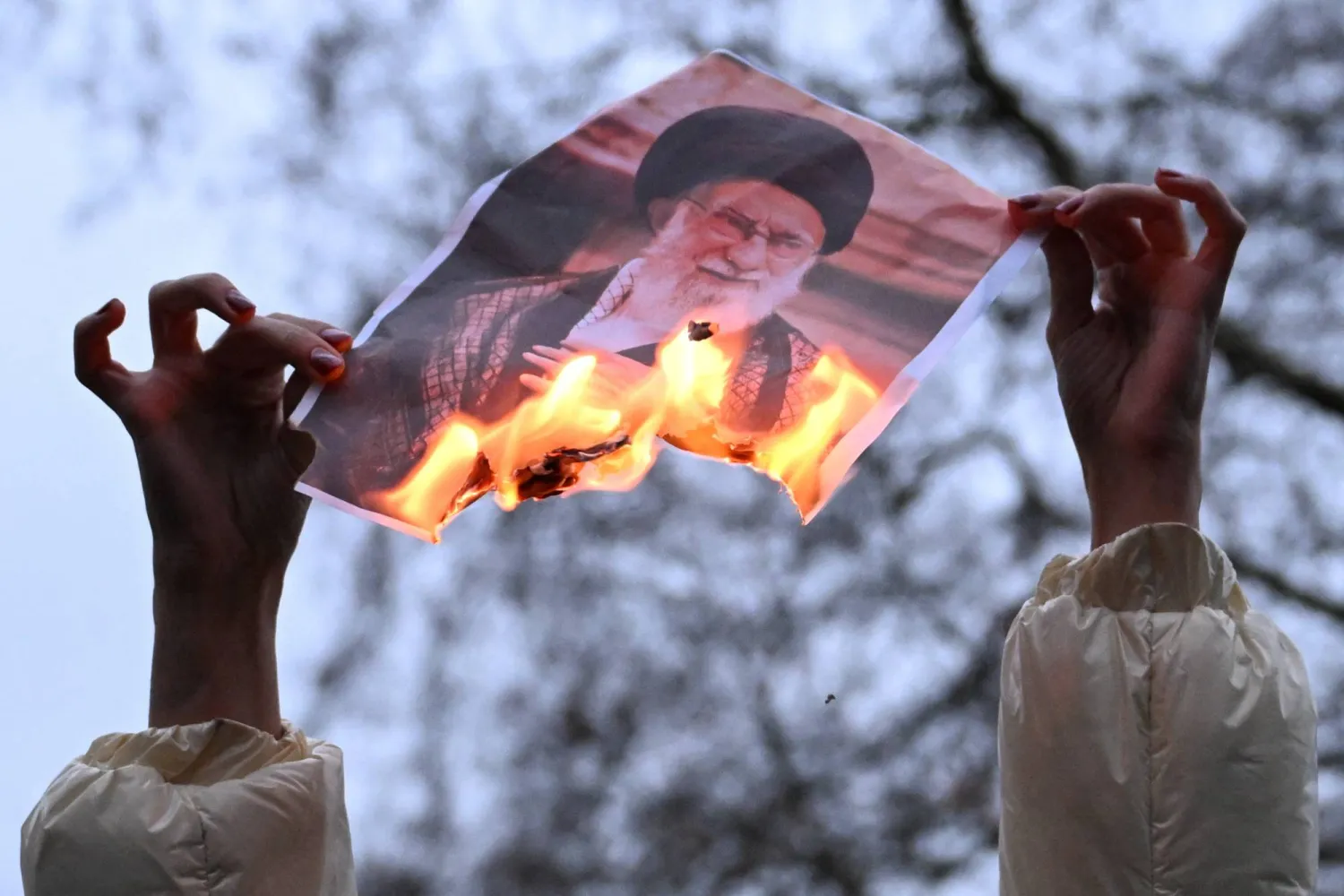
A demonstrator holds a burning photo of Iran's Supreme Leader Ali Khamenei, during a protest in support of the Iranian people outside Downing Street, as protests have spread across Iran since the end of December in response to soaring inflation and protesters demanding an end to clerical rule, in London, Britain, January 11, 2026. REUTERS/Chris J Ratcliffe
TT

Iran Says ‘Prepared for War’ as Alarm Grows over Protest Toll

A demonstrator holds a burning photo of Iran's Supreme Leader Ali Khamenei, during a protest in support of the Iranian people outside Downing Street, as protests have spread across Iran since the end of December in response to soaring inflation and protesters demanding an end to clerical rule, in London, Britain, January 11, 2026. REUTERS/Chris J Ratcliffe

Iran's foreign minister said on Monday the country is ready for both war and talks after repeated threats from US President Donald Trump to intervene militarily over a crackdown on protests that activists fear has killed hundreds.

Over two weeks of protests initially sparked by economic grievances have turned into one of the biggest challenges yet to the theocratic system that has ruled Iran since the 1979 revolution that ousted the shah.

In a sign of the severity of the crisis, the authorities have imposed an internet blackout that has now lasted more than three-and-a-half days and that activists say is aimed at masking the extent of the deadly crackdown.

Seeking to regain the initiative, the government was looking to fill streets nationwide with rallies backing the republic.

Trump said Sunday that Iran's leadership under Ali Khamenei, in power since 1989 and now 86, had called him seeking "to negotiate" after he repeatedly threatened to intervene militarily if Tehran killed protesters.

"Iran is not seeking war but is fully prepared for war," Foreign Minister Abbas Araghchi told a conference of foreign ambassadors in Tehran broadcast by state television.

"We are also ready for negotiations but these negotiations should be fair, with equal rights and based on mutual respect."

Foreign ministry spokesman Esmaeil Baghaei said a channel of communication is open between Araghchi and Trump's special envoy for the Middle East Steve Witkoff despite the lack of diplomatic relations.

"Messages are exchanged whenever necessary," he said, noting that while the United States has no diplomatic presence in Iran, its interests are represented by the Swiss embassy.

Meanwhile, the foreign minister of Oman, which has on occasion acted as a mediator, met Araghchi in Tehran on Saturday.

Trump, who has threatened new military action after the US backed Israel's 12-day war against Iran in June, said Tehran had indicated its willingness to talk.

"The leaders of Iran called yesterday," Trump told reporters aboard Air Force One, adding that "a meeting is being set up... They want to negotiate".

He added, however, that "we may have to act before a meeting".

- Soaring toll -

Iran's shutdown of the internet has now lasted more than 84 hours, said monitor Netblocks. The blackout has severely affected the ability of Iranians to post videos of the mass protests that have rocked big cities since Thursday.

A video circulating on Sunday showed dozens of bodies accumulating outside a morgue south of Tehran amid fears the toll from a crackdown on the protests could amount to hundreds of people or even higher.

The footage, geolocated by AFP to Kahrizak, showed bodies wrapped in black bags, with what appeared to be grieving relatives searching for loved ones.

The Norway-based NGO Iran Human Rights (IHR) said it confirmed the killing of at least 192 protesters but that the actual toll could be much higher.

"Unverified reports indicate that at least several hundreds, and according to some sources, more than 2,000 people may have been killed," said IHR.

More than 2,600 protesters have been arrested, IHR estimated.

The People's Mujahedin (MEK) opposition group, which is banned in Iran, said that according to its sources inside the country more than 3,000 people have been killed.

Iranian state media has said dozens of members of the security forces have been killed, with their funerals turning into large pro-government rallies.

State outlets were at pains to present a picture of calm returning, broadcasting images of smooth-flowing traffic. Tehran Governor Mohammad-Sadegh Motamedian insisted in televised comments that "the number of protests is decreasing".

With the government declaring three days of national mourning for victims of what it has termed "riots", state television broadcast images of pro-government rallies beginning in several cities with a march in Tehran expected later Monday.

- 'Stand with the people' -

Reza Pahlavi, the US-based son of Iran's ousted shah, urged Iran's security forces and government workers to join the protests against the authorities.

"Employees of state institutions, as well as members of the armed and security forces, have a choice: stand with the people and become allies of the nation, or choose complicity with the murderers of the people," he said in a social media post.

He also urged protesters to replace the flags outside Iranian embassies.

"The time has come for them to be adorned with Iran's national flag," he said.

The ceremonial, pre-revolution flag has become an emblem of the global rallies that have mushroomed in support of Iran's demonstrators.

In London, protesters over the weekend swapped out the Iranian embassy flag, hoisting in its place a banner featuring a Persian lion used under the shah. The Iranian foreign ministry said it had summoned the British ambassador to Tehran over the incident.


Kremlin Says It Is in Constant Touch with Iranian Leaders

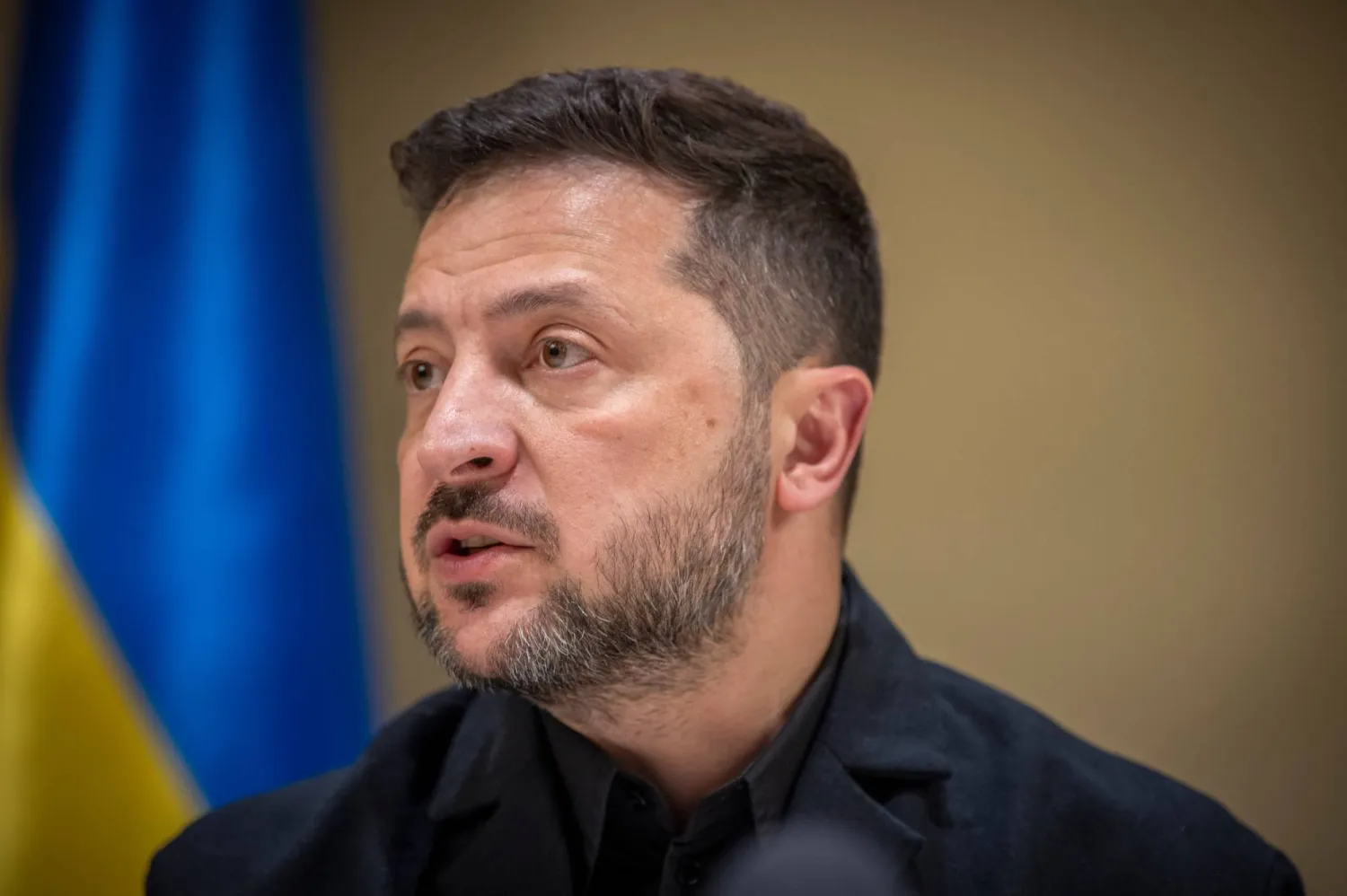
05 March 2026, Russia, Moscow: Kremlin Spokesman Dmitry Peskov attends a meeting between Russian President Vladimir Putin and President of the Central African Republic Faustin-Archange Touadera at the Kremlin. (Kremlin/dpa)
TT

Kremlin Says It Is in Constant Touch with Iranian Leaders

05 March 2026, Russia, Moscow: Kremlin Spokesman Dmitry Peskov attends a meeting between Russian President Vladimir Putin and President of the Central African Republic Faustin-Archange Touadera at the Kremlin. (Kremlin/dpa)

Russia is constantly in touch with the Iranian leadership and willing to contribute to efforts to stabilize the region, the Kremlin said ‌on Wednesday.

"Here ‌I can ‌only ⁠say that we are ⁠in constant contact with the Iranian side and with the Iranian leadership," Kremlin spokesman ⁠Dmitry Peskov told reporters.

"As ‌President (Vladimir) ‌Putin has said, ‌Russia is always ready ‌to do what it can to restore peace and stability ‌in the region."

Putin and Foreign Minister Sergei Lavrov ⁠have ⁠spoken with their Iranian counterparts in recent days, while Putin also held a phone call with US President Donald Trump on Monday.


UK Bans Pro-Palestinian March Over Alleged Iran Support

A boy stands at the site of an Israeli strike on a tent sheltering displaced people, in Nuseirat, central Gaza Strip March 9, 2026. REUTERS/Mahmoud Issa
TT

UK Bans Pro-Palestinian March Over Alleged Iran Support

A boy stands at the site of an Israeli strike on a tent sheltering displaced people, in Nuseirat, central Gaza Strip March 9, 2026. REUTERS/Mahmoud Issa

The UK government has banned an annual pro-Palestinian march planned for Sunday which London police claim is organized by a group "supportive of the Iranian regime".

Interior minister Shabana Mahmood said late Tuesday she had approved the rare police request to prevent "serious public disorder" if the Al-Quds Day march and counter-protests had gone ahead.

It is the first time a protest march has been banned since 2012 but a static demonstration will be permitted, according to London's Metropolitan police.

Mahmood said she was "satisfied" a ban was "necessary" due to "the scale of the protest and multiple counter-protests, in the context of the ongoing conflict in the Middle East".

The minister added that she expected to see "the full force of the law applied to anyone spreading hatred and division".

The Islamic Human Rights Commission (IHRC), an NGO which organizes the annual Al-Quds Day march, said it "strongly condemns" the decision, which it called "politically charged".

"We are seeking legal advice and this decision will not go unchallenged," it added, accusing the Met of having "brazenly abandoned their sworn principle of policing without fear or favor".

It said the London force "unashamedly regurgitate Zionist talking points about the IHRC "without a shred of evidence".

The group describes the day and march as an "international demonstration ... in support of Palestinians and all the oppressed around the world".

Al-Quds day, which takes its name from the Arabic for Jerusalem, originated in Iran in 1979 in support of the Palestinian people, and is now marked annually in various countries, notably in the Muslim world. It aims to protest Israel's occupation of east Jerusalem.

But the Met's Assistant Commissioner Ade Adelekan said it was "uniquely contentious having originated in Iran and in London is organized by the Islamic Human Rights Commission".

He claimed that the organization was "supportive of the Iranian regime".

"The threshold to ban a protest is high and we do not take this decision lightly," AFP quoted Adelekan as saying.

He noted the Met has "a proven track record" of permitting free speech and protest rights at dozens of major pro-Palestinian and other demonstrations in recent years.

"But in our assessment this march raises unique risks and challenges," he said.

"We must consider the likely high numbers of protestors and counter protestors coming together and the extreme tensions between different factions.

"We have taken into consideration the likely impact on protests of the volatile situation in the Middle East, with the Iranian regime attacking British allies and military bases overseas."

The ban on the march and any associated counter-protest marches is valid for a month from Wednesday.


Japan Marks 15 Years Since Tsunami Disaster as Takaichi Pushes More Nuclear Energy Use

People observe a moment of silence towards the sea at 2:46 p.m. (05:46 GMT), the time when the 9.0-magnitude earthquake struck off Japan's coast in 2011, with the tsunami-crippled Fukushima Daiichi nuclear power plant seen in the background in Namie, Fukushima prefecture, Japan, March 11, 2026, to mark the 15-year anniversary of the 2011 earthquake and tsunami that killed thousands and set off a nuclear crisis. (Kyodo/via Reuters)
TT

Japan Marks 15 Years Since Tsunami Disaster as Takaichi Pushes More Nuclear Energy Use

People observe a moment of silence towards the sea at 2:46 p.m. (05:46 GMT), the time when the 9.0-magnitude earthquake struck off Japan's coast in 2011, with the tsunami-crippled Fukushima Daiichi nuclear power plant seen in the background in Namie, Fukushima prefecture, Japan, March 11, 2026, to mark the 15-year anniversary of the 2011 earthquake and tsunami that killed thousands and set off a nuclear crisis. (Kyodo/via Reuters)

Japan marked the 15th anniversary of the earthquake, tsunami and nuclear disaster on its northeastern coast Wednesday as the government pushes for more use of atomic energy.

The magnitude 9.0 earthquake and tsunami on March 11, 2011, ravaged parts of the region, caused more than 22,000 deaths and forced nearly half a million people to flee their homes, most of them due to tsunami damage.

Some 160,000 people fled their homes in Fukushima because of the radiation spewed from the tsunami-hit Fukushima Daiichi nuclear power plant. About 26,000 of them haven't returned because they resettled elsewhere, their hometowns remain off-limits or they have lingering concerns about radiation.

Japan observed a moment of silence at 2:46 p.m., the moment the quake occurred 15 years earlier.

Prime Minister Sanae Takaichi, at a ceremony in Fukushima, pledged to do the utmost to accelerate the region's recovery within the next five years and reinforce “the valuable lessons we learned from the huge sacrifice of the disaster.”

Takaichi has pushed to accelerate reactor restarts and sought to bolster nuclear power as a stable energy source, in line with the major reversal of policy in 2022 that ended a decade-long nuclear phase-out plan.

Some residents in the tsunami-ravaged areas walked down to the coast early morning to pray for their loved ones and others whose remains are still missing.

More than 1 million homes, offices and schools were damaged or destroyed in the quake and tsunami in Iwate, Miyagi, Fukushima and other coastal areas. Key infrastructure has been rebuilt, but communities and local economies have been slow to recover.

The Fukushima Daiichi plant lost its power and cooling functions, causing meltdowns in three of its six reactors. The three reactors contain at least 880 tons of melted fuel debris, but details of the state inside them are little known due to the still-dangerous radiation levels.

Fuller-scale removal of melted fuel debris has been delayed until 2037 or later. At Unit 1 which just got a new roof, workers will shortly start taking out top-floor debris ahead of the planned spent fuel removal from its cooling pool, which will begin around 2027-2028.

There's also a massive amount of slightly radioactive soil, enough to fill 11 baseball stadiums, from the decontamination efforts across the area.

The government has pledged to move the soil and has sought to use some for road construction and other public works projects but has faced public resistance.