


Trump Says US Will Take Greenland 'One Way or the Other'

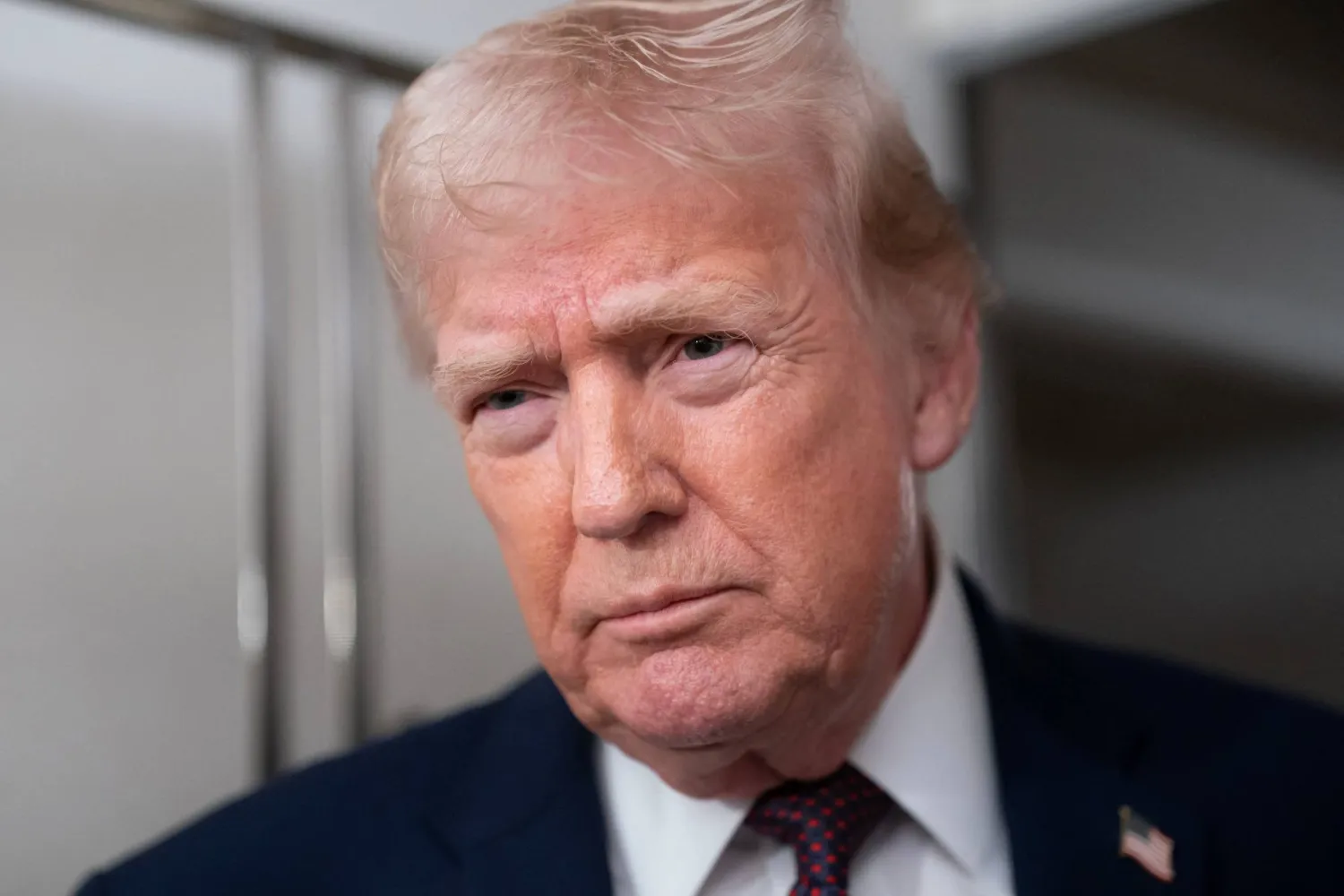
US President Donald Trump speaks with members of the media aboard Air Force One en route from Florida to Joint Base Andrews, Maryland, US, January 11, 2026. REUTERS/Nathan Howard
TT

Trump Says US Will Take Greenland 'One Way or the Other'

US President Donald Trump speaks with members of the media aboard Air Force One en route from Florida to Joint Base Andrews, Maryland, US, January 11, 2026. REUTERS/Nathan Howard

President Donald Trump said Sunday the United States would take Greenland "one way or the other," warning that Russia and China would "take over" if Washington didn't act.

Trump says controlling the mineral-rich Danish territory is crucial for US national security given increased Russian and Chinese military activity in the Arctic.

"If we don't take Greenland, Russia or China will, and I'm not letting that happen," Trump told reporters aboard Air Force One, despite neither country laying claim to the vast island.

Trump said he would be open to making a deal with the Danish self-governing territory "but one way or the other, we're going to have Greenland."

Denmark and other European allies have voiced shock at Trump's threats over the island, which plays a strategic role between North America and the Arctic, and where the United States has had a military base since World War II, reported AFP.

A Danish colony until 1953, Greenland gained home rule 26 years later and is contemplating eventually loosening its ties with Denmark.

The vast majority of its population and political parties have said they do not want to be under US control and insist Greenlanders must decide their own future -- a viewpoint continuously challenged by Trump.

"Greenland should make the deal, because Greenland does not want to see Russia or China take over," Trump warned, as he mocked its defenses.

"You know what their defense is, two dog sleds," he said, while Russia and China have "destroyers and submarines all over the place."

Denmark's prime minister warned last week that any US move to take Greenland by force would destroy 80 years of transatlantic security links.

Trump waved off the comment saying: "If it affects NATO, it affects NATO. But you know, (Greenland) need us much more than we need them."



Kremlin Says It Is in Constant Touch with Iranian Leaders

05 March 2026, Russia, Moscow: Kremlin Spokesman Dmitry Peskov attends a meeting between Russian President Vladimir Putin and President of the Central African Republic Faustin-Archange Touadera at the Kremlin. (Kremlin/dpa)
TT

Kremlin Says It Is in Constant Touch with Iranian Leaders

05 March 2026, Russia, Moscow: Kremlin Spokesman Dmitry Peskov attends a meeting between Russian President Vladimir Putin and President of the Central African Republic Faustin-Archange Touadera at the Kremlin. (Kremlin/dpa)

Russia is constantly in touch with the Iranian leadership and willing to contribute to efforts to stabilize the region, the Kremlin said ‌on Wednesday.

"Here ‌I can ‌only ⁠say that we are ⁠in constant contact with the Iranian side and with the Iranian leadership," Kremlin spokesman ⁠Dmitry Peskov told reporters.

"As ‌President (Vladimir) ‌Putin has said, ‌Russia is always ready ‌to do what it can to restore peace and stability ‌in the region."

Putin and Foreign Minister Sergei Lavrov ⁠have ⁠spoken with their Iranian counterparts in recent days, while Putin also held a phone call with US President Donald Trump on Monday.


UK Bans Pro-Palestinian March Over Alleged Iran Support

A boy stands at the site of an Israeli strike on a tent sheltering displaced people, in Nuseirat, central Gaza Strip March 9, 2026. REUTERS/Mahmoud Issa
TT

UK Bans Pro-Palestinian March Over Alleged Iran Support

A boy stands at the site of an Israeli strike on a tent sheltering displaced people, in Nuseirat, central Gaza Strip March 9, 2026. REUTERS/Mahmoud Issa

The UK government has banned an annual pro-Palestinian march planned for Sunday which London police claim is organized by a group "supportive of the Iranian regime".

Interior minister Shabana Mahmood said late Tuesday she had approved the rare police request to prevent "serious public disorder" if the Al-Quds Day march and counter-protests had gone ahead.

It is the first time a protest march has been banned since 2012 but a static demonstration will be permitted, according to London's Metropolitan police.

Mahmood said she was "satisfied" a ban was "necessary" due to "the scale of the protest and multiple counter-protests, in the context of the ongoing conflict in the Middle East".

The minister added that she expected to see "the full force of the law applied to anyone spreading hatred and division".

The Islamic Human Rights Commission (IHRC), an NGO which organizes the annual Al-Quds Day march, said it "strongly condemns" the decision, which it called "politically charged".

"We are seeking legal advice and this decision will not go unchallenged," it added, accusing the Met of having "brazenly abandoned their sworn principle of policing without fear or favor".

It said the London force "unashamedly regurgitate Zionist talking points about the IHRC "without a shred of evidence".

The group describes the day and march as an "international demonstration ... in support of Palestinians and all the oppressed around the world".

Al-Quds day, which takes its name from the Arabic for Jerusalem, originated in Iran in 1979 in support of the Palestinian people, and is now marked annually in various countries, notably in the Muslim world. It aims to protest Israel's occupation of east Jerusalem.

But the Met's Assistant Commissioner Ade Adelekan said it was "uniquely contentious having originated in Iran and in London is organized by the Islamic Human Rights Commission".

He claimed that the organization was "supportive of the Iranian regime".

"The threshold to ban a protest is high and we do not take this decision lightly," AFP quoted Adelekan as saying.

He noted the Met has "a proven track record" of permitting free speech and protest rights at dozens of major pro-Palestinian and other demonstrations in recent years.

"But in our assessment this march raises unique risks and challenges," he said.

"We must consider the likely high numbers of protestors and counter protestors coming together and the extreme tensions between different factions.

"We have taken into consideration the likely impact on protests of the volatile situation in the Middle East, with the Iranian regime attacking British allies and military bases overseas."

The ban on the march and any associated counter-protest marches is valid for a month from Wednesday.


Japan Marks 15 Years Since Tsunami Disaster as Takaichi Pushes More Nuclear Energy Use

People observe a moment of silence towards the sea at 2:46 p.m. (05:46 GMT), the time when the 9.0-magnitude earthquake struck off Japan's coast in 2011, with the tsunami-crippled Fukushima Daiichi nuclear power plant seen in the background in Namie, Fukushima prefecture, Japan, March 11, 2026, to mark the 15-year anniversary of the 2011 earthquake and tsunami that killed thousands and set off a nuclear crisis. (Kyodo/via Reuters)
TT

Japan Marks 15 Years Since Tsunami Disaster as Takaichi Pushes More Nuclear Energy Use

People observe a moment of silence towards the sea at 2:46 p.m. (05:46 GMT), the time when the 9.0-magnitude earthquake struck off Japan's coast in 2011, with the tsunami-crippled Fukushima Daiichi nuclear power plant seen in the background in Namie, Fukushima prefecture, Japan, March 11, 2026, to mark the 15-year anniversary of the 2011 earthquake and tsunami that killed thousands and set off a nuclear crisis. (Kyodo/via Reuters)

Japan marked the 15th anniversary of the earthquake, tsunami and nuclear disaster on its northeastern coast Wednesday as the government pushes for more use of atomic energy.

The magnitude 9.0 earthquake and tsunami on March 11, 2011, ravaged parts of the region, caused more than 22,000 deaths and forced nearly half a million people to flee their homes, most of them due to tsunami damage.

Some 160,000 people fled their homes in Fukushima because of the radiation spewed from the tsunami-hit Fukushima Daiichi nuclear power plant. About 26,000 of them haven't returned because they resettled elsewhere, their hometowns remain off-limits or they have lingering concerns about radiation.

Japan observed a moment of silence at 2:46 p.m., the moment the quake occurred 15 years earlier.

Prime Minister Sanae Takaichi, at a ceremony in Fukushima, pledged to do the utmost to accelerate the region's recovery within the next five years and reinforce “the valuable lessons we learned from the huge sacrifice of the disaster.”

Takaichi has pushed to accelerate reactor restarts and sought to bolster nuclear power as a stable energy source, in line with the major reversal of policy in 2022 that ended a decade-long nuclear phase-out plan.

Some residents in the tsunami-ravaged areas walked down to the coast early morning to pray for their loved ones and others whose remains are still missing.

More than 1 million homes, offices and schools were damaged or destroyed in the quake and tsunami in Iwate, Miyagi, Fukushima and other coastal areas. Key infrastructure has been rebuilt, but communities and local economies have been slow to recover.

The Fukushima Daiichi plant lost its power and cooling functions, causing meltdowns in three of its six reactors. The three reactors contain at least 880 tons of melted fuel debris, but details of the state inside them are little known due to the still-dangerous radiation levels.

Fuller-scale removal of melted fuel debris has been delayed until 2037 or later. At Unit 1 which just got a new roof, workers will shortly start taking out top-floor debris ahead of the planned spent fuel removal from its cooling pool, which will begin around 2027-2028.

There's also a massive amount of slightly radioactive soil, enough to fill 11 baseball stadiums, from the decontamination efforts across the area.

The government has pledged to move the soil and has sought to use some for road construction and other public works projects but has faced public resistance.