
France Explores Sending Eutelsat Terminals to Iran Amid Internet Blackout

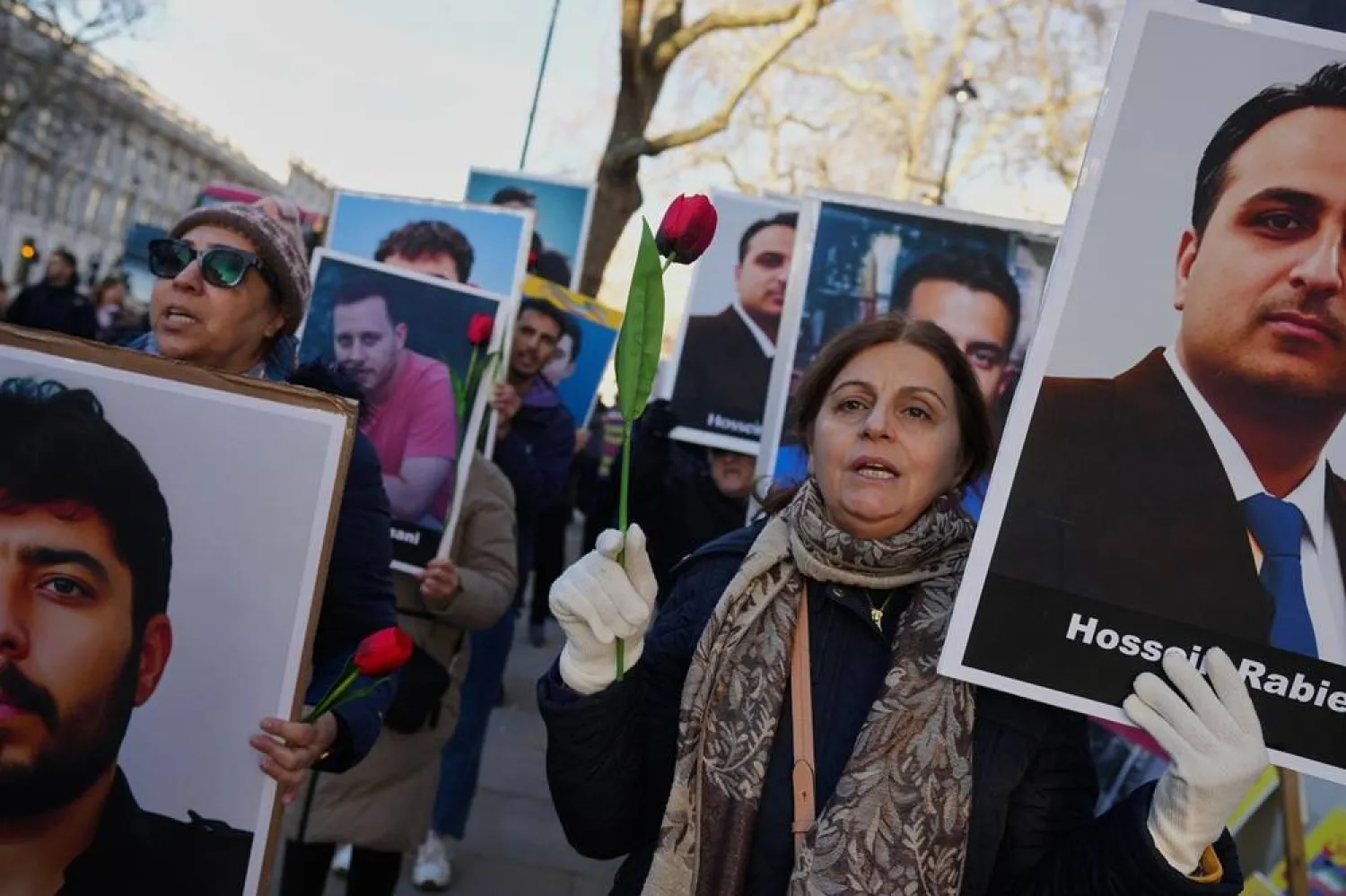
 Protesters hold up placards with pictures of victims as they demonstrate in support of anti-government protests in Iran, outside Downing Street, in London, Wednesday, Jan. 14, 2026. (AP)
Protesters hold up placards with pictures of victims as they demonstrate in support of anti-government protests in Iran, outside Downing Street, in London, Wednesday, Jan. 14, 2026. (AP)
TT

France Explores Sending Eutelsat Terminals to Iran Amid Internet Blackout

 Protesters hold up placards with pictures of victims as they demonstrate in support of anti-government protests in Iran, outside Downing Street, in London, Wednesday, Jan. 14, 2026. (AP)
Protesters hold up placards with pictures of victims as they demonstrate in support of anti-government protests in Iran, outside Downing Street, in London, Wednesday, Jan. 14, 2026. (AP)

France is looking into sending Eutelsat satellite terminals to Iran to help citizens after Iranian authorities imposed a blackout of internet services in a bid to quell the country's most violent domestic unrest in decades.

"We are exploring all options, and the one you have mentioned is among them," French Foreign Minister Jean-Noel Barrot said on Wednesday in ‌the lower house ‌after a lawmaker asked whether France ‌would ⁠send Eutelsat ‌gear to Iran.

Backed by the French and British governments, Eutelsat owns OneWeb, the only low Earth orbit constellation, or group of satellites, besides Elon Musk's Starlink.

The satellites are used to beam internet service from space, providing broadband connectivity to businesses, governments and consumers in underserved areas.

Iranian authorities in recent days have ⁠launched a deadly crackdown that has reportedly killed thousands during protests against clerical rule, ‌and imposed a near-complete shutdown of internet ‍service.

Still, some Iranians have ‍managed to connect to Starlink satellite internet service, three people ‍inside the country said.

Even Starlink service appears to be reduced, Alp Toker, founder of internet monitoring group NetBlocks said earlier this week.

Eutelsat declined to comment when asked by Reuters about Barrot's remarks and its activities in Iran.

Starlink’s more than 9,000 satellites allow higher speeds than Eutelsat's fleet of over 600, ⁠and its terminals connecting users to the network are cheaper and easier to install.

Eutelsat also provides internet access to Ukraine's military, which has relied on Starlink to maintain battlefield connectivity throughout the war with Russia.

Independent satellite communications adviser Carlos Placido said OneWeb terminals are bulkier than Starlink’s and easier to jam.

"The sheer scale of the Starlink constellation makes jamming more challenging, though certainly not impossible," Placido said. "With OneWeb it is much easier to predict which satellite will become online over a given ‌location at a given time."


Erdogan: Türkiye Will Thwart Plots Against Brotherhood Among Turks, Kurds and Arabs

Turkish President Recep Tayyip Erdogan vowed to thwart plots targeting brotherhood among Turks, Kurds and Arabs. (Turkish Presidency)
TT

Erdogan: Türkiye Will Thwart Plots Against Brotherhood Among Turks, Kurds and Arabs

Turkish President Recep Tayyip Erdogan vowed to thwart plots targeting brotherhood among Turks, Kurds and Arabs. (Turkish Presidency)

Turkish President Recep Tayyip Erdogan vowed on Tuesday to thwart attempts to undermine ties among Turks, Kurds and Arabs, reaffirming his commitment to a process aimed at disarming the Kurdistan Workers’ Party’s (PKK).

Türkiye calls the initiative Terror-Free Türkiye, while the Kurdish side refers to it as the “Peace and Democratic Society Process.” It is based on the PKK’s dissolution and disarmament.

“When this process achieves its goal, the merchants of blood, the opportunists who profit from terrorism and the ‘architects of genocide’ seeking to destabilize our country and region will lose,” Erdogan said.

Speaking at a ceremony marking the 955th anniversary of the Battle of Manzikert, where the Seljuks defeated the Byzantines, Erdogan said the process would open the way for a new era.

“Humanity, brotherhood, peace and stability will prevail,” he said.

In what was seen as an indirect message to Israel following last week’s attack on Syria’s Abu al-Duhur military airport near the Turkish border and an attack on him by Israeli Prime Minister Benjamin Netanyahu, Erdogan said: “Whatever you do, you will not divert us from our path or prevent Turks, Kurds and Arabs from embracing one another.”

“We know the games you are playing, and we know very well the ‘dirty’ hands reaching into our region. If you have an agenda, we also have an agenda and a plan,” he added.

Separately, the Turkish presidency’s Center for Countering Disinformation said Türkiye had faced a deliberate, foreign-backed psychological campaign in recent days targeting “social unity, brotherhood and peace.”

"No malicious plan or group will achieve its goal, thanks to our nation’s deep wisdom and our state’s firm stance,” the center, which operates under the presidency’s Directorate of Communications, said in a statement.

It urged citizens to remain alert to malicious content, reject posts from unknown sources and rely only on official statements.

Domestic peace process

Erdogan’s pledge to press ahead with the peace process and the presidency’s warnings came as the Monitoring, Evaluation and Coordination Council decided to establish four committees to oversee the PKK’s dissolution and disarmament.

The council held its first meeting under Vice President Cevdet Yilmaz and issued a statement late on Monday.

It said the “historic” process — launched to rid Türkiye and the region entirely of terrorism, eliminate violence and weapons, and foster brotherhood — had reached a critical stage.

Parliament’s Aug. 10 adoption of Law No. 7595 on “Strengthening National Solidarity and Social Integration” reflected the nation’s will and broad political and social consensus, the council said.

Implementation began after Erdogan approved the law on Aug. 18, bringing it into force, it added.

The council described the law as a key pillar of the “Century of Türkiye” vision. It said the legislation would strengthen Türkiye’s internal cohesion and help turn the region into an oasis of peace, prosperity and security amid instability beyond the country’s borders.


Iran and Oman Agree on Temporary Route in Hormuz Strait

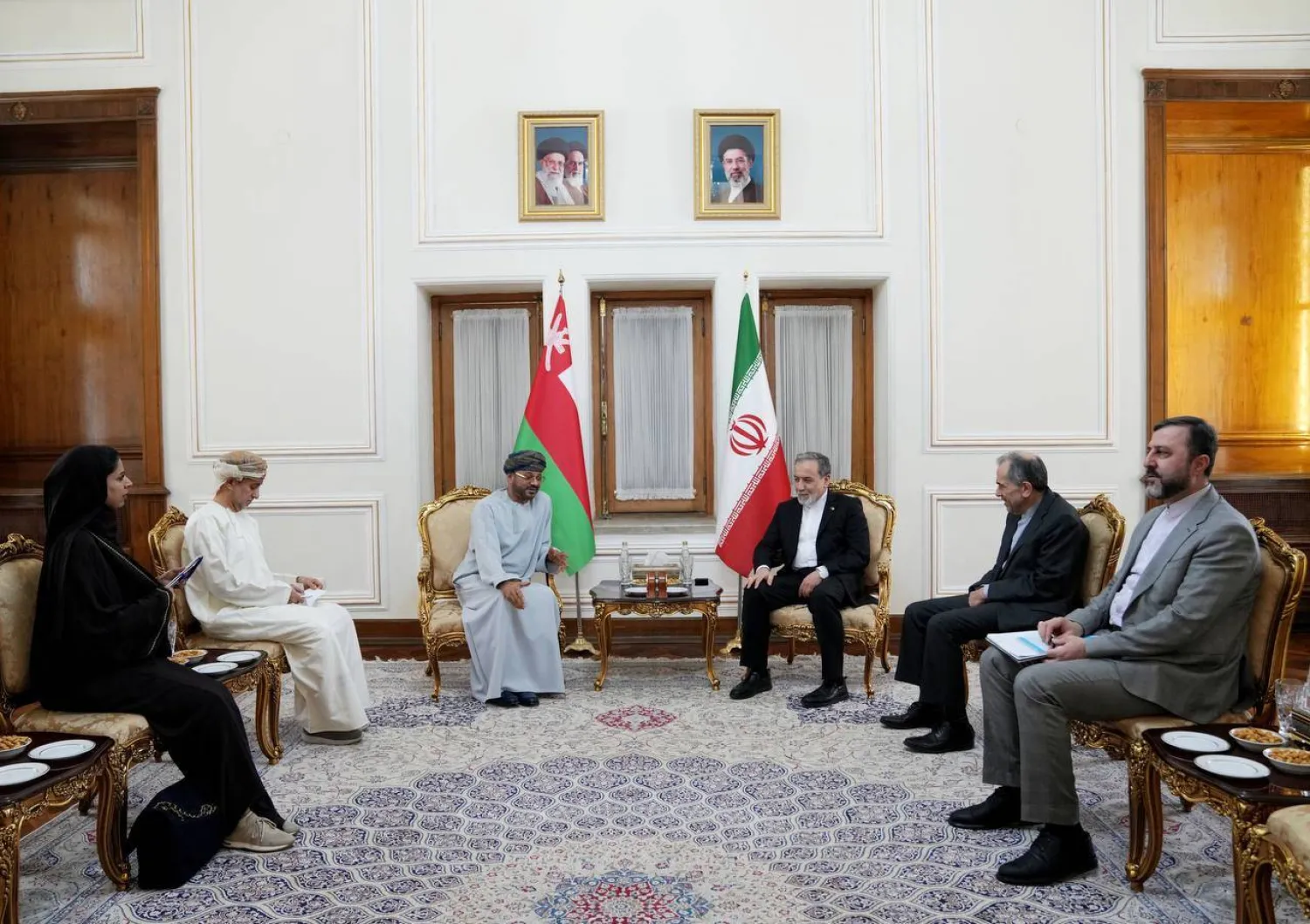
A handout picture provided by the Iranian Foreign Ministry Office, shows Iranian Foreign Minister Abbas Araghchi (top-R) and Omans' Foreign Minister Badr al-Busaidi (Top-L) meeting in Tehran on August 25, 2026. (Iranian Foreign Ministry Office / AFP)
TT

Iran and Oman Agree on Temporary Route in Hormuz Strait

A handout picture provided by the Iranian Foreign Ministry Office, shows Iranian Foreign Minister Abbas Araghchi (top-R) and Omans' Foreign Minister Badr al-Busaidi (Top-L) meeting in Tehran on August 25, 2026. (Iranian Foreign Ministry Office / AFP)

Omani Foreign Minister Badr al-Busaidi met with his Iranian counterpart, Abbas Araghchi, in Tehran, Iran's capital, on Tuesday to discuss a framework for managing ship traffic in the Strait of Hormuz.

A joint statement by the two countries, located on opposite sides of the narrow strait, said the proposed framework includes a “joint temporary navigational corridor” and both countries working to clear mines from the waterway.

The statement said Iran and Oman will continue technical negotiations toward establishing a permanent shipping corridor and an agreement on the future administration of the strait.

Iranian Deputy Foreign Minister Kazem Gharibabadi told state TV that the two countries had reached an understanding on a temporary route.

Traffic into the Gulf from the Gulf of Oman would pass entirely through Iranian waters, while the outbound route would pass partly through Iranian waters and partly through Oman’s territorial waters.

Iran and Oman would then hold negotiations over 30 to 60 days to “reach an understanding on a new permanent and sustainable route,” he said.

About a fifth of the world’s traded oil passed through the strait before the United States and Israel attacked Iran on Feb. 28.

It’s unknown whether the US will accept the emerging deal.

Iran’s president and other senior officials also discussed the strait with a delegation from Pakistan that left Tehran on Tuesday following talks on reviving negotiations to end the Iran-US conflict, the Pakistani military said.


Trump Says Strait of Hormuz Has Been Demined, Warns Iran Not to Plant More

Vessels in the Strait of Hormuz are visible near the beach of Bandar Abbas, Iran, August 25, 2026. Majid Asgaripour/WANA (West Asia News Agency) via REUTERS
TT

Trump Says Strait of Hormuz Has Been Demined, Warns Iran Not to Plant More

Vessels in the Strait of Hormuz are visible near the beach of Bandar Abbas, Iran, August 25, 2026. Majid Asgaripour/WANA (West Asia News Agency) via REUTERS

US President Donald Trump said on Tuesday that all mines had been detonated or removed from international waters of the Strait of Hormuz and that Iran has been told that any ship or boat placing new mines will be destroyed.

In a post ⁠on Truth Social, ⁠Trump said the United States, through its Space Force, was watching "every square inch" of the Strait, a key waterway in the global energy supply chain.

"There is ⁠a Zero Tolerance policy on mine placement in full force and effect," Trump said.

The US and Iran have not conducted air strikes on each other's militaries for weeks, but attacks on vessels in the Strait of Hormuz have continued as the two sides vie for ⁠control of ⁠the narrow maritime passage.

Oil transits through the strait were at 5 million barrels per day on Monday, provisional data from shiptracker Vortexa showed, down from more than 20 million per day before the war or about one of every five barrels consumed worldwide.